Why Prescription Drug Prices Are So High in the United States: A Deep Dive
 Aug, 21 2026
Imagine buying a pill that costs $1,400 a year in London but $88,800 a year in New York. That is not a hypothetical scenario; it is the reality for patients taking Galzin, a treatment for Wilson's disease. While Americans often assume high drug costs are simply due to expensive research, the truth is far more complex and frustratingly opaque. You are likely paying a premium not just for the medicine itself, but for a tangled web of administrative layers, legal loopholes, and market structures that exist almost exclusively in the United States.
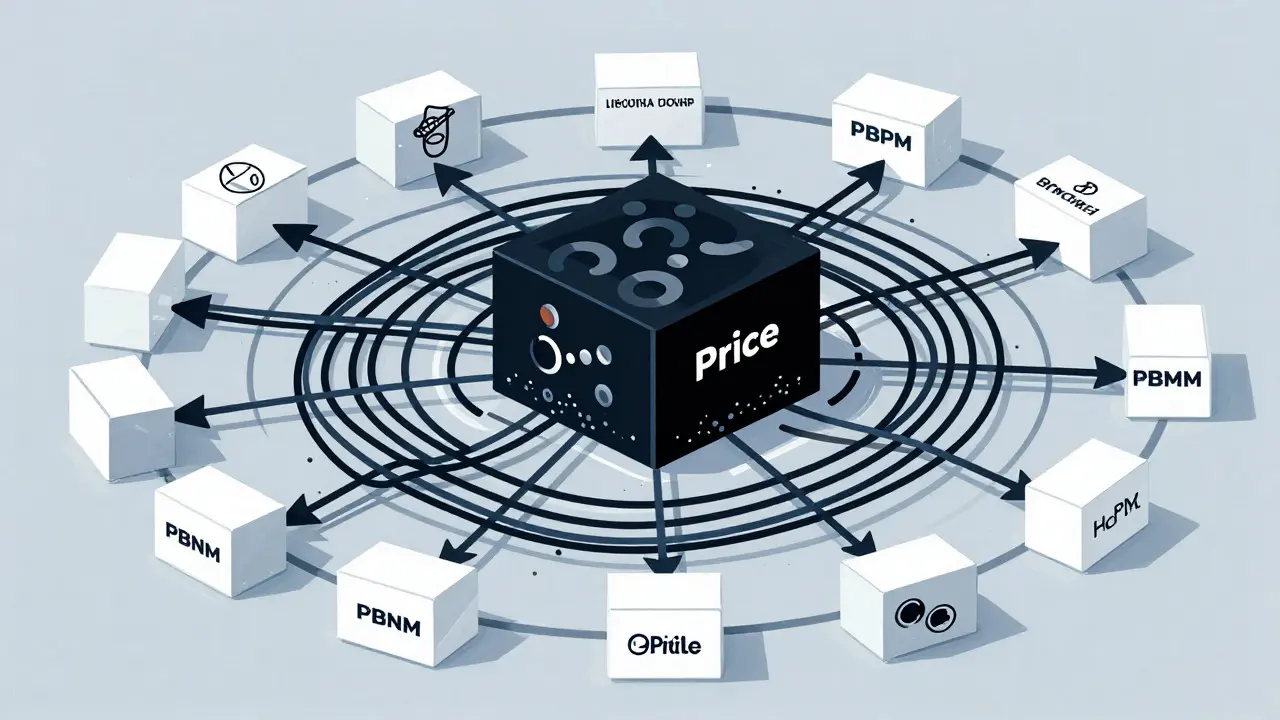
The core issue is that the U.S. operates without a direct government price-setting mechanism for most medications. Unlike other developed nations where governments negotiate directly with manufacturers, the American system relies on a fragmented network of insurers, pharmacy benefit managers (PBMs), and distributors. This lack of centralized oversight allows manufacturers to set list prices that can be significantly higher than what other countries pay for the exact same molecule produced in the same factory.
The Structural Gap: No Government Negotiation
To understand why prices remain stubbornly high, you have to look at the legislative foundation laid down over the last two decades. The Medicare Modernization Act of 2003 is a landmark piece of legislation that expanded Medicare coverage but prohibited the federal government from negotiating drug prices directly with pharmaceutical companies. For years, this created a structural disadvantage. While Germany, France, and Canada use reference pricing or direct talks to cap costs, U.S. manufacturers retained near-total autonomy over their pricing strategies.
This autonomy has resulted in the U.S. capturing approximately 75% of global pharmaceutical profits, despite having less than 5% of the world's population. The White House fact sheet from November 2025 highlighted this disparity, noting that Americans pay more than three times what citizens in other OECD nations pay for brand-name drugs. Even when accounting for discounts given to U.S. insurers, the net cost remains drastically higher abroad. This isn't just about profit margins; it reflects a system where the 'list price'-the sticker price before insurance kicks in-is inflated to create room for rebates and negotiations that rarely translate into lower bills for the average patient.
The Role of PBMs and the Rebate Maze
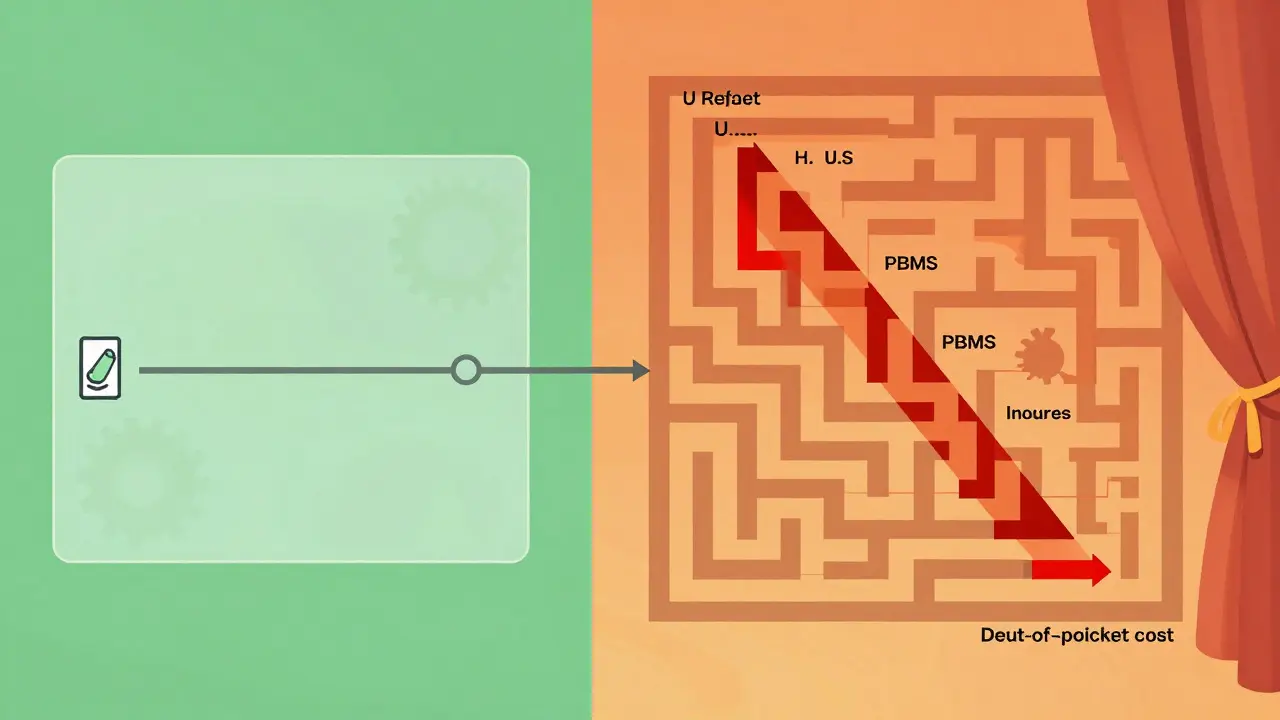
If you have ever looked at your Explanation of Benefits (EOB) from an insurance company, you know the numbers don't always add up. A major culprit behind this confusion is the Pharmacy Benefit Manager (PBM). PBMs act as intermediaries between drug manufacturers, pharmacies, and insurers. Originally designed to manage formularies and negotiate discounts, they have evolved into vertically integrated entities with immense market power.
Here is how the rebate system works in practice: Manufacturers often raise the list price of a drug. In exchange, they offer large rebates to PBMs or insurers. These rebates are meant to lower the overall cost of care, but they often fail to reach the consumer. Instead, the high list price stays visible, which can affect how much you pay out-of-pocket if you hit certain thresholds. According to a Morgan Lewis analysis from April 2025, this vertical integration allows PBMs to influence final drug costs in ways that prioritize maximizing rebates rather than minimizing patient expenses. It’s a system where transparency is low, and the actual price you pay is obscured by layers of financial transactions that happen behind the scenes.
| Feature | United States | Germany / UK / Canada |
|---|---|---|
| Price Setting Authority | Manufacturer (Market-based) | Government (Negotiated/Reference) |
| Direct Government Negotiation | Limited (Recent IRA changes) | Standard Practice |
| Primary Cost Control Method | Rebates & Formulary Management | Reference Pricing & Budget Impact Analysis |
| Transparency Level | Low (Opaque list prices) | High (Publicly available negotiated rates) |
| Typical Price Disparity | 3x+ higher than peers | Benchmark baseline |
Recent Legislative Shifts and Their Limits
You might think recent laws have fixed this problem, but the situation is nuanced. The Inflation Reduction Act (IRA) is a comprehensive law passed in 2022 that introduced significant changes to healthcare, including allowing Medicare to negotiate prices for certain prescription drugs. This was a historic shift. However, its impact has been slower and smaller than many hoped. As of 2026, the Medicare negotiation program covers only ten drugs, projected to save $1.5 billion in annual out-of-pocket costs. While that is meaningful for those specific patients, it does not yet address the broader market inflation affecting millions of others.
Furthermore, the political landscape continues to shift. In 2025, the budget reconciliation bill (HR 1) actually weakened some provisions of the IRA, according to KFF analysis, potentially increasing Medicare spending by at least $5 billion. Meanwhile, executive actions like the May 2025 Executive Order aimed at aligning U.S. prices with other developed nations faced pushback. Senator Bernie Sanders’ report in September 2025 revealed that 688 prescription drugs increased in price since the current administration took office, contradicting early promises of immediate relief. This suggests that while tools for lowering prices now exist, their implementation faces significant hurdles from lobbying, legal barriers, and the sheer complexity of the supply chain.
Specialty Drugs and the Rising Cost Curve
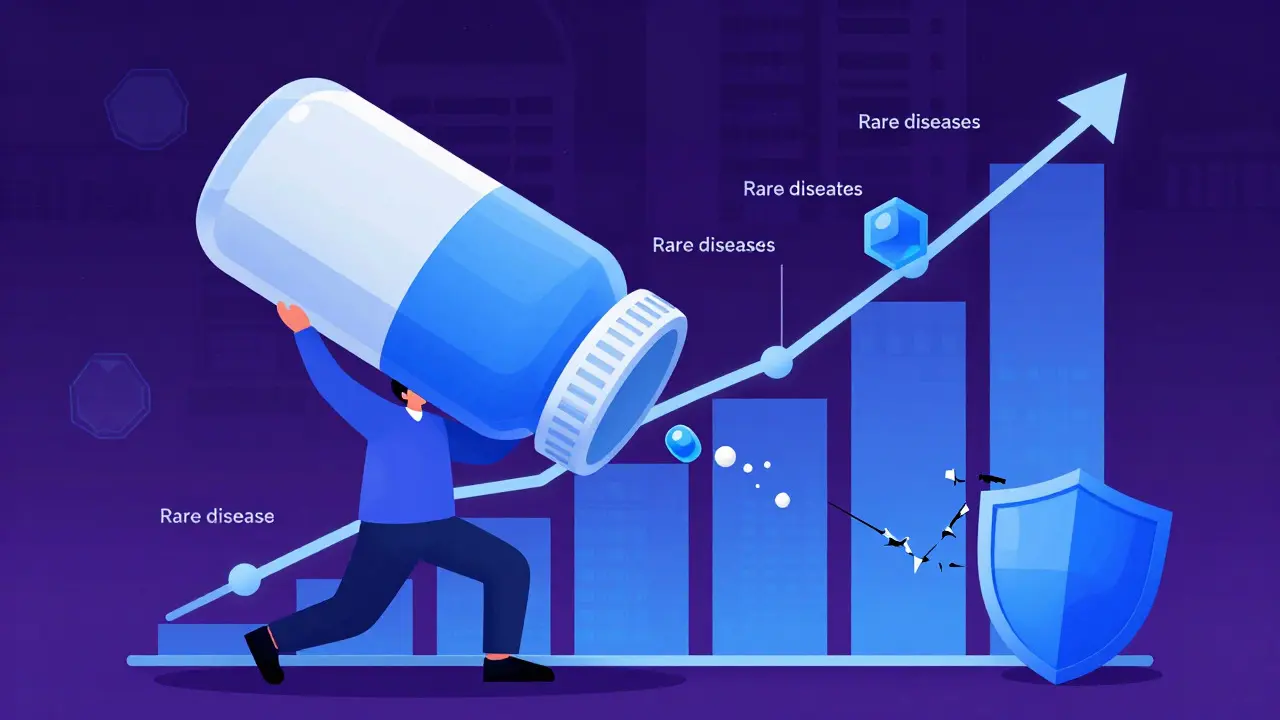
Not all drugs are driving these high costs equally. If you look at where the money is going, specialty drugs-those used for cancer, endocrine conditions, and rare diseases-are the primary drivers. IQVIA Institute reported that the U.S. market at net prices grew 11.4% in 2024, up from 4.9% in 2023. This acceleration was largely fueled by novel obesity and diabetes medications entering the market and expanding into new patient populations.
These high-cost therapies require different management strategies because they account for a disproportionate share of total spending. For example, Ozempic and Wegovy, once niche treatments, became mass-market products with massive price tags. Recent deals announced by the White House in late 2025 claimed to reduce monthly costs for these popular drugs from over $1,000 to $350, showing that targeted interventions can work. However, until such deals become the norm rather than the exception, the overall trend remains upward. National estimates predict that overall prescription drug spending will rise by another 9.0-11.0% in 2025, with clinics seeing even steeper increases of 11.0-13.0%.
What This Means for Your Wallet
So, what does this mean for you? If you are on a standard commercial insurance plan, your out-of-pocket costs are heavily influenced by your deductible and the formulary tier of your medication. Because list prices are high, deductibles tend to be high too. If you are on Medicare, the $2,000 annual out-of-pocket cap introduced by the IRA is a safety net that CMS Administrator Chiquita Brooks-LaSure described as "life-changing" for those previously facing catastrophic costs. But for the millions of seniors and others whose plans might change under future budgets, the risk of higher costs remains real.
The gap between what a drug costs to make and what it sells for is not closing quickly. Until there is full transparency in how PBMs handle rebates and until government negotiation becomes a routine part of the process for all drugs-not just a select few-the U.S. will likely continue to lead the world in per-capita drug spending. Understanding these mechanisms helps you ask better questions of your insurer and advocate for clearer pricing in your own care.
Why do Americans pay more for drugs than people in Europe?
The primary reason is the lack of direct government price negotiation in the U.S. for most drugs. European countries often use reference pricing or negotiate directly with manufacturers to cap costs. In the U.S., manufacturers set high list prices, and while insurers negotiate rebates, these savings don't always pass through to consumers, leaving the base price significantly higher than international benchmarks.
Do Pharmacy Benefit Managers (PBMs) increase drug costs?
Yes, indirectly. PBMs often encourage higher list prices from manufacturers in exchange for larger rebates. Since these rebates are frequently kept by the PBM or insurer rather than fully passed to the patient, the visible price of the drug remains high, which can inflate deductibles and out-of-pocket costs for patients.
Is the Inflation Reduction Act lowering drug prices?
It is starting to, but slowly. The IRA allows Medicare to negotiate prices for specific drugs and sets a $2,000 annual out-of-pocket cap for beneficiaries. However, as of 2026, only a small number of drugs are covered under the negotiation program, and recent legislative changes have limited its full potential, meaning broad market-wide price reductions are still pending.
Which types of drugs drive the highest spending?
Specialty drugs, particularly those for cancer, endocrine disorders, and rare diseases, drive the highest spending. Additionally, newer weight-loss and diabetes medications like Ozempic and Wegovy have become significant growth drivers, contributing to the double-digit percentage increases in overall U.S. prescription drug spending seen in 2024 and 2025.
Can I check the real price of my medication?
It is difficult due to opaque pricing structures, but HHS has announced forthcoming changes to improve prescription drug price transparency. In the meantime, using independent price comparison tools or asking your pharmacist about cash-pay options versus insurance-covered rates can help identify if you are overpaying based on inflated list prices.