Special Instructions on Prescription Labels: What They Mean and Why They Matter
 Jun, 19 2026
Have you ever picked up a prescription bottle, glanced at the label, and felt a wave of confusion? You see the dosage, the doctor's name, and the pharmacy details, but then there it is-a small line that says special instructions. Maybe it reads "take with food," "avoid sunlight," or "do not crush." It’s easy to brush these lines off as minor suggestions, but they are actually critical directives designed to keep you safe and ensure your medication works. Ignoring them can lead to wasted medicine, unnecessary side effects, or even hospital visits.
According to a study by Dr. Terry C. Davis published in PMC, nearly half of primary care patients misunderstand the instructions on their prescription drug labels. That is a staggering number. These special instructions exist because every medication interacts differently with your body, your diet, and your environment. Understanding them isn't just about following rules; it is about taking control of your health.
The Purpose Behind Special Instructions
Why do some pills need specific handling while others don't? The answer lies in how drugs work inside your body. Special instructions go beyond the basic "take one tablet daily" directive. They address factors like absorption rates, chemical stability, and potential interactions with other substances.
For example, some medications are unstable when exposed to air or light. Others might irritate your stomach lining if taken without a buffer. The U.S. Food and Drug Administration (FDA) regulates these instructions to minimize adverse effects and maximize therapeutic effectiveness. This regulatory framework has evolved significantly since the Federal Food, Drug, and Cosmetic Act of 1938, with major updates following the 2006 Institute of Medicine Report which highlighted poor patient comprehension as a root cause of medication errors.
The core goal is simple: reduce medication errors. These errors cost the U.S. healthcare system approximately $42 billion annually. By providing clear, specific directions, regulators and pharmacists aim to close the gap between what a doctor prescribes and what a patient actually does.
Common Special Instructions Decoded
You will likely encounter several standard phrases across different prescriptions. Let’s break down what they really mean so you aren’t left guessing.
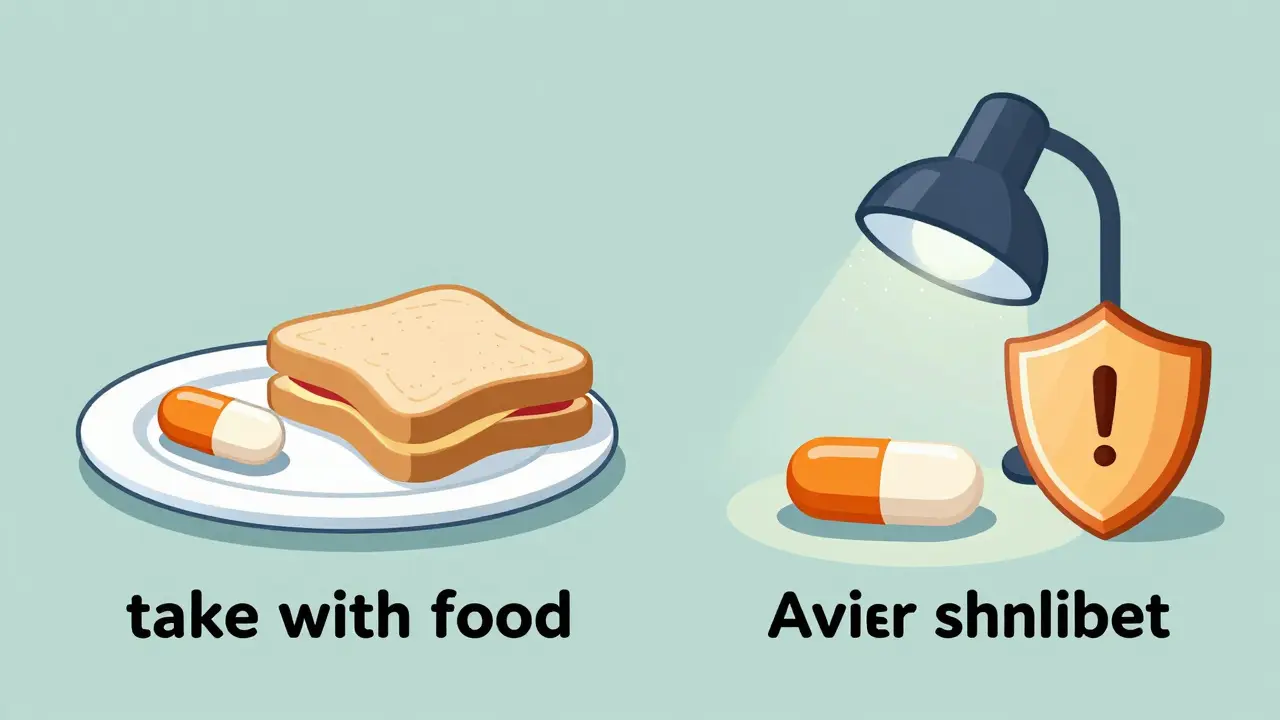
- Take with food: This instruction often causes the most confusion. A 2021 Harvard Health study found that interpretations vary wildly. Some patients think it means taking the pill with the very first bite, others during the meal, and some within 30 minutes after eating. Generally, this means taking the medication during a meal or immediately after to prevent stomach upset or to aid absorption. If you have sensitive digestion, ask your pharmacist if a small snack suffices or if you need a full meal.
- Take on an empty stomach: This usually means taking the medication at least one hour before eating or two hours after a meal. Food can block the absorption of certain drugs, rendering them less effective. For instance, some thyroid medications require strict adherence to this rule to maintain stable hormone levels.
- Avoid sunlight: Some medications make your skin more sensitive to UV rays, increasing the risk of severe sunburns. This is common with certain antibiotics and acne treatments. Wear protective clothing and sunscreen if you are prescribed one of these.
- Do not crush or chew: Many pills are designed as extended-release or enteric-coated. Crushing them releases the entire dose at once, which can be dangerous. It can also destroy the coating that protects the drug from stomach acid or prevents it from irritating your esophagus.
- Shake well before use: Liquid suspensions settle over time. Shaking ensures you get the correct concentration of the active ingredient in every dose. Skipping this step might result in an ineffective dose or, conversely, too much medication.
- Refrigerate: Certain biologics and insulin products degrade at room temperature. Keeping them cold preserves their potency. Always check if the medication needs to be stored in the fridge or if it should be kept at room temperature to avoid freezing damage.
Where to Find These Instructions
Finding the right information on a prescription bottle can sometimes feel like a treasure hunt. According to the Cleveland Clinic, special instructions appear in three main places:
- Directly on the primary label: In about 32% of cases, the instructions are printed directly on the main sticker affixed to the bottle.
- On a supplemental sticker: Nearly half (47%) of the time, pharmacies add a separate sticker specifically for special instructions to ensure visibility.
- In separate printed materials: About 21% of the time, detailed instructions are provided in a leaflet or Medication Guide included in the bag.
The FDA requires that critical instructions use a minimum 10-point font size with high contrast against the background. However, despite these standards, many patients still struggle to locate them. If you cannot find the instructions, do not guess. Ask your pharmacist to point them out to you before you leave the counter.
The Health Literacy Challenge
Even with clear labels, understanding medical terminology remains a significant barrier for many Americans. Approximately 36% of U.S. adults have below-basic health literacy. For these individuals, the misinterpretation rate of special instructions jumps to 62%, compared to 28% for those with proficient health literacy.
This gap is particularly dangerous. Timing instructions, such as "every 12 hours," are misinterpreted by more than half of patients who end up taking doses too close together. This can lead to toxicity or reduced efficacy. Furthermore, language barriers exacerbate the issue. A 2022 UCSF study found that Spanish-speaking patients were 3.2 times more likely to misinterpret "take with food" instructions than English speakers.
To bridge this gap, experts recommend asking for plain-language explanations. Pharmacists are trained to translate medical jargon into everyday terms. Don’t hesitate to say, "Can you explain what this means in simple terms?" or "What happens if I miss this step?"
Practical Steps for Safer Medication Use
Taking charge of your medication safety involves a few proactive steps. Here is a practical checklist based on recommendations from the Dana-Farber Cancer Institute and the Agency for Healthcare Research and Quality:
- Verify all locations: Check the bottle label, any stickers, and the inserted paperwork for special instructions.
- Clarify ambiguities: If a term like "full meal" or "small snack" is unclear, ask your pharmacist for a specific definition. Does "with food" mean a banana or a sandwich?
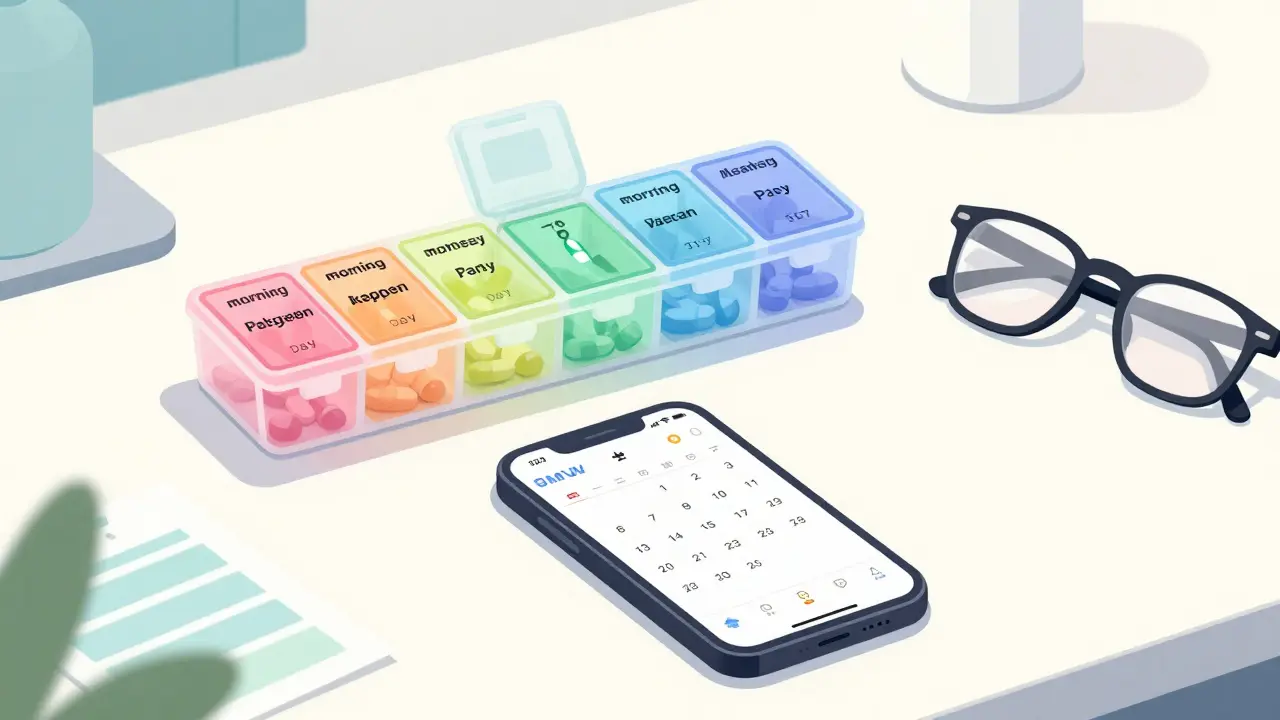
- Create reminders: Use phone alarms or medication apps to track timing. Apps can help ensure you adhere to "every 12 hours" schedules accurately.
- Use visual aids: Pill organizers with time-specific compartments can reduce timing errors by nearly half. Look for organizers that separate morning, afternoon, and evening doses.
- Request large-print labels: If reading small text is difficult, ask your pharmacy for large-print labels. Most U.S. pharmacies offer this service free of charge.
Remember, typical pharmacy counseling lasts only about two minutes. This is rarely enough time to cover all nuances. Take the initiative to ask questions before you leave. Your pharmacist is your best resource for decoding these labels.
Future Trends in Labeling
The industry is recognizing the limitations of current labeling practices. The FDA has proposed new rules to standardize critical special instructions by 2026. Additionally, technology is playing a larger role. Pilot programs are testing augmented reality labels that provide video instructions when scanned with a smartphone. This could revolutionize how patients understand complex directives, especially for those with low health literacy.
As we move toward more personalized healthcare, expect to see AI-driven label customization that adapts to individual patient needs. Until then, staying informed and engaged with your medication instructions is the best defense against errors.
What does "take with food" really mean?
It generally means taking the medication during a meal or immediately after eating. This helps prevent stomach upset or improves absorption. However, definitions vary; some doctors consider a small snack sufficient, while others require a full meal. Always clarify with your pharmacist if you are unsure.
Why shouldn't I crush my pills?
Many pills are coated to release medication slowly (extended-release) or to protect the drug from stomach acid. Crushing them destroys this mechanism, potentially releasing the entire dose at once, which can be dangerous or ineffective.
Where can I find special instructions on my prescription?
Check the primary label on the bottle, any supplemental stickers, and any printed inserts or Medication Guides included in your pharmacy bag. If you cannot find them, ask your pharmacist to show you where they are located.
What should I do if I have trouble reading the label?
Ask your pharmacy for large-print labels. Most pharmacies provide this service for free. You can also ask your pharmacist to explain the instructions verbally and write them down in plain language.
How can I ensure I take my medication at the right time?
Use medication reminder apps, set alarms on your phone, or use a pill organizer with specific time compartments. These tools can help you adhere to strict timing schedules like "every 12 hours" and reduce the risk of missing or doubling doses.
Amy Bogdahn
June 19, 2026 AT 20:30People are just too lazy to read.
Ashley Jacelyn
June 20, 2026 AT 13:24I totally get why this is confusing though! It’s not laziness, it’s just that medical jargon can be so intimidating and overwhelming. I remember when my mom got her first insulin prescription, she was terrified to even open the box because there were so many warnings. It’s really important we have more empathy for people who struggle with health literacy rather than judging them. We should all be supporting each other in understanding these things better. 💖
Sonam Norbu
June 20, 2026 AT 15:33This is exactly what happens when you outsource your healthcare to incompetent bureaucrats and foreign doctors who don’t speak English properly. The system is broken because we stopped trusting American pharmacists to do their jobs without a thousand pages of liability waivers. You think they care about your safety? They care about covering their asses from lawsuits. Get real.
KESHAV KUMAR
June 21, 2026 AT 23:21Lol yeah, nothing says 'patient safety' like a label written by a committee of lawyers trying to avoid getting sued into oblivion. Meanwhile, I’m over here crushing my extended-release pills because apparently my digestive tract has personal opinions on pill coatings. 🙄
Koushiki Behera
June 23, 2026 AT 17:22The deeper issue here is the disconnect between knowledge and action. We live in an age of information overload yet true understanding remains elusive. It reminds me of ancient texts where wisdom was hidden in plain sight but required patience to decipher. Perhaps we need to return to a mindset of mindful consumption of our medicines, treating them with the reverence they deserve. 🧘♀️✨
Alex Johnston
June 23, 2026 AT 20:09And don't forget the big pharma angle... :P They want you confused so you buy more 'adjuvant' products to fix the side effects caused by the main drug. It's a cycle of dependency designed to keep you sick enough to need treatment but healthy enough to pay for it. Wake up sheeple!
Sam Dudgeon
June 24, 2026 AT 18:56i mean seriously why cant they just tell us what to do in plain english instead of hiding it in fine print nobody reads its basically a trap set by the pharmaceutical industry to catch unsuspecting victims who trust their doctors too much
Kimberly Maten-ao
June 25, 2026 AT 02:16Wait, so if I take my thyroid meds with coffee, does that count as 'food'? Because I’ve been doing that for years and my levels are all over the place. This article is super helpful but I feel like I need to go back to the pharmacy and interrogate my pharmacist about every single detail now. 😩
Jake Kitzmiller
June 25, 2026 AT 18:45Coffee definitely counts as food or at least something that interferes with absorption for thyroid meds! You usually need to wait 30-60 minutes after taking levothyroxine before having coffee or eating anything. It’s a common mistake lots of folks make. Don’t stress too much, just ask your doc to adjust your dose based on recent blood work. You’re not alone in this!
Hafiz Omeiza
June 27, 2026 AT 16:06It is fundamentally irresponsible to ignore explicit medical instructions. The FDA exists for a reason, and bypassing their guidelines through willful ignorance is akin to playing Russian roulette with one's own physiology. One must adhere strictly to the prescribed regimen to ensure optimal therapeutic outcomes. To suggest otherwise is morally reprehensible and scientifically unsound.
Annemarie Kautz
June 28, 2026 AT 14:02its so annoying how hard it is to find the info sometimes i had to call my pharmacy three times just to figure out if i needed to refrigerate my eye drops and they kept giving me different answers ugh
Sumit gupta
June 29, 2026 AT 20:51Yeah man, communication breakdowns happen all the time in healthcare. It’s not just about reading labels, it’s about the whole ecosystem being fragmented. In India, we often rely on community health workers to bridge that gap because direct doctor-patient interaction is limited. Maybe we need more human-centric solutions rather than just better stickers on bottles. Just a thought. 🤔