Sarcopenia in COPD: Effective Nutrition and Resistance Training Strategies
 Aug, 26 2026
Imagine trying to climb a flight of stairs, only to realize your legs feel like lead while your lungs are already screaming for air. For many people living with Chronic Obstructive Pulmonary Disease (COPD), this isn't just fatigue; it's Sarcopenia, a progressive loss of skeletal muscle mass, strength, and physical performance that affects approximately 22% of COPD patients. It is an extrapulmonary manifestation that significantly impacts survival, with patients experiencing 20-40% higher mortality rates compared to those without the condition. If you or a loved one has been diagnosed with COPD, you know that managing breathlessness is half the battle. The other half? Keeping your muscles strong enough to support your daily life. Ignoring muscle health can turn simple tasks like carrying groceries or walking to the mailbox into exhausting ordeals. This guide breaks down exactly how to fight back using targeted nutrition and safe resistance training strategies designed specifically for the unique challenges of lung disease.
Understanding the Muscle-Lung Connection
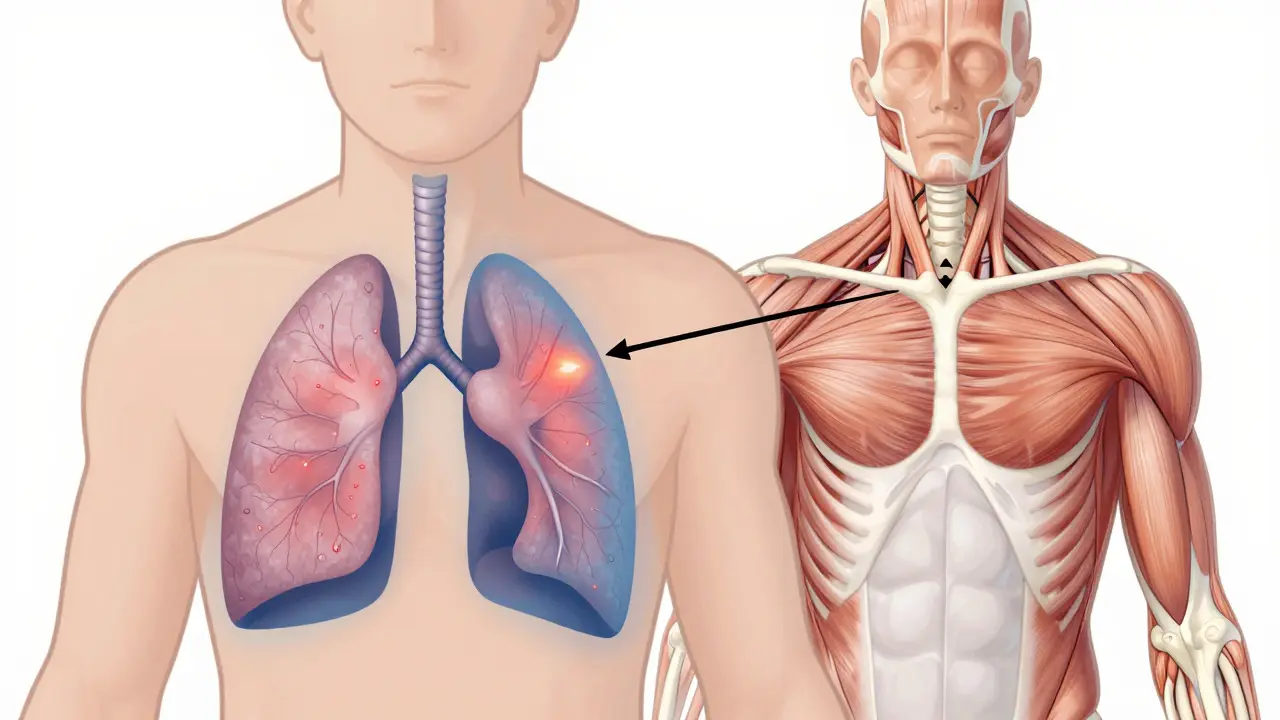
You might wonder why lung disease causes muscle wasting. It’s not just about being inactive. In COPD, systemic inflammation, physical inactivity, nutritional deficits, and hypoxemia create a "perfect storm" for accelerated muscle wasting. Unlike age-related sarcopenia which primarily hits the lower extremities, COPD-associated sarcopenia heavily involves respiratory and upper limb muscles. Studies show that 68% of COPD patients exhibit significant pectoralis major atrophy compared to only 22% in age-matched controls. This specific pattern means your chest muscles, which help expand your ribcage to breathe, are also weakening, making every breath harder.
The rate of decline is faster too. While healthy aging sees a 1-2% annual drop in muscle mass, COPD patients experience a 3.2% annual decline. Furthermore, nocturnal hypoxemia plays a critical role. If oxygen saturation drops below 88% for more than 30% of sleep time, the risk of severe sarcopenia jumps by 47%. This highlights why monitoring your oxygen levels isn't just about lung function-it's directly tied to muscle preservation.
Diagnosing Sarcopenia in COPD Patients
Catching sarcopenia early is crucial because standard BMI cutoffs often underestimate its prevalence in COPD patients due to their unique body composition. The American Thoracic Society recommends routine screening using handgrip strength measurements and the Short Physical Performance Battery (SPPB). According to the European Working Group on Sarcopenia in Older People (EWGSOP2), diagnosis typically involves low muscle strength (handgrip <27 kg for men, <16 kg for women) combined with low muscle quantity or quality. However, for COPD-specific accuracy, clinicians are increasingly looking at the pectoralis muscle index (PMI) and computed tomography (CT) scans at the third lumbar vertebra level (L3) to measure skeletal muscle index (SMI).
| Metric | General Population Standard | COPD-Specific Consideration |
|---|---|---|
| Handgrip Strength | <27 kg (Men) / <16 kg (Women) | Primary indicator; correlates negatively with TNF-α levels |
| Muscle Mass Index | <7.0 kg/m² (Men) / <5.5 kg/m² (Women) via DEXA | BMI underestimates prevalence; use L3 CT scan SMI (<55 cm²/m² Men, <39 cm²/m² Women) |
| Physical Performance | SPPB score ≤8 or Gait speed ≤0.8 m/s | Correlates with FEV1 values (r=-0.47); indicates severe disease |
| Respiratory Muscle | Rarely assessed | Pectoralis Muscle Index (PMI) threshold 1.06 ± 0.33 cm²/BMI |

Nutrition Strategies to Build and Maintain Muscle
Most COPD patients consume only 0.8-1.0 g/kg/day of protein, which is far below what is needed to combat muscle wasting. To effectively manage sarcopenia, aim for 1.2-1.5 g/kg/day of protein. But it’s not just about total amount; distribution matters. Splitting this protein evenly across four meals (0.3-0.4 g/kg per meal) maximizes muscle protein synthesis. Why? Because after each meal, your body has a limited window to utilize amino acids for building muscle tissue.
Leucine, a branched-chain amino acid, acts as a key trigger for this process. Supplementing with 2.5-3.0 g of leucine per meal has been shown to improve the anabolic response by 37% in sarcopenic COPD patients. If appetite is poor-a common issue in advanced COPD-whey protein shakes containing 10g of leucine can be a practical solution. Don't forget calories either. Under-eating forces the body to break down muscle for energy. Ensure you're meeting your caloric needs to spare muscle mass, especially during periods of increased breathing effort.
Safe Resistance Training Protocols for COPD
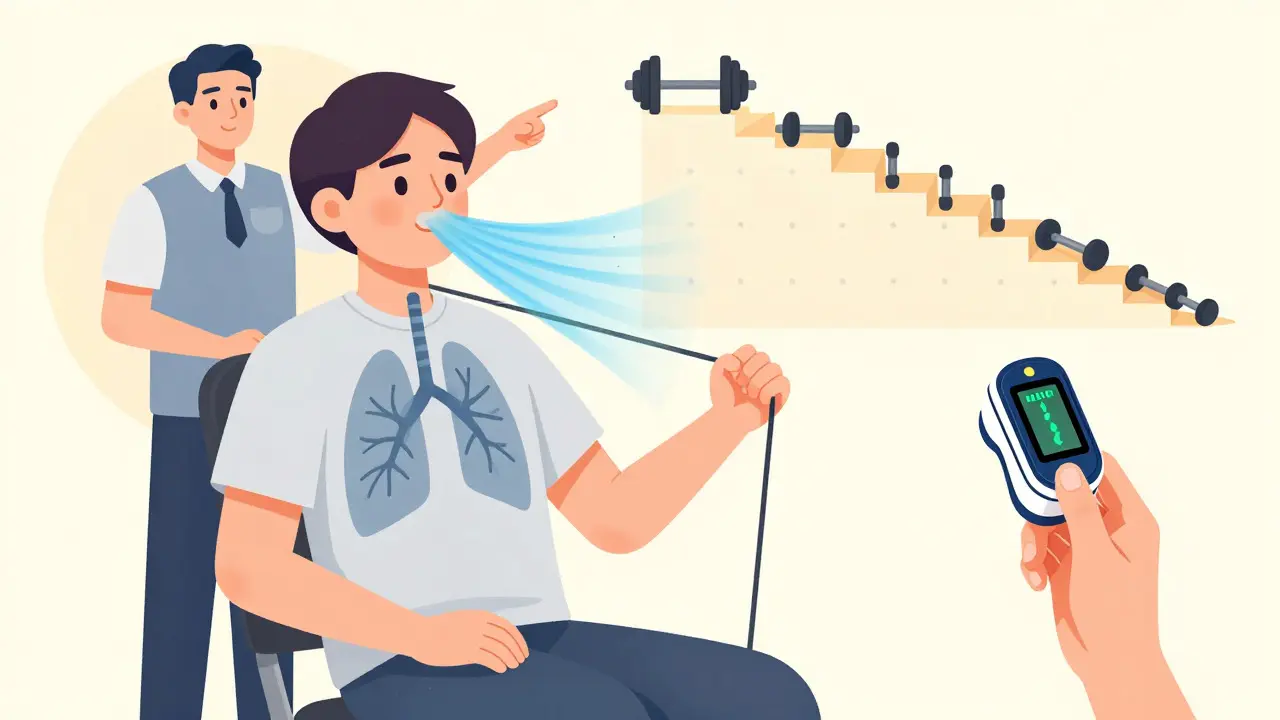
Exercise is medicine, but for COPD patients, standard gym protocols can be dangerous. Exercise-induced dyspnea affects 63% of patients, and 42% require supplemental oxygen during sessions. That’s why individualization is key. Start low and go slow. The recommended starting point is resistance training at 30-40% of your 1-repetition maximum (1-RM) for major muscle groups. This might mean using 1-2 pound weights or light resistance bands rather than heavy dumbbells.
- Frequency: Train 2-3 times per week, allowing rest days between sessions.
- Intensity Progression: Gradually increase to 60-80% 1-RM as tolerated over 8-12 weeks.
- Rest Periods: Take 2-3 minutes between sets to allow your heart rate and breathing to recover fully.
- Oxygen Monitoring: Keep supplemental oxygen nearby if prescribed, and monitor SpO2 levels during and after exercise.
A notable success story from the Cleveland Clinic shows that 78 patients with moderate to severe COPD and sarcopenia improved their 6-minute walk distance by 23% after 16 weeks of supervised resistance training combined with proper protein supplementation. The key was supervision and pacing. If you feel overly breathless, stop, rest, and resume at a lighter intensity. Consistency beats intensity when fighting sarcopenia in COPD.
Overcoming Common Barriers and Challenges
Why do so many patients quit? Dyspnea exacerbation is the primary reason cited by 32% of discontinuers. Another major hurdle is maintaining routines during flare-ups. A European Respiratory Society survey found that 57% of patients abandon exercise programs during symptom flare-ups. To combat this, have a "flare-up plan" ready. During acute exacerbations, focus on gentle mobility exercises and maintain your protein intake even if full resistance training is paused. Also, be aware that community-based rehabilitation centers often lack standardized implementation compared to academic medical centers. If possible, seek programs certified in sarcopenia management through bodies like the American Association of Cardiovascular and Pulmonary Rehabilitation.
Don't ignore the psychological aspect. Feeling weak can lead to fear of movement, creating a vicious cycle of deconditioning. Set small, achievable goals. Can you carry a single bag of groceries instead of two? Can you walk to the end of the driveway? Celebrate these wins. They are tangible evidence that your muscles are responding to your efforts.
Frequently Asked Questions
How much protein should I eat if I have COPD and sarcopenia?
You should aim for 1.2-1.5 grams of protein per kilogram of body weight per day. Distribute this evenly across 4 meals to maximize muscle protein synthesis. Adding 2.5-3.0 grams of leucine per meal can further enhance results.
Is it safe to lift weights with COPD?
Yes, but start very light. Begin at 30-40% of your 1-repetition maximum using light weights or bands. Monitor your breathing closely and use supplemental oxygen if needed. Gradually increase intensity over 8-12 weeks as tolerated.
What are the signs that I might have sarcopenia alongside my COPD?
Look for unexplained weakness, difficulty performing daily tasks like climbing stairs or carrying objects, and a noticeable decline in grip strength. Clinically, this is confirmed by low handgrip strength, reduced muscle mass via imaging, and poor performance on physical tests like the Short Physical Performance Battery.
Does night-time low oxygen affect muscle loss?
Yes. Nocturnal hypoxemia, where oxygen saturation stays below 88% for more than 30% of sleep time, is strongly linked to severe sarcopenia. Ensuring adequate overnight oxygen therapy can help protect muscle mass.
How long does it take to see improvements from resistance training?
Meaningful strength gains typically take 8-12 weeks of consistent training. Some patients report noticing changes in daily functioning, like carrying groceries, within 12 weeks when combining exercise with increased protein intake.