Post-Transplant Life: Recognizing Rejection Signs and Staying on Medication
 Dec, 19 2025
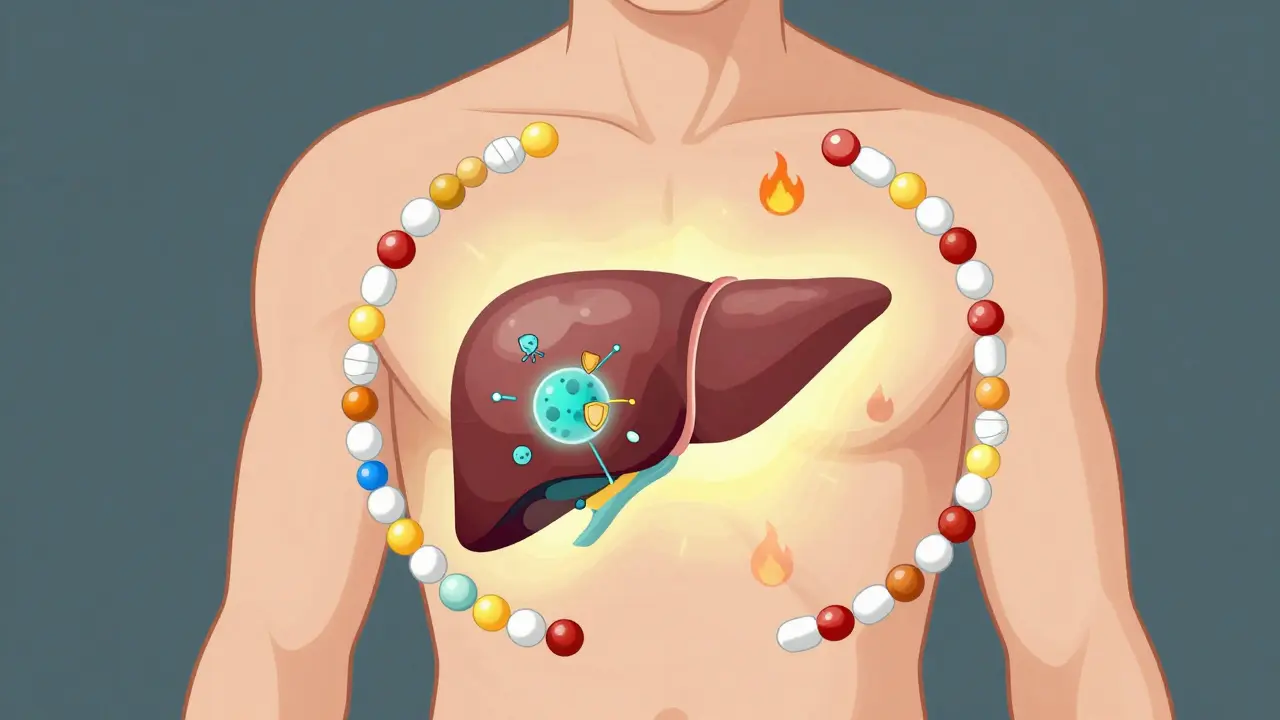
After a liver transplant, the hardest part isn’t the surgery-it’s the daily commitment to stay alive. You’ve survived the operation, but now your body is still trying to fight off the new organ like an invader. That’s rejection. And if you don’t catch it early or skip your meds, it can cost you the transplant-and your life.
What Rejection Really Feels Like
Rejection doesn’t always scream for attention. Sometimes it whispers. In the first few weeks after transplant, your immune system is on high alert. Acute rejection, the most common type, usually hits between one week and three months after surgery. But it can happen months or even years later. You might feel fine, but your liver is quietly failing. Signs to watch for:- Fever over 100°F, even if you think it’s just a cold
- Pain or tenderness near the transplant site
- Unexplained fatigue that won’t go away
- Dark urine or jaundice-yellowing of skin or eyes
- Swelling in your legs or belly
- Rapid weight gain (10 pounds or more in 48 hours)
- Nausea, vomiting, or loss of appetite
Why Your Medications Are Your Lifeline
You’re not just taking pills to feel better. You’re taking them to keep your liver alive. Immunosuppressants like tacrolimus and mycophenolate don’t cure anything-they silence your immune system so it doesn’t attack the transplant. Missing even one dose can trigger a chain reaction. The numbers don’t lie:- Patients who take 90% or more of their doses have a 95% chance of surviving one year post-transplant
- Those who miss more than 10% of doses drop to 78% survival
- Every 10% drop in adherence increases your risk of graft failure by 23%
- Missing 20% of your pills triples your chance of rejection
The Real Cost of Skipping Doses
It’s not just about rejection. Skipping meds leads to hospitalizations, repeat surgeries, and even death. The Cleveland Clinic found that 5-20 out of every 100 transplant patients experience acute rejection. But when meds are taken correctly, fewer than 5 out of 100 lose the organ. That’s the difference between life and a second transplant. And if you need a second transplant? It’s harder. Your body remembers the first one. Your immune system is already primed to fight. Second-time recipients take 1.7 times more medications than first-time patients. The odds drop fast.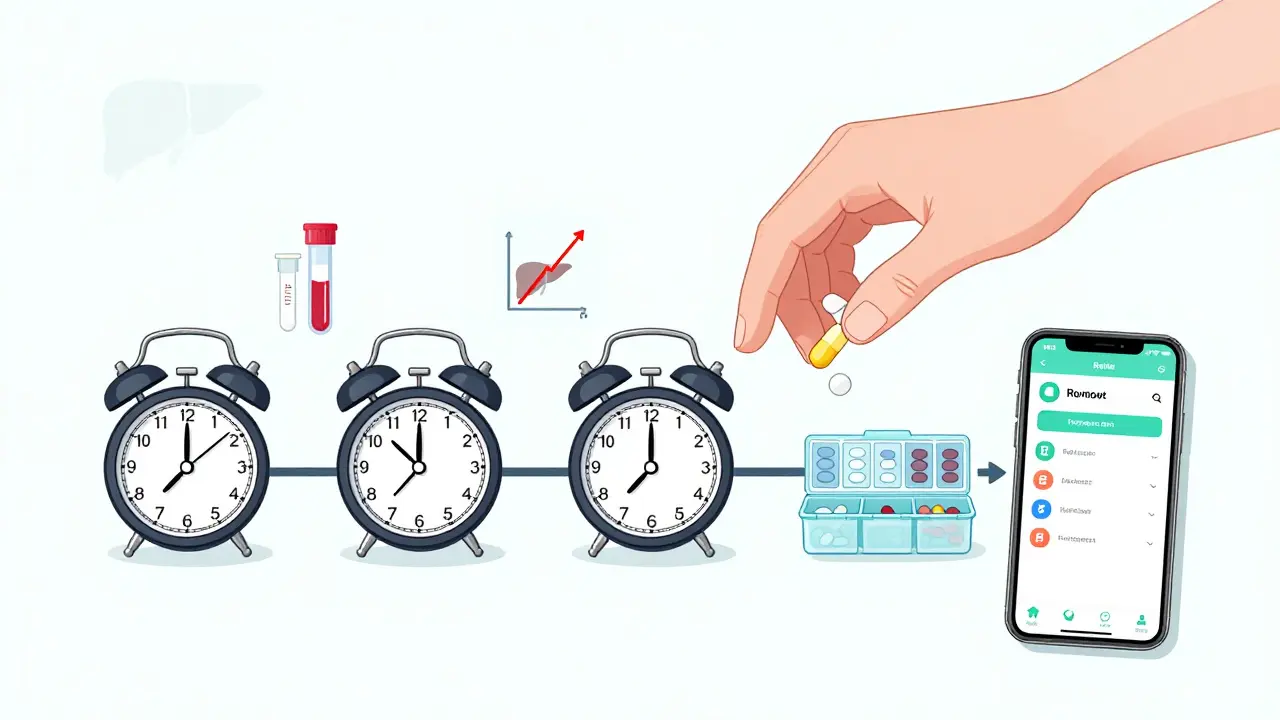
What’s in Your Pill Bottle? (And Why It’s Complicated)
Most liver transplant patients take a cocktail of three drug classes:- Calcineurin inhibitors (tacrolimus or cyclosporine): These are the backbone. Tacrolimus levels must stay between 5-10 ng/mL in the first year. Too low? Rejection risk spikes. Too high? Kidney damage, tremors, high blood pressure.
- Antimetabolites (mycophenolate or azathioprine): These stop immune cells from multiplying. Side effects? Diarrhea, nausea, low white blood cell count.
- Corticosteroids (prednisone): Used early on to calm inflammation. Long-term use? Weight gain, diabetes, bone loss.
How to Stay on Track (Even When It’s Hard)
Life gets busy. You forget. You feel fine. You skip a pill. Then you feel guilty. You’re not alone. A 2022 JAMA Internal Medicine study found that 45% of transplant patients miss at least one dose per week in the first year. Here’s what actually works:- Medication organizers: 63% of long-term survivors use them. A pillbox with morning, afternoon, evening, and night slots cuts confusion.
- Smartphone alarms: Set 3 alarms per dose. One for the time, one 15 minutes later, one for the next day. Studies show this improves adherence by 37%.
- Family reminders: Have someone check in. A spouse, sibling, or friend who calls you at pill time. Cleveland Clinic data shows this lowers rejection rates by 28%.
- Pharmacist check-ins: Many transplant centers now include pharmacists on the care team. Johns Hopkins reports 92% adherence with monthly med reviews. Ask your team if they offer this.
Money, Side Effects, and the Hidden Barriers
The biggest reason people skip meds? Cost and side effects. Without insurance, liver transplant drugs cost about $28,000 a year. That’s more than most people make. Many patients ration pills, cut doses, or delay refills. That’s not laziness. It’s desperation. Side effects are brutal:- Tremors (40% of tacrolimus users)
- High blood pressure (65%)
- Diabetes (up to 30%)
- Hair loss, acne, mood swings
What’s New in Transplant Care
The field is changing fast. In January 2023, the FDA approved the first genetic test-XyGlo-that tells your doctor exactly how much tacrolimus your body needs. No more guesswork. No more dangerous highs and lows. Smart pill bottles that text you when you open them? Used by 35% of major centers. Early results show a 22% drop in rejection. And the most exciting breakthrough? Tolerance. The Immune Tolerance Network found that 40% of patients in a new stem cell + transplant trial stopped needing immunosuppressants after 18 months. They’re not rejecting their liver. Their body accepted it. This isn’t science fiction-it’s happening now.Your New Normal
You’re not just a transplant patient. You’re a survivor. But survival isn’t passive. It’s daily work. Every pill, every blood test, every check-in matters. You don’t need to be perfect. You just need to be consistent. Miss a dose? Call your team. Don’t wait. Don’t hide it. The sooner they know, the sooner they can fix it. Your liver didn’t come from a machine. It came from someone’s sacrifice. Honor that by showing up-for yourself, for them, for every single day.Can rejection happen years after a liver transplant?
Yes. While acute rejection usually happens in the first three months, rejection can occur at any time-even 10 or 15 years later. Chronic rejection develops slowly over years and often shows up as rising liver enzymes, high blood pressure, or fatigue without obvious symptoms. That’s why lifelong monitoring is critical.
What happens if I miss one dose of my transplant medication?
Missing one dose doesn’t always cause immediate rejection, but it increases your risk. Immunosuppressants like tacrolimus have a narrow window-too low and your immune system wakes up. If you miss a dose, take it as soon as you remember, unless it’s close to the next one. Never double up. Call your transplant team immediately. They may want to check your blood levels.
Are there alternatives to lifelong immunosuppressants?
Currently, no. Lifelong medication is still standard. But research is moving fast. A new drug called belatacept has shown 18% lower chronic rejection rates than older drugs. And in clinical trials, 40% of patients who received stem cells along with their transplant no longer needed any immunosuppressants after 18 months. These aren’t widely available yet, but they’re the future.
How often do I need blood tests after a liver transplant?
In the first month, you’ll need blood tests weekly. Months 2-3: every two weeks. After that, monthly for the first year. Once you’re stable, tests may drop to every 2-3 months. But if you feel off, get tested-even if it’s not your scheduled day. Liver function and drug levels are tracked through blood tests like ALT, AST, bilirubin, and creatinine.
Can I drink alcohol after a liver transplant?
No. Alcohol is toxic to the liver-even a healthy one. After transplant, your new liver is under constant stress from medications and immune activity. Alcohol increases inflammation, interferes with drug metabolism, and raises rejection risk. Most transplant centers recommend complete abstinence for life.
What should I do if I can’t afford my meds?
Don’t stop taking them. Contact your transplant center’s social worker or financial counselor immediately. Most hospitals have patient assistance programs, drug manufacturer discounts, or nonprofit grants. The National Kidney Foundation and HealthWell Foundation help with transplant drug costs. You’re not alone-thousands get help every year.
Kevin Motta Top
December 20, 2025 AT 20:51Just got my liver transplant last year. Still take 10 pills a day like clockwork. No excuses. My donor gave me a second shot at life - I owe them that much.
Nina Stacey
December 21, 2025 AT 23:13i know its hard to stay on top of everything when you feel fine but trust me the little things matter so much like that one time i skipped my tacrolimus because i thought i was just tired and turns out my liver enzymes were spiking like crazy and i ended up in the ER for 3 days and the doc said if i had waited another day it couldve been game over so now i set 3 alarms and i dont care if im at a party or on a road trip i take my meds like its my job because honestly it is
Janelle Moore
December 23, 2025 AT 09:42they say you need to take meds forever but what if the government is using these drugs to track us? i read a forum where someone said the tacrolimus has microchips in it and the blood tests are really just scanning your DNA for surveillance. they dont want you to live too long because it costs too much. my cousin's neighbor's cousin works at a pharmacy and she says they get paid extra to make people dependent. also why do they always say 'no alcohol' but never mention that soda has the same toxins? they're lying to us
Henry Marcus
December 23, 2025 AT 10:21Let me tell you something, folks - this isn’t just about pills. It’s about WAR. Your immune system is a rogue army, and your meds? They’re the silent assassins keeping the peace. Miss one dose? It’s like leaving the gate open during a siege. I’ve seen guys go from ‘I’m fine’ to ‘I need a new liver’ in 72 hours. And don’t even get me started on the cost - $28k a year? That’s a luxury car. But your liver? It’s priceless. Don’t let them fool you - this is survival, not lifestyle.
Isabel Rábago
December 24, 2025 AT 16:26People who skip their meds are selfish. You think it’s just you? No. It’s the donor’s family. It’s the hospital staff. It’s the next person on the list who could’ve had that liver if you hadn’t thrown it away. You’re not just risking your life - you’re disrespecting a sacred gift. If you can’t handle responsibility, don’t take the organ. Let someone who will cherish it.
Matt Davies
December 26, 2025 AT 07:49My mum had her transplant in '19. She uses a pillbox with colour-coded slots and her grandkids remind her every morning. Now she’s hiking in the Rockies. It’s not magic - it’s routine. Consistency beats perfection every time.
Mike Rengifo
December 27, 2025 AT 08:37Been 5 years out. Still take my meds. Still get blood tests. Still feel weird about the whole thing sometimes. But I’m alive. And that’s enough.
Dev Sawner
December 27, 2025 AT 18:07It is imperative to underscore the statistical imperatives delineated in the aforementioned exposition. The non-adherence rate of 45% constitutes a statistically significant deviation from optimal therapeutic outcomes, as corroborated by peer-reviewed longitudinal studies published in JAMA Internal Medicine. Furthermore, the economic burden of graft failure, estimated at USD 420,000 per case, renders non-compliance not merely a medical transgression but a fiscal liability to the healthcare ecosystem. One must, therefore, exercise rigorous discipline in pharmaceutical adherence.
Moses Odumbe
December 28, 2025 AT 02:22bro i just found out there’s a smart pill bottle that texts you when you open it 😱 i got one last week and it’s a game changer. also my doc just told me about this new test called XyGlo that figures out your exact dose - no more guessing! 🤯 #transplantlife #medicationgoals
Meenakshi Jaiswal
December 30, 2025 AT 01:28Hi there - I’m a transplant nurse with 12 years in the field. I’ve seen patients bounce back from missed doses because they called us right away. Don’t panic. Don’t hide. Just call. We’ve got patient programs, generics, even ride-share vouchers to get you to appointments. You’re not alone. One pill at a time. You’ve got this.
Connie Zehner
December 30, 2025 AT 15:27Okay but have you ever thought that maybe the liver isn't even real? Like what if it's just a clone and they're using it to harvest your emotions? I read a blog where a guy said his transplant made him cry during commercials and he swears they programmed it. And the blood tests? They're not checking your liver - they're checking if you're 'emotionally compliant'. I haven't taken my meds in 3 weeks because I'm doing a cleanse. I feel more alive than ever. My doctor is scared of me now.
Kelly Mulder
December 31, 2025 AT 13:08It is deeply troubling that so many individuals treat their transplant as a casual privilege rather than the extraordinary medical miracle that it is. The casual misspelling of 'meds' and the flippant attitude toward life-sustaining pharmacology reflects a cultural decay. You are not 'just a patient' - you are a beneficiary of the pinnacle of human scientific achievement. Act accordingly. Or don't. But do not expect sympathy when your negligence leads to failure.
Tim Goodfellow
January 1, 2026 AT 09:18My mate had a transplant last year - he’s now running marathons, cooking for his grandkids, and still takes his pills like a boss. He says the hardest part isn’t the meds - it’s the guilt. Guilt for surviving when others didn’t. But here’s the truth: the best way to honor that gift? Live loud. Live messy. Live full. And yeah - take the damn pills. Every. Single. Day.