Nasal Congestion Caused by Medications: Management Options
 Jul, 8 2026
Rhinitis Medicamentosa Recovery Planner
Your Situation
Your Personalized Recovery Plan
Estimated Timeline
Daily Strategy
What to Expect:
Enter your details to see your estimated recovery path and daily management tips.
You spray your nose. It clears up instantly. You breathe easy for a few hours. Then the stuffiness returns-worse than before. So you spray again. If this sounds familiar, you might be trapped in a cycle known as rhinitis medicamentosa, also called rebound congestion. This condition is a specific type of nasal inflammation caused by the overuse of topical nasal decongestants. It’s not just bad luck; it’s a physiological reaction to medications like oxymetazoline or phenylephrine when used longer than recommended.
This isn't a rare issue. Medical data from the National Center for Biotechnology Information (NCBI) indicates that approximately 10% of people who use these sprays beyond the safe window develop this dependency. In the United States alone, there are an estimated 500,000 new cases diagnosed every year. The problem started gaining clinical attention in the 1950s, but today, with over-the-counter remedies readily available, it remains a significant health burden costing billions in healthcare expenses annually.
Understanding the Rebound Effect
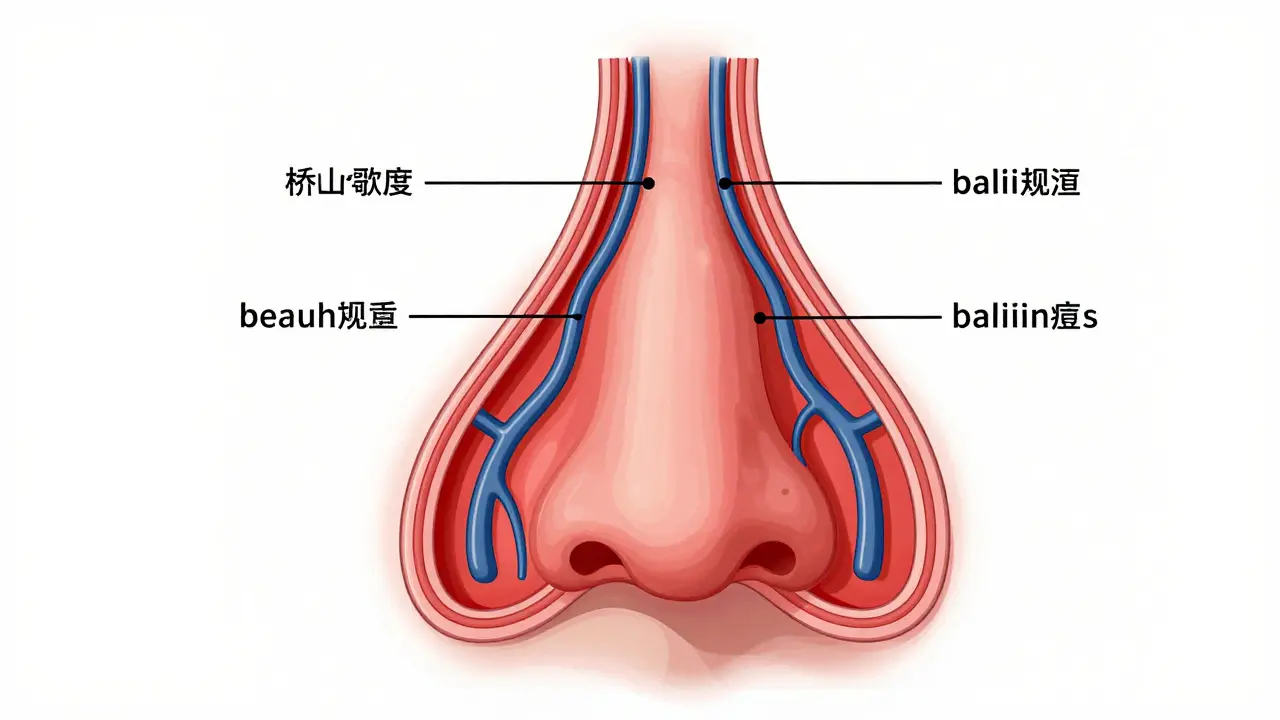
To fix the problem, you first need to understand why it happens. Nasal decongestant sprays work by constricting the blood vessels in your nasal passages. When those vessels shrink, swelling goes down, and air flows freely. However, your body fights back against this artificial constriction. Once the medication wears off, the blood vessels dilate-or expand-even more than they did before. This is called rebound vasodilation.
The result? Your nose feels completely blocked again. Because you’re uncomfortable, you reach for the spray. But now, the spray doesn’t last as long. You start using it more frequently. Over time, the nasal mucosa-the lining of your nose-becomes inflamed, red, and granular. In severe, untreated cases, the tissue can become atrophic and crusty, leading to chronic mouth breathing, dry mouth, and loud snoring. The NHS warns that using these sprays for more than one week makes your stuffiness worse, with studies showing that 92% of users who exceed ten days develop some degree of rebound congestion.
Identifying the Signs Early
Catching rhinitis medicamentosa early is crucial for a quick recovery. Most patients follow a predictable pattern. For the first three to five days, the spray works perfectly. Then, the relief starts wearing off faster. You find yourself spraying twice a day, then three times, then every few hours. If you notice this escalation, stop and assess your situation.
Look for these specific signs:
- Dependency: You cannot breathe through your nose without the spray.
- Frequency Increase: You are using the product more often than the label suggests.
- Duration: You have been using the spray for more than three to seven days.
- Physical Changes: Your nasal passages feel raw, dry, or bleed easily.
If you check any of these boxes, you are likely developing medication-induced nasal congestion. Ignoring it won’t make it go away; it will only deepen the dependency.
Strategies for Breaking the Cycle
The good news is that rhinitis medicamentosa is reversible. The primary treatment, universally agreed upon by major medical institutions like the Mayo Clinic and the Cleveland Clinic, is stopping the offending spray. However, "just stop" is easier said than done. Quitting cold turkey can lead to severe congestion that keeps you awake and miserable. Here are the most effective, evidence-based strategies to manage the withdrawal.
The One-Nostril Method
Many patients find success with the "one-nostril-at-a-time" approach. Instead of stopping the spray in both nostrils simultaneously, you stop using it in one nostril while continuing to use it sparingly in the other. Wait until the first nostril heals and breathes normally on its own-this usually takes about a week. Then, stop the spray in the second nostril. Patient surveys indicate that 63% of people who tried this method found their symptoms manageable compared to only 41% who quit both sides at once. It allows you to keep one airway open while the other resets.
Intranasal Corticosteroids
While you wean off the decongestant, you need something to reduce the inflammation. Intranasal corticosteroids are the gold standard here. Sprays containing mometasone furoate (like Nasonex) or fluticasone propionate (like Flonase) help calm the swollen tissues. Clinical studies show that using these steroids consistently for two to four weeks during withdrawal reduces symptoms by 68-75%. Unlike decongestants, steroids do not cause rebound effects. They take a few days to kick in, so patience is key.
Saline Irrigation
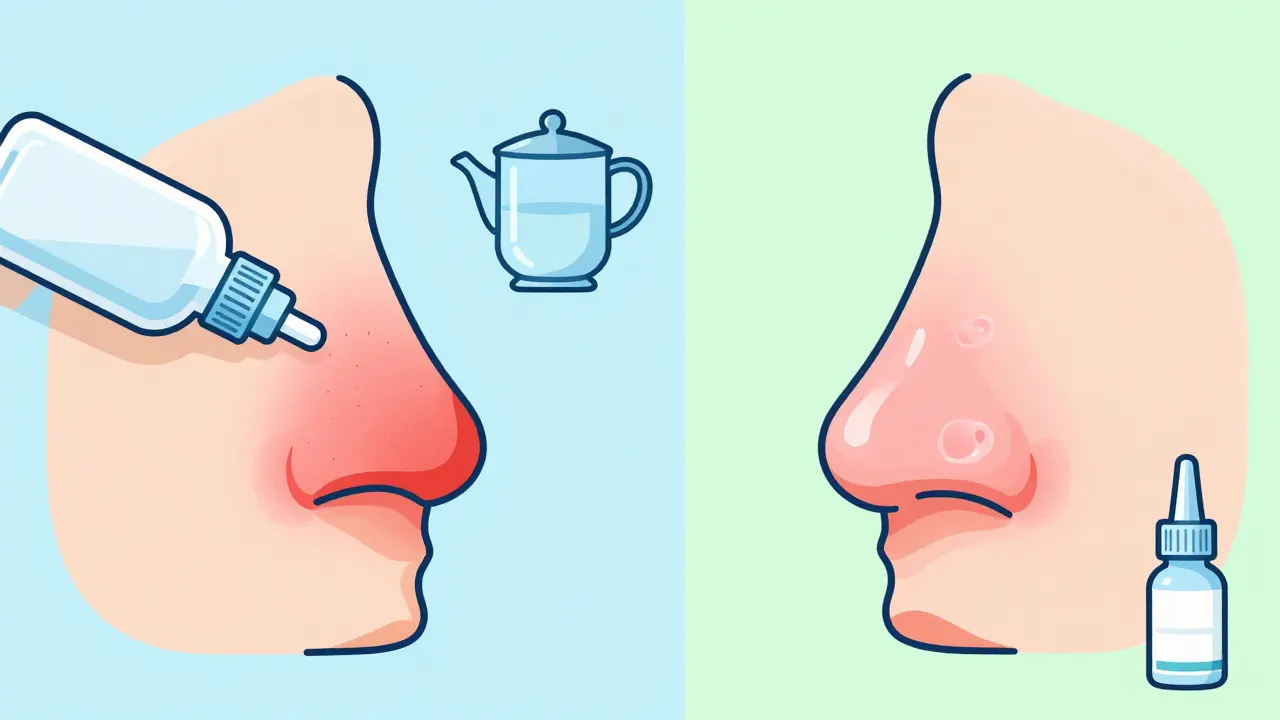
Simple salt water can be surprisingly powerful. Saline nasal irrigation helps flush out mucus, allergens, and irritants while keeping the nasal passages moist. A 2022 systematic review in the Journal of Allergy and Clinical Immunology found that saline irrigation provided symptomatic relief for 60% of patients suffering from rebound congestion. Use a neti pot or a squeeze bottle with distilled or boiled water mixed with saline packets. Do this every two to three hours during the worst days of withdrawal.
Managing Withdrawal Symptoms
Stopping the spray is hard. Be prepared for a rough patch. Most people experience peak discomfort in the first three to seven days. During this time, you might feel constantly congested, unable to sleep, and frustrated. Here is how to cope:
- Humidify the Air: Dry air worsens congestion. Use a cool-mist humidifier in your bedroom, especially if you live in a dry climate like parts of the western US.
- Elevate Your Head: Sleep with extra pillows to help drain your sinuses and reduce nighttime congestion.
- Stay Hydrated: Drinking plenty of water thins mucus, making it easier to clear.
- Avoid Triggers: Stay away from smoke, strong perfumes, and dust, which can further irritate your sensitive nasal lining.
Some doctors may prescribe a short course of oral corticosteroids, such as prednisone, for severe cases. In a 2021 multicenter trial, this approach showed an 82% efficacy rate. However, this is a prescription-only option and should only be used under strict medical supervision due to potential side effects.
Comparison of Management Approaches
| Method | How It Works | Efficacy/Success Rate | Key Considerations |
|---|---|---|---|
| Complete Discontinuation | Stops the cycle of dependency | High (if adhered to) | Severe initial congestion; requires patience |
| One-Nostril Approach | Gradual weaning by treating one side at a time | 63% report manageable symptoms | More comfortable than cold turkey; takes longer |
| Intranasal Corticosteroids | Reduces inflammation in nasal tissues | 68-75% symptom reduction | Takes days to work; no rebound effect |
| Saline Irrigation | Flushes irritants and moisturizes membranes | 60% symptomatic relief | Safe for daily use; must use sterile water |
| Oral Corticosteroids | Systemic anti-inflammatory action | 82% efficacy in trials | Prescription only; short-term use only |

Preventing Future Episodes
Once you’ve recovered, the goal is to never go back. Prevention is far easier than cure. The FDA mandated stronger warning labels on all over-the-counter nasal decongestants in December 2022, requiring clear "DO NOT USE MORE THAN 3 DAYS" warnings in large font. Pay attention to these limits.
Switch to safer alternatives for occasional congestion. Saline sprays can be used indefinitely without risk. For allergies, antihistamines or steroid nasal sprays are better long-term solutions than decongestants. If you have high blood pressure, be extra cautious with oral decongestants like pseudoephedrine, as they can raise blood pressure significantly. A study at Massachusetts General Hospital found that 1 in 7 hypertensive patients experienced dangerous blood pressure spikes when using these drugs.
Educate yourself and your family. Only 28% of patients receive proper usage instructions when buying OTC decongestants, according to a 2022 JAMA Otolaryngology study. Read the labels. Ask your pharmacist. And remember: if your nose needs a spray to breathe after three days, it’s time to switch strategies.
When to See a Doctor
While most cases of rhinitis medicamentosa resolve with self-care, some situations require professional help. Consult an ENT specialist or primary care physician if:
- You have tried quitting for two weeks with no improvement.
- You experience frequent nosebleeds or severe pain.
- You suspect you have nasal polyps (growths in the nasal passages), which can develop from chronic inflammation.
- You have underlying conditions like asthma or heart disease that complicate your treatment options.
Doctors can offer additional treatments, such as capsaicin nasal spray, which has shown promise in European trials, or surgical interventions in extreme, refractory cases. Don’t suffer in silence; help is available.
How long does it take to recover from rebound congestion?
Recovery typically takes 7 to 14 days. The first three to seven days are usually the hardest, with severe congestion. Most people see significant improvement within two weeks of stopping the decongestant spray and starting alternative treatments like corticosteroids or saline irrigation.
Can I use Flonase to treat rhinitis medicamentosa?
Yes. Flonase (fluticasone propionate) is an intranasal corticosteroid that helps reduce inflammation without causing rebound congestion. It is widely recommended by doctors as a first-line therapy during the withdrawal phase from decongestant sprays. It may take a few days to start working effectively.
Is it safe to use Afrin for more than 3 days?
No. Using Afrin (oxymetazoline) or similar decongestant sprays for more than three to five days significantly increases the risk of developing rhinitis medicamentosa. The longer you use it, the harder it becomes to stop, and the worse the rebound congestion becomes.
What is the best way to stop using nasal decongestants?
The most comfortable method for many people is the "one-nostril-at-a-time" approach. Stop using the spray in one nostril while continuing limited use in the other until the first one heals. Combine this with intranasal corticosteroids and saline rinses to manage symptoms during withdrawal.
Does saline rinse help with medication-induced congestion?
Yes. Saline irrigation helps flush out irritants and keeps the nasal passages moist, providing relief for about 60% of patients. It is a safe, non-medicated option that can be used multiple times a day to support healing during the withdrawal process.
Can rebound congestion cause permanent damage?
In rare, chronic cases, long-term overuse can lead to structural changes in the nasal lining, such as atrophy or the development of nasal polyps. However, most cases are fully reversible with proper treatment and discontinuation of the offending medication.