Medications During Menopause: Navigating Hormone-Related Side Effect Changes
 Aug, 5 2026
Menopause Medication & Symptom Checker
Your Profile
Analysis Results
Enter your details and click "Analyze" to see personalized insights.
Menopause changes the way your body processes medication. It is not just about hot flashes or sleepless nights; it is a fundamental shift in how your hormones interact with drugs. If you are managing other health conditions, this transition can turn a stable medication regimen into a guessing game. You might find that a dose that worked for years suddenly causes nausea, dizziness, or unexpected bleeding. Understanding these medications during menopause is crucial for staying safe and comfortable.
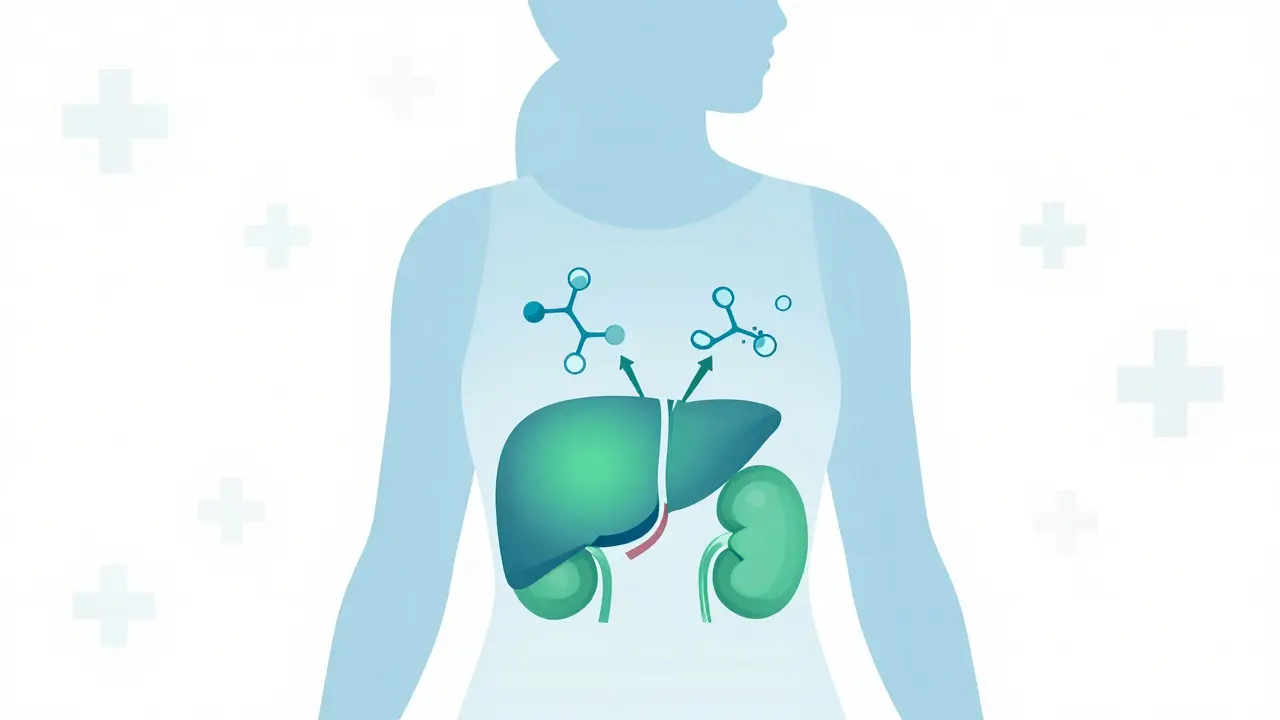
The drop in estrogen affects liver enzymes, kidney function, and fat distribution. Since many drugs are metabolized by the liver or excreted by the kidneys, their effectiveness and toxicity profiles change. This article breaks down what happens to common medications during this life stage, how hormone replacement therapy (HRT) interacts with them, and what alternatives exist if side effects become unmanageable.
How Estrogen Decline Alters Drug Metabolism
Estrogen does more than regulate your cycle; it influences the activity of cytochrome P450 enzymes in your liver. These enzymes are responsible for breaking down a vast array of medications. When estrogen levels plummet during perimenopause and menopause, the speed at which your liver processes certain drugs slows down. This means standard doses can build up in your system, leading to higher concentrations than intended.
| Medication Class | Common Examples | Metabolic Change | Potential Side Effects |
|---|---|---|---|
| Benzodiazepines | Alprazolam, Diazepam | Slower clearance | Increased sedation, confusion, fall risk |
| Opioids | Codeine, Tramadol | Reduced metabolism | Nausea, constipation, respiratory depression |
| SSRIs/SNRIs | Sertraline, Venlafaxine | Variable response | Insomnia, jitteriness, or reduced efficacy |
| Statins | Atorvastatin, Rosuvastatin | Increased sensitivity | Muscle pain (myalgia), elevated liver enzymes |
For example, benzodiazepines used for anxiety may stay in your system longer, causing excessive daytime drowsiness or balance issues. Similarly, statins, which protect heart health, can cause more muscle pain as estrogen’s protective effect on muscles wanes. If you notice new or worsening side effects from long-term prescriptions, do not stop taking them abruptly. Instead, ask your doctor if a dosage adjustment is needed based on your current hormonal status.
Hormone Replacement Therapy (HRT): Risks and Realities
Hormone Replacement Therapy (HRT) is a treatment using estrogen and sometimes progestin to replace declining hormones. It remains the most effective option for moderate-to-severe vasomotor symptoms like hot flashes and night sweats. However, it comes with a complex risk profile that varies significantly based on age, timing, and delivery method.
The FDA warns that systemic HRT can increase the risk of blood clots, stroke, and breast cancer in some women. According to data from the Women’s Health Initiative, combination estrogen-progestin therapy may raise the risk of heart attack by 29% and stroke by 41%. Yet, these statistics often lack context. The "window of opportunity" hypothesis suggests that starting HRT before age 60 or within 10 years of menopause onset yields a favorable benefit-risk ratio. For healthy women in this window, the relief from debilitating symptoms often outweighs the small absolute increase in risk.
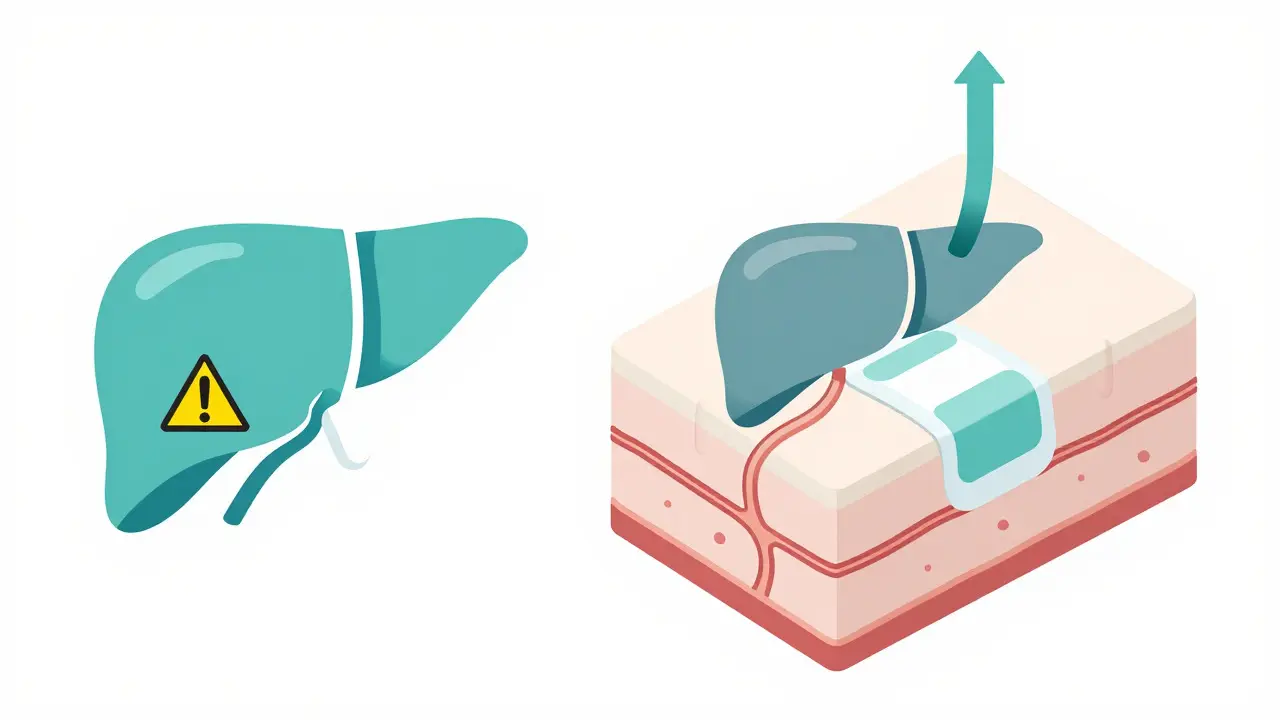
Delivery methods matter immensely. Oral pills pass through the liver, increasing the production of clotting factors and raising the risk of venous thromboembolism. Transdermal options, such as patches or gels, bypass the liver entirely. Studies show that transdermal estrogen reduces the risk of blood clots by 30-40% compared to oral formulations. If you have a history of migraines with aura, high blood pressure, or gallbladder disease, discuss transdermal options with your provider.
Common Side Effects of Menopausal Medications
Even when prescribed correctly, HRT and other menopausal medications can cause uncomfortable side effects. Knowing what to expect helps you distinguish between normal adjustment periods and signs that require medical attention.
- Vaginal Bleeding: Occurs in 30-50% of users, especially in the first six months. While often benign, persistent or heavy bleeding requires immediate evaluation to rule out endometrial hyperplasia.
- Breast Tenderness: Reported by 20-30% of users. This usually subsides as the body adjusts to the new hormone levels.
- Bloating and Fluid Retention: Affects 15-25% of users. Reducing sodium intake and switching to lower-dose formulations can help mitigate this.
- Headaches: Experienced by 10-20% of users. Hormonal fluctuations can trigger migraines in susceptible individuals.
- Mood Changes: While HRT often improves mood, 12-18% of users report increased irritability or depression initially.
If side effects persist beyond three months, they are unlikely to resolve on their own. Your provider can adjust the dose, switch the type of estrogen (e.g., from conjugated equine estrogen to estradiol), or change the delivery route. Do not suffer in silence; there are multiple formulation options available.
Non-Hormonal Alternatives for Symptom Relief
Not everyone can or wants to take hormones. Women with a history of breast cancer, stroke, heart attack, or blood clots are generally advised against systemic HRT. Fortunately, several non-hormonal medications offer significant relief.
Selective Serotonin Reuptake Inhibitors (SSRIs) and Selective Norepinephrine Reuptake Inhibitors (SNRIs), originally developed for depression, reduce hot flashes by 50-60% in many users. Paroxetine mesylate is specifically FDA-approved for this purpose. Gabapentin, an anticonvulsant, reduces hot flash frequency by 45% and can also improve sleep quality. Clonidine, a blood pressure medication, offers modest relief but often causes dry mouth and drowsiness.
For vaginal dryness and painful intercourse (dyspareunia), local treatments are highly effective without systemic absorption. Vaginal moisturizers and lubricants are first-line defenses. The FDA-approved vaginal DHEA insert (Intrarosa) improves tissue health and reduces pain in 70% of users by converting locally into estrogen. Ospemifene, an oral selective estrogen receptor modulator (SERM), targets vaginal tissues while minimizing effects on the breast and uterus.
Drug Interactions and Safety Checks
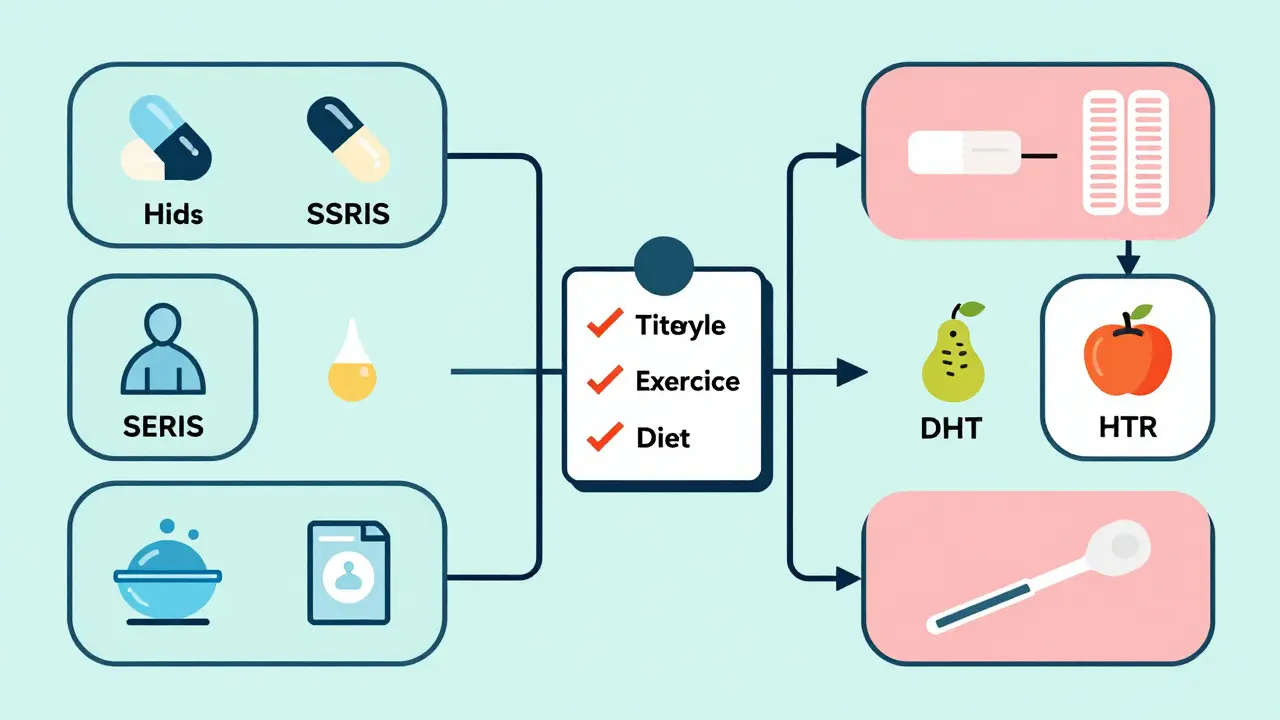
Adding HRT or non-hormonal agents to your regimen introduces potential interactions. For instance, combining SSRIs with triptans for migraines increases the risk of serotonin syndrome, a rare but serious condition. St. John’s Wort, a popular herbal supplement, induces liver enzymes that break down estrogen rapidly, rendering HRT ineffective. Conversely, grapefruit juice inhibits these enzymes, potentially leading to toxic levels of certain medications.
Always maintain an updated list of all prescription drugs, over-the-counter medications, and supplements. Share this list with every healthcare provider you see. Pharmacists are excellent resources for checking interactions; use them. If you are taking anticoagulants like warfarin, monitor your INR closely when starting or stopping HRT, as estrogen can alter clotting times.
Personalizing Your Treatment Plan
There is no one-size-fits-all approach to menopause management. Your ideal plan depends on your symptom severity, medical history, age, and personal preferences. Start with the lowest effective dose for the shortest duration necessary. Reassess annually with your provider. Ask yourself: Are my symptoms improving? Are side effects manageable? Is my cardiovascular health protected?
Lifestyle modifications remain foundational. Regular weight-bearing exercise protects bone density and improves insulin sensitivity. A diet rich in phytoestrogens (soy, flaxseeds) may provide mild symptom relief for some women, though evidence is mixed. Stress reduction techniques like mindfulness and cognitive behavioral therapy (CBT) can significantly impact perceived symptom burden and overall well-being.
Can I take HRT if I had breast cancer?
Generally, systemic HRT is contraindicated for women with a history of hormone-receptor-positive breast cancer due to the risk of recurrence. However, local vaginal estrogen or DHEA inserts may be considered under strict oncologist supervision for severe genitourinary symptoms, as systemic absorption is minimal. Always consult your oncologist before starting any hormonal therapy.
Why do patches cause fewer side effects than pills?
Patches deliver estrogen directly through the skin into the bloodstream, bypassing the liver. Oral pills undergo "first-pass metabolism" in the liver, which increases the production of clotting factors and triglycerides. By avoiding this hepatic processing, patches significantly reduce the risk of blood clots, gallbladder disease, and lipid abnormalities.
How long should I stay on HRT?
There is no fixed timeline. Many women use HRT for 3-5 years to manage acute symptoms. Others continue longer for bone protection or chronic symptom control. The decision should be re-evaluated annually. If benefits outweigh risks, continuing beyond five years is acceptable for many healthy women, provided regular screening is maintained.
Do herbal supplements like black cohosh work?
Evidence for black cohosh is mixed. Large randomized controlled trials have shown inconsistent results, with some studies finding no benefit over placebo. Additionally, herbal supplements are not regulated as strictly as pharmaceuticals, leading to variability in potency and purity. They can also interact with liver-metabolized drugs. Use caution and discuss with your doctor before starting any herbal remedy.
What if I miss a dose of my HRT pill?
Take the missed dose as soon as you remember. If it is almost time for your next scheduled dose, skip the missed one and continue your regular schedule. Never double up on doses to make up for a missed one, as this can spike hormone levels and increase side effects like nausea and breast tenderness.
Christina Thygesen
August 7, 2026 AT 05:16honestly this is so scary to read because i have been taking the same dose of my anxiety meds for like five years and suddenly i feel like a zombie during the day
i never connected it to menopause until now but maybe that is why i am always tired
Minal Aditi
August 7, 2026 AT 11:53oh look another article telling women their bodies are broken and need fixing with more chemicals
typical medical industrial complex nonsense designed to keep us dependent on prescriptions forever
who benefits here exactly? the pharma companies or us? think about it
Marc H
August 8, 2026 AT 16:14absolutely riveting stuff right there
nothing says romance like discussing liver enzyme degradation over dinner
my wife tried to explain this to me last week and i just nodded while thinking about football
she said i was being dismissive which is rich coming from someone reading articles about cytochrome P450
Chris McQuaid
August 9, 2026 AT 18:52the part about grapefruit juice is actually crucial because most people ignore it
i took statins for years and drank orange juice every morning not realizing i should have been checking interactions
it is wild how much we assume doctors know everything about our diet when they barely ask what we eat
sam howard
August 10, 2026 AT 22:02statins cause muscle pain yeah no kidding
why do doctors still push them so hard when the side effects are basically living in hell
just cut back on cheese and walk more instead of poisoning your liver with synthetic garbage
Samuel Hershberger
August 11, 2026 AT 23:16great point about the transdermal patches bypassing the liver
i switched from pills to a patch two years ago and the bloating disappeared almost immediately
if you are struggling with oral HRT side effects definitely ask your provider about switching delivery methods it can make a huge difference in quality of life
Diane Nash
August 13, 2026 AT 04:43one must consider the philosophical implications of hormonal decline as a natural process versus a pathological condition requiring intervention
the medicalization of menopause reflects a broader societal discomfort with aging rather than a genuine physiological crisis
yet the data regarding liver metabolism is undeniably significant and warrants careful consideration by all stakeholders involved in healthcare decisions
Alli Crumley
August 13, 2026 AT 16:21lol seriously? philosophy? 🙄
listen up you pseudo-intellectuals
the bio-availability metrics clearly indicate that first-pass metabolism is the primary culprit for thromboembolic events
stop overthinking it and start looking at the pharmacokinetics if you want to stay alive
basic biology 101 folks
Mathew Stuckey
August 14, 2026 AT 22:06thanks for sharing this info 😊
i had no idea gabapentin could help with hot flashes
going to talk to my doc about trying it since i dont want hormones right now 🌿
John Divers
August 15, 2026 AT 12:08the consensus seems to be that individualized care is paramount
what works for one patient may contraindicate another due to varying metabolic profiles
collaboration between patient and provider is essential for optimal outcomes
Ambria St louis
August 15, 2026 AT 16:53I have found that tracking my symptoms alongside my medication changes has been incredibly insightful! It helps to see the correlation between dosage adjustments and physical responses.
For instance, I noticed that my mood swings stabilized significantly after reducing my SSRI dose, which aligns perfectly with the variable response mentioned in the article!
It is vital to advocate for oneself during these appointments, ensuring that all concerns are addressed comprehensively!
Dennis Leeftink
August 15, 2026 AT 17:07doctors are clueless
they just throw drugs at you and hope something sticks
i stopped taking mine and feel fine now
science is fake anyway
Traci Bobbitt
August 16, 2026 AT 14:38nah you dumbass
stopping meds cold turkey is how you end up in the ER
read the whole thing before posting trash
your body processes drugs differently now deal with it
Sansaray Jones
August 17, 2026 AT 11:05interesting read
Anna Salamon
August 18, 2026 AT 05:24This is such an important topic that often gets overlooked in general health discussions. We need to normalize talking about how our bodies change and adapt throughout different life stages. The information about liver enzymes slowing down is particularly eye-opening for those of us managing chronic conditions. It really highlights the need for regular check-ins with healthcare providers who understand these nuances. Thank you for bringing this to light and encouraging open dialogue about medication safety during menopause.