Medicaid and Generics: How Low-Income Patients Save on Prescription Costs
 Aug, 22 2026
Walking into a pharmacy with a $50 brand-name prescription can feel like a small financial crisis for someone living paycheck to paycheck. But if you are enrolled in Medicaid is a joint federal-state health insurance program established in 1965 that provides coverage for low-income individuals, the story changes dramatically. For most beneficiaries, the pill bottle costs just a few dollars. This isn't magic; it’s the result of a complex interplay between generic drugs, government rebate programs, and strict formulary management. Understanding how this system works helps explain why your out-of-pocket costs are so low compared to private insurance holders.
The Power of Generic Drugs in Medicaid
You might not realize just how dominant Generic Drugs are medications that are bioequivalent to brand-name versions but sold at lower prices after patent expiration within the Medicaid system. According to the Association for Accessible Medicines (AAM), roughly 90% to 91% of all prescriptions filled under Medicaid are for generics. That is a massive volume. Yet, these drugs account for only about 18% of total Medicaid prescription spending. Why such a disparity? Because while you fill them often, they are cheap per unit.
The average copay for a generic medication for a Medicaid beneficiary is approximately $6.16. In stark contrast, the average copay for a brand-name drug sits at $56.12. That is nearly nine times more expensive. For a family managing a tight budget, the difference between paying $6 and $56 for a monthly supply of blood pressure medication or an asthma inhaler is the difference between staying on top of bills or falling behind. The data shows that 93% of generic prescriptions are dispensed for less than $20 at the counter, whereas only 59% of brand-name drugs fall into that affordable bracket.
How Rebates Keep Prices Low
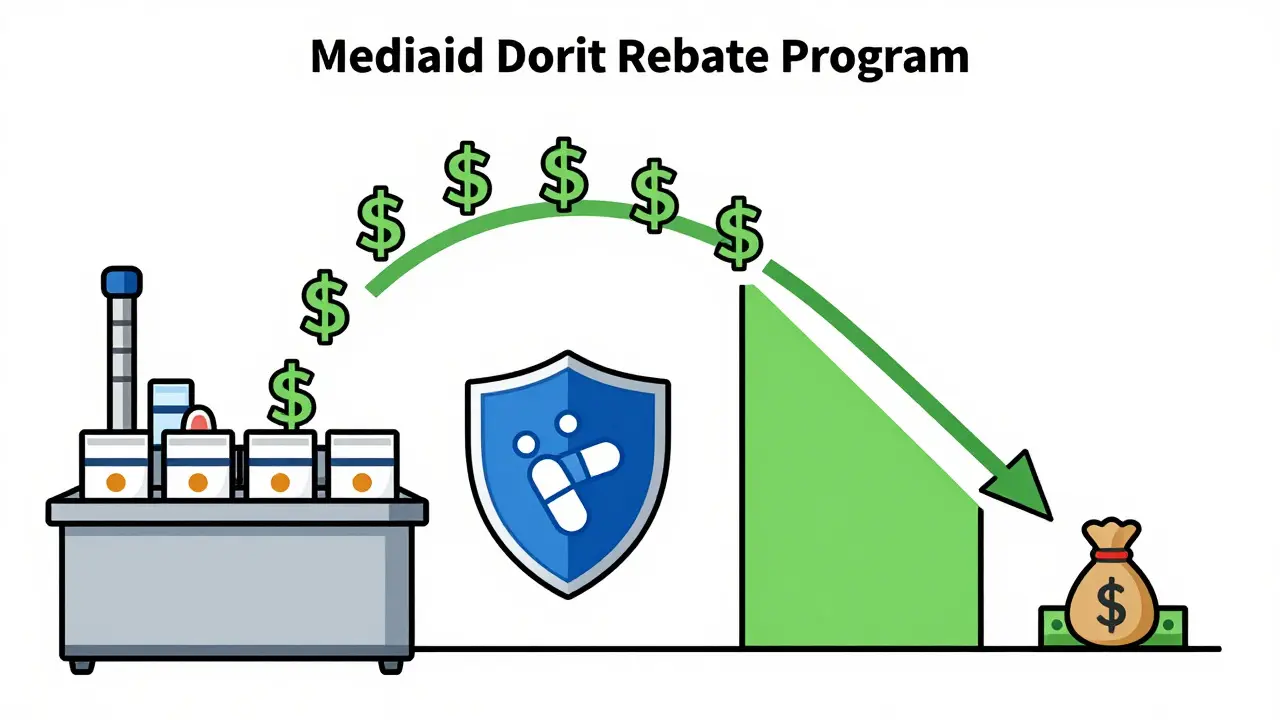
Low copays don't happen by accident. They are driven by the Medicaid Drug Rebate Program (MDRP) is a federal program requiring drug manufacturers to provide discounts to state Medicaid programs in exchange for coverage. Established in 1990, this program forces pharmaceutical companies to give back a significant portion of their revenue. If a manufacturer wants its drug covered by Medicaid, they must offer a rebate based on the lowest price they give any other customer, plus an additional percentage.
In Fiscal Year 2023, these rebates reduced overall gross federal and state Medicaid prescription drug spending by 51.2%, which amounted to $53.7 billion. To put that in perspective, for non-specialty generic drugs, Medicaid obtained average rebates equal to 86% of the average retail price. Essentially, the government pays a fraction of what the sticker price suggests, and that discount flows down to the patient's copay. A 2021 Congressional Budget Office study confirmed that Medicaid obtains the lowest net prescription drug prices among all federal programs, even beating out the Department of Veterans Affairs.
Comparing Medicaid Savings to Other Programs
It is helpful to see where Medicaid stands against other payment sources. While commercial insurance also uses generics heavily, the rebate structures differ significantly. Private insurers often negotiate different deals, and patients may face higher deductibles or coinsurance rates. In comparison, Medicaid’s structure is designed specifically to minimize out-of-pocket costs for those with limited income.
| Metric | Medicaid Generics | Medicaid Brand-Name |
|---|---|---|
| Average Copay | $6.16 | $56.12 |
| % of Prescriptions Filled | ~90% | ~10% |
| % of Total Spending | ~18% | ~82% |
| Rebate Rate (Avg.) | 86% of Retail Price | 77% of Retail Price |
This table highlights the efficiency of the system. Even though brand-name drugs make up the bulk of the *spending* due to high unit costs, they represent a tiny fraction of the *volume*. The system is engineered to push utilization toward generics whenever medically appropriate.
Navigating the Formulary and Prior Authorization
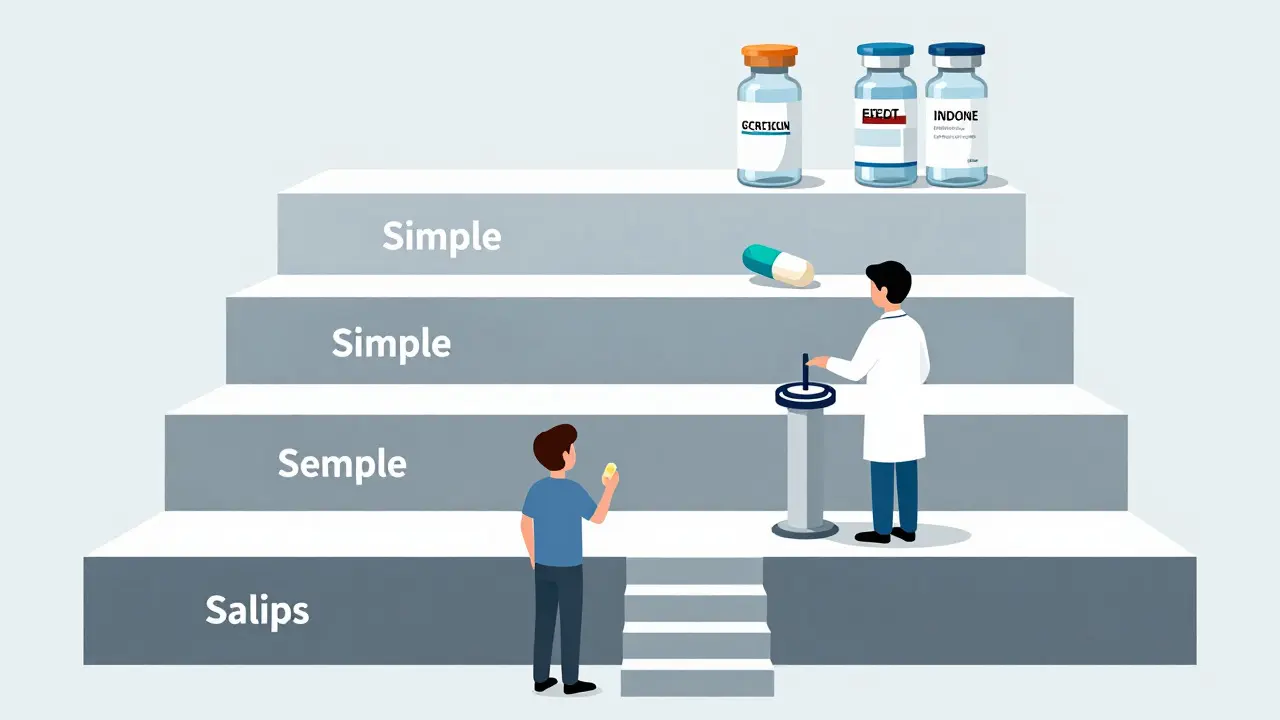
While the savings are real, the path to getting them isn't always smooth. Most states use a tiered formulary system. Tier 1 usually contains preferred generics, which have the lowest copays. Tier 2 includes non-preferred generics, Tier 3 covers brand-name drugs, and Tier 4 is reserved for specialty medications. If your doctor prescribes a brand-name drug when a generic equivalent exists, the pharmacy may automatically substitute the generic unless the doctor specifies otherwise. This automatic substitution is a key driver of cost containment.
However, some medications require prior authorization. This means the doctor must get approval from the insurance plan before the pharmacy fills the script. About 15-20% of prescriptions involve this step. Users on forums like r/Medicaid often share stories of delays. One user noted that switching their daughter’s asthma inhaler to a generic dropped the copay from $25 to $3, but the approval process took three weeks and multiple phone calls. It is a trade-off: you save money, but you might wait longer. Knowing your specific state’s rules is crucial, as 48 states now deliver pharmacy benefits through Managed Care Organizations (MCOs), each with slightly different processes.
The Challenge of High-Cost Specialty Drugs
If generics are the backbone of savings, specialty drugs are the growing headache. These are high-cost treatments for conditions like cancer, rheumatoid arthritis, or multiple sclerosis. In FY 2021, drugs costing over $1,000 per claim accounted for less than 2% of utilization but more than half of total Medicaid drug spending. This shift is driving up overall costs despite the high generic fill rate.
Net spending on prescription drugs increased by 72% from $30 billion in FY 2017 to $51 billion in FY 2023. Much of this growth comes from these expensive biologics. To combat this, CMS launched the GENEROUS Model in 2024, aiming to reduce costs through better utilization management. Additionally, there is hope in biosimilars-generic versions of biologic drugs. As more biologics lose patent protection, biosimilars could generate an estimated $100 billion in annual savings by 2027, potentially reversing the trend of rising specialty drug costs.
Practical Tips for Beneficiaries
So, how do you maximize these savings in your daily life? First, always ask your pharmacist if a generic alternative is available. If your doctor insists on a brand name, ask why. Often, there is no medical reason, and the switch saves you tens of dollars. Second, check your state’s Medicaid website for your specific formulary. Some plans cover certain brands without prior auth, while others are strict. Third, be aware of Pharmacy Benefit Manager (PBM) fees. Recent audits in Ohio revealed PBMs taking 31% fees on generic drugs, which can inflate costs indirectly. While you don't pay this fee directly, it affects the overall budget and can lead to tighter formularies later.
- Verify Substitutions: Ensure your pharmacy is substituting generics automatically where allowed.
- Review Your Formulary: Know which tier your medications fall into to predict your copays.
- Communicate with Providers: Let your doctor know if a brand-name drug causes financial strain; they may be able to prescribe a cheaper equivalent.
- Monitor Changes: Formulary updates happen annually. Check if your maintenance medications moved tiers.
Frequently Asked Questions
Are generic drugs exactly the same as brand-name drugs?
Yes, for therapeutic purposes. The FDA requires generic drugs to have the same active ingredients, dosage form, strength, quality, performance, and intended uses as the brand-name version. They may look different in color or shape, but they work the same way in your body.
Why is my Medicaid copay sometimes higher for a generic?
This can happen if the generic is on a 'non-preferred' tier of your formulary, or if your plan has changed its reimbursement rates. It can also occur if the brand-name drug was previously authorized and the switch to generic triggered a new prior authorization review, temporarily affecting pricing.
Does Medicaid cover all generic drugs?
Most, but not all. States must cover all medically necessary drugs, but they can create a formulary list. If a generic is not on the list, you might need prior authorization or may have to pay a higher copay if you insist on it over a preferred alternative.
How do biosimilars differ from standard generics?
Biosimilars are similar to biologics (complex proteins made in living cells) rather than simple chemical compounds. They are not exact copies but are highly similar and have no clinically meaningful differences. They are generally more expensive than standard generics but much cheaper than the original biologic brand names.
Will my copay increase if I switch from a brand-name to a generic?
Usually, it decreases. Generics are typically in the lowest cost tier. However, if your plan has a 'step therapy' requirement, you might be required to try the generic first. Once approved, the copay should drop significantly compared to the brand-name option.