Lopinavir/Ritonavir Boosting: Understanding CYP3A4 Interactions and Risks
 Jun, 13 2026
Lopinavir/Ritonavir Interaction Checker
Check for Interactions
Select a medication you are currently taking to see how it interacts with Lopinavir/Ritonavir.
No Selection Made
Select a medication from the list to analyze its interaction profile with Lopinavir/Ritonavir.
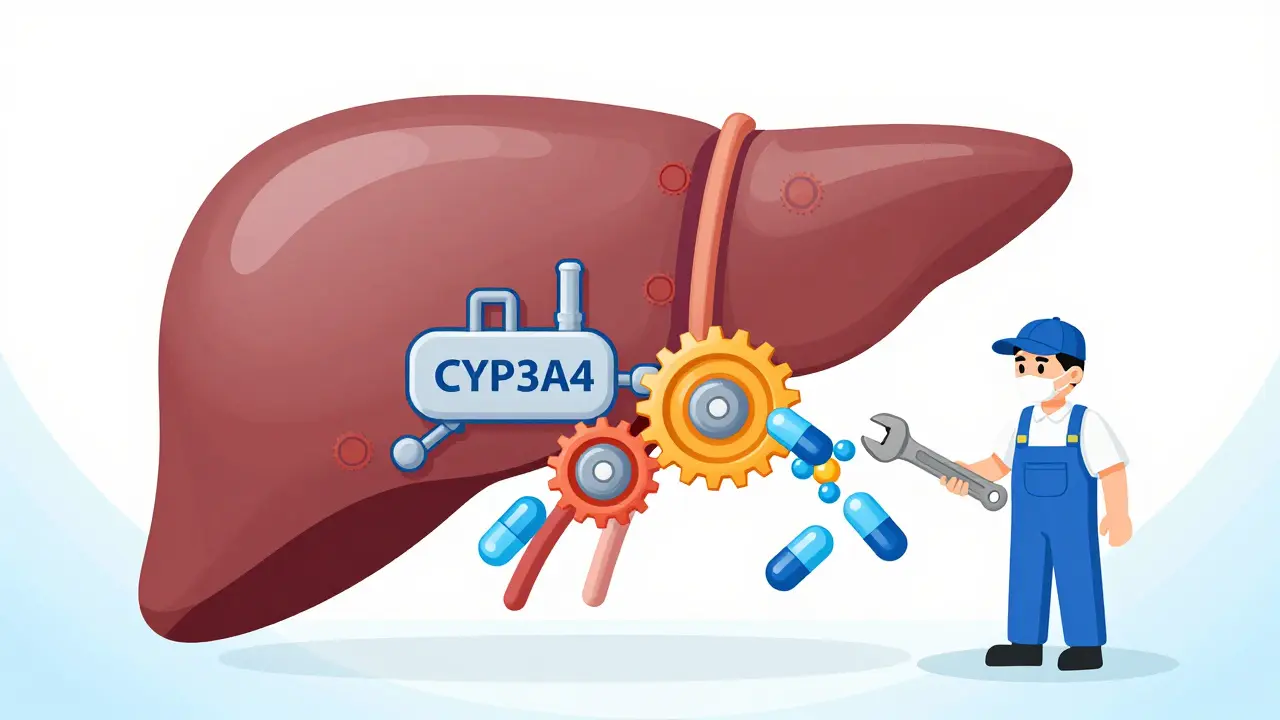
Imagine taking a medication that doesn't just treat your condition but also acts as a traffic controller for every other pill in your system. That is exactly what happens when you take Lopinavir/Ritonavir, commonly known by the brand name Kaletra. This combination therapy was designed to fight HIV-1, but its real secret weapon-and its biggest headache-is how it manipulates your liver's enzymes. Specifically, it targets the Cytochrome P450 3A4 (CYP3A4) enzyme, which handles about half of all prescribed medications. If you are on this drug, or if you are prescribing it, understanding these widespread interactions isn't just academic; it is a matter of safety.
The concept here is called "pharmacokinetic boosting." Lopinavir is the actual antiviral agent, but it gets broken down too quickly by your body to be effective at reasonable doses. Enter Ritonavir. You don't take Ritonavir for its own antiviral power in this mix; you take it to shut down the enzyme that destroys Lopinavir. It’s like putting a cork in a bottle so the good stuff stays inside longer. But because Ritonavir is such a potent inhibitor, it doesn't just stop the breakdown of Lopinavir. It slows down the metabolism of countless other drugs, leading to dangerous buildups in your bloodstream.
How Ritonavir Boosting Works
To grasp why these interactions are so severe, we need to look at the mechanics. Ritonavir is not just a mild blocker; it is a mechanism-based inactivator of CYP3A4. Think of CYP3A4 as a factory line in your liver that processes toxins and drugs. Ritonavir walks onto that line and essentially smashes the machinery. It does this through several methods, including forming tight complexes with the heme group of the enzyme and even causing covalent attachments that permanently disable the enzyme's function.
When Ritonavir is present, the metabolic clearance of Lopinavir drops by more than 85%. Without this boost, Lopinavir would have a short half-life of roughly 7 hours, requiring frequent dosing. With the boost, the concentration stays therapeutic for much longer, allowing for a twice-daily regimen instead of three times a day. This improves adherence, which is critical in HIV treatment. However, this same "smashing" effect applies to any other drug that relies on CYP3A4 for clearance. The result? Those other drugs stay in your system way longer and at higher concentrations than intended.
| Agent | Primary Target | Interaction Breadth | Clinical Use Case |
|---|---|---|---|
| Ritonavir | CYP3A4 (Strong Inhibitor) | Very High (Also induces CYP1A2, CYP2B6, etc.) | HIV (Legacy), COVID-19 (Paxlovid) |
| Cobicistat | CYP3A4 (Selective Inhibitor) | Moderate (Fewer induction effects) | HIV (Modern regimens) |
The Double-Edged Sword: Induction vs. Inhibition
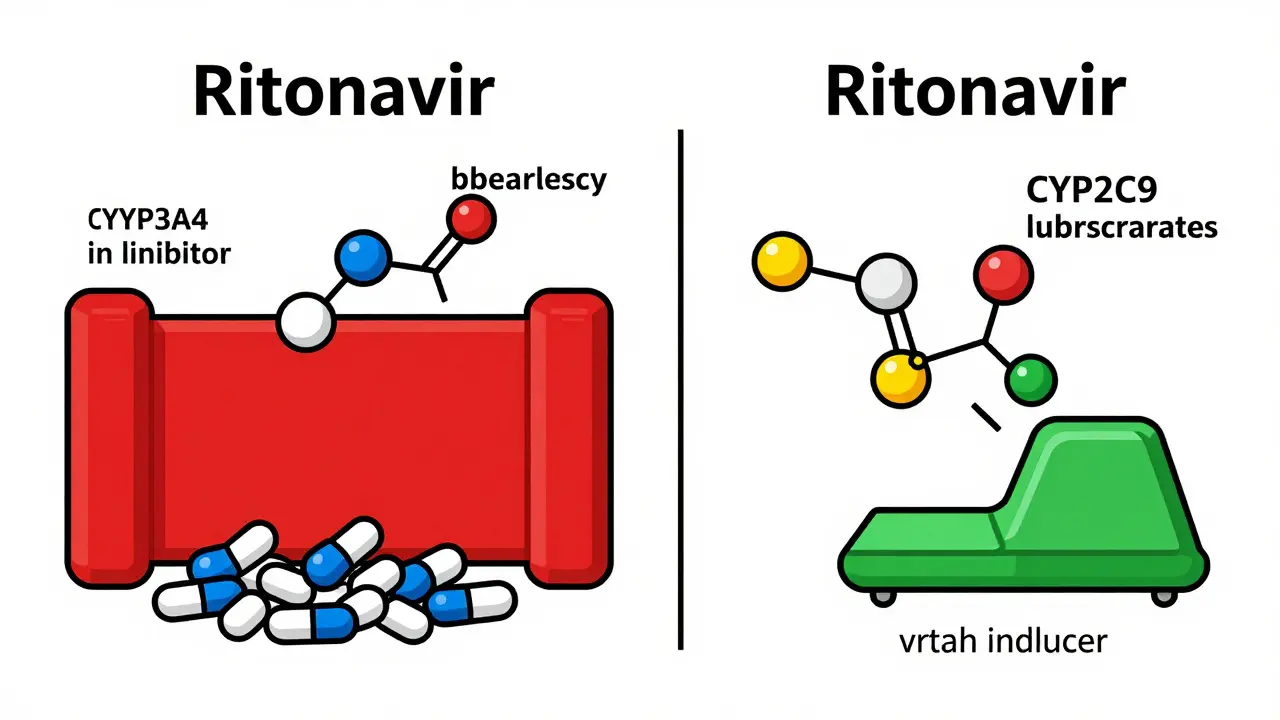
Here is where things get tricky. While Ritonavir is famous for inhibiting CYP3A4, it has a split personality. It is also an inducer of other enzymes, including CYP1A2, CYP2B6, CYP2C9, and CYP2C19. An inducer does the opposite of an inhibitor: it ramps up production of the enzyme, speeding up the breakdown of certain drugs. This means Ritonavir can simultaneously increase the levels of some drugs while dangerously decreasing the levels of others.
For example, if you take Warfarin, a blood thinner metabolized by CYP2C9, Ritonavir might induce that enzyme, lowering Warfarin levels and increasing your risk of clots. Conversely, if you take Midazolam, a sedative metabolized by CYP3A4, Ritonavir inhibits its breakdown, potentially increasing exposure by 500% and causing excessive sedation or respiratory depression. This dual nature makes predicting net effects difficult. Dr. David J. Back from the University of Liverpool noted that this unpredictability is a major clinical challenge, especially for patients on complex medication regimens.
Dangerous Drug Combinations to Avoid
Not all interactions are created equal, but many involving Lopinavir/Ritonavir are life-threatening. The Liverpool HIV Interactions database documents over 1,200 potential interactions. Some combinations are strictly contraindicated, meaning they should never be mixed.
- Ergot derivatives: Drugs used for migraines that rely on CYP3A4. Inhibition leads to ergotism, characterized by severe vasoconstriction, tissue necrosis, and gangrene.
- Alfuzosin: A medication for prostate enlargement. Increased levels can cause dangerous drops in blood pressure and cardiac issues.
- Rivaroxaban: A popular blood thinner. Combining it with Ritonavir significantly increases bleeding risk due to elevated drug levels.
- Voriconazole: An antifungal. Ritonavir’s induction effects can lower voriconazole levels to subtherapeutic ranges, rendering it ineffective against fungal infections.
- Statin cholesterol meds: Simvastatin and Lovastatin are heavily metabolized by CYP3A4. Inhibition can lead to rhabdomyolysis, a serious condition involving muscle breakdown that can damage kidneys.
Even common over-the-counter drugs like St. John’s Wort can interfere. As a potent inducer itself, it fights against Ritonavir’s inhibition, potentially lowering Lopinavir levels below the threshold needed to suppress HIV viral replication. This could lead to treatment failure and drug resistance.
Clinical Management and Monitoring
If you must use Lopinavir/Ritonavir, rigorous management is non-negotiable. Clinicians typically spend 15-20 minutes reviewing a patient’s full medication list before initiation. This includes prescription drugs, over-the-counter supplements, and herbal remedies. The goal is to identify any substrates of CYP3A4, CYP2D6, or the induced enzymes.
Dose adjustments are often necessary. For instance, Tacrolimus, an immunosuppressant used in transplant patients, requires a 75% dose reduction when taken with Ritonavir to avoid toxicity. Methadone, used for pain or opioid dependence, may require a 20-33% dose increase because Ritonavir induces its metabolism. Regular monitoring of drug levels, liver function tests, and clinical symptoms is essential. Patients should be educated to report any new side effects immediately, as these may signal an interaction rather than a new disease process.

Why Usage Is Declining
You might wonder why we still talk about Lopinavir/Ritonavir if it causes so many problems. The truth is, its role in high-income countries has shrunk dramatically. In the United States, less than 5% of new HIV prescriptions involve this combination. Newer antiretrovirals, particularly integrase inhibitors like Dolutegravir, offer better tolerability, fewer interactions, and simpler dosing. Even within boosted protease inhibitors, Darunavir/Cobicistat is preferred because Cobicistat selectively inhibits CYP3A4 without the messy induction effects of Ritonavir.
However, Lopinavir/Ritonavir remains vital in low- and middle-income countries. It is listed on the World Health Organization’s Essential Medicines List and costs significantly less-around $68 per person per year compared to $287 for newer agents. In resource-limited settings, its established manufacturing infrastructure and proven efficacy keep it in play. Additionally, Ritonavir found a second life in Paxlovid (Nirmatrelvir/Ritonavir) for treating COVID-19, where it boosts Nirmatrelvir levels. Yet, even there, the "rebound" phenomenon highlighted challenges with Ritonavir’s prolonged enzyme inhibition.
Practical Tips for Patients and Providers
Navigating this landscape requires vigilance. Here are actionable steps to minimize risk:
- Use a Central Pharmacy: Having one pharmacy manage all medications allows pharmacists to flag interactions automatically.
- Consult Interaction Databases: Resources like the Liverpool HIV Interactions database are updated regularly and provide specific guidance on dose adjustments.
- Avoid Grapefruit Juice: Like Ritonavir, grapefruit juice inhibits CYP3A4. Combining them can amplify the inhibition effect unpredictably.
- Monitor Contraceptives: Ritonavir reduces the efficacy of hormonal contraceptives by up to 50%. Backup methods like condoms or IUDs are recommended.
- Watch for Side Effects: Gastrointestinal issues like diarrhea and nausea are common with Lopinavir/Ritonavir. If they worsen suddenly, consider a new interacting drug.
Understanding the biology behind the interaction empowers better decisions. Ritonavir isn’t just a drug; it’s a systemic modifier. Respecting its power means respecting the complexity of human pharmacology.
What is the main purpose of adding Ritonavir to Lopinavir?
Ritonavir is added to inhibit the CYP3A4 enzyme, which normally breaks down Lopinavir. By blocking this enzyme, Ritonavir increases the concentration and duration of Lopinavir in the bloodstream, allowing for less frequent dosing and improved therapeutic efficacy.
Can I take statins with Lopinavir/Ritonavir?
Generally, no. Statins like simvastatin and lovastatin are metabolized by CYP3A4. Ritonavir’s inhibition can cause toxic levels of these statins to build up, leading to muscle damage (rhabdomyolysis). Safer alternatives like pravastatin or rosuvastatin may be considered under strict medical supervision.
Why is Lopinavir/Ritonavir less common in the US now?
Newer HIV treatments, such as integrase inhibitors and boosted regimens using cobicistat, offer fewer drug interactions, better side effect profiles, and easier dosing. Consequently, guidelines favor these modern options over the older, more complex Lopinavir/Ritonavir combination.
Does Ritonavir affect birth control pills?
Yes. Ritonavir induces enzymes that break down estrogen and progestin, reducing the effectiveness of hormonal contraceptives by up to 50%. Patients should use backup non-hormonal methods like condoms or intrauterine devices to prevent unintended pregnancy.
Is Lopinavir/Ritonavir still used for COVID-19?
No. Clinical trials like the RECOVERY study showed no benefit of Lopinavir/Ritonavir in treating COVID-19. However, Ritonavir is used in Paxlovid (combined with nirmatrelvir) to boost nirmatrelvir levels, demonstrating its continued utility as a booster agent in specific contexts.
Aditya Singh
June 15, 2026 AT 00:24It is absolutely fascinating how the pharmacokinetic modulation via CYP3A4 inhibition creates such a complex therapeutic landscape. The synergy between Lopinavir and Ritonavir represents a classic example of mechanistic drug design where one agent serves purely as a metabolic gatekeeper. This boosting strategy essentially extends the half-life of the primary antiviral, thereby optimizing bioavailability and reducing dosing frequency which is crucial for adherence in chronic HIV management protocols.
rebecca torres
June 15, 2026 AT 13:46yeah but nobody talks about how messy this gets when you add other meds to the mix like statins or blood thinners its basically a minefield waiting to explode
Brett Webster
June 17, 2026 AT 09:47You raise a valid point regarding the polypharmacy risks. The interaction with simvastatin and lovastatin is particularly severe due to the risk of rhabdomyolysis. Clinicians must carefully review all concomitant medications and consider alternative lipid-lowering agents that are not metabolized by CYP3A4 such as pravastatin or rosuvastatin to mitigate these adverse events effectively.
Erin Livengood
June 17, 2026 AT 15:46It feels like we are dancing on a tightrope of chemical reactions doesn't it? One step too far towards a grapefruit juice or a specific antifungal and the whole balance tips into toxicity. It reminds me of how delicate the ecosystem is within our own bodies really quite profound when you think about it.
Daniella Renzon
June 18, 2026 AT 12:27I guess it just shows why having a good relationship with your pharmacist is so important they can catch those little interactions before they become big problems its all about staying informed and vigilant
Cecilia McGuinness
June 18, 2026 AT 23:43totally agree with that plus the fact that ritonavir induces some enzymes while inhibiting others makes it super confusing for patients to keep track of everything going on in their system
Talilla Bailey
June 20, 2026 AT 10:15The dual nature of Ritonavir as both an inhibitor and inducer necessitates rigorous clinical monitoring. Failure to account for these paradoxical effects can lead to subtherapeutic levels of certain drugs while simultaneously causing toxic accumulation of others. This complexity underscores the need for specialized knowledge in managing patients on boosted protease inhibitor regimens.
Sherry Wheeler
June 22, 2026 AT 05:44Oh my goodness, the sheer drama of what happens inside the liver is almost theatrical! It’s like a high-stakes game of chess where every move has consequences. We have to respect the power of these molecules because they don’t play nice with everyone. It’s a wild ride through the bloodstream!
shreya sinha
June 22, 2026 AT 21:05One must critically evaluate the ethical implications of prescribing such a hazardous combination when safer alternatives exist. The persistence of Lopinavir/Ritonavir in low-income settings raises questions about equitable access to modern pharmacotherapy. It is morally questionable to subject patients to higher risks of adverse drug reactions when newer agents with cleaner profiles are available globally, even if cost remains a barrier.
Lee Coates
June 23, 2026 AT 04:12Look, I'm all for science but isn't it ironic that we're still using this old-school combo while the rest of the world moves on? Maybe if we focused on domestic manufacturing of better drugs instead of relying on global supply chains for cheap generics we wouldn't be stuck in the past :)
Miranda River
June 23, 2026 AT 08:00the thing is its not just about money its about the intricate dance of molecular biology that most people dont understand so yeah lets pretend its simple but its really a philosophical mess of chemistry
Brandon Brodsky
June 24, 2026 AT 21:49Please spare me the philosophy lecture. The reality is that Cobicistat is a cleaner booster and the medical community knows it. Sticking with Ritonavir is just stubbornness at this point unless you are in a resource-poor setting where options are limited.
Ganesh Honikol
June 26, 2026 AT 02:41Indeed, the transition to Cobicistat-based regimens reflects a significant advancement in antiretroviral therapy. However, we must acknowledge the historical context and the continued relevance of Lopinavir/Ritonavir in specific geographical contexts. It is essential to maintain a balanced perspective that appreciates the efficacy of established therapies while embracing innovation. The journey of pharmacological evolution is long and winding :)