Immunosuppressants: Transplant Medication Safety Essentials
 Jun, 3 2026
Getting a new organ is a miracle. It gives you time when doctors said there was none left. But that gift comes with a heavy price tag in the form of daily pills. These are immunosuppressants, also known as anti-rejection medications. They keep your body from attacking its new kidney, heart, or liver. The problem? They also keep your body from fighting off colds, infections, and even cancer cells. Balancing this tightrope is the hardest part of life after a transplant.
You might wonder why we can’t just stop taking them once the organ settles in. The truth is harsher. Your immune system never truly forgets that the new tissue is foreign. If you stop these drugs, your body will launch an attack, often destroying the graft within weeks or months. The goal isn’t to cure the immune system; it’s to manage it safely for decades.
The Big Three Classes of Rejection Drugs
To keep things safe, doctors rarely use just one pill. They mix different types of drugs so each one attacks the immune response from a different angle. This allows lower doses of each, which reduces side effects. You’ll likely encounter three main groups in your prescription bottle.
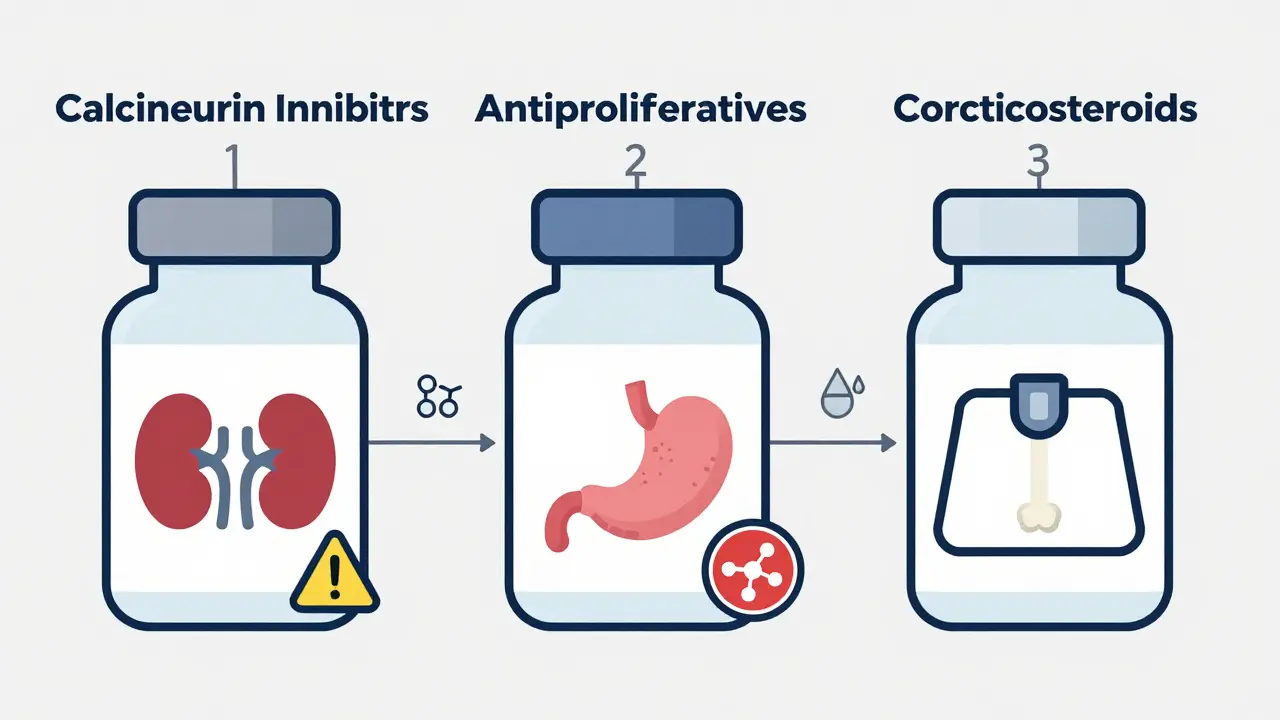
Calcineurin inhibitors (CNIs) like tacrolimus and cyclosporine are the backbone of most regimens. They block T-cells, the soldiers that identify foreign invaders. However, they are tough on the kidneys. Studies show that 30-50% of patients develop some level of kidney damage from these drugs over time. They can also raise blood pressure and cause tremors or headaches.
Antiproliferative agents such as mycophenolate mofetil (MMF) work by stopping immune cells from multiplying. Think of it as cutting off the enemy’s supply line rather than killing them directly. The trade-off here is often stomach trouble. Up to half of patients report diarrhea, nausea, or abdominal pain. It can also lower white blood cell counts, making you more prone to bacterial infections.
Corticosteroids like prednisone are broad-spectrum suppressors. They dampen inflammation everywhere. While effective, long-term use leads to weight gain, diabetes, osteoporosis, and mood swings. Many centers now try to taper these off completely within the first year to spare patients these chronic issues.
| Drug Class | Common Examples | Primary Side Effects | Key Monitoring Need |
|---|---|---|---|
| Calcineurin Inhibitors | Tacrolimus, Cyclosporine | Kidney toxicity, high blood pressure, tremors | Blood levels, kidney function (creatinine) |
| Antiproliferatives | Mycophenolate Mofetil (MMF) | Diarrhea, low white blood cells | Complete blood count (CBC) |
| Corticosteroids | Prednisone | Weight gain, diabetes, bone loss | Blood sugar, bone density scans |
| mTOR Inhibitors | Sirolimus, Everolimus | Poor wound healing, high cholesterol | Lipids, wound sites, lung function |
The Hidden Danger: mTOR Inhibitors and Wound Healing
Not every patient stays on the standard trio. Some switch to mTOR inhibitors like sirolimus or everolimus. These are often used if kidney function drops too low on CNIs, since mTOR inhibitors are gentler on the kidneys. But they come with a specific, serious warning.
These drugs interfere with how skin and tissues heal. If you take them immediately after surgery, your incision might not close properly. Everolimus carries a black box warning for increased risk of kidney thrombosis (blood clots) in the first 30 days. Sirolimus has been linked to higher mortality in liver and lung transplants due to poor wound healing and graft loss. Because of this, doctors usually wait until wounds are fully healed before starting these medications.
Infection Risks: The First Six Months Are Critical
Your immune system is weakest right after the transplant. This is called the induction phase. During the first 3 to 6 months, you are at highest risk for opportunistic infections-germs that don’t bother healthy people but can be deadly for you.
Cytomegalovirus (CMV) is a major threat. Without preventive antibiotics, 30-70% of at-risk recipients get infected. Symptoms include fever, fatigue, and low platelet counts. To fight this, you’ll likely take antiviral prophylaxis for several months. Other common threats include Pneumocystis pneumonia (PCP), fungal infections like candida, and tuberculosis reactivation if you were exposed years ago.
This means simple habits become survival skills. Wash your hands constantly. Avoid crowds during flu season. Don’t eat undercooked meat or unpasteurized cheese. Wear a mask if someone around you has a cold. Your body can’t handle what a toddler could shrug off.
Why Missing a Dose Is Dangerous
We’ve all forgotten a pill. For most people, it’s an annoyance. For a transplant recipient, it’s a potential emergency. Consistency is non-negotiable.
Studies show that up to 55% of renal transplant patients struggle with adherence at some point. Reasons vary: complex schedules, cost, or simply forgetting. But the consequence is clear. Missing doses leads to "subtherapeutic" levels of the drug in your blood. Your immune system senses the drop and starts activating T-cells against the graft. This can trigger acute rejection, which damages the organ permanently.
In heart transplant patients, nonadherence increases the risk of transplant coronary artery disease by 3.5 times. That’s a condition where arteries narrow and restrict blood flow to the new heart. There is no room for error here. Use alarms, pillboxes, and phone apps. Make taking your meds as automatic as brushing your teeth.
Cancer Risk: The Long-Term Trade-Off
Suppressing the immune system doesn’t just let viruses in; it lets abnormal cells grow unchecked. Transplant recipients have a 2- to 4-fold higher risk of developing cancer compared to the general population. Skin cancers, particularly squamous cell carcinoma, are the most common. Lymphomas and cervical cancers are also elevated risks.
This isn’t a reason to panic, but it is a reason to be vigilant. Protect your skin from the sun. Wear hats and sunscreen daily. Get regular skin checks from a dermatologist. Women should stick strictly to cervical cancer screening schedules. Early detection is key because treating cancer while on immunosuppressants is complicated-you may need to reduce your rejection meds, which risks the organ, or increase them, which fuels the cancer.
Monitoring Levels: Why Blood Draws Matter
You can’t guess if your dose is right. Immunosuppressants have a narrow therapeutic window. Too little, and you reject the organ. Too much, and you poison your kidneys or invite severe infection.
Doctors measure trough levels-the lowest concentration of the drug in your blood, usually taken right before your next dose. Tacrolimus and cyclosporine require frequent monitoring, especially in the first year. Factors like food (especially grapefruit, which blocks metabolism), other medications, and even changes in kidney function can spike or drop these levels unexpectedly. Never change your dose based on how you feel. Always follow the lab results.
Food and Drug Interactions to Watch
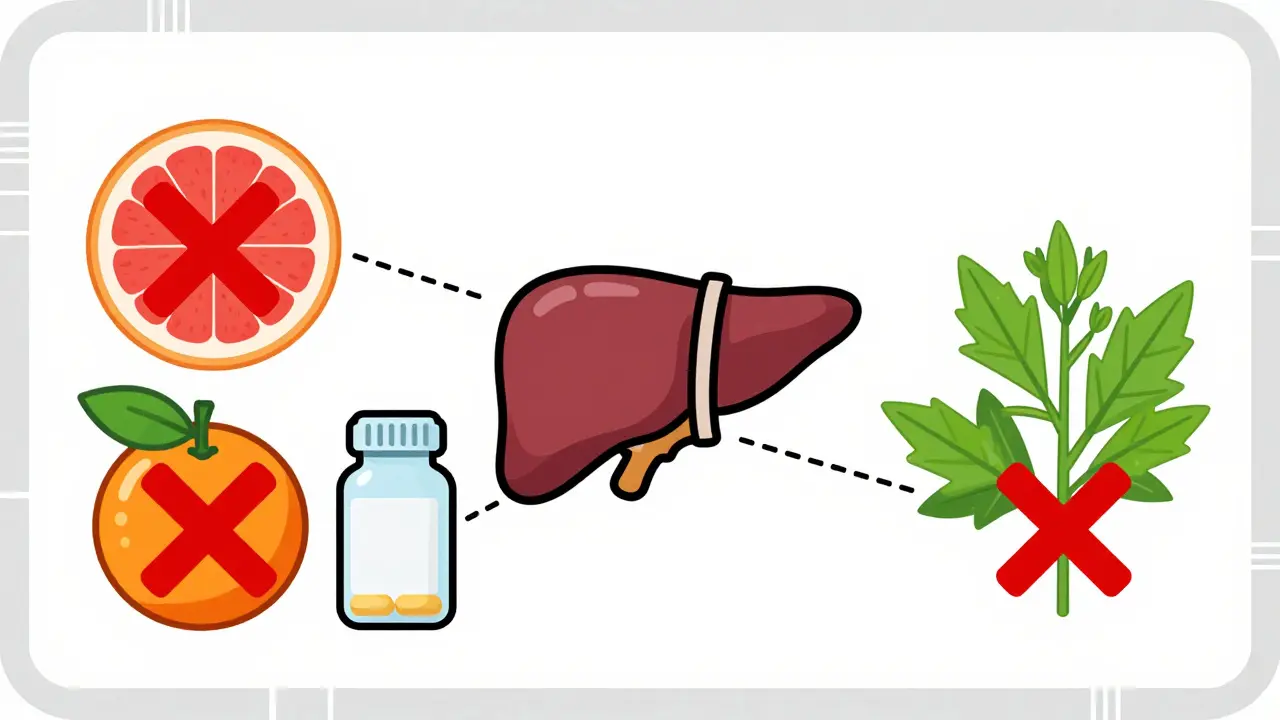
Your diet plays a bigger role in medication safety than you might think. Grapefruit and Seville oranges contain compounds that inhibit CYP3A4, the enzyme that breaks down many immunosuppressants. Eating them can cause drug levels to skyrocket, leading to toxicity. Avoid them entirely.
St. John’s Wort, a common herbal supplement for depression, does the opposite. It speeds up drug metabolism, causing levels to crash and increasing rejection risk. Always check with your transplant team before starting any vitamin, herb, or over-the-counter medication. Even common painkillers like ibuprofen can harm your kidneys when combined with calcineurin inhibitors.
Living Well With Suppressed Immunity
Safety isn’t just about avoiding sickness; it’s about managing your overall health. Diabetes, high blood pressure, and high cholesterol are common side effects of these drugs. Controlling these conditions protects both your native organs and your transplant.
Exercise helps maintain muscle mass lost from steroids and improves cardiovascular health. A balanced diet low in sodium and processed sugars manages blood pressure and glucose. Sleep matters too, as stress hormones can interfere with immune regulation. Remember, the goal is quality-adjusted life years. You want not just more time, but good time.
Can I ever stop taking immunosuppressants?
For most solid organ transplants, the answer is no. Lifelong therapy is required to prevent rejection. However, some protocols allow tapering corticosteroids or reducing calcineurin inhibitor doses after the first year if kidney function remains stable. Only do this under strict medical supervision. Abruptly stopping can cause rapid graft failure.
What should I do if I miss a dose?
If you remember within a few hours, take it immediately. If it’s almost time for your next dose, skip the missed one. Do not double up to make up for it, as this can cause toxicity. Contact your transplant coordinator if you miss multiple doses or are unsure. Consistency is critical for maintaining steady drug levels.
Are live vaccines safe for transplant recipients?
Generally, no. Live vaccines like MMR, Varicella, and the nasal flu shot can cause the actual disease in immunocompromised individuals. You should receive inactivated (killed) vaccines instead. Discuss your vaccination history with your doctor before travel or exposure to outbreaks. Household members should stay up-to-date on their vaccines to protect you indirectly.
How does pregnancy affect transplant medication?
Many women successfully have pregnancies after transplantation. However, some drugs like mycophenolate mofetil are teratogenic (cause birth defects) and must be switched to safer alternatives like azathioprine before conception. Tacrolimus is generally considered safer than cyclosporine during pregnancy. Close coordination between your transplant team and obstetrician is essential to adjust doses and monitor fetal growth.
What signs indicate acute rejection?
Symptoms vary by organ. For kidneys, watch for decreased urine output, swelling, or rising creatinine levels. For hearts, look for fluid retention, shortness of breath, or irregular heartbeat. Liver rejection may present as jaundice (yellowing skin/eyes) or abdominal pain. Lung rejection can cause coughing or difficulty breathing. Any sudden change in how you feel warrants immediate contact with your transplant center.