Generic vs Brand-Name Drug Labor Costs: Why the Price Gap Exists
 May, 27 2026
You walk into your pharmacy, pick up a bottle of generic drugs, and pay a fraction of what you would for the brand-name equivalent. It feels like magic. You might wonder if the pills inside are just sugar or chalk. They aren't. The active ingredient is identical. So where does that massive savings come from? While research and development (R&D) gets all the blame for high prices, there is a hidden layer in the cost structure that few people talk about: labor costs in pharmaceutical manufacturing.
The truth is stark. Producing a generic pill requires significantly less human effort per unit than producing a brand-new drug. But it’s not just about paying workers less. It’s about scale, complexity, geography, and the sheer volume of pills being made. When you peel back the layers of pharmaceutical supply chains, you see that labor is only one piece of a much larger puzzle involving regulatory burdens, quality control, and global arbitrage.
The Real Cost Breakdown: Where Does Your Money Go?
To understand labor, we first have to look at the total bill. A 2023 analysis by Prosperous America breaks down the $100 spent on a generic drug. Only $36 goes to actual production and manufacturing. Of that $36, roughly half covers direct materials like APIs (active pharmaceutical ingredients) and packaging. The other half stays with the manufacturer as gross profit to cover overhead, litigation, and yes, labor.
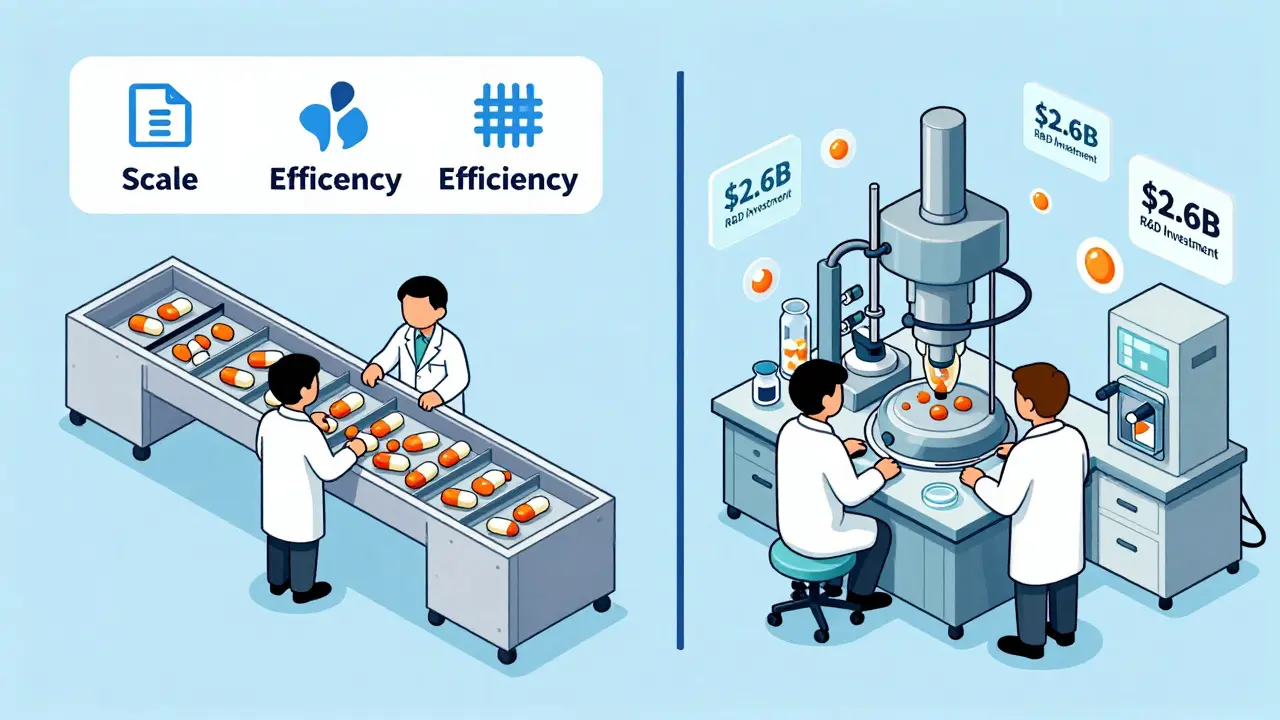
Compare this to a brand-name drug. These often cost 80% to 85% more than their generic counterparts, even when the production costs for the active ingredient are similar. Why? Because brand manufacturers must recoup an average investment of $2.6 billion over 10 to 15 years to bring a new molecule to market. That upfront R&D cost is amortized into every single pill sold during the patent period. Generic makers skip this step entirely. They reverse-engineer an existing formula. This fundamental difference changes how they staff their factories.
| Cost Component | Generic Drugs | Brand-Name Drugs |
|---|---|---|
| R&D Investment Recovery | $0 (Reverse Engineering) | ~$2.6 Billion (Amortized) |
| Labor Share of Manufacturing | 15-25% | 30-40% (Initial Phases) |
| Production Volume Impact | High Scale = Low Unit Cost | Lower Scale = Higher Unit Cost |
| Quality Control Burden | 20%+ of Total Cost | Significant, but diluted by price |
Why Labor Costs Are Lower for Generics
If you run a factory making millions of identical aspirin tablets a day, your labor efficiency skyrockets. According to a 2019 benchmark study by BCG, generic small-molecule manufacturers achieve a 27% reduction in unit costs every time the volume per site doubles. For biopharma companies making complex brand drugs, that number drops to just 17%. This isn't because generic workers are slower; it's because the process is simpler and standardized.
Brand-name drugs often involve complex formulations-extended-release mechanisms, specialized coatings, or unstable compounds that require sterile, highly controlled environments. These processes demand highly skilled technicians and rigorous monitoring. Generic drugs, particularly simple small molecules, are often compressed powders. The machinery runs faster, stops less often, and requires fewer specialized interventions. Consequently, labor constitutes approximately 15-25% of total manufacturing costs for generics, compared to 30-40% for brand-name drugs in their initial production phases.
The Hidden Labor Cost: Quality Control and Compliance
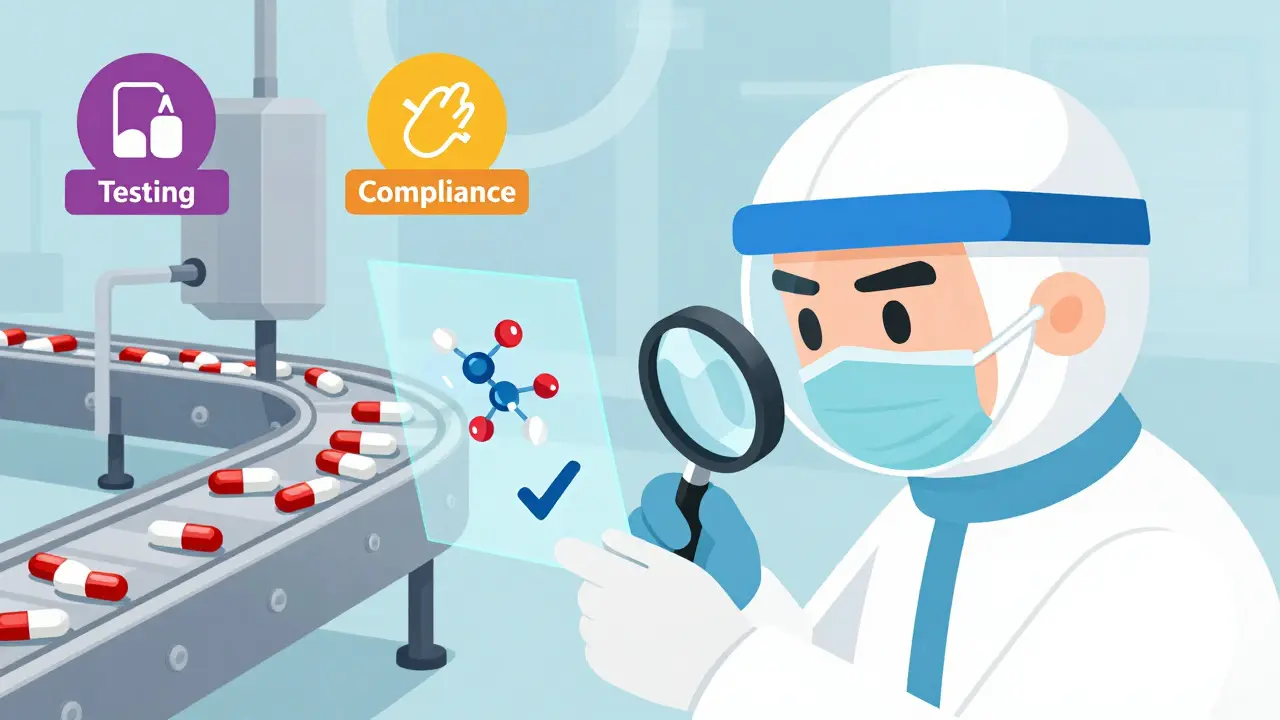
Here is where the story gets complicated. You might think "lower labor costs" means fewer safety checks. It doesn't. In fact, quality control (QC) is a massive labor sink for generic manufacturers. A 2023 analysis by DrugPatentWatch reveals that QC processes account for more than 20% of total generic drug production costs.
This includes testing raw materials, checking in-process batches, and verifying final products. Every batch needs meticulous documentation for traceability. If a batch fails, it’s scrapped, and the labor invested is lost. The FDA estimates that medium-sized firms spend around $184,000 annually just to maintain compliance systems. Add in the cost of new drug applications ($320,000 each), and the regulatory burden is heavy. This "Cost of Quality" includes prevention (training), appraisal (testing), and failure costs (rework). Strategic investment in well-trained QC staff can actually lower long-term costs by reducing errors and speeding up release times, proving that cheap labor isn't always the smartest play.
Geography Matters: The Global Arbitrage Factor
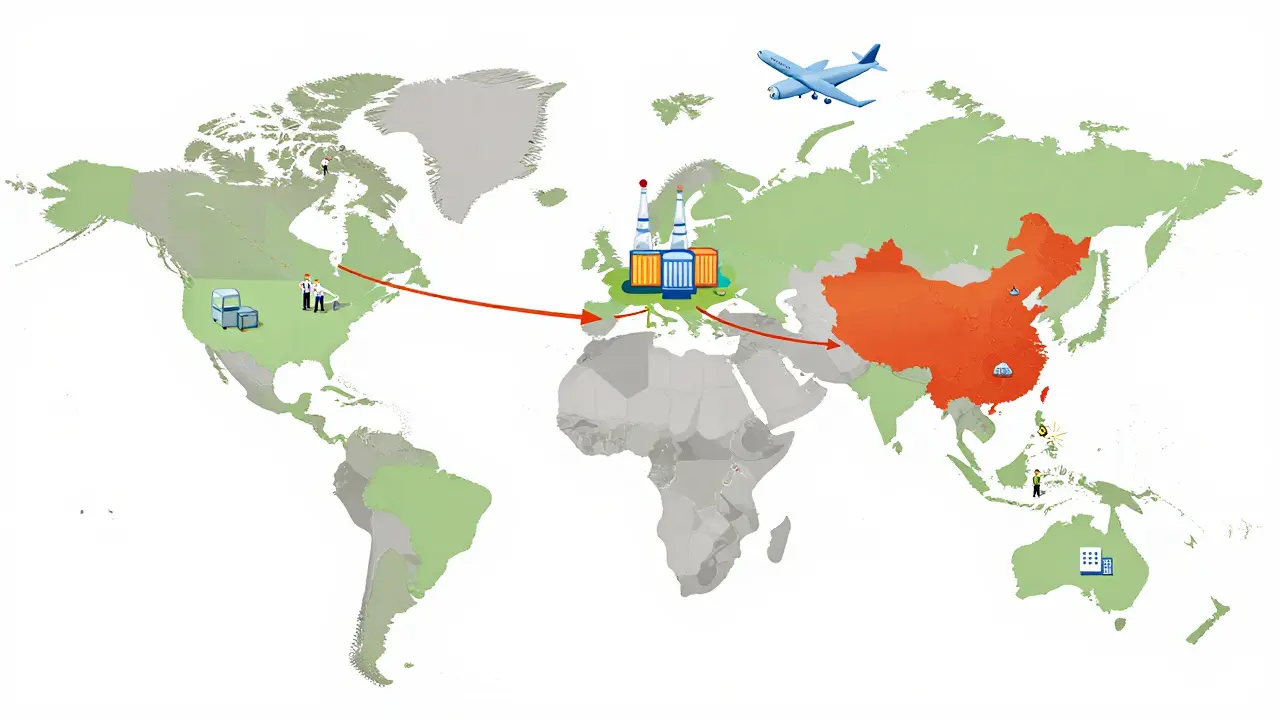
A significant portion of the labor cost advantage comes from *where* the drugs are made. Many generic manufacturers source their Active Pharmaceutical Ingredients (APIs) from India and China. Prosperous America’s 2023 data shows API production in these regions is approximately 42% cheaper than in U.S. facilities.
This isn't necessarily due to superior technology. The HHS Office of the Assistant Secretary for Planning and Evaluation noted in 2021 that these cost advantages often reflect subsidies, lax labor standards, and environmental regulations that artificially depress costs. For a U.S.-based generic company, shifting production offshore allows them to access a larger, lower-cost labor pool. This geographic arbitrage directly impacts the bottom line, allowing generic prices to stay low despite rising domestic wages in countries like the United States.
Scale and Competition: The Pressure Cooker
Nine out of ten prescriptions filled in the U.S. are for generic drugs. This massive volume creates intense competition. When multiple generic manufacturers enter the market, prices plummet. The FDA has noted that this pricing pressure forces companies to optimize every aspect of manufacturing, including labor. There is a risk here: the drive to cut costs can lead to understaffing or using less experienced personnel, which may compromise quality and cause supply shortages. However, efficient manufacturers use automation and streamlined workflows to maintain quality without bloating payroll.
The shift toward Contract Manufacturing Organizations (CMOs) also plays a role. Biosimilar units, for example, spend 42% of their Cost of Goods Sold on external manufacturing compared to 28% for small molecules. This transforms fixed labor costs into variable expenses, allowing companies to scale labor up or down based on demand rather than keeping large permanent teams idle.
Frequently Asked Questions
Are generic drugs safer than brand-name drugs?
Yes, generic drugs are held to the same strict safety and efficacy standards as brand-name drugs by the FDA. They must contain the same active ingredient, strength, dosage form, and route of administration. The differences lie in inactive ingredients (like dyes or binders), which rarely affect performance.
Why do brand-name drugs cost so much more if production costs are similar?
Brand-name drugs carry the burden of recouping billions in Research and Development (R&D) costs. Developing a new drug takes 10-15 years and averages $2.6 billion. Generic manufacturers bypass this phase by replicating existing formulas, allowing them to offer lower prices.
Does lower labor cost mean generic drugs are made with cheaper materials?
Not necessarily. The active pharmaceutical ingredient (API) must be identical. Lower costs come from economies of scale, simplified manufacturing processes, and often sourcing materials from countries with lower labor and operational costs, such as India or China.
How does quality control impact the price of generic drugs?
Quality control is labor-intensive and accounts for over 20% of generic production costs. Rigorous testing ensures batch consistency and safety. Efficient QC reduces waste and rework, ultimately lowering the final price for consumers.
What happens to drug prices when more generic competitors enter the market?
Prices typically drop significantly. Increased competition forces manufacturers to optimize costs, including labor and supply chain efficiencies. This drives down the price for consumers, though it can sometimes create pressure that leads to supply chain vulnerabilities if costs are cut too aggressively.