Functional Impairment in Autoimmunity: Rehab and Occupational Therapy Guide
 Jun, 20 2026
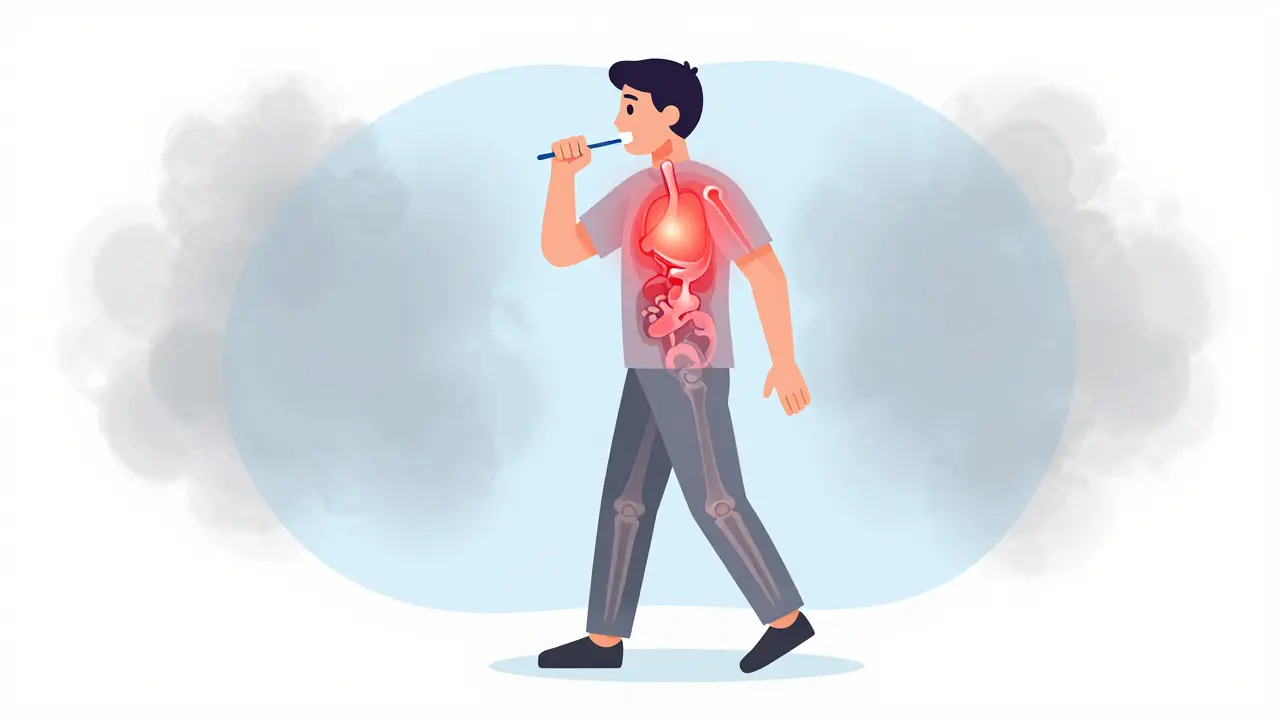
Living with an autoimmune disease often feels like your body is fighting a war on two fronts. One enemy is the immune system attacking healthy tissue; the other is the resulting functional impairment that makes daily tasks-like brushing teeth or walking to the mailbox-feel insurmountable. You might have heard that medication controls inflammation, but what about the stiffness, fatigue, and weakness that remain? That’s where rehabilitation and occupational therapy step in. They don’t just treat symptoms; they rebuild your capacity to live independently despite the disease.
Approximately 5-8% of the global population deals with autoimmune conditions, and women are three times more likely to be affected than men. The good news? Structured rehabilitation can improve functional capacity by 35-42%, especially if you start within the first year of symptoms. This guide breaks down how physical and occupational therapies work together to manage these impairments, offering practical strategies to reduce pain, conserve energy, and regain control over your daily life.
Understanding Functional Impairment in Autoimmune Diseases
To fix the problem, we first need to define it. Functional impairment in the context of autoimmune diseases isn't just about pain. It's a complex triad involving inflammation-induced tissue damage, side effects from medications, and general deconditioning from reduced activity. When your joints swell or your muscles weaken due to chronic inflammation, your brain adapts by avoiding movement. Over time, this leads to a vicious cycle: less movement causes more weakness, which causes more pain, leading to even less movement.
This impairment manifests differently depending on the condition. In rheumatoid arthritis, it might mean losing grip strength. In lupus, it could present as overwhelming central fatigue that prevents you from working a full day. Regardless of the specific diagnosis, the goal of rehabilitation is to break this cycle. Research published in the *Journal of Autoimmunity* (2022) confirms that addressing these mechanical and functional issues directly improves quality of life scores measured by the Health Assessment Questionnaire Disability Index (HAQ-DI).
The Distinct Roles of Physical and Occupational Therapy
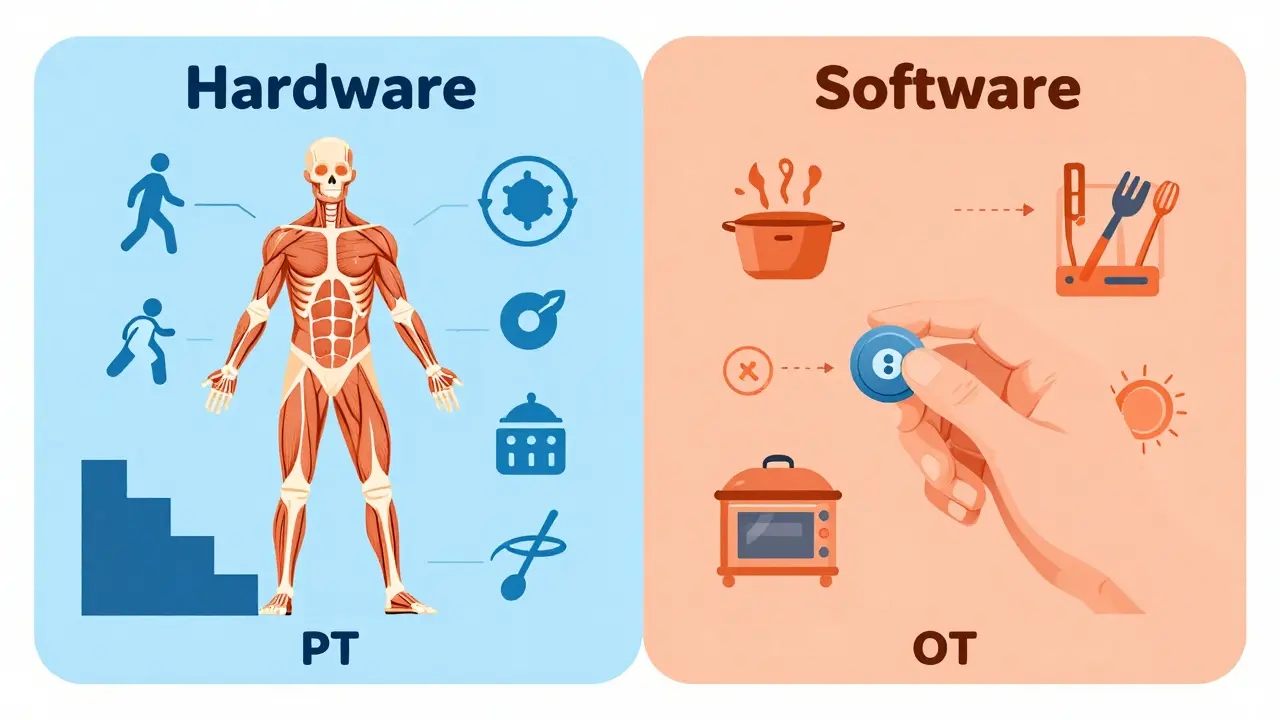
Many patients use the terms "physical therapy" (PT) and "occupational therapy" (OT) interchangeably, but they serve different, complementary roles. Think of PT as focusing on the hardware-the muscles, joints, and cardiovascular system. OT focuses on the software-how you interact with your environment and perform daily tasks.
| Feature | Physical Therapy (PT) | Occupational Therapy (OT) |
|---|---|---|
| Primary Focus | Lower extremity function, mobility, aerobic capacity | Upper extremity function, activities of daily living (ADLs) |
| Efficacy Metric | Timed Up and Go test scores (28% better than OT alone) | Arthritis Hand Function Test (33% better than PT alone) |
| Key Interventions | Aerobic training, strengthening, hydrotherapy | Energy conservation, adaptive equipment, home modifications |
| Best For | Improving walking distance, balance, and overall stamina | Dressing, cooking, writing, and managing household chores |
If you struggle to walk up stairs or feel unsteady, PT is your primary tool. If you can't button your shirt or cook dinner without crashing, OT is essential. Most successful rehab programs integrate both. For instance, while a physical therapist works on your gait, an occupational therapist might teach you how to modify your kitchen layout to reduce bending and reaching.
Core Strategies: Exercise Prescription and Energy Conservation
One of the biggest myths in autoimmune care is that rest is always best. In reality, complete rest leads to rapid muscle loss. However, pushing too hard triggers flares. The solution lies in precise dosing. Dr. Jane Smith from Johns Hopkins emphasizes that exercise must be treated like medication-with exact frequency, intensity, and type parameters adjusted to your current disease activity.
Phased Exercise Progression
Your exercise plan should change based on whether you are in a flare or remission. During acute flares, high-intensity work is dangerous. Instead, focus on isometric exercises at 20-30% of your maximum voluntary contraction. These strengthen muscles without moving the joint, reducing stress on inflamed tissues. As inflammation subsides, you advance to aerobic training at 40-60% of your heart rate reserve. This zone builds cardiovascular health without overstressing the immune system.
The 4 Ps of Energy Conservation
Occupational therapists rely on the "4 Ps" principle to help you manage fatigue: Prioritize, Plan, Pace, and Position. This isn't just advice; it's a structured protocol. For example, pacing involves limiting continuous task performance to 15-20 minute intervals followed by 5-10 minute rest periods. This prevents the "boom-bust" cycle, where you overexert on good days and crash for several days afterward. Studies show that 63% of patients fall into this trap, averaging 3.2 days of recovery after overexertion. By sticking to the 70% effort rule-never exceeding 70% of your perceived maximum capacity-you can maintain consistency without triggering setbacks.
Hydrotherapy and Specialized Equipment
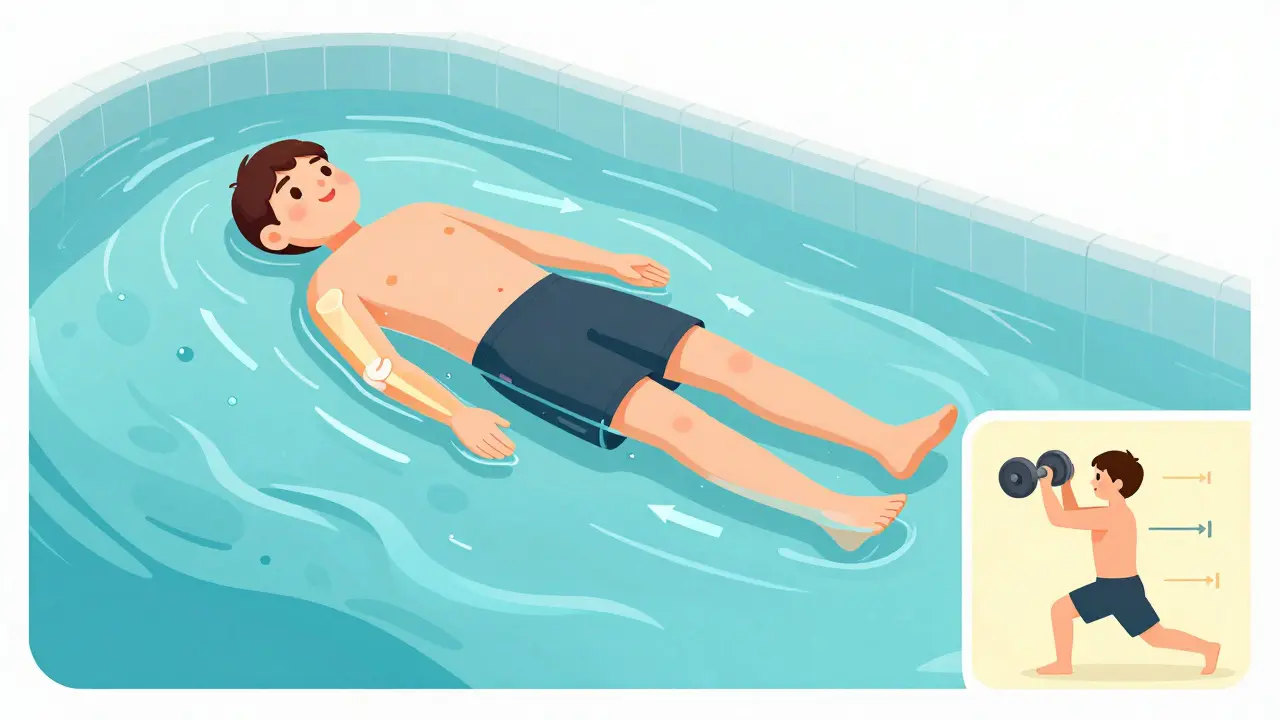
Water is a powerful ally for those with autoimmune conditions. Hydrotherapy provides buoyancy, which reduces weight-bearing stress on joints, while warmth helps relax stiff muscles. Research indicates that underwater treadmills operating at 92-96°F produce 22% greater pain reduction compared to land-based exercise during active disease phases. Patients report Visual Analog Scale pain scores dropping from 7.2 to 4.1 in water, versus only 5.8 on land.
However, access can be a barrier. Only 32% of rural rehabilitation centers have specialized hydrotherapy facilities. If you don't have pool access, ask your therapist about alternatives like transcutaneous electrical nerve stimulation (TENS) units, which deliver 50-100Hz pulses to block pain signals, or using goniometers at home to track your range of motion progress accurately.
Navigating Flares and Contraindications
Rehabilitation isn't one-size-fits-all, and timing is critical. The American Physical Therapy Association outlines clear contraindications for exercise. You should pause intense rehab if you have:
- Active joint swelling in more than two joints
- Fever above 100.4°F
- Recent corticosteroid injections (within 72 hours)
Ignoring these signs can lead to injury. Dr. Michael Chen warns that 37% of patients initiate inappropriate high-impact activities, resulting in a 23% higher injury rate. Conversely, stopping all movement during mild flares can also be harmful. The key is modification. Swap running for swimming, or lifting weights for gentle stretching. Always communicate with your therapist about your current Disease Activity Score-28 (DAS28); if it exceeds 5.1, traditional rehab may offer minimal benefit until inflammation is controlled medically.
Future Directions and Practical Next Steps
The field of autoimmune rehabilitation is evolving rapidly. New guidelines from the American College of Rheumatology (2024) suggest incorporating biomarkers like serum IL-6 levels to personalize exercise intensity. Trials show 39% better outcomes when adjusting workouts based on weekly inflammatory markers. Additionally, AI-driven apps like 'PacePartner' are entering Phase 3 trials, using wearable data to predict flare risks with 82% accuracy.
For now, focus on finding a certified therapist. Look for professionals with specialized autoimmune training, such as those certified by the Academy of Pelvic Health Physical Therapy. Be prepared for an 8-12 week learning curve to master pacing techniques. Keep an activity diary to identify your personal exertion thresholds. Remember, the goal isn't to cure the disease-it's to maximize your function and independence despite it.
How long does it take to see results from autoimmune rehabilitation?
Most patients begin to notice improvements in pain and mobility within 4-6 weeks of consistent therapy. Significant gains in functional capacity, measured by tools like the HAQ-DI, typically occur within 3-6 months. Early initiation, within the first 12 months of symptom onset, yields the best long-term outcomes.
Is hydrotherapy safe for everyone with autoimmune diseases?
Hydrotherapy is generally safe and highly effective for pain relief, but it requires caution if you have open wounds, severe infections, or uncontrolled blood pressure. Always consult your rheumatologist before starting aquatic therapy, especially if you are immunocompromised.
What is the "boom-bust" cycle in autoimmune fatigue?
The boom-bust cycle occurs when a patient overexerts themselves on a "good" day (the boom), leading to a severe flare or exhaustion period lasting several days (the bust). Occupational therapists teach pacing strategies, like the 70% effort rule, to prevent this cycle and promote sustainable energy management.
Can I do rehabilitation exercises at home?
Yes, home-based programs are crucial for maintenance. After initial supervised sessions, therapists provide tailored home exercise plans. Telehealth options have grown significantly, with 68% of patients now using remote guidance for ongoing support, ensuring continuity of care between clinic visits.
How do I find a therapist specialized in autoimmune conditions?
Look for therapists with certifications in autoimmune specialty training, such as those offered by the Academy of Pelvic Health Physical Therapy. Ask potential providers about their experience with energy conservation techniques and their approach to managing flares. Reading patient reviews on platforms like Healthgrades can also provide insights into their bedside manner.