Finding Pharmacies and Medication Help Abroad: A Traveler’s Guide
 Jul, 31 2026
Imagine you are in Bangkok, Tokyo, or Paris. You reach for your daily pill, but the bottle is empty. Or worse, customs officials stop you at the border because your medication looks suspicious. It happens more often than you think. According to the International Association for Medical Assistance to Travelers (IAMAT), a global network of volunteer physicians providing medical assistance to travelers, about half of all travelers face a health issue that needs attention while overseas. For many, the biggest headache isn't the illness itself-it's finding the right medicine in a foreign system.
Navigating international pharmacies can feel like solving a puzzle without the picture on the box. Rules change from country to country. Some places have strict limits on what you can carry. Others might not even stock the brand name you use back home. This guide breaks down exactly how to prepare, what to pack, and where to turn when things go wrong. We will cover everything from decoding local pharmacy laws to handling time-zone shifts that mess up your dosing schedule.
Key Takeaways
- Carry meds in original containers: 89% of Schengen Area countries require pharmacy labels with your name and doctor's details.
- Bring a physician’s letter: Having this document reduces medication confiscation incidents by 73%, according to Johns Hopkins University research.
- Plan for delays: Pack at least a 10-day surplus beyond your trip end date to handle flight cancellations or lost luggage.
- Know the generic names: Brand names vary globally; knowing the generic ingredient (like escitalopram instead of Lexapro) saves hours of confusion.
- Use reliable resources: Tools like IAMAT and the CDC’s MedAbroad app provide real-time access to vetted doctors and local regulations.
Packing Your Medications Right
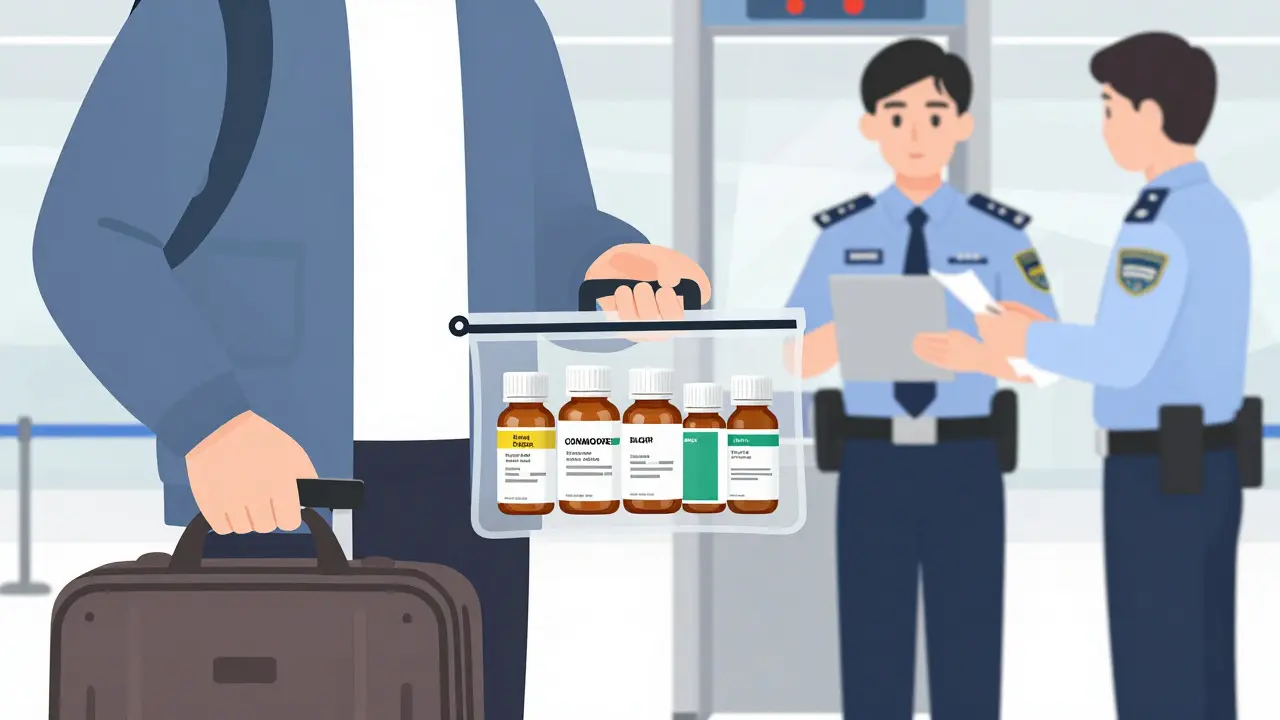
The first rule of traveling with medicine is simple: keep it together and keep it labeled. Never dump pills into a generic ziplock bag. Customs agents and security scanners want to see exactly what they are looking at. The U.S. Department of State, the federal executive department responsible for international relations and diplomacy notes that 63% of nations limit travelers to a 30-day supply of prescription drugs, even if you have a valid prescription. To stay safe, carry your medications in their original pharmacy containers. These bottles must display your name, the prescribing physician's name, and the drug details.
If you are flying through Europe, pay close attention. European Commission Regulation (EC) No 726/2004 enforces strict labeling rules in 89% of Schengen Area countries. If your bottle lacks a clear label, an officer might confiscate it, thinking it’s something illicit. This is especially true for controlled substances like ADHD medications or opioids. The International Narcotics Control Board reports that 78% of countries have restrictions on meds that are common in the United States.
What about liquids? If you need insulin or liquid antibiotics, remember the TSA liquid rules usually don’t apply to medically necessary liquids. However, you should declare them at security. The International Air Transport Association (IATA), the trade association for the world’s airlines guidelines state that insulin must be kept between 2°C and 8°C (36°F to 46°F). Use insulated coolers with ice packs that are frozen solid when you go through security. Once you pass security, you can swap them for gel packs if needed.
Understanding International Pharmacy Systems
Not all pharmacies work the same way. In the United States, you walk in, hand over a prescription, and leave with your meds. In other parts of the world, the process can be completely different. Understanding these differences before you land can save you from panic.
| Country/Region | Prescription Requirement | Emergency Access | Cost Notes |
|---|---|---|---|
| United Kingdom | Required for most meds | NHS emergency prescriptions available (£9.65 charge) | d>Standard NHS charges apply |
| France | Strictly enforced | Pharmacies can provide 72-hour emergency supply without Rx for some conditions | High reimbursement rates for locals; tourists pay full price |
| Japan | Very strict | Limited; only 24 pharmacies certified for foreign patients | Expensive for non-residents |
| Australia | Required | Subsidized via PBS for reciprocal agreement countries | US travelers pay full price |
| Thailand/Cambodia | Varies widely | Open markets may sell counterfeit/substandard drugs (68% risk per WHO) | Cheaper, but high quality control risks |
In the UK, you can access the National Health Service (NHS) for emergency prescriptions. You’ll pay a standard fee, which was £9.65 as of April 2023. In France, community pharmacies operate under Article L. 5125-26 of the French Public Health Code, allowing them to give you a 72-hour emergency supply for certain conditions without a new prescription. This is a lifesaver if you lose your script.
Japan is much stricter. The Japan Pharmaceutical Association’s 2022 directory shows that only 24 pharmacies nationwide are certified to serve foreign patients. If you need help there, you must find one of these specific locations. Conversely, in Southeast Asia, be cautious. A 2023 World Health Organization study found that 68% of medications bought in open markets in Cambodia and Thailand contained counterfeit or substandard ingredients. Always buy from licensed pharmacies, not street vendors.
Handling Time Zones and Dosing Schedules
Time zones are the silent enemy of consistent medication management. The CDC’s 2023 Travelers' Health Manual points out that 47% of travelers experience time zone changes that affect their medication schedules. This is critical for time-sensitive drugs like anticoagulants (blood thinners) and insulin.
Dr. Michael Rodriguez from the American Pharmacists Association notes that 82% of travelers taking time-sensitive medications need specific adjustment protocols. Here is a simple strategy for once-daily medications: take your dose at the same clock time as you do at home for the first two to three days. Then, gradually shift the time forward or backward by one hour each day until you match the local time. This method works for 78% of travelers, according to a 2022 study by Johns Hopkins University.
For insulin users, it gets trickier. Don’t just guess. Split your doses during the transition period. If you are traveling west (gaining time), you might need slightly less insulin due to the longer day. If traveling east (losing time), you might need more. Consult your endocrinologist before you go. Dr. Sarah Williams of the CDC’s Travelers' Health Branch highlights that insulin storage failures account for 37% of medication-related travel emergencies. Keep your insulin cool, but never let it freeze.
What to Do When Things Go Wrong
Despite best plans, emergencies happen. Maybe you lose your bag. Maybe you get sick unexpectedly. Knowing where to turn is crucial.
First, join IAMAT, a free service connecting travelers with volunteer physicians worldwide. They have a directory of 1,200 pre-vetted doctors in 110 countries. Their annual report shows an 89% satisfaction rate among users. It’s free to sign up, and it could save your trip.
Second, check your travel insurance. Many people assume their Medicare covers them abroad. It doesn’t. CMS’s 2023 policy manual confirms that Medicare Advantage plans explicitly exclude international medication coverage. Look for policies like those from World Nomads, which covered up to $2,000 for emergency medication purchases in 2023. Make sure your policy specifically lists "prescription replacement" as a benefit.
If you need a refill urgently, try using major pharmacy chains with international partners. Walgreens, for example, has a partner network in 18 countries with 3,200 locations as of March 2023. While CVS and Walgreens have limited physical presence outside the US, their digital networks can sometimes help locate nearby alternatives.
Practical Preparation Checklist
You don’t need to wait until you are at the airport to start preparing. Experts recommend starting 2-3 weeks before your trip. Here is what you should do:
- Contact the embassy: Check the website of the destination country’s embassy for specific medication bans. The ASHP’s 2023 survey shows 92% of travel medicine specialists recommend this step.
- Get a physician’s letter: Ask your doctor for a letter on official letterhead. Include your diagnosis, medication names (generic and brand), dosage, and the doctor’s contact info. Translate it into the destination country’s language. Dr. Jane Chen from Johns Hopkins found this reduces confiscation by 73%.
- Calculate your surplus: Pack enough medication for your entire trip plus 10 extra days. This buffer accounts for flight delays or lost luggage, reducing trip disruptions by 65%, per the International Society of Travel Medicine.
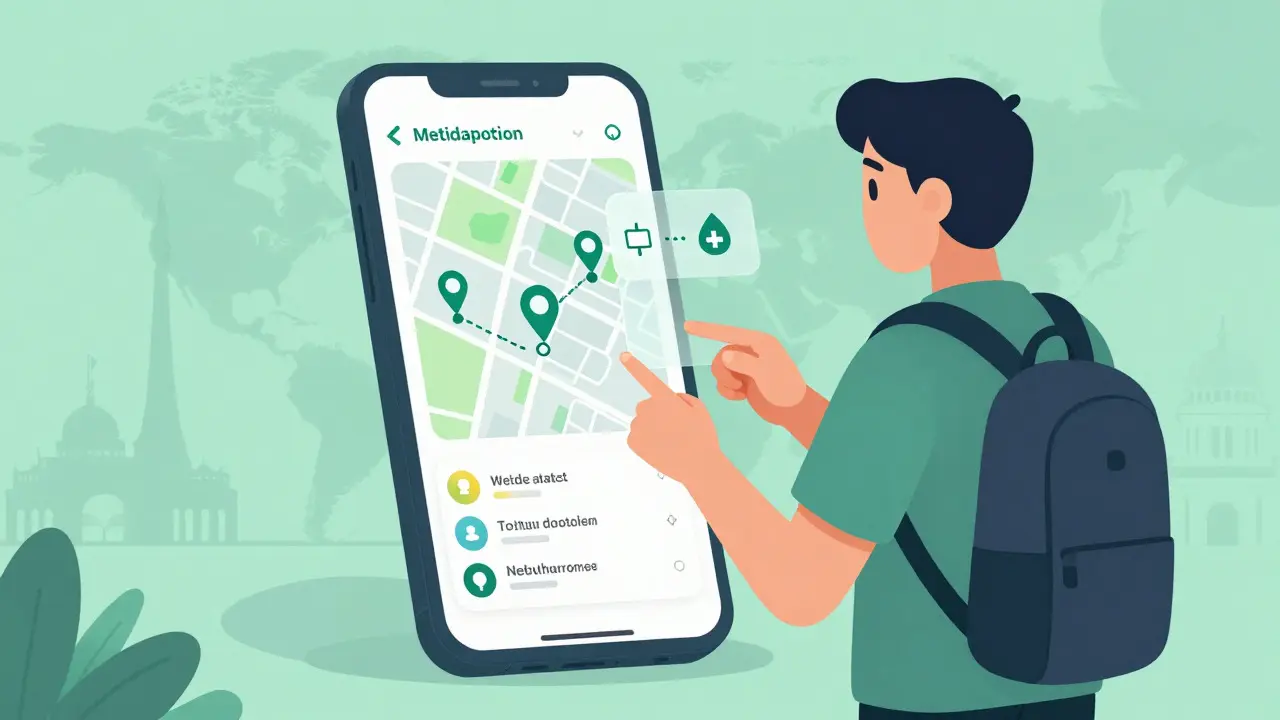
- Research local pharmacies: Use tools like the CDC’s MedAbroad digital tool, launched in May 2023, which provides country-specific regulations for 195 nations. Also, look up the International Pharmaceutical Federation’s global pharmacy locator API integrated with Google Maps.
- Split your bags: Don’t put all your medication in one checked bag. Keep your daily supply in your carry-on. Put the rest in your checked luggage. If one bag gets lost, you still have your meds.
Frequently Asked Questions
Can I bring my own prescription medication into another country?
Yes, but you must follow strict rules. Most countries allow you to bring a personal supply (usually up to 30 days) for personal use. You must keep medications in their original containers with pharmacy labels. Always carry a copy of your prescription and a letter from your doctor. Check the specific entry requirements of your destination country, as some ban certain controlled substances entirely.
What should I do if I run out of medication while abroad?
First, contact your travel insurance provider to see if they can assist with locating a pharmacy or covering costs. Next, visit a local licensed pharmacy. Bring your original prescription bottle and any remaining pills. If the pharmacist cannot read the script, show them the generic name of the drug. If you are a member of IAMAT, use their directory to find a local English-speaking doctor who can write a new prescription.
Does Medicare cover prescriptions while traveling internationally?
Generally, no. Original Medicare does not cover prescription drugs or medical services outside the United States. Most Medicare Advantage plans also exclude international coverage. You will need to purchase separate travel health insurance that includes prescription drug coverage. Check your plan details carefully before booking your trip.
How do I adjust my medication schedule for time zone changes?
For once-daily medications, take your dose at the same clock time as home for the first few days, then gradually shift the time by one hour each day until you match the local time. For complex medications like insulin or blood thinners, consult your doctor before traveling. They may advise splitting doses or adjusting amounts based on whether you are traveling east or west.
Are pharmacies in tourist areas safe to use?
It depends on the country. In developed nations like the UK, France, and Australia, pharmacies are highly regulated and safe. In some Southeast Asian and Latin American countries, be cautious. Avoid buying meds from street vendors or unlicensed shops. A 2023 WHO study found high rates of counterfeit drugs in open markets in Cambodia and Thailand. Always look for official pharmacy signs and licensed pharmacists.
What is a physician's travel letter and why do I need it?
A physician's travel letter is a document from your doctor confirming your medical condition and the necessity of your medications. It should include your name, the drug names (generic and brand), dosage, and the doctor's contact information. Research shows this letter reduces medication confiscation at borders by 73%. It is especially important for controlled substances like ADHD meds or painkillers.
How much extra medication should I pack?
The International Society of Travel Medicine recommends carrying at least a 10-day surplus beyond your planned return date. This buffer helps you handle unexpected delays like flight cancellations, lost luggage, or sudden illnesses. Never pack all your medication in one bag; split it between your carry-on and checked luggage.
Can I use my US prescription in Europe?
Usually, no. Most European countries require a local prescription issued by a doctor practicing in that country. However, some countries like France allow pharmacies to provide a short-term emergency supply (up to 72 hours) without a new prescription for chronic conditions. Always carry your original US prescription and a doctor's letter to facilitate this process.
What are the risks of buying medication online while abroad?
Buying medication online from unverified sources carries high risks of receiving counterfeit or substandard drugs. Trustpilot reviews indicate 74% of users mention counterfeit concerns with international online pharmacies. Stick to reputable, licensed local pharmacies or use verified telemedicine services that partner with local clinics. Avoid unknown websites offering drastically lower prices.
How do I store insulin while traveling?
Insulin must be kept between 2°C and 8°C (36°F to 46°F). Use an insulated cooler bag with frozen gel packs. Ensure gel packs are fully frozen when going through security. Never place insulin directly against ice, as freezing damages it. Monitor temperatures regularly, especially in hot climates. Consider portable battery-operated coolers for long trips.
Next Steps and Troubleshooting
Start your preparation early. Contact your doctor today to discuss your travel plans and request a physician's letter. Check your travel insurance policy to ensure it covers prescription replacements abroad. Download the CDC’s MedAbroad app and bookmark the IAMAT website. By taking these small steps now, you can avoid major headaches later. Safe travels!