Drug Safety Signals and Clinical Trials: How Hidden Risks Emerge After Approval
 Mar, 7 2026
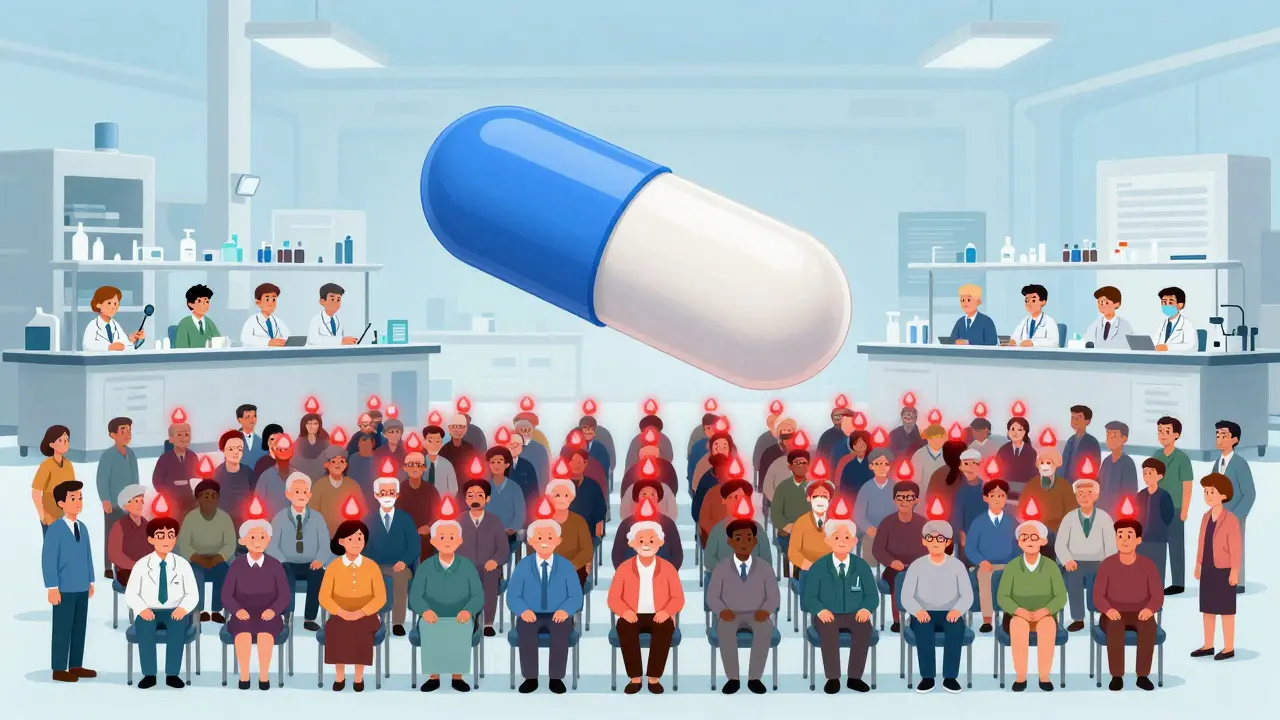
Most people assume that if a drug makes it to market, it’s been thoroughly tested for safety. That’s true - up to a point. Clinical trials are rigorous, tightly controlled, and involve thousands of patients. But here’s the hard truth: drug safety signals - the early warning signs of serious side effects - often don’t show up until after millions of people start using the drug. And that’s where the real risk emerges.
What Exactly Is a Drug Safety Signal?
A drug safety signal isn’t a rumor or a single scary story. It’s a pattern. A statistically unusual cluster of reports suggesting a medicine might be linked to a new or unexpected health problem. The Council for International Organizations of Medical Sciences (CIOMS) defines it clearly: information that suggests a new possible connection between a drug and an adverse event, strong enough to demand investigation. Think of it like a flickering light on a dashboard - not a crash, but a sign something’s off. These signals don’t come from one person’s complaint. They’re found by sifting through millions of reports. The FDA’s FAERS database alone holds over 30 million adverse event reports since 1968. The EMA’s EudraVigilance system processes more than 2.5 million reports every year. These aren’t random entries. They’re pieces of a puzzle, gathered from doctors, patients, and hospitals around the world.Why Clinical Trials Miss the Big Risks
Clinical trials are designed to prove a drug works - not to find every possible side effect. Most trials involve 1,000 to 5,000 people. They’re short, usually lasting months, not years. Participants are carefully selected: no major health problems, no other medications, no extreme ages. Real-world use? That’s different. Imagine a drug tested on healthy 40-year-olds. It works great. But what happens when it’s taken by a 78-year-old with kidney disease, diabetes, and five other prescriptions? That scenario rarely shows up in trials. Yet it’s common in clinics. That’s why 60% to 80% of signals detected after approval are for events that never appeared in pre-market studies. The most dangerous blind spots? Rare events. Events that take years to appear. Events that only happen when combined with other drugs. A 2004 signal linked rosiglitazone to heart attacks - but it took years of real-world use before the pattern became undeniable. Another example: bisphosphonates, used for osteoporosis. The link to jaw bone death didn’t emerge until seven years after approval. Clinical trials simply don’t last long enough to catch these.How Signals Are Found: The Two Paths
There are two main ways safety signals are spotted: through clinical review and through statistics. Clinical signals come from individual case reports. A doctor notices a pattern: three patients on the same drug developed a rare skin reaction. They report it. Another case pops up. Then another. This is how the 2018 signal linking dupilumab to eye surface disease was first noticed - through ophthalmologists sharing observations. These reports often contain critical details: timing, symptoms, whether stopping the drug helped (dechallenge) or if restarting made it worse (rechallenge). This kind of data is gold. Statistical signals come from numbers. Algorithms scan databases looking for unusual spikes. One method, called disproportionality analysis, calculates the Reporting Odds Ratio (ROR). If a drug-event pair shows up 2 to 3 times more often than expected by chance, it triggers a red flag. Other methods like BCPNN and PRR do similar math. The EMA and FDA use these tools constantly. But here’s the catch: 60% to 80% of these statistical flags are false positives. A signal might pop up because patients with liver disease are more likely to be hospitalized - and therefore more likely to report side effects - not because the drug causes liver damage.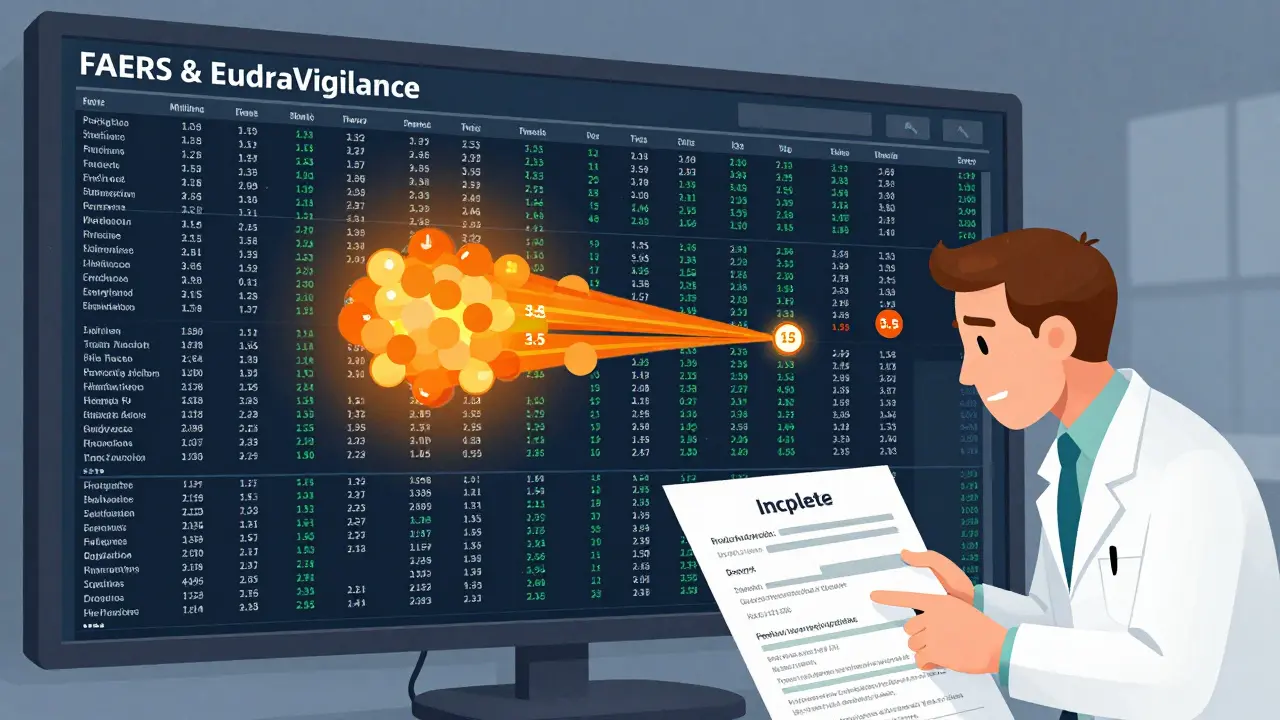
When a Signal Becomes a Warning
Not every signal leads to a black box warning or a drug recall. But some do. Research shows four things make a signal more likely to trigger a label change:- Multiple sources: If the same pattern shows up in spontaneous reports, clinical trials, and patient registries, the odds of action jump 4.3 times.
- Plausible biology: Does the drug’s mechanism explain the side effect? If yes, regulators take it seriously.
- Severity: 87% of serious events led to label updates. Non-serious events? Only 32%.
- Drug age: New drugs - under five years on the market - are 2.3 times more likely to get updated labels than older ones.
The Real Challenges Behind the Scenes
Behind every signal is a messy, slow, human process. Pharmacovigilance teams spend months chasing down incomplete reports. A doctor might report a patient had a seizure after taking a drug - but never follow up. Was it the drug? A missed diagnosis? A seizure disorder? Without answers, the signal stalls. Data quality is the biggest headache. A 2022 survey of 142 safety officers found 68% struggled with poor-quality reports. Many lack dates, dosages, or patient history. And getting follow-up? Only 43% of reports have it. That’s why some signals take 3 to 6 months just to assess. Another issue? Overload. False positives flood systems. One safety officer told me: “We get 15 alerts a week. Ten are noise. Two are maybe something. One is urgent. We’re drowning in alerts.” That’s why the industry is turning to AI. The FDA’s Sentinel Initiative 2.0 now pulls data from 300 million patient records. The EMA cut signal detection time from two weeks to 48 hours using AI. Still, even AI can’t replace clinical judgment.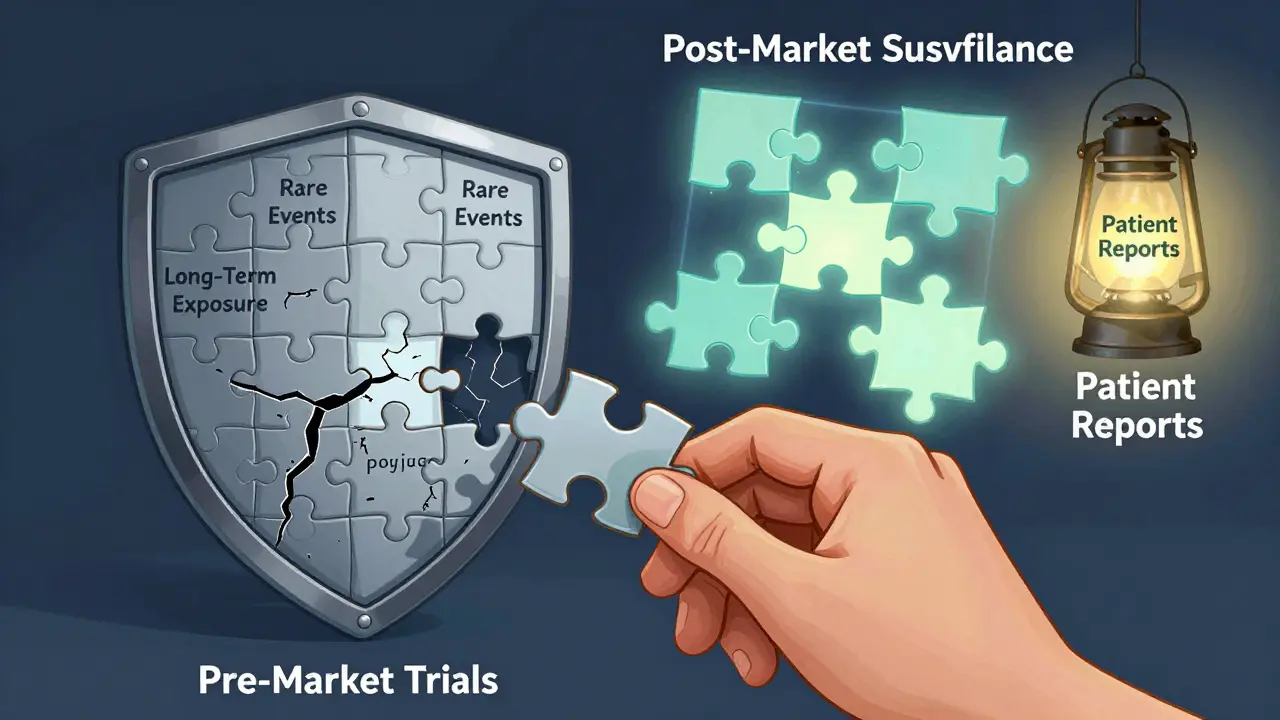
What’s Changing Now - And What’s Still Broken
The landscape is evolving. The EU now requires every new drug application to include a detailed signal detection plan. The ICH’s E2B(R3) standard means 89% of global reports now follow the same format. That’s progress. But the system still struggles with three things:- Older patients: Prescription use in people over 65 has jumped 400% since 2000. Most drugs weren’t tested in this group. Polypharmacy - taking five or more drugs - creates interactions no algorithm can fully predict.
- Biologics: These complex drugs - antibodies, gene therapies - have unpredictable side effects. Traditional signal detection tools were built for small-molecule pills. They’re not built for these.
- Delayed reactions: Some side effects take decades. Think of thalidomide. Or DES. We’re still not good at designing systems that watch for these.
What You Should Know
If you’re taking a new drug, especially one approved in the last five years, understand this: your doctor doesn’t know everything about its risks. The full safety profile isn’t complete yet. That’s why monitoring matters. If you notice something unusual - fatigue, rash, dizziness, changes in mood - report it. Talk to your doctor. File a report through your country’s system. That’s how signals get stronger. And if you’re a patient, don’t assume safety = certainty. Drug safety isn’t a finish line. It’s a continuous scan. The system works - but only if we all help it work.What triggers a drug safety signal?
A drug safety signal is triggered when a pattern emerges suggesting a possible link between a medication and an adverse event that wasn’t clearly seen during clinical trials. This pattern is usually identified through statistical analysis of large databases like FAERS or EudraVigilance, or through clinical observations reported by healthcare providers. Signals require at least three reported cases and a reporting odds ratio above 2.0 to be considered for further review.
Why are clinical trials not enough to catch all drug risks?
Clinical trials typically involve only 1,000 to 5,000 participants over a few months. They exclude people with other health conditions, older adults, pregnant women, and those taking multiple medications. Real-world use involves millions of people with diverse health profiles, long-term exposure, and complex drug interactions - all of which can reveal side effects invisible during trials.
How do regulators decide if a signal is real?
Regulators don’t act on a single report. They look for consistency across multiple sources: spontaneous reports, clinical trial data, epidemiological studies, and scientific literature. They assess the strength of the statistical association, the biological plausibility, the seriousness of the event, and whether the pattern holds up after ruling out confounding factors like underlying disease or other medications.
Can a drug be pulled from the market because of a safety signal?
Yes, but it’s rare. Most signals lead to label updates - stronger warnings, new contraindications, or usage restrictions. Withdrawal usually only happens if the risk is severe, widespread, and not manageable through labeling. Examples include rosiglitazone (restricted) and cerivastatin (withdrawn). Most drugs remain on the market with updated safety information.
What role do patients play in detecting drug risks?
Patients are critical. Spontaneous reports from patients and providers make up 90% of the data used in signal detection. A single report might seem insignificant, but when hundreds of similar reports accumulate, they form a pattern. Reporting side effects - even minor ones - helps regulators identify emerging risks faster.
Stephen Rudd
March 8, 2026 AT 16:21Erica Santos
March 8, 2026 AT 18:31George Vou
March 9, 2026 AT 13:34Scott Easterling
March 9, 2026 AT 14:43Mantooth Lehto
March 10, 2026 AT 15:52Melba Miller
March 11, 2026 AT 19:35Katy Shamitz
March 12, 2026 AT 03:24Nicholas Gama
March 12, 2026 AT 06:21Mary Beth Brook
March 13, 2026 AT 22:19Neeti Rustagi
March 15, 2026 AT 06:42Dan Mayer
March 16, 2026 AT 04:01