Complex Generic Drugs: Why FDA Approval Is Harder Than You Think
 Jun, 10 2026
When a blockbuster brand-name drug loses its patent protection, you might expect a flood of cheap generics to hit the shelves immediately. That’s how it works for simple pills like ibuprofen or metformin. But for millions of patients relying on more sophisticated treatments-like inhalers for asthma, injectable hormones, or liposomal cancer therapies-the wait can stretch for years, or never happen at all. These are complex generic drugs, and they represent one of the most stubborn bottlenecks in modern healthcare.
The U.S. Food and Drug Administration (FDA) formally recognized this problem with the Generic Drug User Fee Amendments II (GDUFA II) in 2017. Before that, the regulatory system was built for simple molecules. It wasn’t designed to handle products where the delivery mechanism is just as important as the medicine itself. Today, despite billions in market potential, complex generics remain scarce. Why? Because proving they work exactly like the brand-name version is scientifically messy, legally risky, and incredibly expensive.
What Makes a Generic Drug "Complex"?
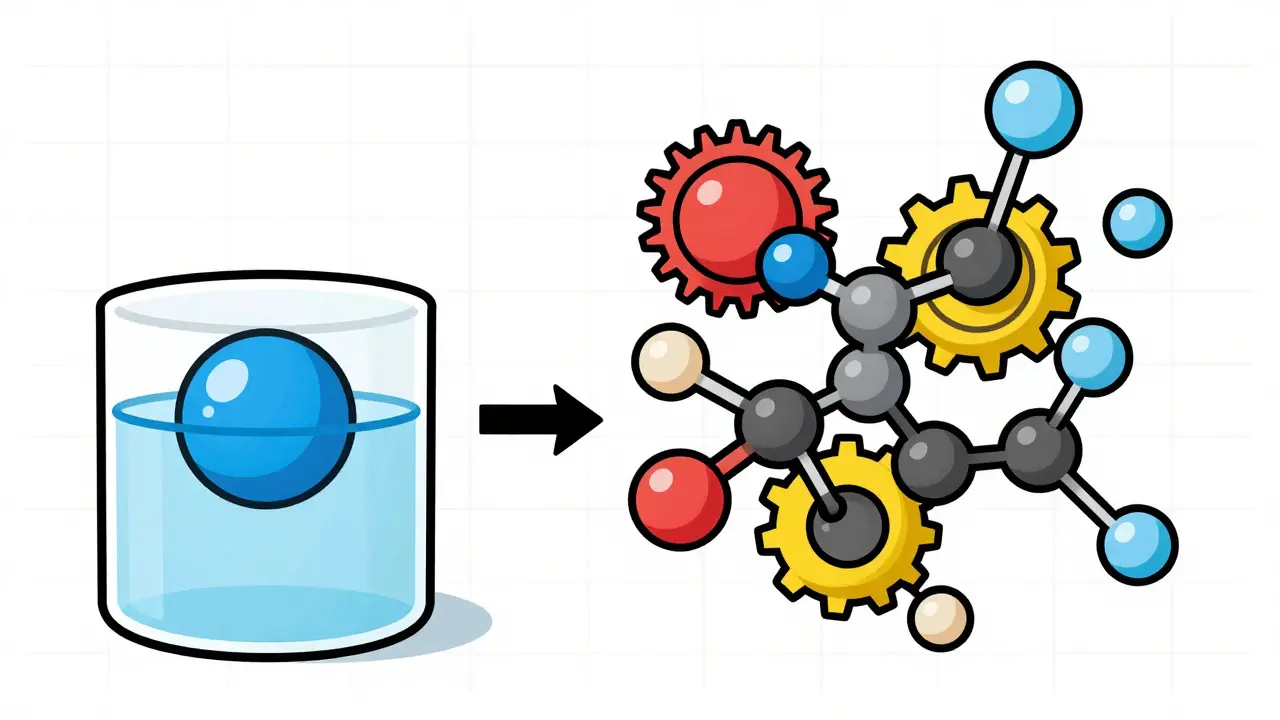
To understand the delay, you first need to know what makes these drugs different. A traditional generic is usually a small molecule-a single chemical compound that dissolves quickly in your stomach. If the generic has the same active ingredient and dissolves at the same rate, it’s considered bioequivalent. Simple.
Complex generics break that simplicity. The FDA defines them by several factors:
- Complex Active Ingredients: Peptides and polymeric compounds are large, intricate molecules. They can trigger immune responses (immunogenicity) that small molecules don’t, requiring specialized testing to ensure safety.
- Complex Formulations: Liposomal formulations encapsulate drugs in tiny fat bubbles to protect them or target specific tissues. Recreating that bubble structure perfectly is like trying to copy a soufflé recipe without knowing the exact oven temperature.
- Complex Dosage Forms: Long-acting injectables release medication over weeks or months. Proving that a generic releases the drug at the exact same pace as the brand is notoriously difficult.
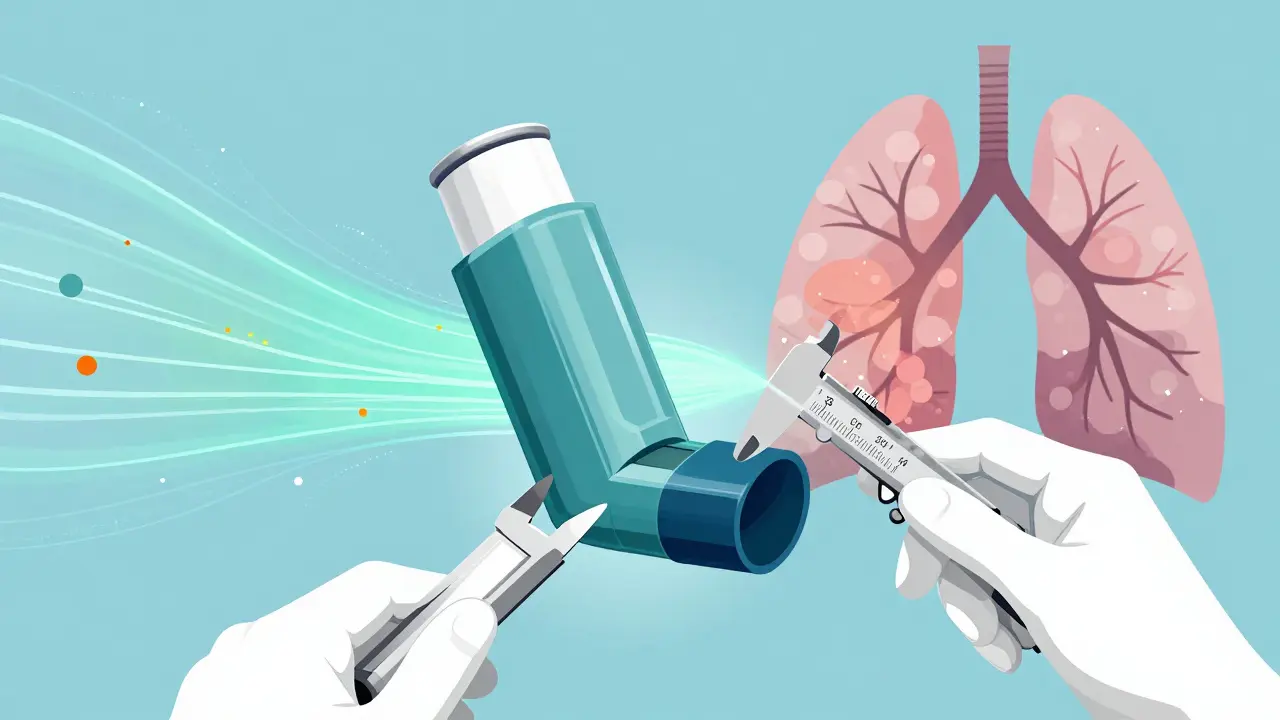
- Drug-Device Combinations: Inhalers, nasal sprays, and auto-injectors combine medicine with hardware. Here, the device matters. If the nozzle shape differs slightly, the spray pattern changes, altering how much drug reaches the lungs versus the throat.
In short, with complex generics, the package isn’t just a container; it’s part of the therapy.
The Bioequivalence Hurdle
The core requirement for any generic approval is bioequivalence (BE). For simple drugs, BE is proven through blood tests showing that the generic enters the bloodstream at the same speed and extent as the brand. For complex generics, this standard often fails.
Consider an inhaler. You can’t easily measure how much drug reached the deep lung tissue via a blood test alone. You have to model airflow, particle size, and deposition patterns. A systematic review published in PubMed analyzed 24 studies on this topic and identified "analytical challenges" and "clinical challenges" as the biggest hurdles. Manufacturers must develop entirely new testing methods just to prove their product matches the reference listed drug (RLD).
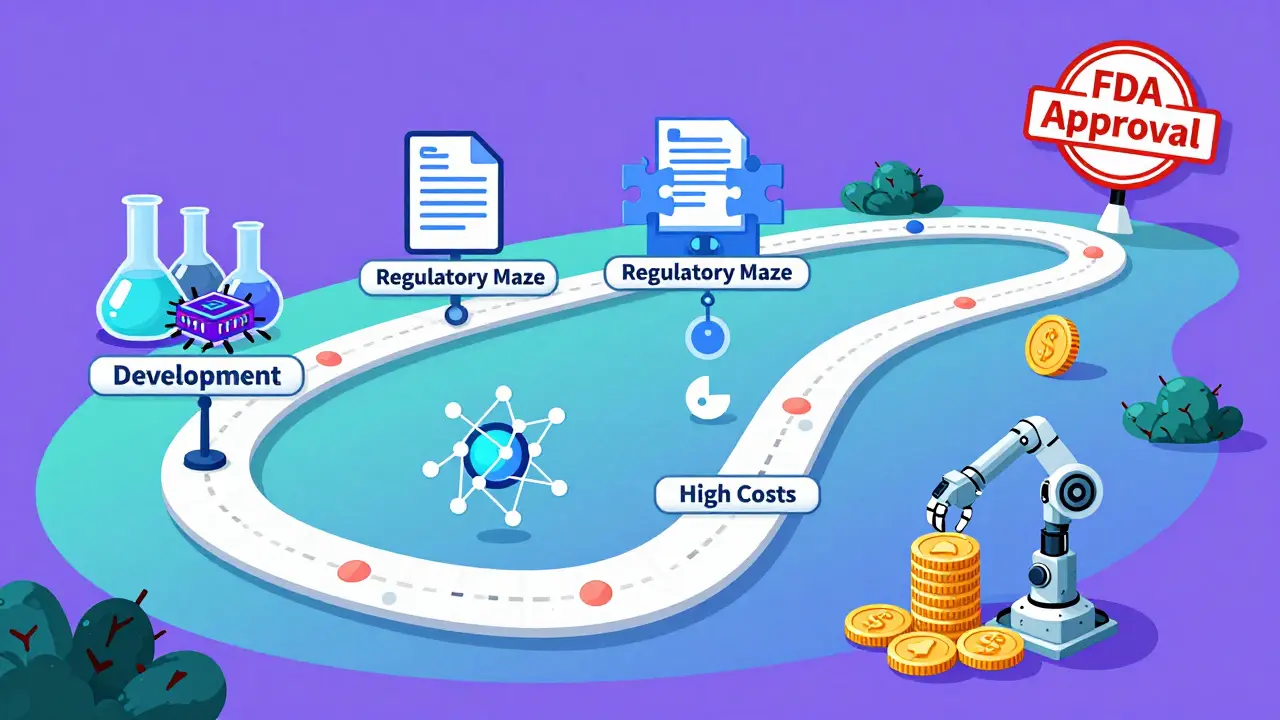
This scientific uncertainty leads to longer development timelines. While a conventional generic might take 2-3 years to develop, a complex generic program often stretches to 5-7 years. The cost reflects this too: industry benchmarks suggest complex programs cost $20-50 million, compared to significantly less for simple generics. High risk means fewer companies are willing to play.
| Feature | Conventional Generic | Complex Generic |
|---|---|---|
| Active Ingredient | Small molecule | d>Peptides, polymers, biologics|
| Delivery Mechanism | Simple pill/capsule | Inhaler, injector, liposome |
| Bioequivalence Test | Blood concentration curve | Custom models, imaging, device analysis |
| Development Time | 2-3 years | 5-7 years |
| Regulatory Pathway | Standard ANDA | ANDA, 505(b)(2), or hybrid |
Navigating the Regulatory Maze
If the science is hard, the bureaucracy is harder. Most generics enter the market via an Abbreviated New Drug Application (ANDA). This pathway relies on the assumption that if the chemistry matches, the clinical effect will too. For complex drugs, that assumption doesn’t hold.
Many manufacturers find themselves forced into a 505(b)(2) application, a "hybrid" route used when some data comes from sources not owned by the applicant. This path is more flexible but also more ambiguous. Without clear rules, developers guess what the FDA wants. As experts note, "Without specific guidance documents, FDA's expectations are unclear and appear to be continuously evolving." This ambiguity causes delays that hurt patients waiting for affordable options.
To fix this, the FDA introduced Product-Specific Guidances (PSGs). By July 2019, there were approximately 1,700 PSGs available, with over 160 new or revised ones published that year alone. These documents act as roadmaps for specific drugs, telling manufacturers exactly how to design their studies. Additionally, the Pre-ANDA Meeting Program allows companies to meet with FDA reviewers early in the process. By 2023, the agency had processed over 1,200 such meeting requests. These tools help, but they don’t eliminate the fundamental complexity.
Why So Few Approvals?
You might wonder: if the FDA is trying so hard, why aren’t we seeing more complex generics? The numbers tell a stark story. As of Q2 2023, only 15 complex generic products had received FDA approval since 2015. In that same period, over 1,000 conventional generics were approved.
Several factors contribute to this gap:
- Low Competition: Because development is risky, few companies compete. Sometimes, only one or two firms attempt a complex generic, reducing the pressure to innovate or lower prices.
- Legal Challenges: Brand-name companies often use patent thickets to block generics. For complex drugs, patents cover not just the molecule but the device, the formulation, and the method of administration. Litigation adds years to the timeline.
- Manufacturing Difficulty: Small changes in manufacturing processes can alter the quality of complex products. Maintaining consistency requires advanced technology and rigorous quality-by-design approaches.
A notable exception proves the rule. In 2019, the FDA approved bupivacaine liposome injectable, the first complex generic requiring a challenging bioequivalence approach. It succeeded because of intense collaboration between the manufacturer and the FDA, using specific guidance to navigate the unknown. It shows what’s possible, but it remains the outlier, not the norm.
Global Variations Add Complexity
The challenge isn’t unique to the U.S., but other countries face different hurdles. In China, the National Medical Products Administration (NMPA) often requires local legal agents and mandates local testing or clinical trials, extending review times up to two years. Brazil’s ANVISA imposes stringent bioequivalence requirements and demands certification of clinical sites adhering to ICH guidelines. These variations mean a company can’t simply approve a drug in the U.S. and sell it globally; they must navigate distinct regulatory landscapes for each major market.
What’s Next for Complex Generics?
Despite the slow progress, the outlook is shifting. Market analysts project that by 2028, complex generics could represent 25% of the $250 billion global generics market. This growth is driven by the expiration of patents on high-value branded products worth roughly $75 billion annually.
Technology is also helping. Artificial intelligence and machine learning tools are expected to reduce development timelines by 20-30% by 2027. These tools can predict formulation behaviors and optimize manufacturing processes faster than traditional trial-and-error methods. Quality-by-design approaches are similarly expected to cut regulatory review cycles by 35-45% for well-characterized products.
The FDA has committed to reviewing most original generic applications within 10 months and has hired hundreds of new staff for the generic drug review program. However, patient advocates argue that the agency needs to do more. Health Affairs emphasized that the current process fails to identify which drugs patients urgently need. Advisory councils with direct patient input could help prioritize approvals that maximize public health impact rather than just filling quota metrics.
Frequently Asked Questions
What is the difference between a simple generic and a complex generic?
A simple generic contains a small-molecule active ingredient in a standard dosage form like a tablet or capsule. Its bioequivalence is easily proven through blood tests. A complex generic involves difficult-to-replicate features such as complex active ingredients (peptides), complex formulations (liposomes), complex dosage forms (long-acting injectables), or drug-device combinations (inhalers). Proving these are equivalent requires advanced scientific modeling and custom testing protocols.
Why does it take longer to get FDA approval for complex generics?
Approval takes longer because standard bioequivalence tests don't work for many complex products. Manufacturers must develop new analytical methods, conduct specialized clinical studies, and often navigate ambiguous regulatory pathways like the 505(b)(2) hybrid route. Additionally, the FDA may require extensive back-and-forth communication through Pre-ANDA meetings to define acceptable standards, adding months or years to the timeline.
How many complex generic drugs has the FDA approved recently?
As of mid-2023, only about 15 complex generic products had been approved since 2015. This is a tiny fraction compared to the over 1,000 conventional generics approved in the same period. The low number reflects the high scientific barriers, significant financial risks ($20-50 million per program), and limited competition in this space.
What role do Product-Specific Guidances (PSGs) play in approving complex generics?
PSGs are documents issued by the FDA that provide detailed instructions on how to develop and test a specific complex drug product. Since general regulations are too vague for complex cases, PSGs act as roadmaps, telling manufacturers exactly what data the FDA needs to grant approval. They help reduce regulatory uncertainty and streamline the review process for high-priority products.
Will artificial intelligence help speed up complex generic approvals?
Yes, industry analysts predict that AI and machine learning tools will reduce complex generic development timelines by 20-30% by 2027. These technologies can simulate drug behavior, optimize formulation designs, and predict manufacturing outcomes more accurately than traditional methods. This efficiency could lower costs and encourage more companies to enter the complex generic market.