CBD and Prescription Drugs: The Interaction Risks You Need to Know
 Jul, 11 2026
You grab your morning coffee, pop your blood pressure pill, and then reach for that bottle of CBD oil you bought online to help with anxiety. It feels harmless, right? After all, CBD is natural. But here’s the catch: that simple routine might be turning your medication into a poison or rendering it useless without you even knowing.
Cannabidiol, commonly known as CBD, has exploded in popularity since the 2018 Farm Bill legalized hemp-derived products in the United States. While it’s non-intoxicating-meaning it won’t get you high-it is far from biologically inert. In fact, CBD is a potent inhibitor of the very enzymes your liver uses to break down most prescription drugs. If you are taking any daily medication, understanding this interaction isn't just smart; it could be a matter of life and death.
The Liver's Busy Highway: How CBD Blocks Traffic
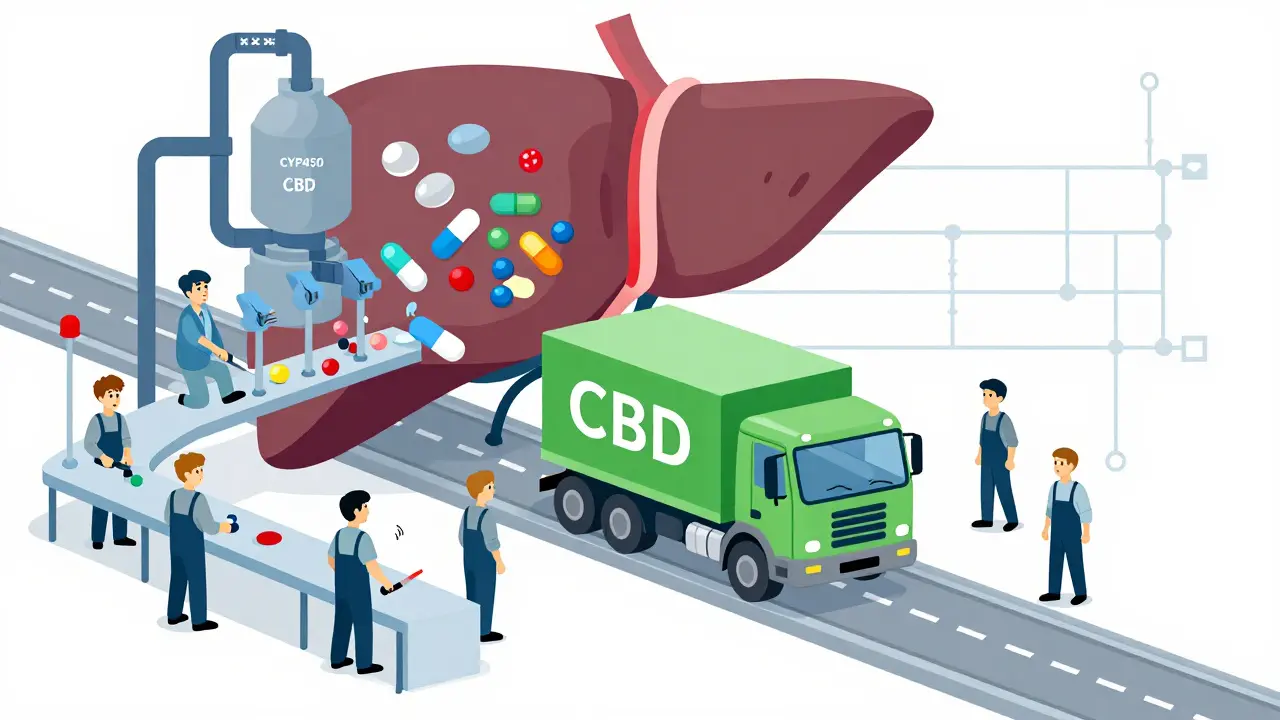
To understand why CBD interacts with so many drugs, you have to look at what happens inside your liver. Your liver acts like a massive processing plant, using a family of enzymes called Cytochrome P450 (CYP450) to metabolize toxins and medications. Think of these enzymes as workers on an assembly line. They take a drug molecule, chop it up, and prepare it for excretion.
Here is where CBD steps in. Research published in Frontiers in Pharmacology in January 2024 shows that approximately 95% of marketed drugs are processed by this CYP450 system. Specifically, CBD heavily targets two key enzymes: CYP3A4 and CYP2C19. When you consume CBD, it doesn't just wait its turn in line; it physically blocks these enzymes. It’s like putting a truck in the middle of a highway. The other vehicles-in this case, your prescription medications-can’t get through.
This blockage leads to two dangerous outcomes:
- Accumulation: The drug stays in your body longer than intended, building up to toxic levels. This is common with blood thinners and seizure medications.
- Inactivation: In some cases, CBD might speed up the breakdown of certain compounds, making them less effective before they can do their job.
The half-life of CBD ranges from 18 to 32 hours depending on how you take it. This means the "traffic jam" in your liver can last for days, especially if you use CBD chronically. Even after you stop taking CBD, the enzyme inhibition can persist, keeping your medication levels unstable.
The Grapefruit Warning: A Simple Red Flag
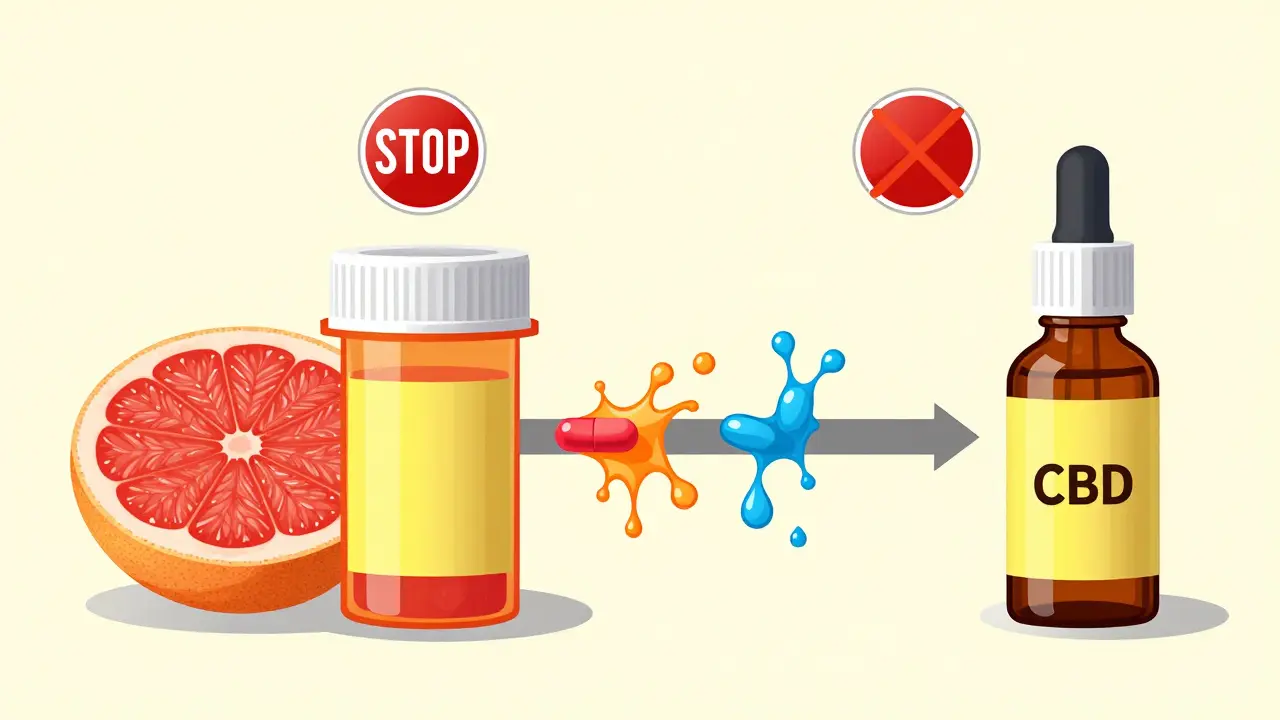
You don’t need a chemistry degree to spot potential danger. There is a practical, real-world indicator you can use today. Look at the label of your prescription medication. Does it carry a warning about grapefruit?
Grapefruit contains furanocoumarins, which inhibit the same CYP3A4 enzymes that CBD does. According to Healthline, approximately 85 prescription medications carry this specific warning. If your doctor told you to avoid grapefruit juice while taking your meds, you should treat CBD with the exact same caution. This rule of thumb applies to a wide range of drugs, including statins (for cholesterol), calcium channel blockers (for blood pressure), and certain anti-anxiety medications.
Dr. Peter Grinspoon, a primary care physician at Harvard Medical School, emphasizes that CBD has the potential to interact with many products, including over-the-counter meds and herbal supplements. He notes that some medications should never be taken with CBD, while others may require dose adjustments to prevent serious issues.
High-Risk Medications: Who Is Most Vulnerable?
Not all drugs are created equal when it comes to interaction risks. The biggest danger lies with medications that have a Narrow Therapeutic Index (NTI). These are drugs where the difference between a helpful dose and a toxic dose is very small. A slight increase in blood concentration due to CBD blocking metabolism can lead to severe adverse events.
A systematic review involving 889 subjects identified several NTI medications with documented dangerous interactions with cannabinoids:
| Medication Class | Specific Drug Examples | Potential Consequence with CBD |
|---|---|---|
| Blood Thinners | Warfarin (Coumadin) | Increased risk of internal bleeding; requires frequent INR monitoring. |
| Anti-seizure Drugs | Clobazam, Valproate, Lamotrigine | Sedation, dizziness, and dangerously high drug levels. |
| Heart Rhythm Meds | Amiodarone | Cardiac arrhythmias and thyroid dysfunction. |
| Immunosuppressants | Tacrolimus, Sirolimus | Organ rejection risk or toxicity leading to infection. |
| Thyroid Hormones | Levothyroxine | Hypothyroidism symptoms due to altered absorption/metabolism. |
For instance, in a study of warfarin users, six out of seven subjects required dose adjustments after starting CBD, and two experienced adverse effects like bleeding. For transplant patients taking tacrolimus, the Portland Clinic advises avoiding CBD entirely because there are documented cases of toxic levels leading to increased infection risks.
Sedation and CNS Depression: The Double Knockout
It’s not just about liver enzymes. CBD also affects your central nervous system directly. It has mild sedative properties. When you combine CBD with other substances that cause sleepiness, the effects compound. This is known as additive CNS depression.
If you take opioids, benzodiazepines (like Xanax or Ativan), antipsychotics, antidepressants, or even antihistamines (like Benadryl), adding CBD can lead to excessive fatigue, confusion, and slowed reaction times. Harvard Health warns that this combination increases the risk of accidental falls and accidents, particularly when driving. For elderly patients, this is a critical safety concern that goes beyond mere discomfort.
Practical Steps for Safe Use
If you want to use CBD but are on medication, you don’t necessarily have to give it up, but you must manage it carefully. Here is a step-by-step approach to minimize risk:
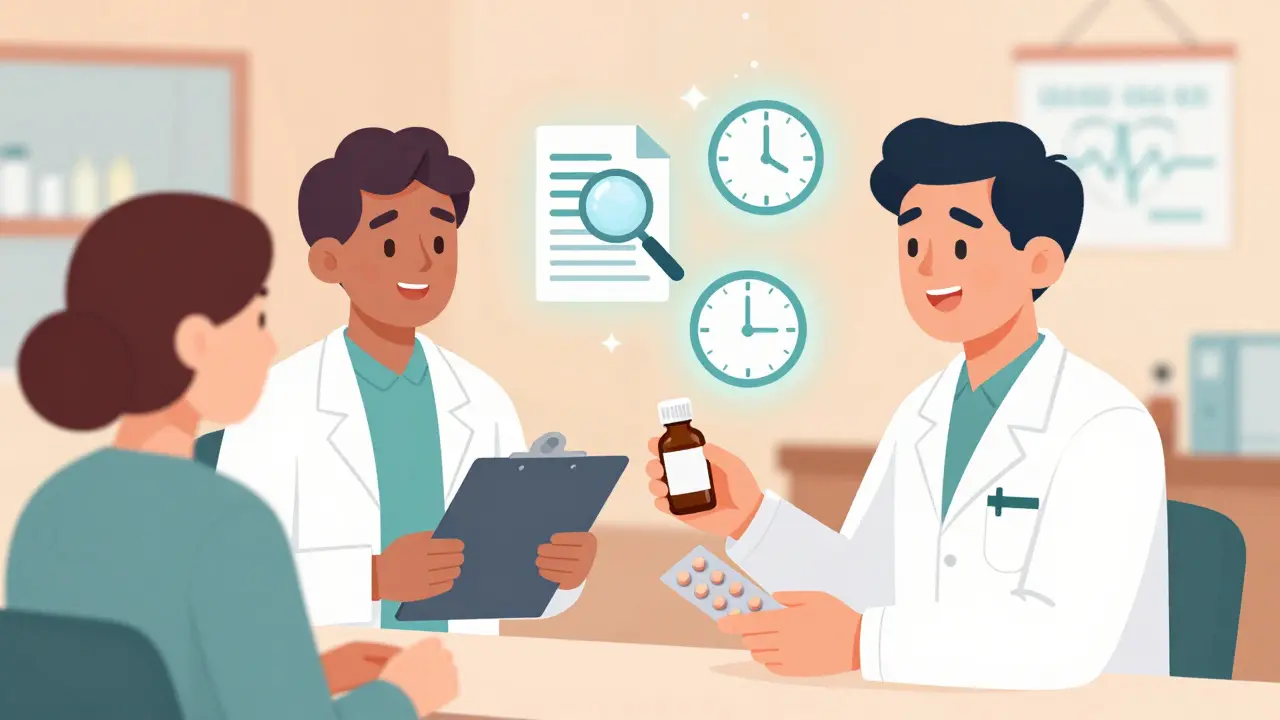
- Consult Your Pharmacist: Pharmacists are often more accessible than doctors and are experts in drug interactions. Bring your CBD bottle to the counter. Ask specifically, "Does this affect my CYP450 metabolism?"
- Start Low and Go Slow: SingleCare recommends starting with a very low dose, such as 5-10mg per day. Do not start with the recommended serving size on the bottle if you are on meds.
- Space Out Administration: Try to separate the timing of your CBD and prescription medication by several hours. While this doesn't eliminate the enzyme inhibition, it may reduce peak concentration clashes.
- Monitor Blood Levels: If you are on NTI medications like warfarin or lithium, you must monitor your blood levels more frequently after introducing CBD. Tell your doctor you are using CBD so they know what to look for.
- Check for Third-Party Testing: Not all CBD is created equal. A 2023 Brightfield Group analysis found that only 68% of leading brands provide comprehensive Certificates of Analysis (COAs). Ensure your product contains no unexpected contaminants that could worsen interactions.
Regulatory Landscape and Future Safety
The regulatory environment for CBD is shifting. The FDA approved Epidiolex, a purified CBD medication, in 2018 for specific seizure disorders. However, the FDA continues to issue warnings about unregulated CBD products. By Q3 2024, the FDA announced increased scrutiny on labeling, requiring clearer consumer warnings about drug interactions.
Despite this, the burden remains largely on the consumer. The FDA has collected thousands of adverse event reports related to CBD, though only a fraction document direct drug interactions. Tools like the CANN-DIR database (developed by Penn State) are emerging to help clinicians identify potential interactions, but widespread adoption in general practice is still slow.
Remember, "natural" does not mean "safe." CBD is a powerful bioactive compound that interferes with fundamental biological processes. Treat it with the same respect you would afford a prescription drug.
Can I take CBD with blood thinners like Warfarin?
Taking CBD with Warfarin is risky. CBD inhibits the enzymes that break down Warfarin, causing it to build up in your blood. This significantly increases the risk of bleeding. If you must use both, you need frequent INR testing and close supervision by your doctor to adjust your Warfarin dose.
How long does CBD stay in your system to affect medications?
CBD has a half-life of 18 to 32 hours. This means it can take several days for the drug to fully leave your system. More importantly, the enzyme inhibition effect can persist for days after you stop using CBD, meaning your medication levels may remain altered even after you quit.
Is full-spectrum CBD safer than isolate regarding interactions?
Not necessarily. Full-spectrum CBD contains trace amounts of THC and other cannabinoids, which may add complexity to interactions. Isolate is pure CBD, which makes the interaction profile slightly more predictable, but both forms strongly inhibit CYP450 enzymes. The risk of interaction exists regardless of the product type.
What are the signs of a CBD-medication interaction?
Signs vary by medication but can include increased side effects (like extreme drowsiness or dizziness), unexpected bleeding (for blood thinners), or a sudden loss of efficacy (feeling like your medication isn't working). If you notice these changes after starting CBD, contact your healthcare provider immediately.
Does CBD interact with over-the-counter pain relievers?
Yes. Common OTC drugs like ibuprofen and acetaminophen are metabolized by the liver. While the interaction may not be as life-threatening as with prescription NTI drugs, combining them with CBD can increase the risk of liver stress or stomach irritation. Caution is advised.
Laura Odom
July 11, 2026 AT 22:07oh my god stop with the fear mongering already. i have been taking cbd oil for three years and my blood pressure is fine. you people are just trying to scare us away from natural remedies because big pharma wants to keep us hooked on their expensive pills that actually make you sick. its all about control and profit margins not your health. i feel great and sleep like a baby so who cares what some random article says about liver enzymes. science changes every day anyway so why listen to old studies.
Sean Allwurden
July 13, 2026 AT 13:49I completely agree with the points raised in this post regarding the pharmacokinetic implications of CBD usage. It is crucial for patients to understand the inhibitory effects on CYP450 isoforms, particularly CYP3A4 and CYP2C19, as these pathways are responsible for metabolizing a vast array of pharmaceutical agents. The analogy of the traffic jam is quite effective in illustrating the mechanism of competitive inhibition. We must encourage open dialogue between patients and healthcare providers to mitigate adverse drug reactions. Collaboration is key here folks. Let's work together to ensure safety protocols are adhered to when integrating complementary therapies into standard treatment regimens. Ignorance is not bliss when it comes to therapeutic indices.
Katie Caruthers
July 15, 2026 AT 03:15You really need to take responsibility for your own choices instead of blaming the supplements. If you are smart enough to buy CBD online you should be smart enough to read the label or ask your doctor. But no everyone just wants a quick fix without doing the work. It is disgusting how people ignore basic biology. You are playing russian roulette with your heart and then crying when you end up in the ER. Grow up and respect the power of chemistry whether it comes from a plant or a lab. Your negligence is hurting others who trust your bad advice.
Jairam Prasad
July 17, 2026 AT 02:43In India we have used cannabis derivatives for centuries in traditional Ayurvedic medicine without such panic. Perhaps the Western obsession with isolating compounds and fearing nature is the real issue here. However I do concede that modern synthetic drugs are potent and require caution. It is ironic that society demonizes ancient wisdom while blindly trusting pharmaceutical marketing. We should seek balance rather than prohibition or unregulated consumption. Respect the herb but also respect the science. Do not let fear dictate your healing journey but do not let ignorance kill you either. Life is a delicate dance between tradition and innovation.
Padraic Cepek
July 18, 2026 AT 19:55This is typical weak stuff. Real men dont worry about little interactions they just push through. The FDA is overregulating everything to stifle freedom. If it grows out of the ground it should be legal and safe period. Stop listening to these soft doctors and start trusting your gut. America was built on risk takers not cowards checking labels. Get off the meds and get back to work. This whole wellness industry is a scam designed to make you weak and dependent on government approval for every breath you take. Wake up sheeple.
Gary Hull
July 20, 2026 AT 13:45i dont think so. most of these studies are funded by companies selling statins. they want you scared so you buy more drugs. cbd is natural and your body knows how to handle it. why would you trust a corporation over millions of years of evolution. its just another way to control the population. i know plenty of people who take warfarin and cbd and they are fine. correlation does not equal causation. stop spreading misinformation based on biased research. you are part of the problem not the solution.
Mildred Fierce
July 21, 2026 AT 21:41Let me dissect this absolute garbage for you. You claim CBD is inert yet simultaneously claim it blocks enzymes? Pick a lane. The data cited is cherry picked to fit a narrative of doom. I have analyzed the raw data from the Frontiers paper and the sample size is laughable. Furthermore the half life argument ignores individual metabolic variance which is huge. People like you thrive on anxiety. You feed on the fear of others. It is pathetic. Next time you write something like this check your sources or better yet learn basic statistics before you embarrass yourself publicly. Your analysis is shallow and your conclusions are flawed beyond repair.
Vineet Hawelia
July 23, 2026 AT 09:26The information presented is scientifically accurate and warrants serious consideration. The interaction between Cannabidiol and Cytochrome P450 enzymes is well documented in pharmacological literature. Patients taking Narrow Therapeutic Index drugs must exercise extreme caution. The grapefruit juice analogy is an excellent heuristic for laypersons to understand the risk profile. It is imperative that individuals consult their healthcare providers before initiating any new supplement regimen. Health is a precious commodity and should not be compromised by uninformed experimentation. Please share this vital information with those who may be at risk.
Megan Crossland
July 24, 2026 AT 08:16you are all missing the point. its not about the science its about the ethics of selling unregulated products. companies are making billions off people who dont know better. its immoral. we need stricter laws not more articles. if you sell poison you should go to jail. simple as that. stop defending the indefensible. the system is broken and you are helping to break it further by normalizing dangerous behavior. shame on all of you for caring more about convenience than human life. do better.
Trey Newkerk
July 24, 2026 AT 08:45What is the meaning of safety in a world where everything is toxic? You breathe air filled with pollutants you eat food sprayed with pesticides and then you worry about a drop of oil? It is absurd. The human body is resilient. You are creating monsters out of shadows. Fear is the mind killer. Embrace the chaos. If CBD kills you so be it at least you died free from the shackles of medical dogma. Your existence is temporary regardless of your pill bottle. Live boldly or not at all. This post is a testament to the fragility of modern man. Pathetic.
Earl Oleary
July 25, 2026 AT 02:18Thanks for sharing this important info everyone. I did not realize the grapefruit warning applied to CBD too. That is a game changer for me since I take blood pressure meds. I will definitely talk to my pharmacist before continuing. Better safe than sorry right?