Antacids and Antibiotics: The Critical Timing Guide to Avoid Drug Interactions
 Jun, 24 2026
Imagine taking your morning dose of antibiotics for a stubborn infection, then popping an antacid because your stomach feels upset. It seems like harmless multitasking. In reality, you might just be flushing that medicine down the toilet. This isn't a scare tactic; it's chemistry. When certain antacids are medications containing aluminum, magnesium, or calcium used to neutralize stomach acid meet specific antibiotics in your gut, they don't mix. They bind together into a solid lump that your body simply cannot absorb.
This interaction is one of the most common reasons antibiotic treatments fail in outpatient settings. Research from the University of California, San Francisco, first flagged this issue back in the 1970s, but it remains a major problem today. According to data published in the American Journal of Health-System Pharmacy, about 35% of patients prescribed antibiotics also take antacids at the same time. If you're not careful with the clock, you could be reducing the effectiveness of your medication by up to 80%. Let's break down exactly which drugs clash, why it happens, and how to schedule your doses so you actually get better.
Why Antacids Block Antibiotic Absorption
To understand the fix, you need to know the problem. There are two main ways antacids mess with antibiotics: chelation and pH alteration. Think of chelation like a magnet. Certain minerals in antacids-specifically aluminum, magnesium, and calcium-act like magnets for specific antibiotic molecules. When they touch in your stomach, they lock together into an insoluble complex. Your digestive system can't break this complex down, so it passes right through you without entering your bloodstream.
The second mechanism involves acidity. Your stomach is naturally very acidic, which helps dissolve many medications so they can be absorbed. Antacids do exactly what their name suggests: they raise the pH level (make it less acidic). Some antibiotics rely on that acidic environment to break apart and enter your system. Without it, they remain intact and unabsorbed. A study in the Journal of Antimicrobial Chemotherapy (2019) showed that doxycycline, a common tetracycline antibiotic, loses about 30% of its absorption power when taken with antacids due to these combined effects.
Which Antibiotics Are Most at Risk?
Not all antibiotics suffer equally from this interaction. Knowing which class your prescription belongs to is the first step in protecting your treatment. Here is how the major groups stack up:
| Antibiotic Class | Common Examples | Absorption Reduction | Required Separation Time |
|---|---|---|---|
| Fluoroquinolones | Ciprofloxacin, Levofloxacin | Up to 90% | 2 hours before OR 4 hours after antacid |
| Tetracyclines | Doxycycline, Tetracycline | 50-70% | 2-3 hours separation |
| Beta-Lactams | Amoxicillin, Cephalexin | 15-25% | 1-2 hours separation |
| Macrolides | Azithromycin, Clarithromycin | Minimal | 2 hours precautionary separation |
Fluoroquinolones are the big winners here-and losers, depending on your perspective. Drugs like ciprofloxacin are notoriously sensitive. The NHS reports that taking ciprofloxacin with antacids containing aluminum or magnesium can slash absorption by up to 90%. That means you're effectively taking a placebo instead of medicine. Tetracyclines, often used for acne or respiratory infections, are also highly vulnerable. Beta-lactams like amoxicillin are more resilient, but even they see a noticeable drop in efficacy if taken simultaneously.
The Golden Rule: Timing Is Everything
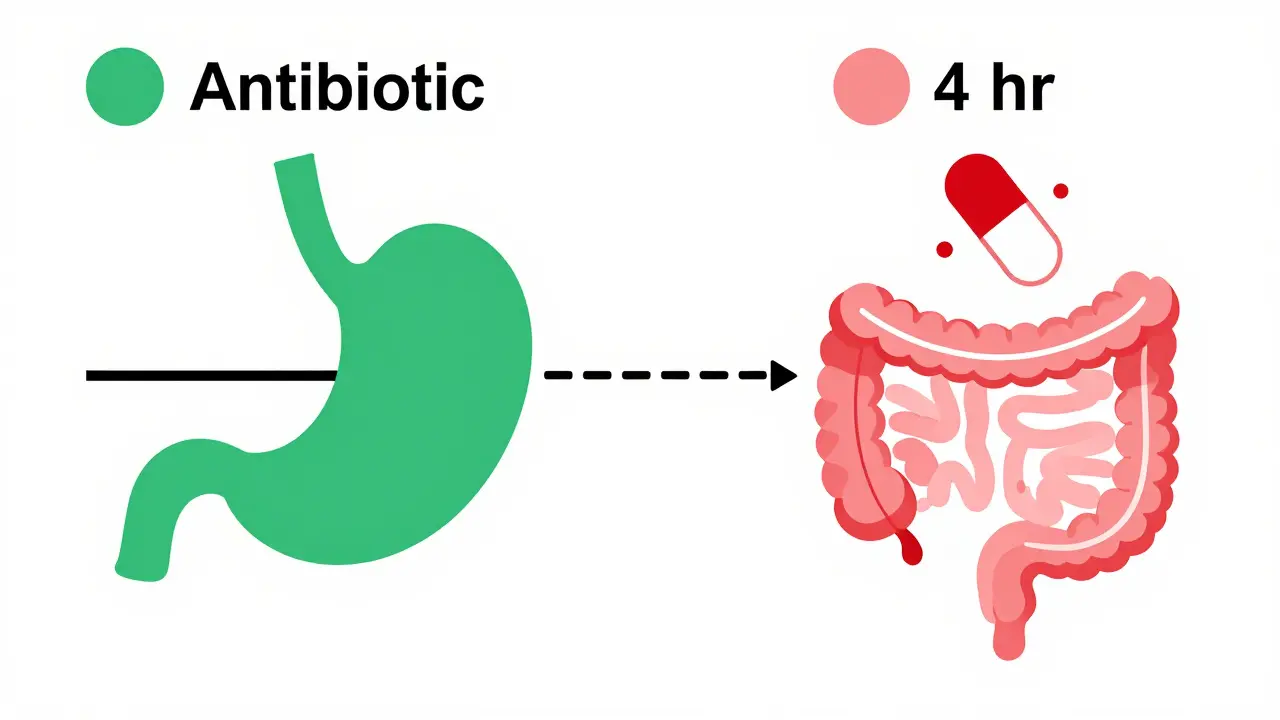
You don't have to stop taking antacids if you're on antibiotics. You just have to space them out. The goal is to let the antibiotic pass through your stomach and enter your small intestine (where most absorption happens) before the antacid arrives, or vice versa.
Here is the practical protocol recommended by the Cleveland Clinic and supported by FDA guidelines:
- For Fluoroquinolones (Cipro, Levaquin): Take the antibiotic at least 2 hours before or 4 hours after your antacid. This wide window is necessary because these drugs bind so strongly to metal ions.
- For Tetracyclines (Doxycycline): Separate doses by at least 2 to 3 hours. Taking doxycycline with calcium-rich antacids (like Tums) is particularly risky, so lean toward the longer end of that window.
- For Amoxicillin and similar drugs: A 1-2 hour gap is usually sufficient, but consistency matters. Don't take them together in one handful of pills.
If you are taking an antibiotic twice a day, scheduling can get tricky. For example, if you take ciprofloxacin at 8 AM and 8 PM, and you need an antacid for heartburn at noon, you are safe. But if you need relief at 10 AM, you have a problem. In cases where you require frequent antacid use, talk to your doctor about switching to H2 blockers (like famotidine) or proton pump inhibitors (like omeprazole). A 2023 study in the Journal of Clinical Pharmacy and Therapeutics found that switching to these alternative acid reducers cut treatment failure rates from 27% down to 9%, as they interact far less with antibiotics than traditional antacids.
Real-World Consequences of Poor Timing
Why does this matter beyond just "following instructions"? Because failed treatments lead to bigger problems. Dr. Sarah Thompson, Director of Clinical Pharmacology at Johns Hopkins University, noted in a 2021 editorial that failing to separate these drugs is a top preventable cause of antibiotic failure. When an antibiotic doesn't reach therapeutic levels in your blood, it doesn't kill the bacteria completely. Instead, it weakens them. Surviving bacteria can develop resistance, making future infections harder to treat.
The CDC's 2023 Antibiotic Resistance Threats Report estimates that 15% of emerging fluoroquinolone resistance may be linked to subtherapeutic levels caused by interactions like this. On a personal level, patients report recurring urinary tract infections or persistent skin issues because the initial course didn't work. One physician on Reddit shared a case of five patients with recurrent UTIs who were unknowingly neutralizing their ciprofloxacin with Tums. Once they fixed the timing, the infections cleared.

Tips for Staying on Schedule
Memory lapses happen, especially when you're sick. Here are some concrete strategies to keep your dosing on track:
- Use Visual Timers: Set a timer on your phone for the required separation window. If you take an antacid at 12:00, set a reminder for 4:00 PM before taking your fluoroquinolone.
- Leverage Apps: Medication management apps like MyMedSchedule now include specific interaction warnings. These tools can automatically flag conflicts and suggest adjusted schedules.
- Ask Your Pharmacist: Pharmacists are trained to spot these interactions. When you pick up your prescription, explicitly ask, "Does this interact with my antacid, and what is the exact timing?" Many pharmacists will write the timing directly on the label if you request it.
- Consider Formulation Changes: If you struggle with timing, ask your doctor if a different formulation is available. In 2023, the FDA approved a novel ciprofloxacin formulation (Cipro XR-24) designed to minimize these interactions, showing only 8% reduced absorption compared to the standard version's 90%.
Don't assume that "natural" antacids are safe either. Calcium carbonate, found in many over-the-counter brands like Tums, Rolaids, and generic equivalents, is just as potent at binding antibiotics as prescription antacids. Milk and dairy products also contain calcium and can interfere with tetracyclines, so avoid drinking milk with those specific antibiotics as well.
When to Call Your Doctor
If you realize you've already taken your antibiotic and antacid together, don't panic. One missed or reduced-dose instance rarely ruins the entire treatment course. However, do not double up on your next dose to "make up" for it, as this can increase side effects. Simply resume your normal schedule with the correct spacing moving forward. If you experience symptoms returning after finishing your course, contact your healthcare provider immediately. They may need to test for resistance or prescribe a different class of antibiotic that doesn't interact with your gastric meds.
Proper timing is a simple, cost-effective strategy that ensures you get the full benefit of your prescription. By respecting the chemistry between these drugs, you protect your health and help combat the broader issue of antibiotic resistance.
Can I take Tums with amoxicillin?
You can, but you should separate the doses. While amoxicillin is less sensitive than other antibiotics, taking it with calcium-based antacids like Tums can reduce absorption by 15-20%. Wait at least 1-2 hours between taking amoxicillin and Tums to ensure maximum effectiveness.
How long should I wait after taking an antacid before taking ciprofloxacin?
You must wait at least 4 hours after taking an antacid before taking ciprofloxacin. Alternatively, you can take the ciprofloxacin 2 hours before the antacid. This wide window is critical because ciprofloxacin binds strongly to metals in antacids, potentially losing up to 90% of its potency if taken too close together.
Do proton pump inhibitors (PPIs) interact with antibiotics?
PPIs like omeprazole generally have fewer direct binding interactions with antibiotics compared to traditional antacids. However, they significantly alter stomach pH, which can affect the absorption of some drugs. If you are on frequent acid-reducing therapy, consult your doctor about switching to an H2 blocker or adjusting your antibiotic choice to minimize risks.
What happens if I take my antibiotic with an antacid by mistake?
If you accidentally take them together, do not take an extra dose to compensate. The antibiotic may be less effective for that single dose, but one instance is unlikely to cause total treatment failure. Resume your regular schedule with proper spacing for subsequent doses. Monitor your symptoms, and if they persist or worsen, contact your healthcare provider.
Are there any antibiotics that don't interact with antacids?
Metronidazole is an example of an antibiotic that shows no significant interaction with antacids. Macrolides like azithromycin also have minimal interactions, though a 2-hour separation is still recommended as a precaution. Always check your specific prescription, as individual formulations can vary.