Allergic Reactions to Generics: Symptoms, Causes & When to Seek Care
 Jul, 24 2026
Did you know that the cheap generic pill sitting in your cabinet might trigger a reaction even if you’ve taken the brand-name version for years? It sounds counterintuitive. After all, generics are supposed to be identical to their expensive counterparts. But here is the catch: while the active ingredient-the part that actually treats your condition-is the same, the rest of the pill can look very different.
This difference matters more than most people realize. Approximately 5-10% of adverse reactions to generic medications are not caused by the medicine itself, but by the fillers, dyes, and binders used to hold the pill together. If you have sensitive skin, a history of allergies, or specific dietary restrictions like celiac disease or lactose intolerance, these "inactive" ingredients can become very active problems. Understanding what is inside those pills and knowing exactly when to run to the doctor versus when to call your pharmacist is a critical skill for modern patient safety.
The Hidden Difference: Active vs. Inactive Ingredients
To understand why a generic might upset you, we need to look at how these drugs are made. The Food and Drug Administration (FDA) requires that generic drugs demonstrate bioequivalence within 80-125% of the brand-name drug's pharmacokinetic profile. This means the amount of active drug entering your bloodstream must be similar enough to work effectively. However, manufacturers have wide latitude when choosing inactive ingredients.
These inactive components include fillers (like lactose or corn starch), binders (to keep the pill from crumbling), dyes (for color recognition), and preservatives. A 2022 study in the Journal of Generic Medicines found that 83% of generic formulations contain at least one different inactive ingredient compared to their brand-name equivalents. For the average person, this doesn’t matter. But for someone with a specific sensitivity, it’s the difference between relief and a rash.
| Ingredient | Prevalence in Generics | At-Risk Population | Common Reaction |
|---|---|---|---|
| Lactose | Present in 28% of oral generics | Lactose-intolerant individuals | Gastrointestinal distress, bloating |
| Gluten | Found in 12% of generics | Celiac disease patients | Inflammation, fatigue, GI issues |
| Tartrazine (FD&C Yellow No. 5) | In 15% of liquid generics | Dye-sensitive individuals | Hives, itching, asthma exacerbation |
| Peanut Oil | In 8% of injectable generics | Peanut allergy sufferers | Anaphylaxis (severe) |
| Magnesium Stearate | Variable usage | Sensitive individuals | Rash, digestive upset |
Consider the case of penicillin allergies. A report from the University of California, San Francisco documented 17 patients who had documented penicillin allergies. They tolerated brand-name amoxicillin perfectly fine but experienced reactions to generic versions. The culprit? Differences in magnesium stearate content. This highlights a crucial point: you might not be allergic to the antibiotic; you might be reacting to the binder holding the generic pill together.
Recognizing the Symptoms: From Mild to Severe
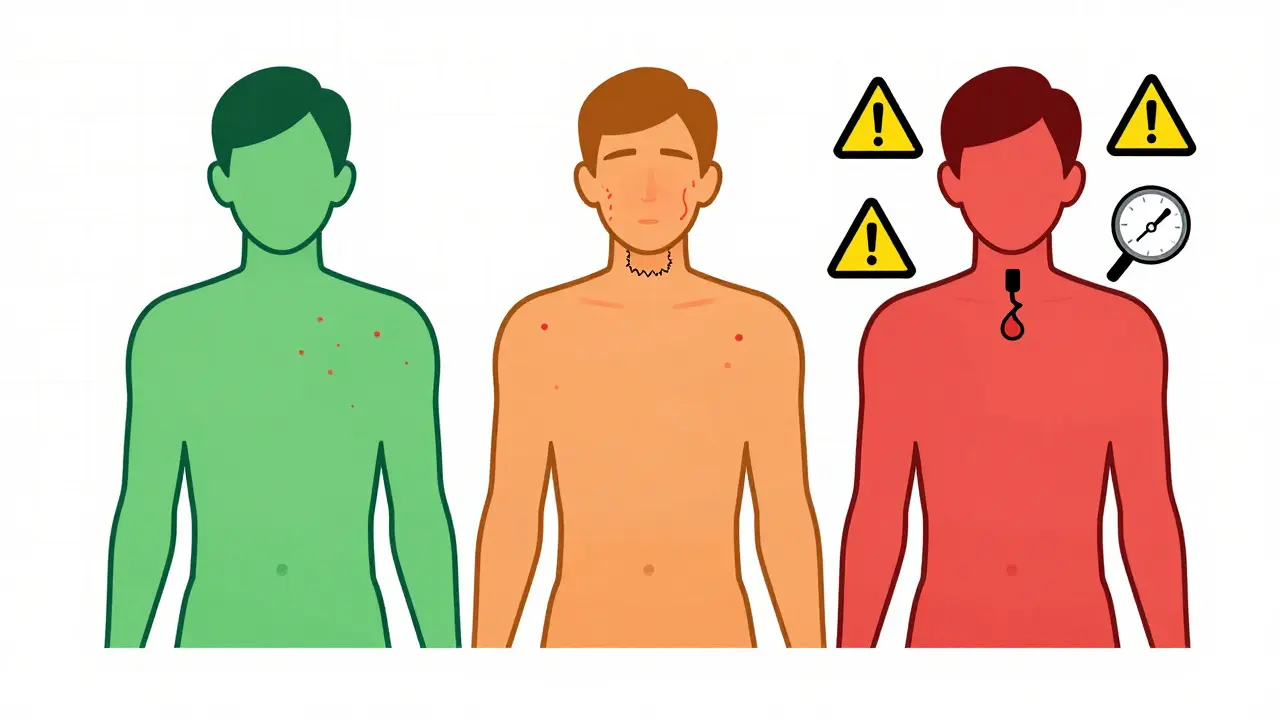
Not every side effect is an allergy. Nausea or mild drowsiness is often just your body adjusting to the medication. An allergic reaction, however, involves your immune system attacking the substance. These reactions fall into three main categories based on severity, and recognizing which bucket you fall into determines your next move.
Mild reactions are usually localized to the skin. According to data from the American College of Allergy, Asthma & Immunology (ACAAI), 68% of mild cases present as a rash, while 42% involve hives (urticaria) and 57% involve itching. These symptoms often appear hours after taking the medication. While uncomfortable, they are rarely life-threatening on their own, though they serve as a warning sign.
Moderate reactions begin to affect multiple body systems. You might experience wheezing (reported in 31% of moderate cases), nausea or vomiting (24%), or swelling of the face and lips (29%). At this stage, the reaction is no longer just cosmetic. It indicates that your immune system is mounting a significant response. If you notice your voice becoming hoarse or your throat feeling slightly tight, you are moving out of the "wait and see" zone.
Severe reactions, specifically anaphylaxis, are medical emergencies. Although rare-occurring in only 0.02-0.04% of generic administrations according to a 2023 meta-analysis-they are dangerous. Symptoms include severe throat tightness (87% of anaphylaxis cases), respiratory distress (92%), and a dangerous drop in blood pressure (systolic BP <90 mmHg in 78% of cases). The American College of Allergy, Asthma & Immunology notes that 43% of these severe reactions develop within just 15 minutes of ingestion. Speed is everything here.
When to Seek Medical Care: A Clear Decision Guide
Confusion about when to act is common. Here is a straightforward guide based on guidelines from the National Institute of Allergy and Infectious Diseases (NIAID) and the Food Allergy Research & Education (FARE) organization.
Call 911 Immediately If:
- You experience any difficulty breathing, wheezing, or stridor (a high-pitched sound when inhaling).
- Your throat feels like it is closing up or you have trouble swallowing.
- You feel faint, dizzy, or lose consciousness (syncope).
- You have swelling of the tongue or lips combined with any other symptom.
- Your heart rate becomes rapid and irregular.
If you have an epinephrine auto-injector (EpiPen), use it immediately while waiting for emergency services. FARE data shows that 91% of anaphylaxis cases require epinephrine within 5-15 minutes of symptom onset for optimal outcomes. Do not wait to see if it gets better. Adrenaline is the first-line treatment for airway compromise.
Contact Your Doctor Within 24 Hours If:
- You have persistent hives that last longer than 6 hours.
- You experience moderate swelling of the face or lips without breathing issues.
- You have gastrointestinal symptoms (vomiting/diarrhea) that do not resolve within 2 hours.
Schedule an Appointment Within 72 Hours If:
- You have a mild rash or itching that is manageable with over-the-counter antihistamines.
- You suspect a new generic medication is causing minor discomfort.
The American Academy of Family Physicians emphasizes that even mild reactions warrant evaluation. Why? Because 65% of initial mild reactions progress to more severe reactions upon subsequent exposure. Getting tested now can prevent a trip to the ER later.
Proactive Management: How to Stay Safe
Once you identify a potential issue, you have options. You don’t necessarily have to stop treating your condition; you just need to switch formulations. Dr. Elina Jerschow, Chair of the ACAAI Drug Allergy Committee, advises patients with known allergies to always review the inactive ingredient list of generic medications.
Here are practical steps you can take starting today:
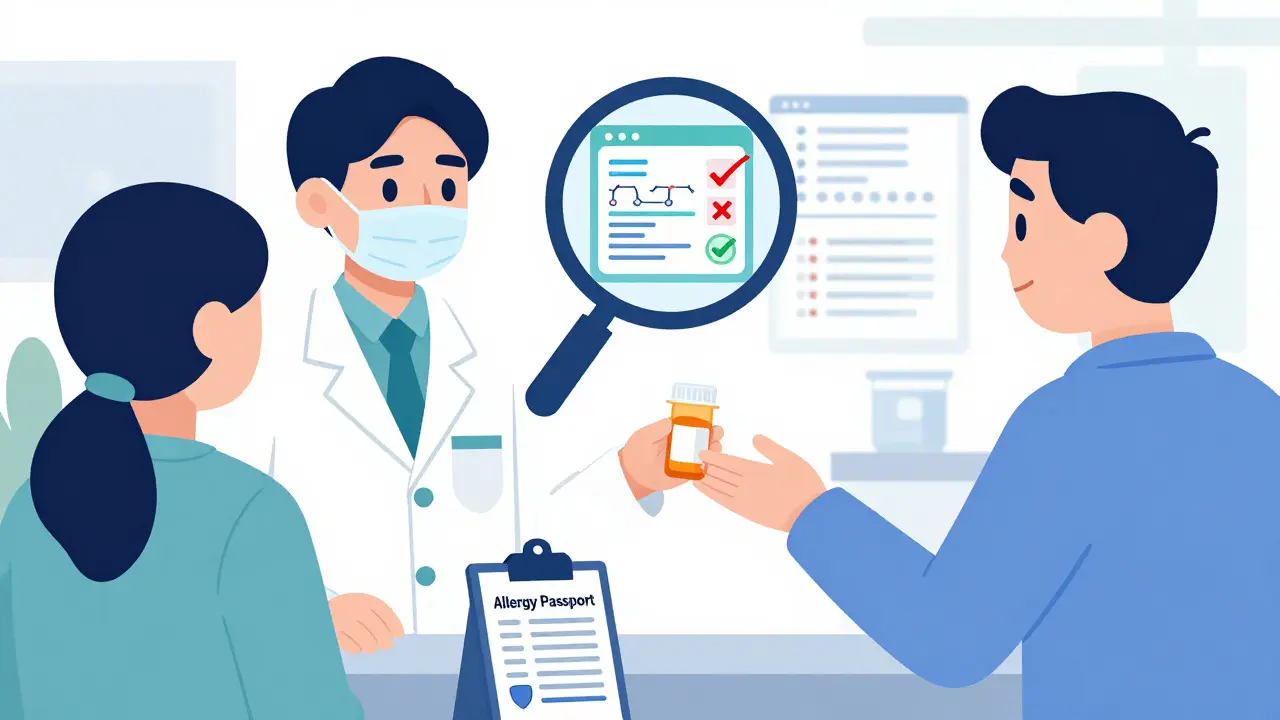
- Create a Medication Allergy Passport: Maintain a written list of not just the drugs you are allergic to, but the specific inactive ingredients (e.g., "tartrazine," "lactose"). A 2022 pilot study showed this simple tool reduces adverse drug events by 29%.
- Talk to Your Pharmacist: Pharmacists are experts in formulation differences. Ask them, "Does this generic contain [specific allergen]?" They can check the FDA’s Inactive Ingredient Database, which catalogs over 1,200 inactive ingredients.
- Request Specialized Formulations: About 38% of major generic manufacturers now offer dye-free, gluten-free, or lactose-free versions. You may need to ask specifically for these. For example, if you react to yellow dye, ask for a white or uncoated tablet.
- Consider Formal Testing: Many people labeled as "allergic" to drugs like penicillin are not truly allergic. Formal drug allergy testing costs approximately $350-$600 but can save you thousands in unnecessary alternative medication costs and open up safer treatment options. Dr. Kimberly Blumenthal notes that 90% of patients labeled as penicillin-allergic can safely take penicillin after proper evaluation.
It is also vital to ensure your medical records are accurate. The American Medical Association recommends that physicians document the specific formulation (brand vs. generic) and the suspected inactive ingredient when recording allergies. This precision has been shown to reduce inappropriate avoidance of essential medications by 37%. If your chart just says "Amoxicillin Allergy," doctors might avoid giving you the best antibiotic for a serious infection. If it says "Reaction to generic amoxicillin due to tartrazine dye," they can prescribe a dye-free version safely.
Frequently Asked Questions
Are generic drugs less effective than brand-name drugs?
No. Generic drugs must meet strict FDA standards for bioequivalence, meaning they deliver the same amount of active ingredient into your bloodstream over the same time period as the brand-name drug. The differences lie only in inactive ingredients like fillers and dyes, which do not affect therapeutic efficacy but can cause allergic reactions in sensitive individuals.
Can I be allergic to a generic if I took the brand name before?
Yes. Since generic manufacturers can use different inactive ingredients (binders, dyes, preservatives) than brand-name companies, you may tolerate the brand name perfectly but react to the generic. Common culprits include lactose, gluten, and specific dyes like tartrazine.
What are the first signs of a severe allergic reaction to medication?
The first signs of anaphylaxis often include throat tightness, difficulty breathing, wheezing, swelling of the face/lips/tongue, and a sudden drop in blood pressure leading to dizziness or fainting. These symptoms typically appear within 15 minutes to an hour after ingestion. Immediate emergency care is required.
How can I find out what inactive ingredients are in my generic medication?
You can ask your pharmacist to check the FDA’s Inactive Ingredient Database. Additionally, the package insert included with your prescription lists all ingredients. Online resources like DailyMed.gov also provide detailed labeling information for both brand and generic versions of medications.
Is it worth getting tested for drug allergies?
Yes, especially if you have been told you are allergic to a commonly prescribed drug like penicillin. Up to 90% of people with a reported penicillin allergy are not truly allergic. Testing can clear your record, allowing you to take safer, more effective, and often cheaper medications in the future.
Do generic manufacturers have to disclose all ingredients?
Yes. The FDA mandates that generic manufacturers disclose all inactive ingredients. However, awareness among patients and providers remains low, contributing to underreporting of reactions. Always proactively check the label or consult your pharmacist if you have known sensitivities.