Yoga and Tai Chi for Pain: Gentle Movement Benefits
 May, 22 2026
Living with chronic pain often feels like a trap. You want to move because sitting still makes your joints stiff and your muscles tight, but moving hurts. It’s a vicious cycle that leaves many people feeling helpless. But what if the solution wasn’t high-intensity gym workouts or more pills? What if the answer was slower, gentler, and rooted in ancient traditions?
Yoga is a mind-body practice originating from ancient India that combines physical postures, breathing techniques, and meditation to improve flexibility, strength, and mental clarity. Alongside it stands Tai Chi, a Chinese martial art evolved into a therapeutic exercise characterized by slow, flowing movements, deep breathing, and focused attention to enhance balance and reduce stress. These two practices are no longer just spiritual hobbies; they are evidence-based tools for pain management.
This guide breaks down how yoga and tai chi work for pain, which one might be right for you, and how to start safely without making things worse.
How Gentle Movement Fights Pain
It sounds counterintuitive, right? Moving when you hurt usually means more pain. But conventional exercise isn’t the only way to get fit. Yoga and tai chi are classified as "movement-based mind-body interventions." This fancy term simply means they treat the body and the brain at the same time.
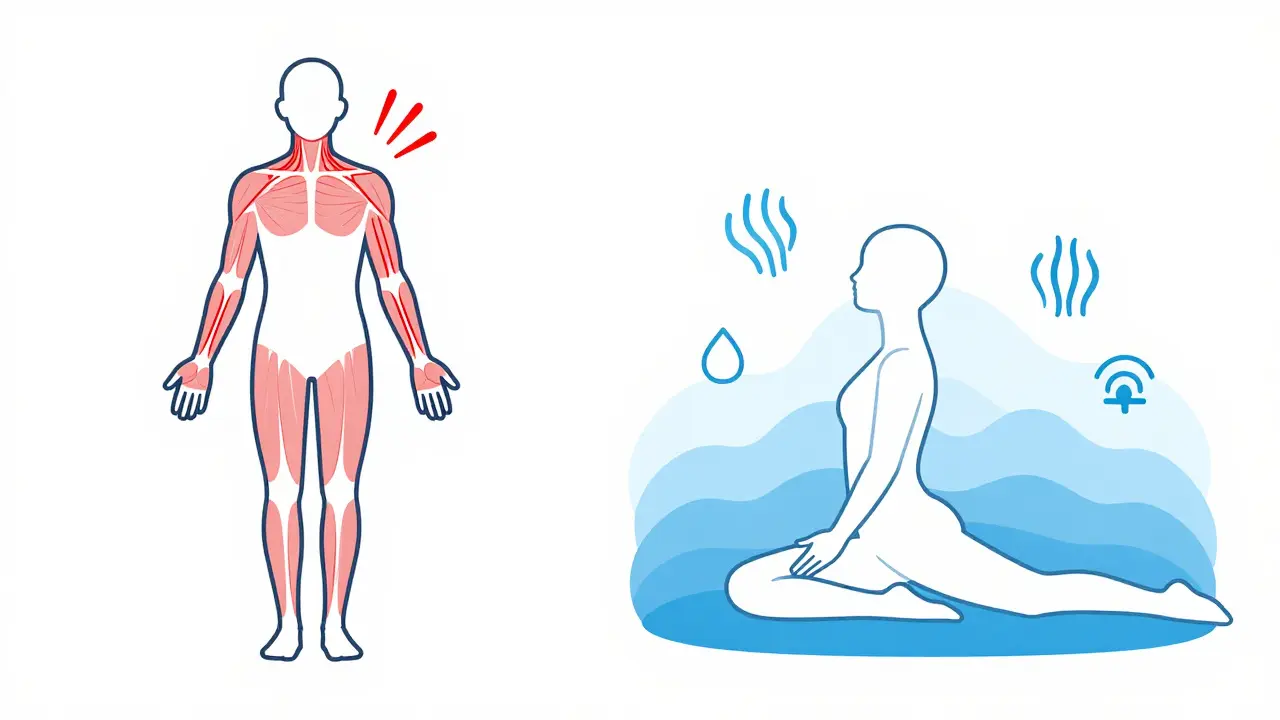
Chronic pain isn’t just a signal from your nerves; it’s amplified by stress, anxiety, and poor sleep. When you’re in pain, your body stays in "fight or flight" mode, keeping muscles tense and inflammation high. Gentle movement flips that switch. It activates the parasympathetic nervous system-the "rest and digest" mode.
Here is what happens on a physiological level:
- Stress Reduction: Deep, synchronized breathing lowers cortisol levels, reducing the body’s overall inflammatory response.
- Improved Body Awareness: You learn to notice tension before it becomes pain, allowing you to release it consciously.
- Gentle Conditioning: Unlike running or weightlifting, these practices strengthen stabilizing muscles without jarring your joints.
A 2021 study by Florida Atlantic University analyzed over 3,400 subjects and found that these practices address both the physical symptoms (like stiffness) and psychological aspects (like fear of movement) of chronic pain. The result? A break in the pain cycle.
Tai Chi vs. Yoga: Which Is Better for Your Pain?
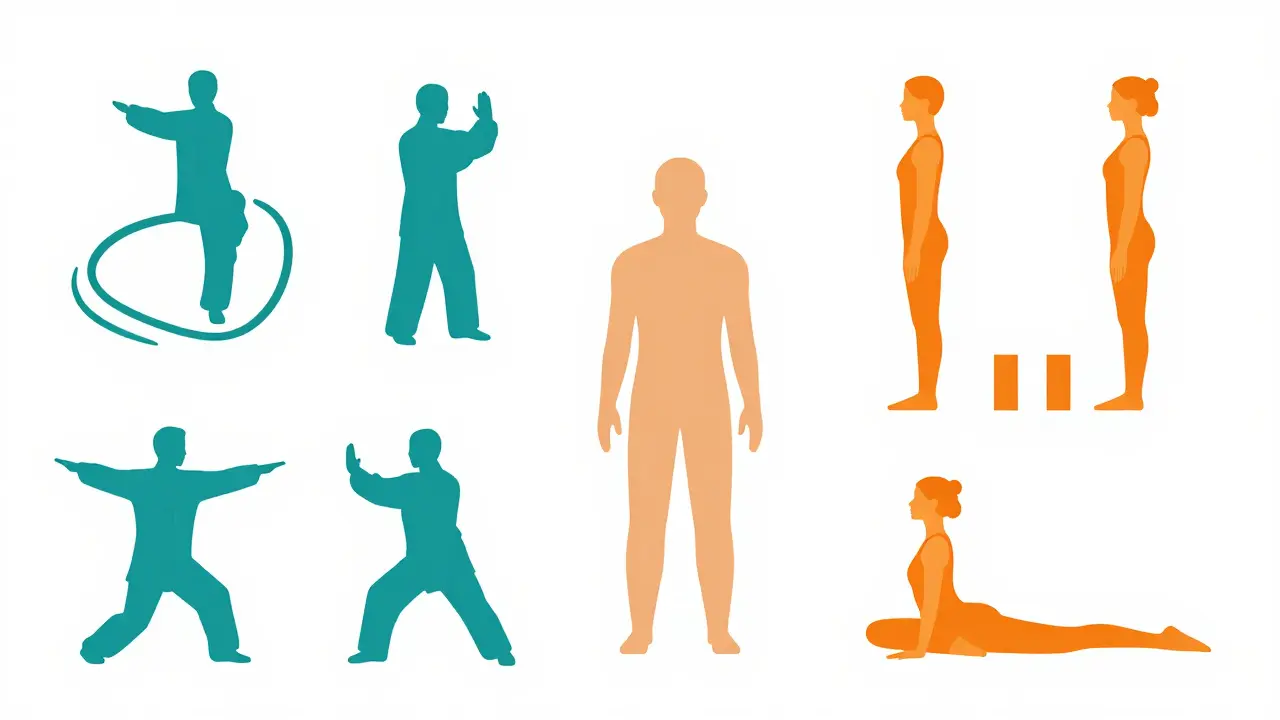
While both practices share mindfulness and breath control, their mechanics differ significantly. Choosing the right one depends on your specific condition and personal preference.
| Feature | Tai Chi | Yoga |
|---|---|---|
| Movement Style | Continuous, flowing sequences | Static poses (asanas) with transitions |
| Best For | Balance issues, knee osteoarthritis, fibromyalgia | Back pain, neck pain, general flexibility |
| Learning Curve | Low impact, easy to modify for standing | Varies; some styles require significant flexibility |
| Social Aspect | Often group-based, fostering community | Can be solo or group; more individual focus |
| Typical Session | 60 minutes, 2-3 times weekly | 45-90 minutes, frequency varies |
Tai Chi shines when balance is a concern. If you have knee osteoarthritis or are an older adult worried about falling, tai chi is exceptional. A 2021 review of 16 studies showed that tai chi improved balance metrics by 18-25% compared to control groups. It’s also highly effective for fibromyalgia. In a landmark New England Journal of Medicine study, participants who did tai chi for 12 weeks reported 27% greater pain reduction and better sleep than those who just stretched.
Yoga offers more variety. For back pain, high-dose yoga interventions (longer sessions, more frequent practice) have shown significant reductions in pain compared to standard care. For neck pain, a 2024 systematic review found that yoga combined with heat therapy reduced pain intensity by 42% more than standard physical therapy alone. However, yoga’s effect on rheumatoid arthritis remains mixed, with some studies showing improvement and others showing no change.
Starting Safely: Avoiding the "Flare-Up" Trap
The biggest mistake beginners make is doing too much, too soon. About 39% of new users report pain flares during their first few weeks. This doesn’t mean the practice is bad; it means you need to adjust your approach.
Follow this gradual progression plan recommended by Harvard Health and pain specialists:
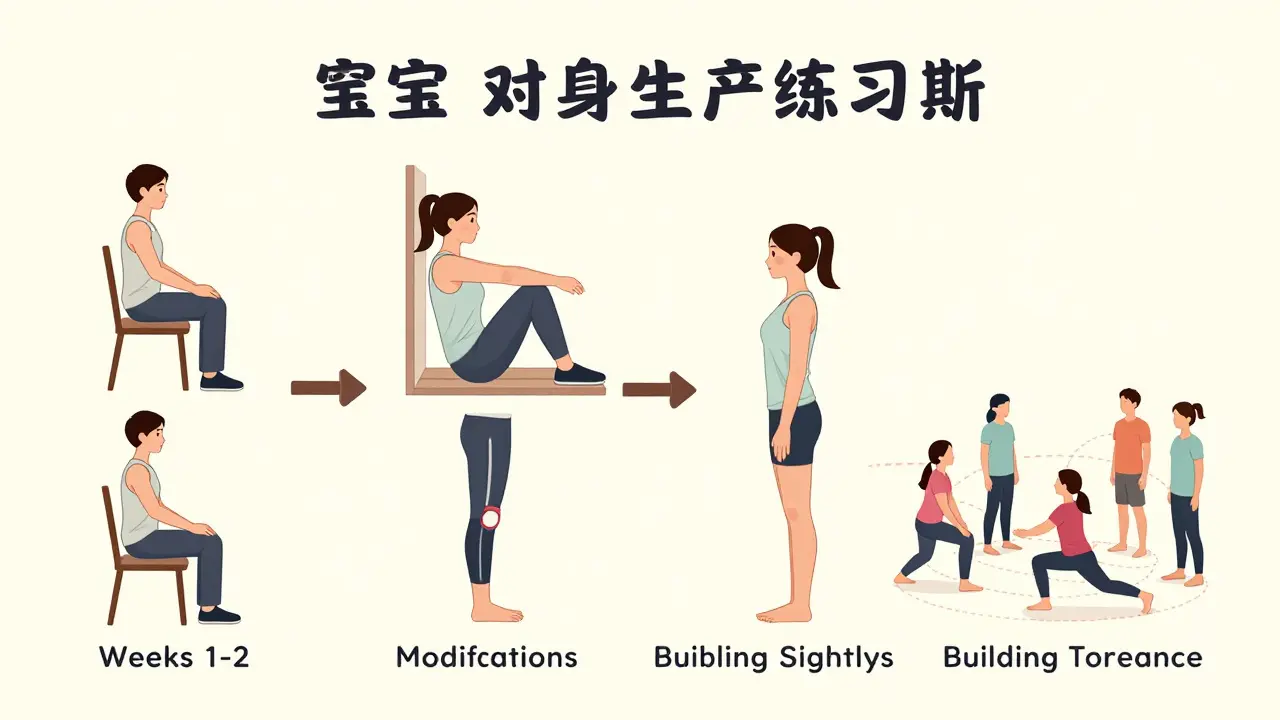
- Weeks 1-2: Start Small. Aim for 15-20 minutes daily. Do not push through sharp pain. Discomfort is okay; injury is not.
- Choose the Right Style. For yoga, avoid Hot Yoga or Power Yoga initially. Stick to Hatha (slow-paced) or Restorative (uses props for support). For tai chi, look for Yang-style or Sun-style, which are gentler than Chen-style.
- Use Modifications. If standing is painful, do seated versions. Chair yoga and seated tai chi are valid and effective. Use blocks, straps, and walls for support.
- Build Tolerance. After two weeks, increase to 30-60 minute sessions, three times a week. Measurable benefits typically emerge after 6-8 weeks of consistent practice.
Dr. Karen J. Sherman, lead author of the NEJM fibromyalgia study, noted that the social aspect of group classes can significantly boost pain relief. If you can, join a class. If not, digital apps like "Tai Chi for Arthritis" or "Yoga for Chronic Pain" offer guided modifications.
Integrating With Medical Care
Yoga and tai chi are complementary therapies, not replacements for medical treatment. The American College of Physicians conditionally recommends them for chronic pain, ranking them equally with cognitive behavioral therapy. However, they work best when combined with conventional care.
Data from the American Chronic Pain Association shows that patients who combine movement therapies with standard medical treatments see 30-40% better outcomes than those using either approach alone. This is crucial for conditions like osteoarthritis or chronic lower back pain where structural changes exist.
Insurance coverage is expanding. As of 2022, Blue Cross Blue Shield covers medically supervised programs in 12 states. Major systems like Mayo Clinic and Kaiser Permanente have integrated these practices into their pain protocols. Always check with your provider before starting, especially if you have severe mobility limitations or recent surgeries.
Finding Qualified Instruction
Not all instructors are trained in pain management. A common complaint (28% of negative reviews) is that teachers don’t know how to modify movements for conditions like knee osteoarthritis, leading to increased pain.
Look for these credentials:
- Yoga: Registered Yoga Teacher (RYT) through Yoga Alliance, preferably with training in trauma-informed or therapeutic yoga.
- Tai Chi: Certification from organizations like the National Certification Commission for Acupuncture and Oriental Medicine (NCCAOM) or instructors affiliated with the Arthritis Foundation.
If cost is a barrier, community centers often charge $10-15 per class. Digital subscriptions range from $18-29 monthly. Many veterans have found success through VA programs, with 68% reporting reduced opioid use after six months of regular tai chi practice.
Can yoga and tai chi replace pain medication?
No, they should not replace prescribed medication without consulting your doctor. However, they are powerful complementary tools. Studies show that combining these practices with medical treatment leads to better outcomes. Some patients find they can reduce their dosage over time under medical supervision, particularly with opioids, but this must be managed carefully by a healthcare provider.
Which is better for knee pain: yoga or tai chi?
Tai chi is generally considered superior for knee osteoarthritis. Multiple studies, including a 2021 NCCIH review, highlight tai chi’s ability to improve balance and reduce pain in knee OA patients. Its low-impact, weight-shifting movements strengthen the muscles around the knee without high-impact stress. Yoga can help, but requires careful modification to avoid deep knee bends that may aggravate the joint.
How long does it take to feel pain relief?
Most people begin to notice measurable improvements after 6 to 8 weeks of consistent practice. Maximum effects are often seen around the 12-week mark. Consistency is key-short, daily sessions are more effective than occasional long ones. Initial discomfort is common, so start gently and build up gradually.
Is it safe to do yoga or tai chi if I have severe pain?
Yes, but with modifications. Severe pain limits mobility, so chair-based adaptations are essential. Both practices can be done seated. The goal is gentle movement, not stretching to the limit. Always consult your physician before starting, and look for instructors experienced in working with chronic pain patients to ensure proper form and safety.
Does insurance cover yoga or tai chi for pain?
Coverage is expanding but varies by provider and location. As of 2022, Blue Cross Blue Shield covers medically supervised programs in several states. Many major hospital systems include these therapies in their pain management plans. Check with your specific insurer and ask if the program is "medically necessary" or part of a prescribed rehabilitation plan to maximize chances of coverage.