Why Generic Drugs Feel Different: The Psychology of the Placebo Effect
 Apr, 25 2026
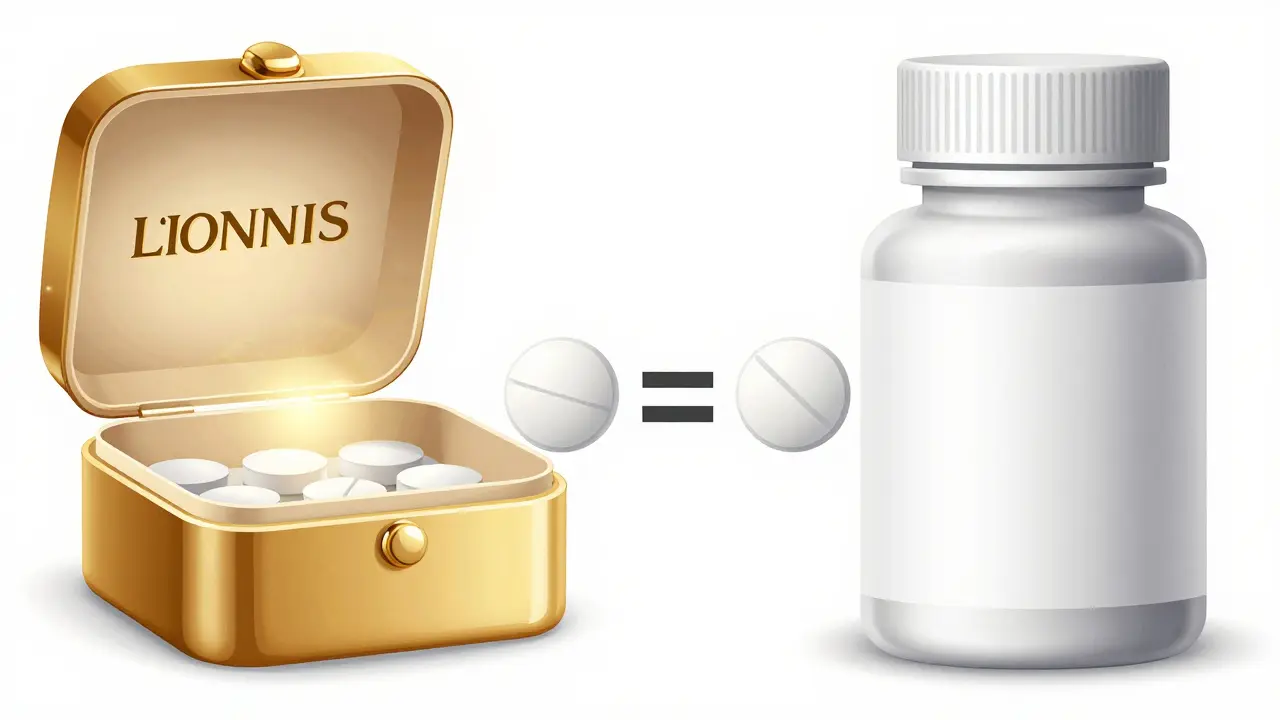
Imagine two pills. One comes in a fancy box with a well-known brand name and costs $50. The other is a plain white tablet in a plastic bottle, labeled as a generic, costing only $2. Scientifically, they are identical. They have the same active ingredient, the same dosage, and the same chemical structure. Yet, for many people, the $50 pill "works" better. This isn't a failure of chemistry; it's a triumph of placebo effect is a psychological phenomenon where a person experiences a real improvement in their condition based on their expectations of a treatment rather than the treatment itself. When it comes to generics, our brains often trick us into thinking that lower cost equals lower quality.
The Brand Name Illusion
Our brains love shortcuts. When we see a brand name we recognize, we subconsciously associate it with trust, prestige, and effectiveness. This is a core part of brand psychology, where the perceived value of a product outweighs its physical properties. In a landmark 2014 study by Dr. Kate Faasse at the University of Auckland, researchers gave students placebo painkillers. Those who thought they were taking a brand-name drug reported a pain reduction of 2.3 points on a 10-point scale. Those who were told the pill was a generic placebo? They only felt a 1.1-point reduction. The pills were exactly the same, but the label changed the biological outcome.
This happens because expectations trigger actual chemical changes in the brain. When you believe a medicine is powerful, your brain can release endorphins or dopamine to dampen pain. If you're skeptical of a generic, your brain doesn't trigger that same response. Essentially, the brand name acts as a psychological "key" that unlocks your body's own healing mechanisms.
The Price of Perception
Price isn't just a number on a receipt; it's a signal of quality. This is known as price conditioning. A fascinating study from the University of Cincinnati looked at Parkinson's disease patients. Some received a placebo injection they were told cost $1,500, while others received the same placebo labeled at $100. The "expensive" group showed a 28% greater improvement in motor function. Even more wild? fMRI scans showed a 53% greater release of dopamine in the substantia nigra for the high-priced group.
Similarly, Harvard Medical School researchers found that people reported 37% less pain when they believed their painkiller cost $2.50 compared to those who thought it cost $0.10. We've been conditioned to believe that if something is cheap, it must be inferior. In the $265 billion U.S. generic drug market, this mental loop can lead to a dangerous gap where patients feel their medicine isn't working simply because it was affordable.
| Metric | Brand-Labeled Placebo | Generic-Labeled Placebo | Impact |
|---|---|---|---|
| Pain Relief (Avg Score) | 3.2 point reduction | 1.8 point reduction | Higher perceived efficacy for brands |
| Dopamine Release | Significantly Higher | Lower | Price cues trigger brain chemistry |
| Response Rates (Psychiatric) | Higher | 11% Lower | Stronger psychological link in mental health |
The Dark Side: The Nocebo Effect
While the placebo effect makes us feel better, its evil twin-the nocebo effect is the experience of negative symptoms or side effects caused by a patient's negative expectations of a drug-can make us feel worse. If you believe a generic drug is "cheap' and therefore more likely to cause side effects, your brain can actually manifest those symptoms.
This is particularly common with cardiovascular medications and statins. A 2014 analysis in JAMA Internal Medicine found that people taking generic-labeled placebos reported muscle pain 2.1 times more often than those taking brand-labeled placebos. There was no actual chemical difference, but the fear of the generic caused the pain. In some cases, patients taking generic heart meds reported 22% more adverse effects than those on brand names, despite the drugs being bioequivalent.
For those dealing with psychiatric conditions, the stakes are even higher. Research shows that discontinuation rates for psychiatric generics are 18-24% higher. Patients often stop taking their meds not because the drug failed, but because the nocebo effect convinced them the generic version was causing intolerable side effects.
Bioequivalence vs. Biology
From a regulatory standpoint, generics are safe and effective. The FDA (Food and Drug Administration) ensures that generics meet a bioequivalence standard, meaning they must be within 80-125% of the brand-name drug's pharmacokinetic parameters. Essentially, they do the same thing in your blood. However, the FDA's standards focus on the active ingredient, not the psychology of the patient.
Some experts, like Dr. Beatrice Golomb, argue that it's not all in the head. She points out that inactive ingredients (fillers, binders, and dyes) can vary between generics. For some highly sensitive patients, these fillers can cause real reactions. While this happens, it's a small fraction of the problem compared to the psychological weight of the "generic" label. For the vast majority, the issue is a mental hurdle, not a molecular one.
Hacking the Brain for Better Health
How do we fix this? The solution isn't just telling people "it's the same thing." It's about framing. A University of Chicago study found that when doctors spent just seven minutes explaining bioequivalence, generic acceptance jumped from 58% to 89%. When the doctor uses "positive generic messaging"-like saying, "This version works exactly the same but saves you money"-adherence rates climb significantly.
We're also seeing a shift in how these drugs are presented. Some trials have tested "premium" packaging for generics that looks more like brand-name boxes. Interestingly, this small change in aesthetics reduced nocebo complaints by 37%. By treating the generic with the same visual respect as a brand, we trick the brain into trusting the medication again.
When Perception Actually Matters
It's important to note that the placebo effect doesn't hit every condition the same way. It's most powerful in areas where the brain modulates the symptom. For example, migraine treatment, antidepressants, and pain management are heavily influenced by psychology. In these cases, the brand-name "boost" is very real.
On the other hand, if you have a bacterial infection, a generic antibiotic will work just as well as a brand-name one. Your immune system doesn't care about the logo on the box when it's fighting off strep throat. The biological mechanism of killing bacteria is far more dominant than the psychological mechanism of expectation.
Are generic drugs actually less effective than brand-name drugs?
Pharmacologically, no. The FDA requires generic drugs to be bioequivalent to the brand-name version, meaning they deliver the same active ingredient to your bloodstream at the same rate. Any difference in perceived effectiveness is usually due to psychological factors like the placebo or nocebo effect.
What is the nocebo effect in the context of generics?
The nocebo effect occurs when a patient experiences negative side effects because they expect the medication to be inferior or harmful. For example, a patient might feel muscle pain from a generic statin simply because they believe generics are "lower quality," even if the drug is identical to the brand name.
Can the price of a drug change how it works?
While price doesn't change the chemical composition, it changes your brain's response. Research has shown that higher-priced placebos can trigger more dopamine release and better pain relief because our brains use price as a shorthand for quality.
Why do some people react poorly to generics but not others?
Most of the time, it's psychological (the nocebo effect). However, in rare cases, differences in inactive ingredients (fillers or dyes) can cause sensitivity in certain patients. This is why some people may genuinely tolerate one generic brand better than another.
How can I make sure my generic medication works as well as the brand?
The best way is through education. Understanding that the active ingredients are identical and that your body's response is partially driven by your expectations can help you shift your mindset toward a positive outcome, effectively utilizing the placebo effect in your favor.
Next Steps for Patients and Providers
If you're a patient switching to a generic and you're worried about it working, talk to your pharmacist or doctor. Ask them specifically about bioequivalence. Once you understand that the chemical "engine" under the hood is the same, the anxiety often disappears, and the medicine works better.
For healthcare providers, the goal is to move toward "expectation engineering." Instead of just telling a patient a drug is a generic, frame it as a smart financial choice that doesn't sacrifice quality. A few minutes of focused communication can prevent a patient from abandoning a life-saving medication due to a psychological glitch.
Majestic Blue Band
April 27, 2026 AT 08:13It is honestly laughable that anyone believes the FDA's so called bioequivalence standards because if you actually look into the lobbyists and the rotating door between big pharma and regulatory agencies you realize that the inactive ingredients are exactly where they hide the additives that keep us dependent on the system, and the fact that they want to frame it as a psychological glitch just proves they are trying to gaslight the entire population into accepting sub-par chemical cocktails that are designed to keep us docile while the brand names are just the premium bait for those who think they are getting the good stuff when in reality it is all just a massive experiment in human conditioning and social control orchestrated by globalists who profit from our sickness.
Michael Chukwuma
April 28, 2026 AT 17:06That's a really interesting perspective on how our minds work. I can definitely see how a little bit of reassurance from a doctor would make a huge difference in how someone feels about their meds.
Daniel Runion
April 29, 2026 AT 08:04UMMM... PLEASE!!! Give me a break!!! This is basically just an advertisement for the pharmaceutical industry!!! Anyone with a brain can see that the fillers ARE the problem!!! Totally ignoring the chemical reality for some "psychology" fairy tale!!! ABSURD!!!
Hayley Redemption
May 1, 2026 AT 01:11The analysis presented here is quaint, though it oversimplifies the complex intersection of neurobiology and socioeconomic status. One would think the obvious correlation between price and quality perceptions would be common knowledge by now without needing a curated list of studies to prove it.
Gauri Parab
May 1, 2026 AT 08:26Actually, the whole premise that "education" fixes the gap is just a convenient narrative for the healthcare system. It's not about framing, it's about the inherent lack of trust in a system that prioritizes profit over patient outcome, and claiming that a seven minute chat can erase years of systemic failure is just delusional elitism at its finest.
Edwin Perez
May 3, 2026 AT 03:45The FDA is a joke. They probably don't even check the active ingredients half the time. It's all just a shell game to keep people paying for things that don't work.
Karyn Tindall
May 4, 2026 AT 19:47My goodness, the thought of our own brains sabotaging our healing process is absolutely terrifying! It is simply heart-wrenching to think that someone could suffer more just because of a label on a bottle!
suresh kumar
May 5, 2026 AT 09:12This whole thing is a spicy cocktail of brain-trickery! I bet the pharmacists are just laughing in their sleeves while we argue about whether the pill is a fancy brand or a budget bargain bin special!
Kristen O'Neal
May 6, 2026 AT 12:37I'm totally on board with the idea of expectation engineering. If we can actually use the placebo effect to make cheaper meds more effective, it's a win-win for everyone's wallet and health!