The Nocebo Effect in Medications: Why Expectations Shape Side Effects
 Dec, 9 2025
Have you ever started a new medication and suddenly felt sick-even though the pill was just sugar? You’re not alone. Many people report side effects like headaches, nausea, or fatigue after starting a drug, only to find out later that those symptoms weren’t caused by the medicine at all. They were caused by expectation.
What Is the Nocebo Effect?
The nocebo effect is the dark twin of the placebo effect. While a placebo makes you feel better because you believe a treatment will work, a nocebo makes you feel worse because you believe it will hurt you. The word comes from Latin: nocebo means “I shall harm.” It’s not imagination. It’s real. Your brain actually changes how your body feels based on what you’re told. If your doctor says, “This drug can cause dizziness, fatigue, and stomach pain,” your brain starts scanning for those exact symptoms. Suddenly, that slight headache you had yesterday? Now it’s the drug. That tired feeling after work? Definitely the pill. Studies show that about 20% of people taking a sugar pill in clinical trials report side effects. Nearly 10% quit the trial because they felt so bad-even though they never took real medicine. That’s not a fluke. That’s the nocebo effect in action.How Your Brain Creates Real Symptoms
Your brain doesn’t just “think” you feel bad-it makes you feel bad. Brain scans show that when people expect pain or side effects, areas like the anterior cingulate cortex and insula light up. These are the same regions that activate during real physical pain. No chemicals. No toxins. Just expectation. In one famous experiment, patients were given a powerful painkiller called remifentanil. When researchers told them the drug would make their pain worse after it wore off, the pain relief disappeared-even though the dose stayed the same. Negative expectations wiped out the drug’s effect completely. This isn’t just about pain. It happens with nausea, dizziness, insomnia, even heart palpitations. Your body reacts to what you believe is happening, not just what’s actually in the pill.Why Generic Drugs Trigger More Complaints
One of the clearest real-world examples happened in New Zealand in 2017. The government switched patients from brand-name venlafaxine to a cheaper generic version. The active ingredient? Identical. The dosage? The same. The side effect profile? Exactly the same. But after media coverage warned people about the switch, reports of side effects jumped. Patients started complaining of dizziness, anxiety, and fatigue-symptoms that had been rare before. The only thing that changed? Their expectations. Similar stories pop up on Reddit, Facebook groups, and patient forums. People swear their generic antidepressant gives them worse side effects than the brand name-even when their pharmacist confirms the ingredients are identical. When they switch back, the symptoms vanish. This isn’t about quality. It’s about belief.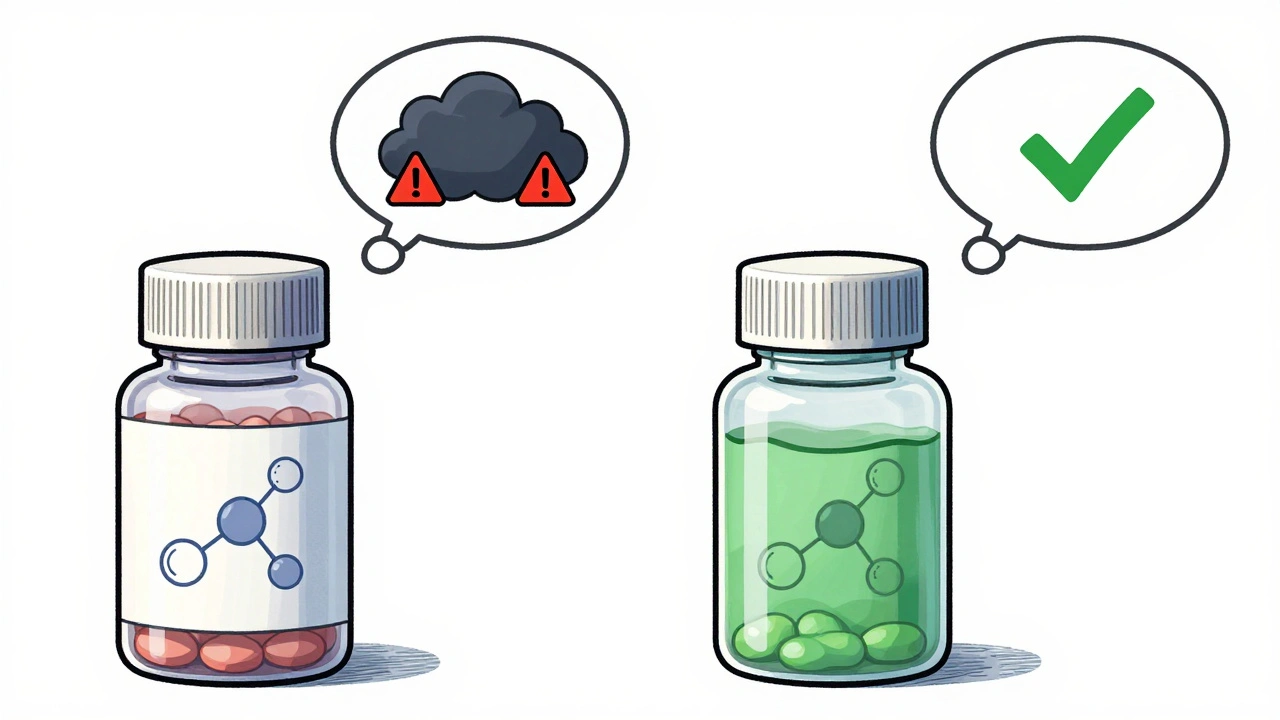
How Doctors and Pharmacies Make It Worse
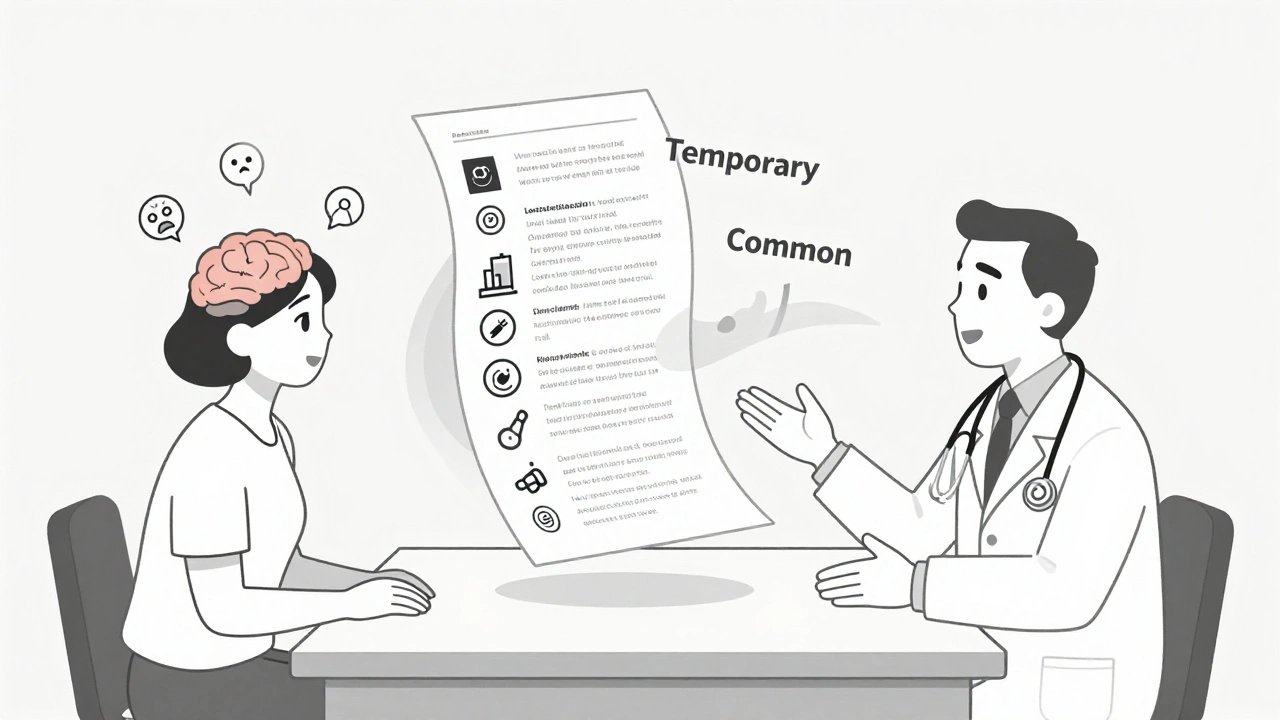
The problem isn’t just patients. It’s how we talk about medicine. Patient information leaflets list every possible side effect-sometimes over 50. “May cause: headache, drowsiness, weight gain, suicidal thoughts, liver damage, hair loss, tinnitus…” It’s overwhelming. And it works like a checklist. People start matching their normal life symptoms to the list. A study found that the more side effects listed, the more people report them. It’s not that the drug causes more problems. It’s that people start noticing things they never paid attention to before. Even doctors can unintentionally trigger the nocebo effect. Saying, “This might make you feel sick,” is very different from saying, “Most people feel fine, but if you do get a headache, it’s usually mild and goes away in a few days.” The first message plants fear. The second prepares for possibility without panic.Who’s Most at Risk?
Not everyone is equally affected. Some people are more likely to fall into the nocebo trap:- People with anxiety or depression-they’re already tuned into bodily sensations and more likely to interpret them as dangerous.
- Women-they report 23% more side effects than men in placebo groups, possibly due to higher sensitivity to social cues and health information.
- People who’ve had bad experiences with meds before-past trauma shapes future expectations.
- Those who read a lot of online forums or watch health-focused YouTube videos-exposure to others’ negative stories increases risk.
How to Fight the Nocebo Effect
You can’t ignore risks. But you can frame them better. Here’s what works:- Balance the message. Don’t just list side effects. Say: “Most people take this without issues. A small number may feel a bit tired at first, but it usually passes in a week.”
- Avoid fear language. Instead of “This can cause severe nausea,” say “Some people feel a little queasy, but it’s rare and temporary.”
- Normalize normal symptoms. “If you feel a little off in the first few days, that’s your body adjusting-not a reaction to the drug.”
- Ask about expectations. Before starting a new med, ask: “What have you heard about this drug?” That opens the door to correct myths.
- Don’t rush the conversation. A 5-minute chat can prevent a 6-month medication dropout.
The Bigger Picture: Cost, Compliance, and Care
This isn’t just about feeling better. It’s about saving money and lives. About 15-20% of people stop taking effective medications because they think they’re having side effects-when those side effects are likely nocebo-driven. That leads to worse health outcomes, more hospital visits, and higher costs. The global generic drug market is worth over $200 billion. If patients stop taking these cheaper, equally effective drugs because they believe they’re inferior, it’s not just a personal loss-it’s a system-wide failure. Health organizations like the WHO now list improving medication communication as a top priority. The goal? Reduce harm-not just from drugs, but from how we talk about them.What You Can Do Right Now
If you’re starting a new medication:- Don’t read the leaflet before you take it. Read it after, if you need to.
- Ask your doctor: “What do most people feel when they start this?”
- Keep a simple journal: Note how you feel each day, but don’t assume every ache is the drug.
- If symptoms appear, wait a few days. Many nocebo effects fade as your brain adjusts.
- Don’t assume a brand-name drug is better than a generic. The active ingredient is the same.
- Use positive framing. Focus on what most people experience, not the worst-case scenario.
- Validate feelings without reinforcing fear. “I hear you’re feeling tired. That’s common at first. Let’s see if it improves.”
- Don’t dismiss concerns. Say: “Let’s figure out if this is the drug or something else.”
Final Thought: Your Mind Is Part of the Medicine
Medicine isn’t just chemicals in a pill. It’s the conversation before you take it. The way it’s packaged. The tone of the pharmacist’s voice. The article you read online. The story your friend told. Your brain doesn’t separate “real” from “imagined” when it comes to how you feel. If you believe something will hurt you, it will. That’s not weakness. It’s biology. The nocebo effect reminds us that healing isn’t just about what’s in the bottle. It’s about what’s in the mind.Can the nocebo effect cause real physical damage?
No, the nocebo effect doesn’t cause permanent physical damage like organ failure or tissue injury. But it can trigger real, measurable physiological responses-increased heart rate, higher cortisol levels, amplified pain signals, and disrupted sleep. These changes feel very real and can significantly impact quality of life, even if they’re not caused by the drug’s chemistry.
Are nocebo effects only caused by doctors?
No. While healthcare providers play a big role, the nocebo effect can come from anywhere: patient information leaflets, online forums, social media, TV ads, or even overheard conversations. A viral TikTok video about “bad generic pills” can trigger symptoms in hundreds of people who’ve never even taken the drug.
If I feel side effects, how do I know if it’s the drug or the nocebo effect?
Look at timing and pattern. True side effects usually appear within hours or days of starting the drug and get worse with higher doses. Nocebo effects often appear after hearing negative information-even before taking the pill. They also tend to match the symptoms described in warnings, not the drug’s known profile. If symptoms disappear after switching back to the original brand (with the same active ingredient), it’s likely nocebo.
Can open-label placebos help with nocebo effects?
Yes. In studies, patients have been told, “This is a sugar pill, but it can still help you feel better if you believe it can.” Surprisingly, many report improvement-even when they know it’s fake. This suggests that the ritual of taking medicine, combined with positive expectation, can override negative beliefs. Researchers are testing similar approaches to reverse nocebo effects.
Why do some people never experience nocebo effects?
It’s a mix of personality, biology, and environment. People with lower anxiety, higher resilience, or less exposure to negative health stories are less likely to develop nocebo responses. Some research also suggests genetic differences in how the brain processes expectation and pain. But it’s not about being “stronger”-it’s about how your brain interprets information.
Jack Appleby
December 9, 2025 AT 12:18The nocebo effect isn’t just a psychological quirk-it’s a neurobiological phenomenon with measurable fMRI correlates. The anterior cingulate and insula don’t lie. When expectation hijacks somatic perception, you’re not ‘imagining’ pain-you’re generating it through top-down cortical modulation. This is neuroscience, not pseudoscience. And yes, it’s why placebo-controlled trials are the gold standard.
Kaitlynn nail
December 9, 2025 AT 13:56It’s not about belief. It’s about control. Your brain’s just trying to protect you from a world that’s always trying to poison you. We’re wired for threat detection-even when the threat is a pill labeled ‘generic.’
Stephanie Maillet
December 11, 2025 AT 03:02Interesting how we treat the mind as separate from the body, when in reality, the two are inseparable-like a symphony where the conductor (expectation) determines the volume of every instrument (sensation). The nocebo effect doesn’t invalidate real illness-it reveals how deeply perception shapes physiology.
Doris Lee
December 12, 2025 AT 05:12This is so important. I’ve seen patients quit life-saving meds because they read too many horror stories online. A little reassurance goes a long way. You’re not crazy for feeling it-you’re human.
Rebecca Dong
December 12, 2025 AT 22:14Wait-so you’re saying Big Pharma doesn’t want us to know that generics are just as good? And that the side effect lists are designed to make us panic so we keep buying brand names? That’s not coincidence-that’s manipulation. And the doctors? They’re in on it. They read the same fear-based scripts. It’s all a scam.
Raj Rsvpraj
December 14, 2025 AT 12:32India has known this for millennia! Ayurveda teaches that ‘manas’-the mind-is the root of all disease. You Westerners are just catching up. We’ve had mantra therapy, pranayama, and mindfulness for 5,000 years-and you’re only now realizing your thoughts can make you sick? Pathetic. And why do you even need generics? We make perfect medicines here-no need for your inferior, fear-mongering pharma.
Frank Nouwens
December 16, 2025 AT 03:51Thank you for this thoughtful, well-researched piece. I’ve worked in primary care for 22 years, and the nocebo effect is one of the most under-discussed barriers to adherence. I’ve started rephrasing side effect disclosures using positive framing-‘Most patients tolerate this well’ instead of ‘This can cause nausea.’ The difference in dropout rates has been remarkable. Small changes, big impact.
Nikki Smellie
December 17, 2025 AT 14:59Are you aware that the FDA has been quietly suppressing data on nocebo-induced cardiac arrhythmias? I’ve got a cousin who went into atrial fibrillation after switching to generic lisinopril-her EKG was clear, but her cortisol spiked 400%. They called it ‘psychosomatic.’ I call it cover-up. The pharmaceutical lobby owns the NIH. Don’t trust the system.
Aileen Ferris
December 18, 2025 AT 12:54generic drugs r fake? like seriously? i swtiched to one n got a headache n felt like i was gonna die… then i switched back n boom. fine. so yeah. theyre diff. ur just scared of the truth. #noceboisreal #pharmalies
David Palmer
December 20, 2025 AT 05:29Man, I took a generic zoloft last year. Felt like I was being slowly drained by a ghost. Couldn’t sleep, kept crying for no reason. Switched back to brand name? All gone. Like magic. I don’t care what the science says-I felt it. And I’m not crazy.
Queenie Chan
December 21, 2025 AT 03:00It’s fascinating how language acts as a cognitive scaffold-what we’re told about a pill becomes the architecture of our bodily experience. The leaflet isn’t just information; it’s a script we perform. And if the script says ‘you will feel terrible,’ the body learns to audition for that role-even if the script was written by a lawyer, not a doctor.
Michelle Edwards
December 22, 2025 AT 02:53If you're starting a new med, give yourself grace. The first week is a dance between your body and your brain. Don't panic if you feel off. Breathe. Wait. Journal. You're not broken-you're adapting. And you're not alone.
Regan Mears
December 23, 2025 AT 05:48My sister had severe anxiety after switching to a generic thyroid med. She was convinced she was dying. We took her to a therapist who used open-label placebo techniques-told her it was inert, but said, ‘Your body can still respond to the ritual.’ Within three days, her panic attacks stopped. She’s now on the generic, feels fine. The mind is powerful. We need to teach this in med school.
Sarah Clifford
December 24, 2025 AT 00:46OMG I knew it!! I told everyone my generic Adderall was making me feel like a zombie, and everyone laughed. But now I have proof! It’s not me-it’s the damn pill! I’m going viral with this. #GenericPillsArePoison #NoceboExposed
Michaux Hyatt
December 24, 2025 AT 17:50For anyone reading this who’s scared to start a new med: Talk to your doctor. Ask, ‘What’s the most common thing people feel?’ Don’t Google. Don’t read the leaflet yet. Just listen to the person who’s seen thousands of patients. You’re not weak for feeling nervous-you’re human. And you’re going to be okay.