Telehealth Medication Reviews: How to Prepare and What to Ask
 Jan, 16 2026
Medication Review Preparation Checklist
Get ready for your telehealth medication review appointment with this essential checklist. Completing all items ensures your pharmacist can provide the most accurate assessment and recommendations.
Some items need attention:
When you’re managing multiple medications - whether for diabetes, high blood pressure, or chronic pain - a simple mistake can lead to serious problems. Drug interactions, duplicate prescriptions, or side effects you didn’t know about can sneak up on you. That’s where telehealth medication reviews come in. These virtual check-ins with a pharmacist or provider aren’t just convenient; they’re a proven way to catch errors before they hurt you. In fact, studies show they reduce dangerous drug reactions by more than a third in older adults. But like any tool, they only work if you show up prepared.
Why Telehealth Medication Reviews Matter
More than 78% of U.S. healthcare systems now offer telehealth medication reviews. Why? Because they work. A 2020 study found patients on these virtual reviews had 34.7% fewer adverse drug events than those getting standard care. For people taking five or more medications - common among seniors or those with chronic conditions - this isn’t just helpful. It’s life-saving.
These reviews don’t replace your doctor. They add a layer of safety. Pharmacists specializing in medication therapy management (MTM) use clinical tools to scan your full list of prescriptions, over-the-counter drugs, and supplements. They look for duplicates, dangerous interactions, and doses that are too high or too low. Then they send clear recommendations to your doctor. The whole process happens over video - no travel, no waiting rooms, no missed work.
What You Need to Do Before Your Appointment
Most people walk into a telehealth appointment with their phone in hand and hope for the best. That’s a mistake. The difference between a good review and a great one? Preparation.
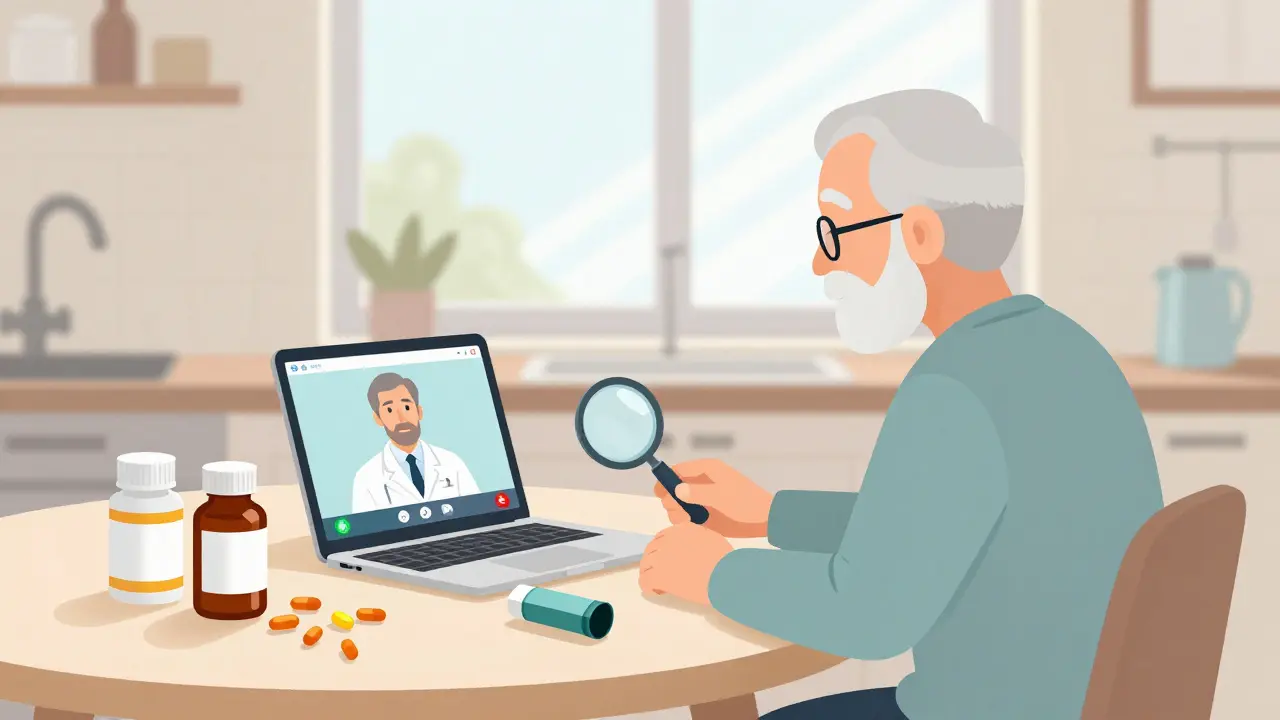
- Collect every medication you take. This includes pills, patches, inhalers, eye drops, vitamins, herbal supplements, and even over-the-counter painkillers like ibuprofen or melatonin. Don’t rely on memory. Open your medicine cabinet, purse, or nightstand drawer and lay everything out.
- Bring the original bottles or packaging. Pharmacists need to see the exact name, strength, and dosage instructions. A bottle says “Lisinopril 10mg,” but your app says “Lisinopril 20mg.” That’s a red flag they can catch - if they can see the label.
- Write down your symptoms. Are you dizzy after taking your blood pressure pill? Has your sleep changed since starting a new antidepressant? Write down when it happens, how often, and what you were doing. These details matter more than you think.
- Test your tech ahead of time. Make sure your camera works, your internet is stable (at least 1.5 Mbps upload/download), and you know how to join the video call. Platforms like Doxy.me or Zoom for Healthcare are HIPAA-compliant and secure. If you’re not tech-savvy, ask a family member to help you set it up the day before.
- Have your pharmacy info ready. Know the name and phone number of your main pharmacy. Some telehealth providers can’t access your pharmacy records unless you give them permission or share your details.
A 2023 study showed patients who brought all their meds to a telehealth review had 37.4% more accurate assessments. That’s not a small boost. It’s the difference between a review that just checks a box - and one that actually protects you.
Questions You Must Ask During the Review
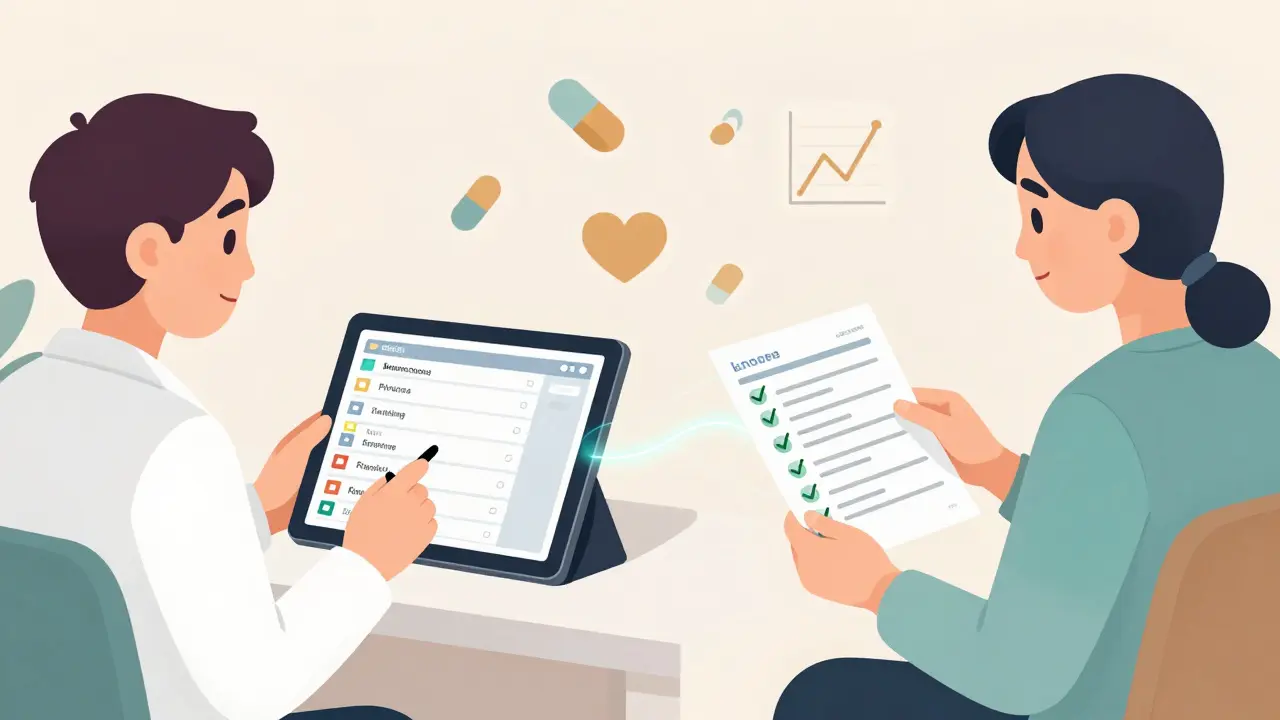
Don’t let the pharmacist do all the talking. You’re the expert on how your body feels. Ask these five questions - no matter how simple they seem.
- “How will you make sure my medication list matches what my pharmacy has on file?” Forty-three percent of medication errors come from outdated or mismatched lists. If they’re not pulling data from your pharmacy’s system, they’re guessing.
- “Which of my medications are absolutely necessary, and which could I stop?” Many people take drugs they no longer need. A review can help you safely taper off things like old painkillers, unused antibiotics, or supplements that don’t do anything.
- “What side effects should I watch for between now and our next check-in?” Some reactions take days or weeks to show up. Know what’s normal and what’s not. For example, if you’re on a statin and suddenly feel muscle pain, that’s not just fatigue - it’s a warning sign.
- “How will you share your recommendations with my doctor?” Only 63% of telehealth services have a clear, automatic way to send updates to your primary care provider. If they say they’ll “email” or “call,” ask for a written summary you can keep.
- “What happens if I have a problem after this appointment?” Do you call a nurse line? Text a portal? Get a callback within 24 hours? Know the safety net. Purely virtual reviews have a 28.6% higher risk of missed side effects if there’s no clear follow-up plan.
These aren’t just questions. They’re your rights. You’re paying for a service that’s meant to keep you safe. If the provider can’t answer clearly, it’s time to find someone else.
When Telehealth Falls Short
Telehealth medication reviews are powerful - but not perfect. They struggle with certain cases. If you have:
- Multiple chronic conditions with unstable symptoms
- Signs of confusion, memory loss, or mood swings that might be drug-related
- Difficulty swallowing pills or using inhalers
- Unexplained falls or dizziness that could be from medication
Then a video call might not be enough. A 2021 study found telehealth reviews had a 17.3% higher chance of missing problems in patients with complex health needs. In these cases, you still need an in-person visit - maybe with your doctor, maybe with a home health nurse. Don’t let convenience override safety.
Also, if you’re over 75 and not comfortable with technology, you’re at higher risk of being left out. About 33% of seniors in that age group don’t participate in telehealth because they don’t know how to use it. If that’s you, ask your clinic if they offer phone-based reviews or in-home support.
What Happens After the Review
The review doesn’t end when the video call does. You should get a written summary - either emailed or mailed - that lists:
- Changes made to your meds (additions, deletions, dose adjustments)
- Reasons for each change
- Follow-up instructions
- Contact info for questions
Keep this document. Share it with your doctor. Put it in your wallet or phone notes. If you’re prescribed a new medication, ask for a printed handout on what to expect. Don’t rely on memory.
Also, track your response. Did your energy improve? Did the headaches stop? Did you feel less anxious? Write it down. That feedback helps your pharmacist adjust your plan next time.
How This Fits Into Your Long-Term Health Plan
Telehealth medication reviews aren’t a one-time fix. They’re part of a larger safety system. Think of them like an annual car tune-up - except for your pills. You wouldn’t drive a car for years without checking the brakes. Why do the same with your medications?
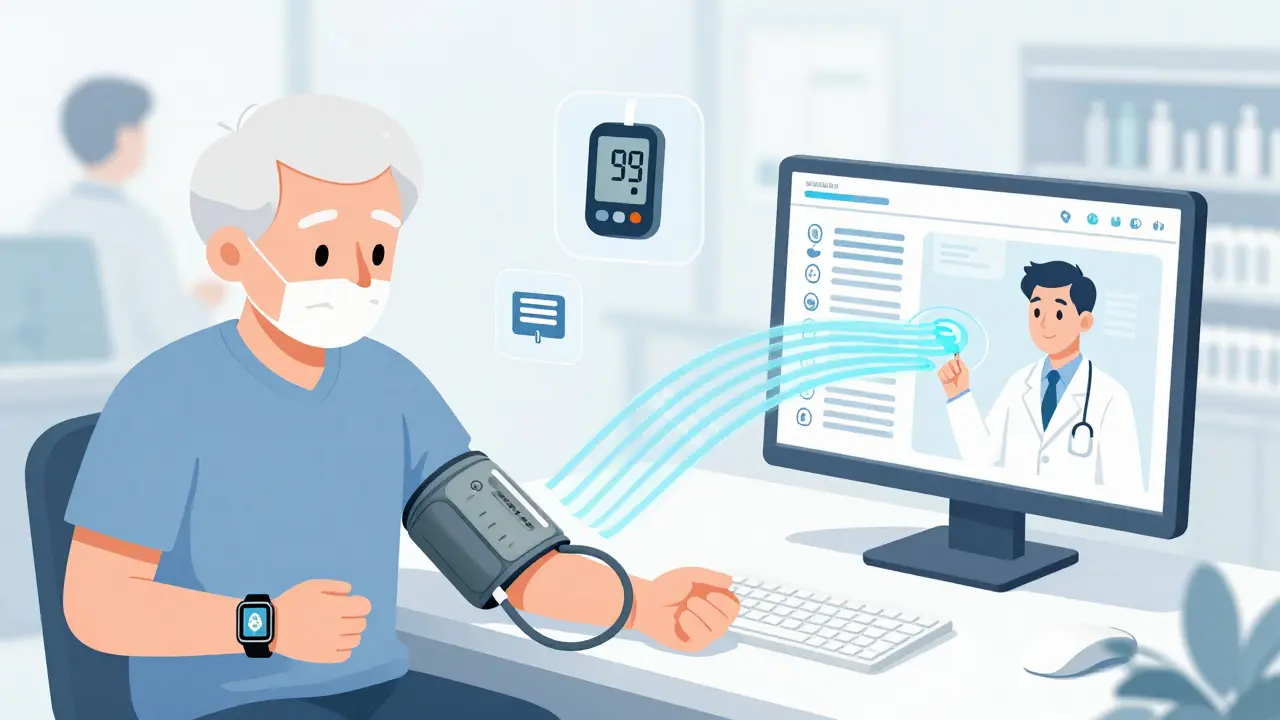
With Medicare and private insurers now paying for these reviews (codes G2225 and G2226), they’re becoming standard care. And the future is even brighter: health systems are starting to link them with smart scales, blood pressure cuffs, and glucose monitors that send data automatically. Imagine your pharmacist seeing your blood pressure spike on Tuesday and calling you Wednesday - before you even feel sick.
But none of that matters if you don’t show up ready. Gather your meds. Ask the hard questions. Speak up when something doesn’t feel right. Your life depends on it - not on the technology, but on your willingness to take control.
Do I need to be on Medicare to get a telehealth medication review?
No. While Medicare covers comprehensive telehealth medication reviews (under code G2225), many private insurers and Medicaid programs also pay for them. Even if your insurance doesn’t cover it, some pharmacies and clinics offer free or low-cost reviews as part of patient care programs. Always ask.
Can a pharmacist really change my prescriptions?
Not directly. Pharmacists can’t legally prescribe or change your meds without your doctor’s approval. But they can recommend changes - like lowering your dose, stopping a duplicate, or switching to a safer drug. Your doctor usually follows their advice, especially when backed by data from your health records. If your doctor refuses, ask why. You have the right to a second opinion.
What if I’m taking controlled substances like opioids or Xanax?
For Schedule III to V drugs (like Xanax, tramadol, or certain sleep aids), telehealth reviews are fully allowed. But for Schedule II drugs - like oxycodone or Adderall - federal rules require an initial in-person visit. After that, follow-ups can be virtual, but you must be seen every three months. Always confirm your provider’s compliance with DEA rules, especially if you’re getting these meds from a telehealth clinic.
How often should I have a telehealth medication review?
If you’re taking three or more medications for chronic conditions, aim for at least once a year. If you’ve recently been hospitalized, had a major health change, or started new drugs, get one within 30 days. Some high-risk patients - like those with kidney disease or dementia - may need reviews every 3 to 6 months. Your pharmacist can help you decide.
What if I don’t have internet or a smartphone?
You still have options. Many clinics offer phone-based medication reviews. You can also ask your pharmacy if they have a nurse or pharmacist who can visit your home - especially if you’re over 65 or have mobility issues. Community health centers and senior services often provide this for free. Don’t let lack of tech stop you from getting safe care.
vivek kumar
January 16, 2026 AT 13:47Let’s be precise: the 34.7% reduction in adverse drug events isn’t just statistically significant-it’s clinically transformative. The data from that 2020 study is replicated across multiple cohorts in JAMA and BMJ Open. This isn’t anecdotal. It’s systemic. And yet, 42% of primary care providers still don’t refer patients to MTM services because they don’t understand the billing codes. That’s not negligence-it’s ignorance masked as efficiency. Fix the referral pipeline before you fix the patient’s pill organizer.
waneta rozwan
January 17, 2026 AT 04:21I’ve seen this go wrong. My aunt went through a telehealth med review last year. She brought her meds, her list, her symptoms. The pharmacist said, ‘You don’t need this statin anymore.’ Two weeks later, she had a stroke. Turns out the pharmacist didn’t check her lipid panel from her cardiologist-because the clinic didn’t have access. So now she’s on a feeding tube and the pharmacist got a ‘great review’ score. Don’t trust algorithms. Trust your doctor. Or better yet-trust your own body.
Cheryl Griffith
January 17, 2026 AT 18:07I’m a nurse and I’ve helped five elderly patients prep for these reviews. The biggest mistake? They think it’s a quick chat. It’s not. It’s a forensic audit of their entire health history. One guy brought 17 bottles-half were expired, two were his neighbor’s, and one was a supplement he thought was ‘natural’ so it couldn’t hurt. He didn’t realize melatonin interacts with his blood thinner. We spent 47 minutes. He cried. Then he thanked us. This isn’t tech. It’s care. And it only works if you show up like your life depends on it-because it does.
swarnima singh
January 19, 2026 AT 05:55they say telehealth saves lives but what about the ones who just... disappear? my mom got her med review, everything looked good, they said ‘all clear’-then she stopped answering calls. two weeks later we found her on the floor. the meds were fine. the problem was she was too scared to ask if she could stop the anxiety pills. no one asked her if she was okay. just checked boxes. this system doesn’t see people. it sees data points. and we’re all just… numbers now.
Riya Katyal
January 19, 2026 AT 23:13Oh please. You’re telling people to bring their pill bottles to a video call like it’s a grocery run? Most seniors don’t even know what ‘HIPAA-compliant’ means. And you think they’re gonna test their internet speed? My grandma tried to join Zoom by calling the number on her landline. She got a robot voice saying ‘please hold.’ She hung up and kept taking her expired blood pressure meds. This whole thing is a luxury for people who still have functional hands and a working brain. The rest of us? We’re just waiting to die quietly.
Allen Davidson
January 20, 2026 AT 09:48Good post. Real talk: the real hero here isn’t the pharmacist-it’s the family member who sits with the patient for an hour, sorting through 17 bottles, writing down symptoms, and then explaining to the doctor why grandma’s ‘sleep aid’ is actually a sedative that’s making her fall. We don’t talk about that. We celebrate tech. But the real magic? It’s the daughter who missed work to help. The grandson who learned how to use Doxy.me. The neighbor who checks in every Tuesday. That’s the infrastructure that actually saves lives.
Kasey Summerer
January 21, 2026 AT 08:07Telehealth med reviews are great… until you realize your pharmacist is just a glorified bot with a degree. I got mine last month. They told me to stop my thyroid med because ‘your labs look fine.’ I asked for the lab report. They couldn’t send it. Said they don’t have access. So I had to call my doctor and beg for my own records. Meanwhile, my anxiety spiked because I was scared I’d die from a typo. Thanks, tech. 😑
Isabella Reid
January 22, 2026 AT 09:21As someone who grew up in a rural town with no pharmacy within 40 miles, I can tell you: this is life-changing. My mom has COPD, diabetes, and depression. She takes 11 meds. Before telehealth, she drove 3 hours every 3 months just to get her pills reviewed. Now? She does it from her recliner. She cried the first time she didn’t have to wait in the pharmacy line. Don’t dismiss this because it’s not perfect. It’s the best thing that’s happened to rural healthcare in 20 years.
john Mccoskey
January 23, 2026 AT 23:03Let’s dismantle the myth that telehealth is ‘convenient.’ Convenience is a marketing term invented by corporations to sell you services you don’t need. What we’re really talking about is the erosion of embodied care. The human body is not a data stream. Muscle pain isn’t a checkbox. Confusion isn’t a lab value. Dizziness isn’t a dropdown menu. When you reduce a person’s suffering to a list of pills and a video call, you’re not optimizing care-you’re outsourcing empathy. And empathy can’t be coded. It can’t be billed under G2225. It can’t be automated. And yet, we’re pretending it can. We’re not saving lives-we’re sanitizing death.
Henry Ip
January 24, 2026 AT 14:11Just did my first telehealth med review. Brought every bottle. Wrote down every symptom. Asked all five questions. Pharmacist caught two duplicates and lowered my dose on one thing. Felt like I finally got a real checkup. No waiting. No rushed doctor. Just someone who actually listened. If you’re on meds-do this. It’s free if you’re on Medicare. Even if you’re not, ask. It’s worth your time. Seriously. Do it.
Bobbi-Marie Nova
January 25, 2026 AT 02:31Y’all are overthinking this. My 78-year-old neighbor did her review on her tablet while eating pancakes. She didn’t know what ‘MTM’ meant. She just said ‘I think my pills are making me weird.’ Turns out she was taking two kinds of melatonin. One was for sleep. The other was ‘for immune support’ from a guy at the flea market. She stopped the fake one. Now she sleeps better. No drama. No tech problems. Just a woman who trusted her gut. Sometimes the best medicine is listening to yourself.
kanchan tiwari
January 25, 2026 AT 17:56THIS IS A GOVERNMENT CONTROL TACTIC. THEY WANT YOU TO TAKE LESS MEDS SO THEY CAN SAVE MONEY ON HEALTHCARE. THEY’RE PUSHING TELEHEALTH BECAUSE THEY WANT TO KILL OFF THE ELDERLY WITHOUT LOOKING LIKE THEY’RE DOING IT. MY COUSIN WAS TOLD TO STOP HER HEART MEDS-SHE DIED TWO WEEKS LATER. THE PHARMACIST SAID ‘IT WASN’T NECESSARY.’ BUT THE RECORDS WERE ALTERED. I SAW THE EMAILS. THEY’RE USING AI TO DECIDE WHO LIVES AND WHO DIES. YOU THINK THIS IS SAFE? IT’S A MASS EUTHANASIA PROGRAM DISGUISED AS ‘CARE.’
Nicholas Gabriel
January 26, 2026 AT 05:06Just a quick note: if you’re on controlled substances-especially Schedule II-make sure your provider is DEA-compliant. I had a friend who got his oxycodone refills via telehealth for 18 months… then one day, the clinic shut down. No warning. No transfer. He went into withdrawal. He ended up in the ER. Turns out the clinic was operating illegally. Always ask: ‘Are you registered with the DEA to prescribe controlled substances via telehealth?’ If they hesitate-walk away. Your pain matters. But so does your safety.