Switching to an Authorized Generic: Managing Patient Transitions
 Dec, 18 2025
When your doctor says it’s time to switch from your brand-name medication to a generic, you might feel uneasy. You’ve been on this pill for years. It works. You know how it feels. Now they’re handing you a different-looking tablet and saying it’s the same. But what if it’s not just any generic? What if it’s an authorized generic-the exact same drug, made by the same company, in the same factory, with the same ingredients? That’s not a compromise. That’s a smarter, safer switch.
What Exactly Is an Authorized Generic?
An authorized generic isn’t just another generic. It’s the brand-name drug sold under a different label. Same active ingredient. Same inactive ingredients. Same size, shape, color, and even the same manufacturing line. The only difference? No brand name on the bottle. It’s produced by the original drugmaker-or a licensed partner-and approved under the brand’s own FDA application. That means no extra testing. No guesswork. Just the same medicine you’ve always taken, at a lower price.
Unlike regular generics, which must prove they’re "bioequivalent"-meaning they work about the same-authorized generics are chemically identical. That matters more than you think. For patients with conditions like epilepsy, thyroid disease, or blood thinners, even tiny differences in how a drug is absorbed can lead to serious problems. Authorized generics eliminate that risk entirely.
Why Patients Switch Back-And Why Authorized Generics Reduce That Risk
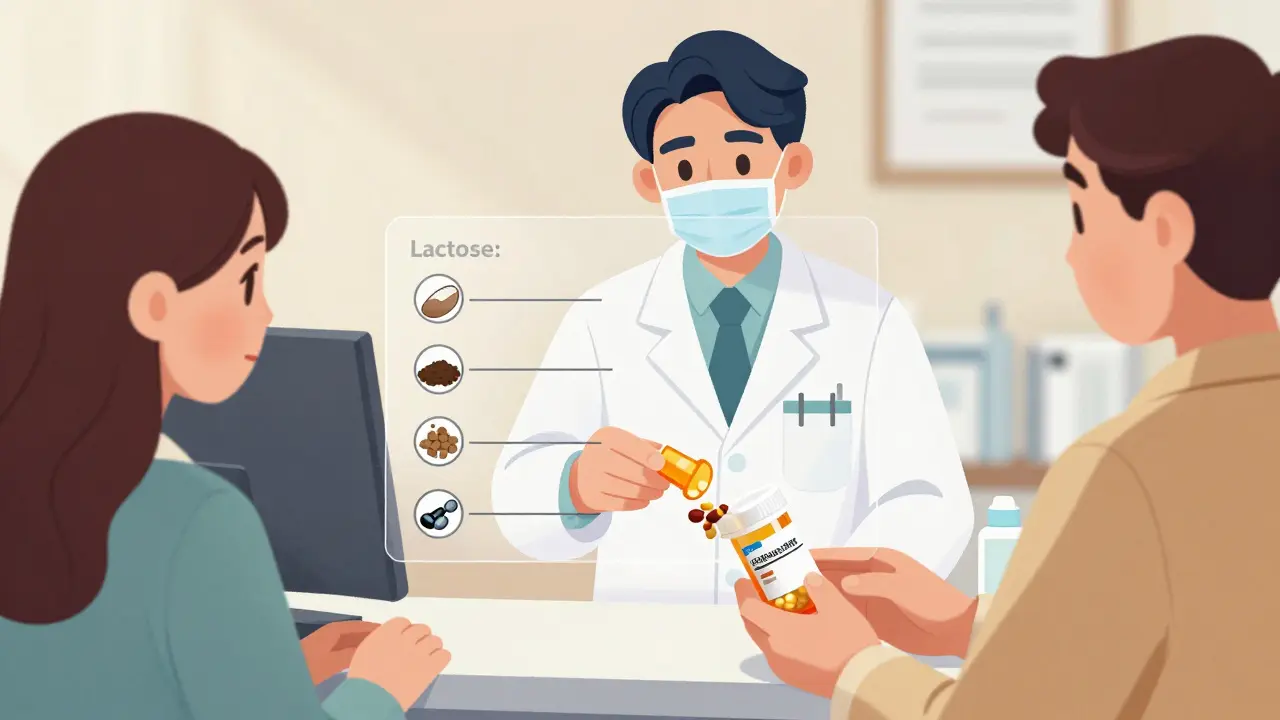
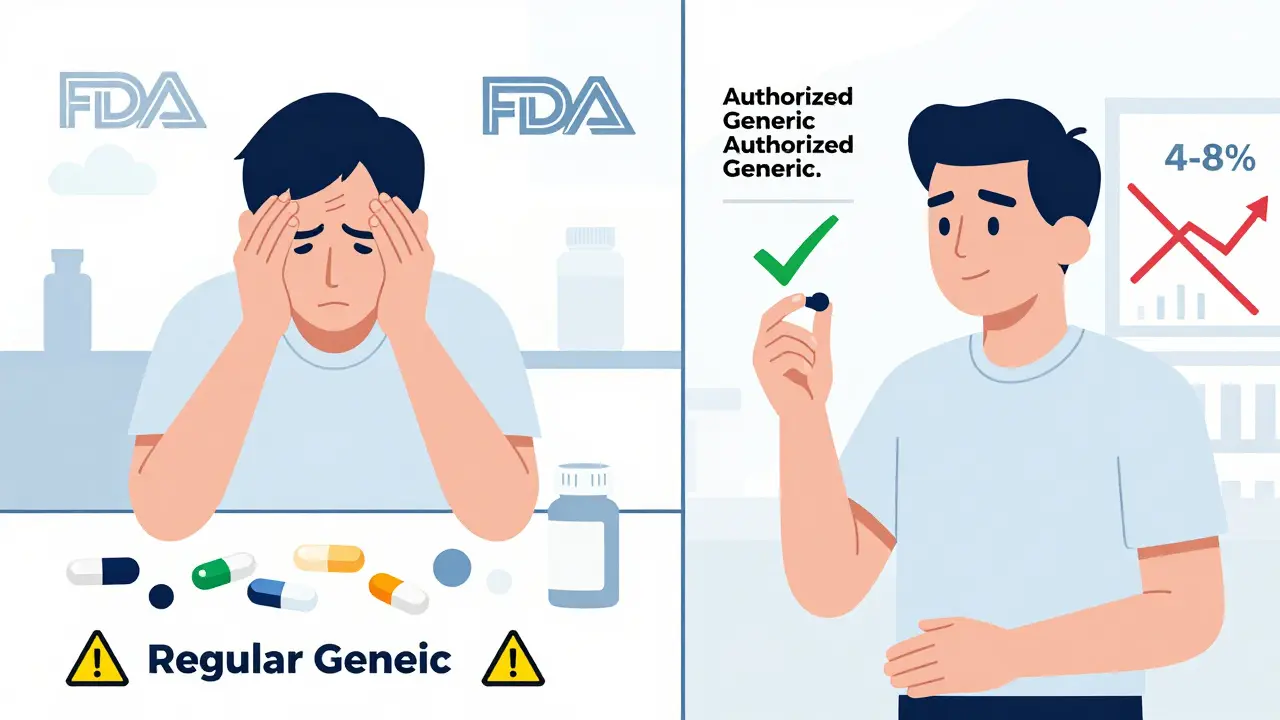
One in eight patients who switch to a regular generic report side effects they didn’t have before. Not because the drug doesn’t work-but because of the fillers. Lactose. Dyes. Preservatives. Things that aren’t active, but can trigger reactions in sensitive people. A 2023 GoodRx study found 12.7% of patients had issues with regular generics due to these inactive ingredients. With authorized generics? That number drops to 2.3%.
And it shows in outcomes. A 2021 study in the Journal of Clinical Pharmacy and Therapeutics tracked patients switching to generics. Those who got regular generics had an 18.4% chance of going back to the brand-name drug. Those who got the authorized generic? Only 7.2%. That’s more than half the switchback rate. For asthma patients, discontinuation rates fell by 42% when switched to authorized generics.
Real patients notice the difference. One person wrote on GoodRx: "Switched to the authorized generic of my blood thinner and haven’t had the bruising issues I experienced with the regular generic." Another on Reddit said: "I used to panic every time my pill looked different. Now it’s the same pill, just cheaper. No stress."
When Authorized Generics Make the Biggest Difference
Not all medications need this level of precision. But for drugs with a narrow therapeutic index-where the difference between a helpful dose and a dangerous one is small-authorized generics are critical. The FDA defines these as about 5.3% of all prescriptions. Think: warfarin, levothyroxine, lithium, digoxin, and some seizure meds.
Studies show switching to a regular generic for these drugs increases the risk of therapeutic failure by 28%. That means your condition could flare up, or you could have a bad reaction. Authorized generics cut that risk dramatically. That’s why the American Pharmacists Association specifically recommends them for these high-risk medications.
Why You Might Not Get One-Even If It’s Better
Here’s the catch: only 37.5% of brand-name drugs with generics also have an authorized generic version. And even when they do, your insurance might not make it easy.
Some plans put authorized generics on the same tier as brand-name drugs-meaning higher copays-while putting regular generics on lower tiers. One patient on Reddit shared: "My insurance covered the brand but not the authorized generic version, costing me $45 more monthly despite identical medication." That’s not a mistake. It’s a system flaw.
Pharmacists often don’t know which version is which. Electronic health records don’t always distinguish between authorized and regular generics. In fact, 63% of EHR systems don’t even label them separately. So if your doctor doesn’t specify "authorized generic," your pharmacist might just fill the cheapest one.
How to Make the Switch Right
Switching to an authorized generic doesn’t have to be confusing. Here’s how to do it right:
- Check availability. Use the FDA’s Drugs@FDA database or ask your pharmacist if an authorized generic exists for your drug. The FDA launched a free "Authorized Generic Finder" tool in 2023 to make this easier.
- Verify your insurance. Call your plan. Ask: "Is the authorized generic covered at the same cost as the regular generic?" If not, ask if they can make an exception. Medicare Part D now requires authorized generics to be covered at no higher cost than the brand, so ask if you’re on Medicare.
- Ask your doctor to write "dispense as written" or "authorized generic only." This tells the pharmacy not to substitute.
- Get educated. Use FDA-approved materials to understand that this is the exact same medicine. Bring a printout or show your pharmacist the FDA’s fact sheet.
- Monitor for 30 days. Even with identical ingredients, your body might need time to adjust. Keep track of symptoms. Report any changes to your provider.
Most patients need just 3 to 5 minutes of counseling to feel confident about an authorized generic switch-compared to 7 to 10 minutes for regular generics. Why? Because there’s less fear. Less uncertainty. Less "Is this really the same?"
The Bigger Picture: Cost, Competition, and Care
Authorized generics aren’t perfect. They’re not always available. And some experts worry they might discourage new generic manufacturers from entering the market, since the brand company already has a cheaper version out. But the data is clear: when available, they deliver real savings without sacrificing safety.
In 2022, the U.S. authorized generic market hit $18.7 billion. They cut retail prices by 4-8% and wholesale prices by 7-14%. That’s real money for people paying out of pocket. And with 79% of patients saying they’d switch if the cost savings were over 15%, there’s clear demand.
More insurers are catching on. Medicare Part D’s 2022 policy change alone benefits over 1.2 million seniors. And 37% of accountable care organizations now track authorized generic use as part of quality metrics.
What’s Next?
The FDA is pushing for clearer labeling by 2025. That means bottles and blister packs will soon say "Authorized Generic" right on them. No more guessing. No more confusion.
Right now, you have more power than you think. You don’t have to accept whatever generic your pharmacy hands you. You can ask for the one that’s made by the same company, with the same ingredients, and the same track record. It’s not about brand loyalty. It’s about smart, safe care.
If your medication is critical, if you’ve had bad reactions before, or if you’re paying too much-ask. Ask your doctor. Ask your pharmacist. Ask your insurer. An authorized generic might be the quiet upgrade your health has been waiting for.
What’s the difference between an authorized generic and a regular generic?
An authorized generic is made by the same company that produces the brand-name drug, using the exact same ingredients and manufacturing process. A regular generic is made by a different company and only needs to prove it works similarly-not that it’s identical. Authorized generics have the same active and inactive ingredients; regular generics can differ in fillers, dyes, or coatings.
Are authorized generics as safe as brand-name drugs?
Yes. Authorized generics are chemically identical to the brand-name version. They’re made in the same facility, on the same equipment, and under the same quality controls. The FDA considers them therapeutically equivalent, with no added risk.
Why isn’t my pharmacy offering the authorized generic?
Your pharmacy may not know it exists, or your insurance might not cover it at a lower cost. Some plans even charge more for authorized generics than regular ones. Ask your pharmacist to check the FDA’s Authorized Generic Finder tool and call your insurer to confirm coverage.
Can I switch to an authorized generic for any medication?
No. Only about 37.5% of brand-name drugs have an authorized generic version. You’ll need to check the FDA’s database or ask your pharmacist. They’re most common for high-cost, high-demand medications like statins, blood pressure drugs, and asthma inhalers.
Will my insurance cover the authorized generic at the same price as the regular generic?
Not always. Some plans put authorized generics on higher tiers, making them more expensive than regular generics. Medicare Part D now requires them to be covered at no higher cost than the brand, but commercial plans vary. Always verify your copay before switching.
Should I switch to an authorized generic if I’m on a narrow therapeutic index drug?
Yes-if it’s available. For drugs like warfarin, levothyroxine, or lithium, even small differences in absorption can cause serious side effects or treatment failure. Authorized generics eliminate that risk because they’re identical to the brand. The American Pharmacists Association specifically recommends them for these medications.
Mike Rengifo
December 20, 2025 AT 05:59My pharmacist switched me to an authorized generic for my levothyroxine last year. Same pill, same bottle shape, just no brand name. I didn’t even notice until I checked the label. No weird side effects, no panic attacks. Saved me $60 a month. Why isn’t this the default?
Chris Davidson
December 21, 2025 AT 21:57Authorized generics are just a marketing trick to keep big pharma profits alive while pretending to help patients. The FDA doesn't require them to be identical just bioequivalent and that's enough. Stop pretending this is some miracle solution
Kinnaird Lynsey
December 23, 2025 AT 14:28Wow. So you're telling me the only thing that changed is the label and the price? That’s wild. I mean I get it. I’m not mad. I just wish the system didn’t make me feel like I’m begging for the same medicine I’ve been taking for 12 years
Erica Vest
December 24, 2025 AT 16:22There is a critical distinction between bioequivalence and chemical identity. Authorized generics eliminate variability in inactive ingredients, which is especially significant for patients with sensitivities to lactose, dyes, or preservatives. A 2023 GoodRx study demonstrated a 12.7% adverse reaction rate with regular generics versus 2.3% with authorized generics. This is not anecdotal-it is clinically substantiated. Pharmacists should be trained to distinguish between the two in EHR systems, and insurers should be required to tier them identically. The FDA’s new labeling initiative in 2025 will help, but systemic change is overdue.
Matt Davies
December 25, 2025 AT 11:03It’s like swapping your favorite coffee mug for one that’s identical in every way except the logo on the bottom. You still get the same brew, same heat retention, same chipped handle-you just pay less and don’t have to explain to your friends why you’re drinking ‘that generic stuff.’ Why do we make medicine feel like a moral dilemma? It’s just chemistry with a better price tag.
Andrew Kelly
December 26, 2025 AT 05:30Big Pharma is using authorized generics to lock out real competition. They make the brand, then make the cheap version themselves and call it ‘authorized’ so no other company can touch it. It’s not about patient safety-it’s about monopolizing the market under the guise of trust. And don’t get me started on how the FDA rubber stamps this. They’re in bed with the same companies they’re supposed to regulate
Anna Sedervay
December 27, 2025 AT 11:25It is profoundly disconcerting that the regulatory architecture of pharmaceutical distribution remains so egregiously opaque. One is compelled to engage in bureaucratic archaeology merely to ascertain whether one’s prescribed therapeutic agent is, in fact, the chemically identical formulation manufactured by the original innovator-a situation that is not merely suboptimal, but ethically indefensible. The FDA’s failure to mandate unambiguous labeling prior to 2025 constitutes a dereliction of professional duty.
Mahammad Muradov
December 28, 2025 AT 16:58Everyone is overcomplicating this. In India, generics are everywhere and no one dies. If your body reacts to a pill because of a dye, you were already fragile. Stop blaming the system. Take the cheaper one. Your insurance won’t care if you cry.