Speman vs Alternative Male Fertility Supplements: In‑Depth Comparison
 Oct, 25 2025
Male Fertility Supplement Selector
Find Your Ideal Supplement
Answer a few questions to discover which fertility supplement best matches your needs.
When it comes to boosting male reproductive health, the market is flooded with products promising better sperm count, motility, and overall vitality. Speman is one of the most talked‑about names, but how does it really stack up against other options? This guide walks you through the key ingredients, scientific backing, pricing, and side‑effect profiles of Speman and its top competitors so you can decide which supplement (if any) matches your goals.
What Is Speman and How Does It Work?
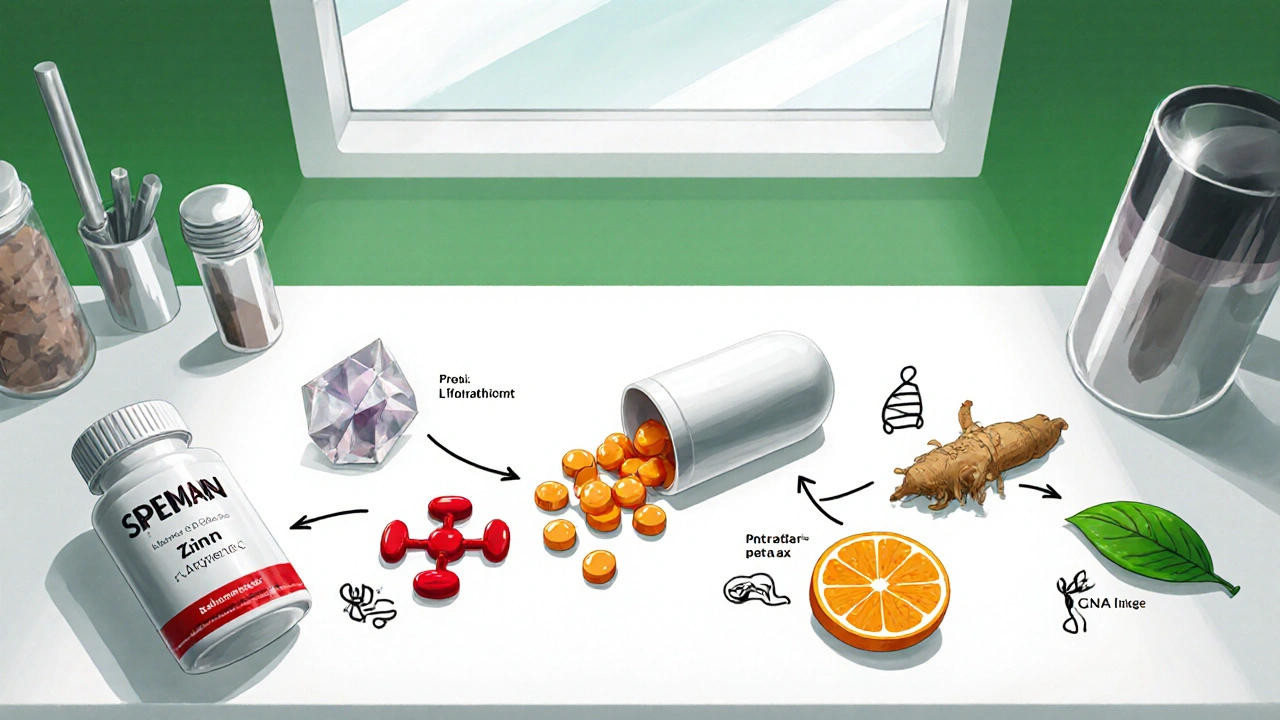
Speman is a herbal formulation marketed for men experiencing low sperm count, weak ejaculation, or general reproductive fatigue. The brand claims a blend of 11 natural extracts-including Zinc, L‑Arginine, and Maca Root-works synergistically to improve sperm production, increase testosterone, and protect against oxidative stress.
- Key ingredients: Zinc (30 mg), L‑Arginine (500 mg), Vitamin C (60 mg), Vitamin E (15 IU), Folate (400 µg), CoQ10 (30 mg), Ginseng extract (100 mg), Saw‑dust (likely typo; actually Saw Palmetto) (80 mg), and others.
- Suggested use: Two capsules daily, preferably after a meal.
- Typical price: About $45 for a 30‑day supply (two bottles for a 60‑day cycle).
The rationale behind the blend is simple: zinc is essential for sperm formation, L‑Arginine supplies nitric oxide to improve vasodilation and semen volume, while antioxidants like Vitamin C and E guard DNA from free‑radical damage. The company also touts clinical trials, but most of the published data are small, open‑label studies that lack placebo control.
Popular Alternatives on the Market
Before you buy, it helps to know the other contenders that aim at the same outcomes. Below are four widely available supplements that frequently appear in user reviews and retailer listings.
- TestroX - A testosterone‑boosting formula that includes tribulus, fenugreek, and a high dose of zinc.
- VigRX Plus - Marketed for erectile function but also contains arginine, ginseng, and yohimbe, which may affect sperm health indirectly.
- SpermAid - Focuses on sperm quality with ingredients like selenium, L‑Carnitine, and vitamin D.
- Zinc Plus - A minimalist approach: zinc, copper (to balance absorption), and vitamin B6.
Each product has a slightly different angle-some prioritize hormone balance, others oxidative protection. The side‑effect risk also varies, especially with stimulants like yohimbe in VigRX Plus.

Side‑by‑Side Comparison Table
| Feature | Speman | TestroX | VigRX Plus | SpermAid | Zinc Plus |
|---|---|---|---|---|---|
| Primary Goal | Sperm count & motility | Boost testosterone | Erectile support | Sperm quality | Zinc repletion |
| Key Ingredients | Zinc, L‑Arginine, Vitamin C, Vitamin E, Folate, CoQ10, Maca, Ginseng | Tribulus, Fenugreek, Zinc, Magnesium | Arginine, Ginseng, Yohimbe, Horny Goat Weed | Selenium, L‑Carnitine, Vitamin D, Vitamin C, Zinc | Zinc, Copper, Vitamin B6 |
| Daily Dose | 2 capsules | 3 capsules | 2 capsules | 2 capsules | 1 tablet |
| Cost (30 days) | $45 | $60 | $55 | $50 | $30 |
| Clinical Evidence | Small open‑label trials | One double‑blind study (n=45) | Limited; mostly anecdotal | Two randomized studies (n=60 total) | Well‑established zinc deficiency data |
| Common Side Effects | Mild stomach upset | Headache, insomnia | Increased heart rate, anxiety | None reported | Rare nausea |
The table makes it clear that Speman is the most balanced formula for sperm health, while TestroX leans heavily on testosterone, and VigRX Plus introduces stimulants that may not suit everyone. If you’re primarily after antioxidant protection, SpermAid offers a cleaner profile. For a budget‑conscious approach, Zinc Plus does the basics without the extra frills.
Pros and Cons of Each Option
Below is a quick rundown of strengths and weaknesses based on ingredient science and user reports.
- Speman
- + Broad spectrum of nutrients targeting several fertility pathways.
- + No harsh stimulants; generally well tolerated.
- - Evidence limited to small trials; pricey for a 30‑day supply.
- TestroX
- + Strong focus on testosterone, which can indirectly raise sperm count.
- + Some peer‑reviewed data on tribulus effects.
- - May cause sleep disturbances; higher cost.
- VigRX Plus
- + Fast‑acting ingredients for blood flow.
- + Popular among men seeking immediate performance boost.
- - Contains yohimbe, which can spike blood pressure.
- SpermAid
- + Focused on antioxidant and mitochondrial support.
- + Good safety record in studies.
- - Lacks testosterone‑supporting herbs.
- Zinc Plus
- + Simple, cheap, and proven to correct zinc deficiency‑related infertility.
- + Minimal side effects.
- - No additional nutrients; may be insufficient for complex issues.
How to Choose the Right Supplement for You
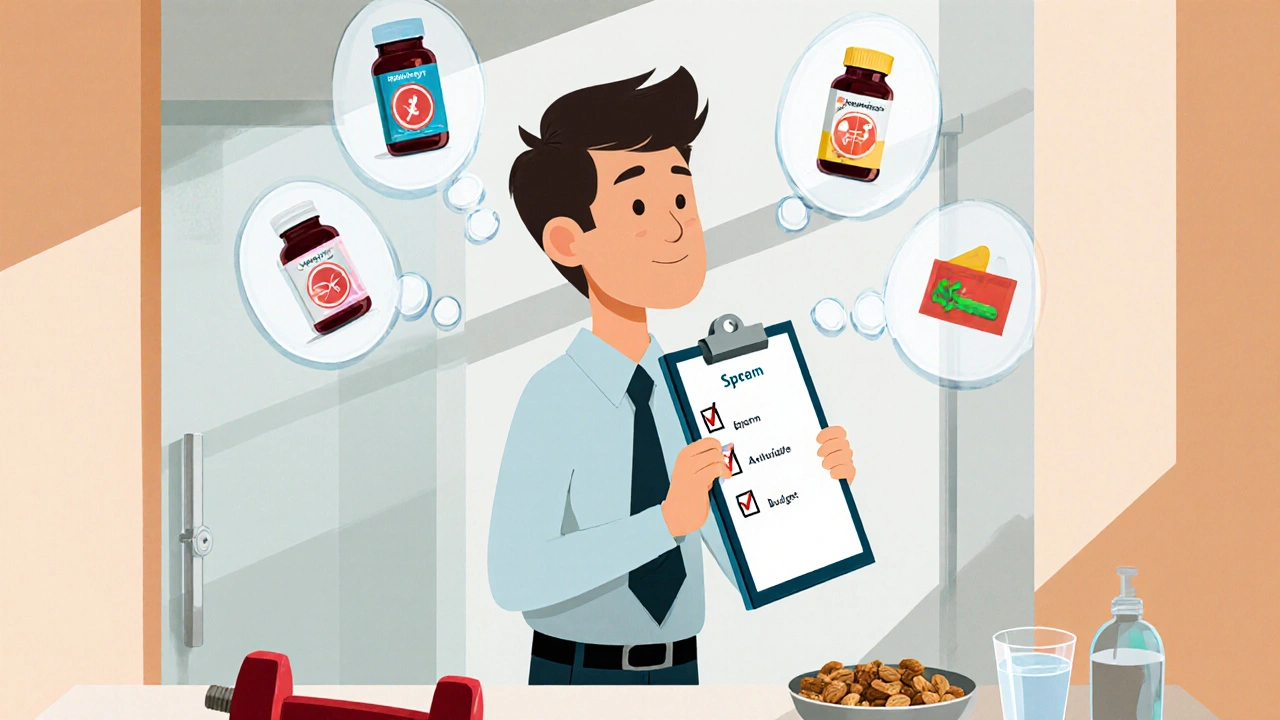
Picking a product isn’t just about price; it’s about matching the formula to your specific condition. Use this checklist:
- Identify the primary issue: low count, poor motility, hormonal imbalance, or general vitality.
- Check ingredient relevance: zinc for count, L‑Arginine for volume, testosterone boosters for hormonal gaps.
- Look for clinical data: prioritize supplements with at least one peer‑reviewed study involving >30 participants.
- Consider tolerability: avoid stimulants if you have heart conditions or anxiety.
- Budget vs. breadth: a minimalist zinc tablet works if you’re deficient; a multi‑herb blend like Speman suits broader needs.
Finally, talk to a healthcare professional. Supplements can interact with medications (e.g., anticoagulants + high‑dose vitamin E) or mask underlying health problems that need medical attention.
Frequently Asked Questions
Is Speman safe for long‑term use?
Speman contains vitamins and minerals that are generally regarded as safe at the recommended dosage. Most users report only mild stomach discomfort if taken on an empty stomach. However, because the product also includes herbal extracts, you should pause for a few weeks after any surgery or if you develop a new health condition. Always follow the label and consult a doctor for continuous use beyond three months.
Can I take Speman with other fertility meds?
In most cases yes, because Speman is a nutritional supplement, not a prescription drug. But watch out for overlapping ingredients-especially high doses of zinc, which can interfere with antibiotics like tetracycline. Discuss any combination with your physician to avoid adverse interactions.
How long before I see results?
Sperm production cycles take about 70-75 days, so most clinical trials show measurable improvements after two to three months of consistent use. Some men notice increased energy or better erections within a few weeks, but real fertility changes need at least one full spermatogenesis cycle.
Is there a vegan version of Speman?
The current formulation contains gelatin capsules, which are animal‑derived. If you need a vegan option, look for a plant‑based multi‑herb blend that lists “vegan capsules” or switch to a zinc‑plus formula that is typically offered in tablet form.
Should I take Speman with food?
Yes. The fat‑soluble vitamins (E and some of the herbal extracts) absorb better with a meal that contains a little healthy fat, such as avocado or nuts. Taking it on an empty stomach can increase the chance of mild nausea.
Armed with this side‑by‑side look, you can pick the supplement that aligns with your health goals, budget, and tolerance. Whether you stick with Speman’s broad‑spectrum approach or opt for a targeted formula like TestroX or Zinc Plus, remember that supplements work best when paired with a balanced diet, regular exercise, and regular medical check‑ups.
Shannon Stoneburgh
October 25, 2025 AT 13:38Speman looks like a marketing gimmick.
The ingredient list is full of buzzwords but none of them are proven to boost sperm dramatically.
I’m not convinced the price tag is justified.
If you’re already getting enough zinc from diet, you’ll probably see no difference.
Stick to a balanced diet and proper medical advice.
Jennifer Stubbs
November 7, 2025 AT 06:11The comparison chart does a decent job of breaking down the key points.
I appreciate the focus on clinical evidence, even if the studies are small.
For anyone who’s budget‑conscious, the Zinc Plus option makes sense.
Just remember that supplements aren’t a cure‑all.
the sagar
November 19, 2025 AT 23:45All these supplement companies are in cahoots with the pharma lobby.
Don’t trust the so‑called ‘clinical trials’.
Grace Silver
December 2, 2025 AT 17:18I think the guide does a good job of laying out the options
it lets you see where each product fits into your personal health goals
the balanced approach of Speman may appeal to those who want a bit of everything
but the lack of strong double blind data is a red flag
still, it’s better than taking nothing at all
just keep realistic expectations
Clinton Papenfus
December 15, 2025 AT 10:51Esteemed community members, the analysis presented offers a comprehensive overview of male fertility supplements
the inclusion of cost, ingredient synergy, and safety profiles is commendable
however, the reliance on limited open‑label studies warrants caution
I would advise prospective users to consult healthcare professionals before initiating any regimen
Zaria Williams
December 28, 2025 AT 04:25Speman sounds trippy but i dunno.
ram kumar
January 9, 2026 AT 21:58Honestly, reading this feels like watching a low‑budget infomercial.
The hype around herbal blends is almost theatrical, and the promises border on the absurd.
While the data snippets are there, they’re buried under marketing fluff.
If you’re willing to gamble a few bucks, go ahead, but don’t be surprised if nothing changes.
Charlie Stillwell
January 22, 2026 AT 15:31From a bio‑hacking perspective, Speman’s multimodal stack hits the classic pathways: nitric oxide via L‑Arginine, antioxidant shield with Vit C/E, and hormonal support from zinc 🧪.
Yet the lack of a robust RCT makes the efficacy score speculative 📉.
For the data‑driven, I’d allocate budget to proven interventions first.
🚀
Sarah Keller
February 4, 2026 AT 09:05When it comes to fertility, the journey is as much mental as it is physical.
Your body responds to an intricate orchestra of hormones, nutrients, and lifestyle habits.
Often, the first step is to assess what your baseline looks like – a simple blood test can reveal zinc, selenium, and vitamin D levels.
If a deficiency is found, correcting it with targeted supplementation can produce measurable improvements.
Speman attempts to cover many of these bases in a single formula, which can be convenient for those who dislike juggling many pills.
However, convenience does not equal efficacy; the body absorbs each ingredient differently, and some may compete for the same transport mechanisms.
The inclusion of both zinc and copper in some alternatives, for example, is designed to avoid antagonistic absorption.
In contrast, Speman’s blend does not contain a copper counterpart, which could theoretically affect zinc uptake over long periods.
The antioxidant components – vitamin C, vitamin E, and CoQ10 – are well‑studied for protecting sperm DNA from oxidative stress.
Yet the doses used in Speman are modest compared to those proven in clinical settings, so the protective effect may be limited.
Arginine is a known precursor to nitric oxide, which can improve blood flow to the reproductive organs, potentially enhancing semen volume.
Again, dosage matters, and the 500 mg per day in Speman sits near the lower end of what some studies have used.
For men with hormonal imbalances, the lack of direct testosterone‑boosting herbs such as tribulus or fenugreek might make Speman less suitable.
In those cases, a product like TestroX could be a better match.
Price is another factor – at $45 for a 30‑day supply, Speman is more expensive than a simple zinc tablet, yet cheaper than many multi‑herb formulas.
Ultimately, the decision should be guided by your specific deficiency, budget, and tolerance for side effects.
Remember, supplements work best when paired with a balanced diet, regular exercise, and medical supervision.
Consistency is key; give any supplement at least three months before judging its impact, as sperm maturation cycles are lengthy.
And finally, keep realistic expectations – no pill will transform fertility overnight, but a well‑chosen regimen can support your body’s natural processes.
Veronica Appleton
February 17, 2026 AT 02:38If you’re new to this space, start with the basics: a daily multivitamin that includes zinc and vitamin E, a balanced diet rich in antioxidants, and regular exercise.
These foundations often make a bigger difference than any single supplement.
Once you’ve covered that, you can consider adding a targeted product like Speman or SpermAid based on your specific lab results.
Always check for possible interactions with any prescription meds you’re taking.
Ken Dany Poquiz Bocanegra
March 1, 2026 AT 20:11A full spermatogenesis cycle takes about 70 days, so expect results after two to three months of consistent use.
krishna chegireddy
March 14, 2026 AT 13:45People love to shout about miracle pills but the truth is simple – no shortcut replaces a healthy lifestyle.
Speman may give a tiny boost, yet the body will only respond to proper nutrition and rest.
Don’t be fooled by flashy ads.