Soluble vs. Insoluble Fiber: Which One Actually Helps You Lose Weight?
 Mar, 25 2026
Quick Takeaways
- Soluble fiber is the key player for weight control because it forms a gel that slows digestion and keeps you full longer.
- Insoluble fiber is essential for digestive health but has minimal direct impact on calorie absorption or appetite suppression.
- Aiming for at least 10-15 grams of soluble fiber daily can reduce waist circumference and body weight significantly.
- Whole foods like oats, apples, and beans are superior to supplements for long-term weight management.
- Drinking enough water is non-negotiable; without it, fiber can cause constipation instead of relief.
The Confusion Around Fiber
Have you ever looked at a nutrition label and wondered why some foods list "dietary fiber" as one lump sum? It's easy to assume all fiber works the same way. You eat it, you feel full, you lose weight. But the reality is much more specific. Your body treats different types of fiber like completely different substances. If you are trying to manage your weight, understanding the difference between soluble and insoluble fiber is the missing piece of the puzzle.
Think of fiber as the indigestible parts of plant foods. While it passes through your system without being broken down like sugar or protein, it does a lot of work along the way. The science behind this isn't new; researchers have known about fiber since the early 20th century. However, the specific distinction between its two main forms really took shape in the 1970s. Dr. Denis Burkitt's work highlighted how fiber affects digestive health, but modern studies have dug deeper into how it impacts your metabolism and hunger signals.
Here is the core problem most people face: they eat fiber hoping to lose weight, but they aren't eating the right kind. A recent study published in May 2023 (PMC10253086) confirmed that specific types of soluble fiber demonstrate measurable weight control effects. If you are relying on the wrong type, you might be missing out on significant benefits. Let's break down exactly how these two types work so you can make smarter choices.
Soluble Fiber: The Weight Loss Hero
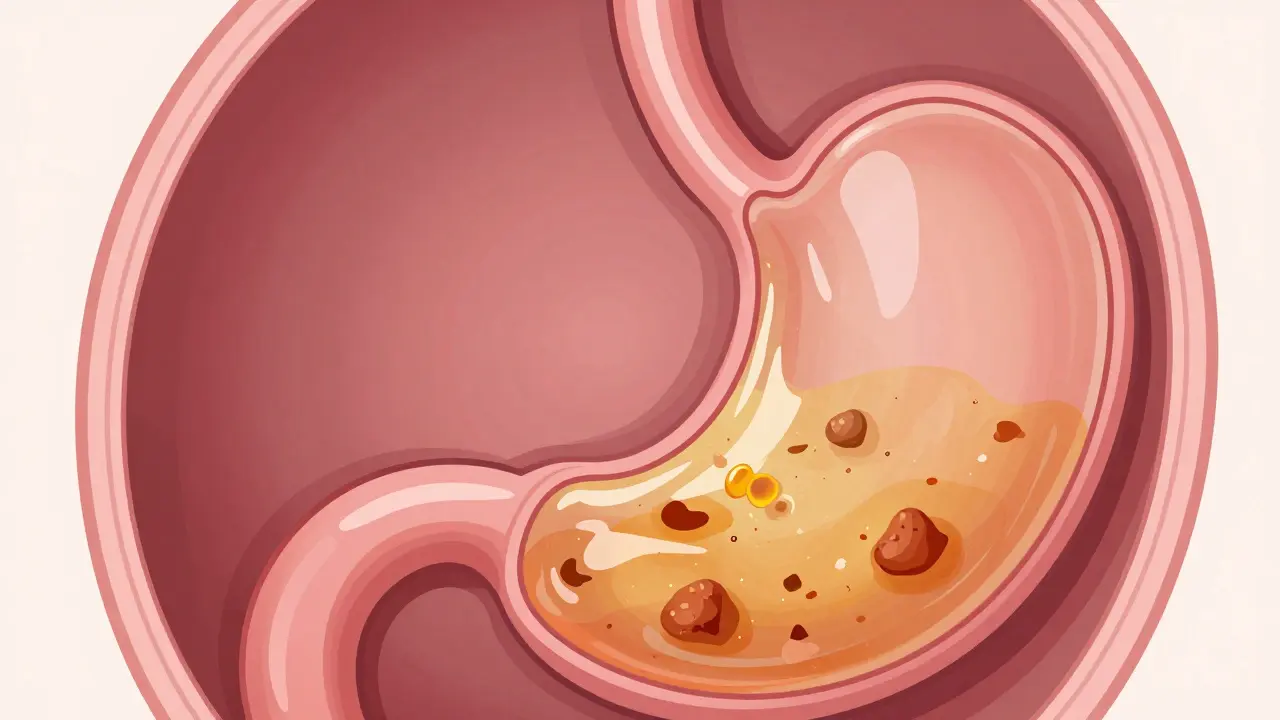
When it comes to shedding pounds, Soluble Fiber is a type of dietary fiber that dissolves in water to form a gel-like substance. This gel is the magic ingredient. When you eat it, it mixes with water in your digestive tract and slows down how fast food leaves your stomach. This process, known as gastric emptying, is delayed by about 25-30% according to a 2023 review by Medical News Today.
Why does slowing down digestion help you lose weight? It keeps you feeling full for longer. If your stomach empties quickly, you get hungry again sooner. But with that gel-like substance sitting there, you stay satisfied. This directly impacts your calorie intake. Studies show that soluble fiber can block approximately 15-20% of dietary fat absorption. That means fewer calories from fat actually get into your bloodstream.
The data backs this up. A comprehensive analysis of 62 studies by the American Institute for Cancer Research (AICR) in 2023 found a clear trend. Consuming just 7 grams of viscous soluble fiber daily led to an average weight reduction of 0.75 pounds (0.34 kg) over 10 weeks. It also shrank waistlines by about a quarter of an inch. While that might sound small, in the world of nutrition, consistent small changes lead to big results over time.
Not all soluble fibers are created equal. The most effective ones are the "viscous" types. These include:
- Pectins: Found in apples and citrus fruits.
- Beta-glucans: Found in oats and barley.
- Psyllium: A popular supplement derived from plant seeds.
- Glucomannan: Extracted from the konjac root.
- Guar gum: Often used in food processing and supplements.
Psyllium husk stands out in the research. The PMC10253086 study identified it as the most effective supplement for weight loss among those tested. It can absorb up to 50 times its weight in water. This massive expansion creates significant volume in your stomach, triggering those fullness signals to your brain. In one group, participants lost an average of 3.2% of their body weight compared to just 1.1% in the placebo group after 8 weeks.
Insoluble Fiber: The Digestive Helper
Insoluble Fiber is a type of dietary fiber that does not dissolve in water and adds bulk to stool. While it doesn't get the glory for weight loss, you absolutely cannot ignore it. Its main job is to keep things moving. It passes through your digestive system largely unchanged. Instead of forming a gel, it acts like a broom, sweeping through your intestines.
This type of fiber adds bulk to your stool. The Cleveland Clinic notes that for every 10 grams you consume, you add about 3-5 grams of bulk. This accelerates intestinal transit time by 24 to 48 hours. This is crucial for preventing constipation and maintaining a healthy gut environment. However, its direct impact on weight metrics is minimal. It doesn't slow down gastric emptying or block fat absorption in the same way soluble fiber does.
You find insoluble fiber in plenty of places. Whole wheat bread is a classic example, offering about 2.0 grams per slice, with 75% of that being insoluble. Other sources include:
- Vegetable skins
- Nuts and seeds
- Whole grains like brown rice
- Bean skins
Dr. Walter Willett, a Professor of Epidemiology and Nutrition at Harvard, has noted that while fiber supplements show effects, fiber from whole plant foods is better. This is because whole foods usually contain a mix of both types. You need the insoluble fiber to keep your system regular, but you need the soluble fiber to manage your hunger.
Comparing the Two Types
To make this clear, let's look at how they stack up against each other in a direct comparison. Understanding these differences helps you build a plate that supports both your weight goals and your digestive health.
| Feature | Soluble Fiber | Insoluble Fiber |
|---|---|---|
| Water Interaction | Dissolves to form a gel | Does not dissolve; holds water |
| Primary Weight Benefit | Increases satiety, blocks fat absorption | Minimal direct impact |
| Digestive Effect | Slows gastric emptying | Speeds up transit time |
| Key Sources | Oats, beans, apples, psyllium | Whole wheat, nuts, veggie skins |
| Best For | Weight loss, blood sugar control | Regular bowel movements |
How to Use Fiber for Weight Control
Knowing the difference is one thing; applying it is another. You want to maximize the benefits of soluble fiber without causing stomach upset. The University of Michigan School of Public Health recommends a gradual increase. Jumping straight to high fiber intake is a recipe for disaster. They suggest adding 5 grams per week until you reach your target.
Timing matters too. If you are taking a supplement or eating a high-fiber meal, aim to consume the soluble fiber 15-30 minutes before your main meals. The Cleveland Clinic guidelines specify that 3-5 grams of viscous fiber taken before eating can reduce subsequent calorie intake by about 10-15%. This is a powerful tool for portion control without having to count every calorie.
Hydration is the most critical rule. You cannot just eat fiber and expect it to work. The PMC study recommends drinking 16-24 ounces of water for every 5 grams of supplemental fiber. Without enough water, the fiber hardens instead of expanding, leading to constipation. This is why 57% of adverse reports in user surveys involve insufficient water intake.
Here is a practical checklist for implementation:
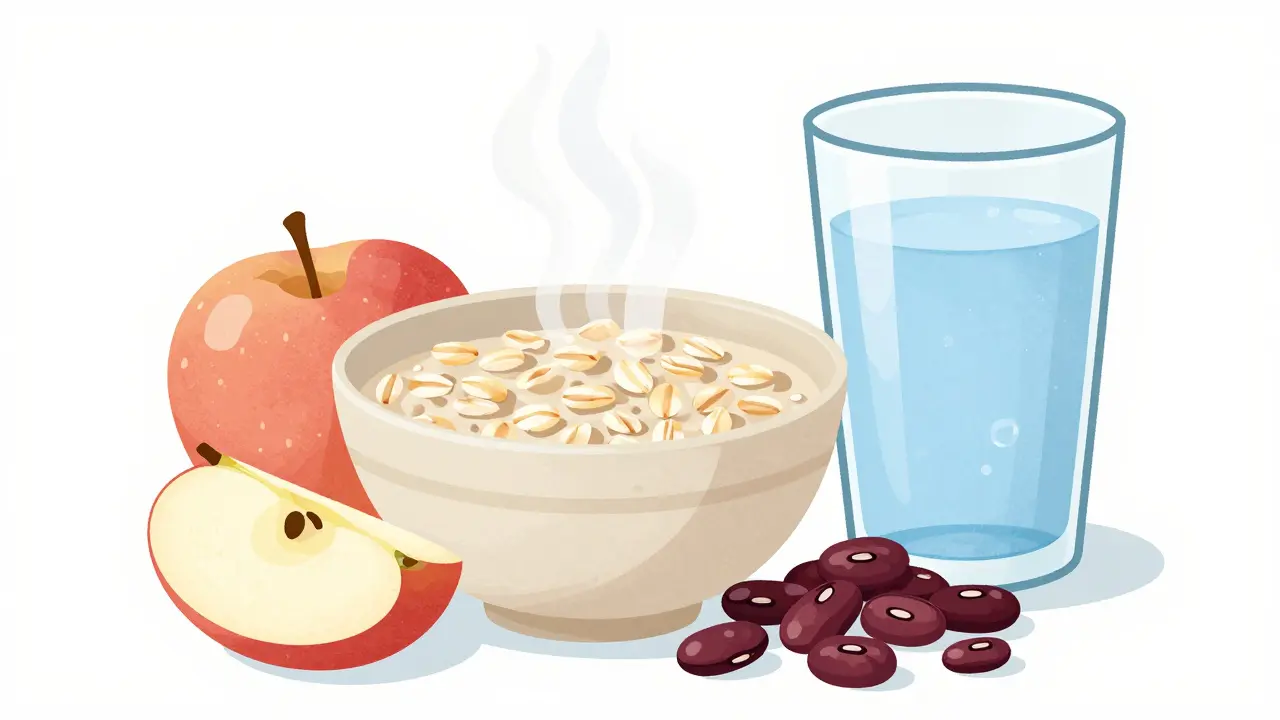
- Start Slow: Add one high-fiber food to your breakfast, like oatmeal with berries.
- Hydrate: Drink a full glass of water with every fiber-rich meal.
- Choose Whole Foods: Eat an apple instead of taking a pill. The natural food matrix works better.
- Monitor Comfort: If you feel bloated, slow down your increase. It takes time for your gut bacteria to adjust.
- Balance: Aim for a 3:1 ratio of insoluble to soluble fiber for optimal digestive function.
Supplements vs. Whole Foods
You might be tempted to buy a bottle of psyllium husk or glucomannan capsules. They are convenient, and the market for dietary fiber supplements is growing fast, valued at billions of dollars. However, experts consistently warn against relying solely on them. Dr. David Ludwig from Harvard T.H. Chan School of Public Health states that viscous soluble fibers create significant physiological effects, but whole foods are superior.
Why? Because whole foods offer a synergy of nutrients. When you eat a bean, you get the fiber, but you also get protein, vitamins, and phytochemicals. Healthline's 2023 analysis showed that individuals incorporating two high-fiber meals daily maintained adherence rates of 82% at 6 months. In contrast, supplement users dropped to 54%. It is easier to stick with a diet change than a pill regimen.
That said, supplements have their place. If you struggle to hit the 25-38 grams of total fiber recommended by the Mayo Clinic, a supplement can help bridge the gap. Psyllium is the most effective option for weight loss specifically. But view it as a supplement to your diet, not a replacement for vegetables and grains.
Common Mistakes to Avoid
Even with good intentions, people make errors that stop fiber from working. One common issue is the "fiber ceiling." Research suggests benefits plateau at about 15 grams of soluble fiber daily. Eating more than that doesn't necessarily mean more weight loss, and it might cause digestive distress.
Another mistake is increasing intake too fast. 78% of cases with adverse effects happen when people increase fiber too rapidly. This leads to bloating and gas, which makes people quit. Reddit users in weight loss communities often report this initial discomfort within the first week. It usually passes, but patience is key.
Finally, ignoring the gut microbiome is a missed opportunity. Soluble fiber feeds healthy gut bacteria. These bacteria produce compounds that protect against obesity and diabetes. If you starve them of fiber, you miss out on this metabolic protection. Laura Jeffers, a registered dietitian at the Cleveland Clinic, emphasizes that healthy gut bacteria are linked to protection against obesity.
Frequently Asked Questions
How much fiber should I eat daily for weight loss?
The Mayo Clinic recommends 25-38 grams of total fiber daily for adults. For optimal weight management, aim for at least 10-15 grams of that total to come from soluble sources. This balance supports both satiety and digestive health.
Can taking fiber supplements alone help me lose weight?
Supplements like psyllium can aid weight loss, with studies showing an average reduction of 3.2% body weight over 8 weeks. However, experts advise that whole foods are more effective for long-term results because they provide additional nutrients and promote better adherence to healthy habits.
What are the best food sources of soluble fiber?
Top sources include oats (rich in beta-glucans), apples (high in pectin), beans and lentils, citrus fruits, and carrots. These foods provide the gel-forming properties needed to slow digestion and increase fullness.
Why do I feel bloated when I eat more fiber?
Bloating often occurs when fiber intake is increased too quickly. Your gut bacteria need time to adapt. Increase your intake gradually by 5 grams per week and ensure you drink plenty of water to prevent constipation and discomfort.
Does insoluble fiber help with weight loss?
Insoluble fiber has minimal direct impact on weight metrics. Its primary role is to add bulk to stool and speed up digestion. While essential for gut health, soluble fiber is the more effective type for appetite control and calorie reduction.
Next Steps for Your Journey
Now that you understand the mechanics, you can start making changes today. Don't try to overhaul your diet overnight. Start by swapping your morning toast for oatmeal. Add an apple to your lunch. Drink more water. These small shifts accumulate. Remember, fiber is a tool, not a magic wand. It works best when paired with a balanced diet and regular activity.
If you are struggling to meet your goals, consider tracking your fiber intake for a week. You might be surprised by how far short you are falling. Most Americans only get a fraction of the recommended amount. Closing that gap is one of the simplest, most effective health moves you can make. Keep it simple, stay consistent, and listen to your body.
Blessing Ogboso
March 25, 2026 AT 23:09I have been thinking about how we treat our bodies like machines. It is important to understand that fiber is not just one thing. My grandmother always told us to eat the skin of the fruit. She did not know the science behind soluble and insoluble types. But she knew that whole foods were better for the stomach. Drinking water is something people often forget in this process. Without water the fiber just sits there and causes pain. I have seen friends try supplements and fail miserably. They wanted a quick fix instead of changing their habits. Real food has a synergy that pills cannot replicate. You get vitamins and minerals along with the fiber structure. It is better to start slow with your intake levels. Jumping into too much fiber too fast is a bad idea. Your gut bacteria need time to adjust to the new diet. Patience is truly the key to long term success here.
Kevin Siewe
March 26, 2026 AT 00:28It is great to see people focusing on hydration alongside fiber intake. Many individuals overlook the water requirement and experience discomfort. Taking small steps is the best way to build sustainable habits. You should feel proud of any progress you make toward better health. The advice to start with breakfast is very practical for daily routines. Consistency will yield better results than intense short term efforts. I hope everyone finds a balance that works well for their lifestyle. Listening to your body signals is essential for long term success. Keep up the good work on your health journey.
Chris Farley
March 26, 2026 AT 07:05This whole narrative is just another diet fad designed to sell more oats. People are too willing to believe that a single nutrient solves everything. Genetics play a much bigger role than what you put on your plate. The science cited here is cherry picked to fit a specific agenda. Most of the population would be better off focusing on sleep and stress management. Fiber is not the magic bullet everyone claims it to be. I see these trends come and go every few years without lasting change. Stop looking for external fixes and look inward instead. The industry profits from your confusion about nutrition. We need to stop trusting these generic health guidelines blindly.
J. Murphy
March 27, 2026 AT 06:32supplements are a scam anyway
Linda Foster
March 28, 2026 AT 06:26The distinction provided between soluble and insoluble fiber is quite clear and informative. One must consider the physiological implications of each type carefully. The recommendation to prioritize whole foods over supplements is well supported by current data. Hydration remains a critical factor that cannot be overlooked during this process. It is prudent to follow the suggested gradual increase in intake. This approach minimizes the risk of adverse digestive effects. The data regarding gastric emptying is particularly interesting to note. Adherence to dietary changes is often the most challenging aspect for individuals. Thank you for compiling such a comprehensive overview of the subject matter.
Jefferson Moratin
March 30, 2026 AT 06:44The physiological mechanisms described here are sound and logically consistent with established nutritional science. Digestion is a complex process that requires a balanced approach to macronutrients. Soluble fiber acts as a modulator for glucose and lipid absorption effectively. Insoluble fiber serves a mechanical function within the gastrointestinal tract. Both types are necessary for optimal health outcomes in the long term. The synergy found in whole plant foods is superior to isolated compounds. This observation aligns with the broader principles of metabolic health. Implementation requires discipline and a commitment to lifestyle modification. One should view this information as a foundation for further dietary adjustments.
Natasha Rodríguez Lara
March 30, 2026 AT 22:05Oatmeal is my absolute favorite way to start the day now. I never realized the beta-glucans were doing so much work in my stomach. Adding berries to the bowl makes it feel like a treat instead of a chore. The fullness lasts way longer than when I used to eat sugary cereal. I am going to try adding more beans to my lunch routine as well. It feels good to know there is actual science behind what I eat. Hydration is something I need to work on more consistently though. I will keep a water bottle with me all day long. Small changes like this make a huge difference over time. I appreciate the clear breakdown of the different fiber types here.
Brandon Shatley
March 31, 2026 AT 02:24im gonna try the oats tomorrow morning for sure. i always thought all fiber was the same thing. this makes me want to eat more apples too. i hope i dont get bloated like the article said. i will drink more water with my meals. thanks for the info on the psyllium stuff. maybe i will skip the pills and just eat food. its cheaper that way anyway. i feel like i need to start slow so my stomach is ok. good stuff here.
Alex Arcilla
April 2, 2026 AT 00:24lol another article telling us to eat our veggies. i guess the magic pill doesnt exist after all. eating beans is a lot harder than popping a capsule though. at least they admit supplements arent the best option here. i bet most people will just read this and go back to eating pizza. the water part is the real deal breaker for most folks. nobody wants to drink that much water with their meals. its a good read but the execution is always the hard part. hope everyone actually listens to the advice this time.
Darlene Gomez
April 3, 2026 AT 09:26There is a deep connection between what we eat and how we feel mentally. Gut health influences our mood in ways we are just beginning to understand. The microbiome is a garden that needs constant care and attention. Feeding the bacteria with soluble fiber is an act of self respect. It is not just about weight loss but about overall vitality. We should honor our bodies with nutrient dense foods daily. The rush for quick fixes often ignores the wisdom of nature. Whole foods offer a complexity that isolated nutrients cannot match. Listening to your body is the most important tool you have. Balance is the goal rather than perfection in every meal.
Jacob Hessler
April 5, 2026 AT 03:59fiber is bull dont waste ur time on this. just eat meat and protein and u will be fine. these studies are paid for by the grain companies. i know people who eat tons of oats and they are still fat. its all about calories in calories out nothing else matters. stop listening to these diet gurus and eat real food. i dont take any pills or powders ever. my stomach works fine without all this fancy talk. just eat steak and eggs and forget the beans. this is just another way to make u feel bad about eating.