Pharmacy Sourcing Requirements: Legitimate Drug Procurement Standards to Avoid Counterfeit Medications
 Jan, 21 2026
Every pill, injection, or capsule that ends up on a pharmacy shelf has traveled through a complex network of manufacturers, distributors, and wholesalers. But not all of that network is safe. In 2023, the FDA reported over 2,100 suspicious drug diversion cases - and that’s just what got caught. The real number? Likely much higher. For pharmacists, hospital supply chains, and independent pharmacies, the question isn’t whether counterfeit drugs exist - it’s how to make sure they never reach your patients.
Why Legitimate Drug Procurement Matters More Than Ever
Counterfeit drugs aren’t just a global problem. They’re a local one. A fake antibiotic might look identical to the real thing, but without the right active ingredient, it won’t cure an infection. Worse, it could make the patient sicker or create drug-resistant bacteria. The World Health Organization estimates that up to 1% of all pharmaceuticals worldwide are fake - that’s about $200 billion in lost value and, more importantly, lives at risk. In the U.S., the Drug Supply Chain Security Act (DSCSA) was passed in 2013 to fix this. By November 27, 2023, every pharmacy, distributor, and manufacturer had to be able to trace every prescription drug from the factory to the patient. That means each package must carry a unique identifier - a serial number tied to the lot, expiration date, and product code. If you can’t scan it and match it to the electronic record, you can’t dispense it.The Core Rules: What Legitimate Sourcing Actually Looks Like
Legitimate drug procurement isn’t about picking the cheapest supplier. It’s about proving trust. Here’s what it takes:- Verified suppliers only: Every vendor must be registered with the FDA and hold a valid state pharmacy license. Ask for proof - not just a website link, but official documents.
- Full transaction history: For every shipment, you need three things: transaction information (what was sold), transaction history (who owned it before), and a transaction statement (a signed legal document). No paper? No sale.
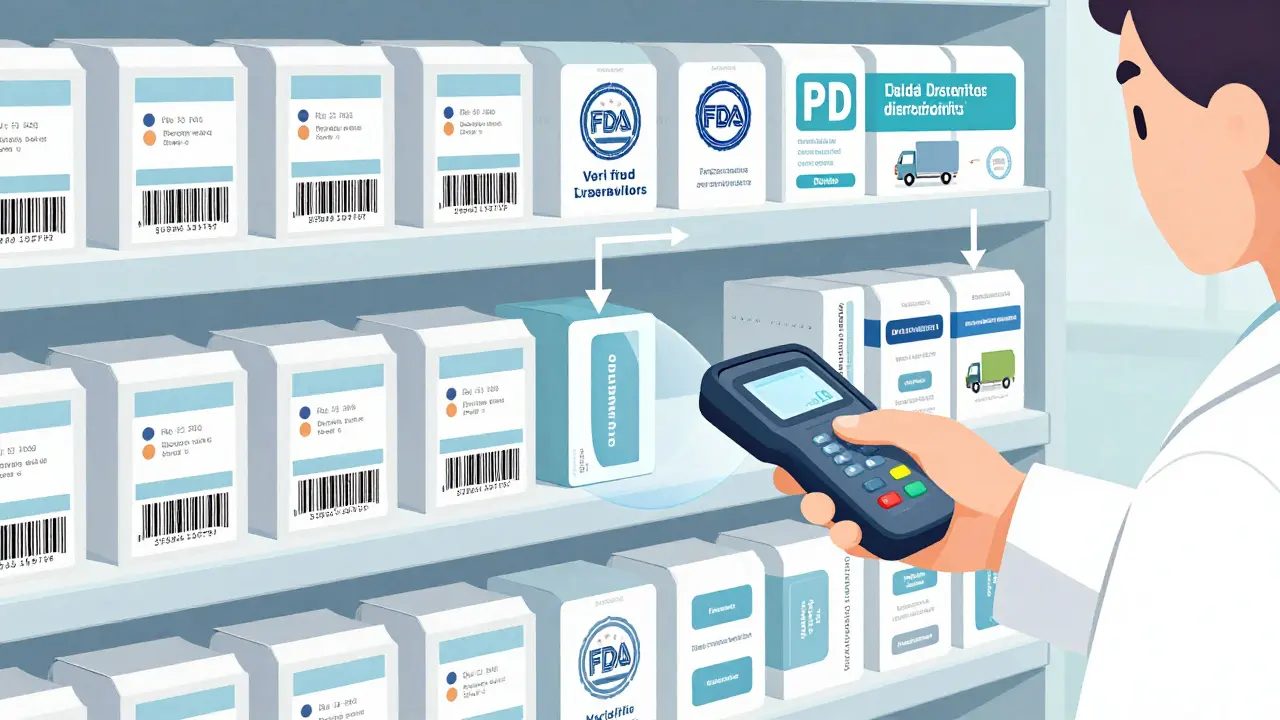
- Barcode scanning on every item: The American Society of Health-System Pharmacists (ASHP) recommends scanning every single package as it arrives. This isn’t optional anymore. If your system can’t match the NDC code and serial number to your purchase order, quarantine the whole batch.
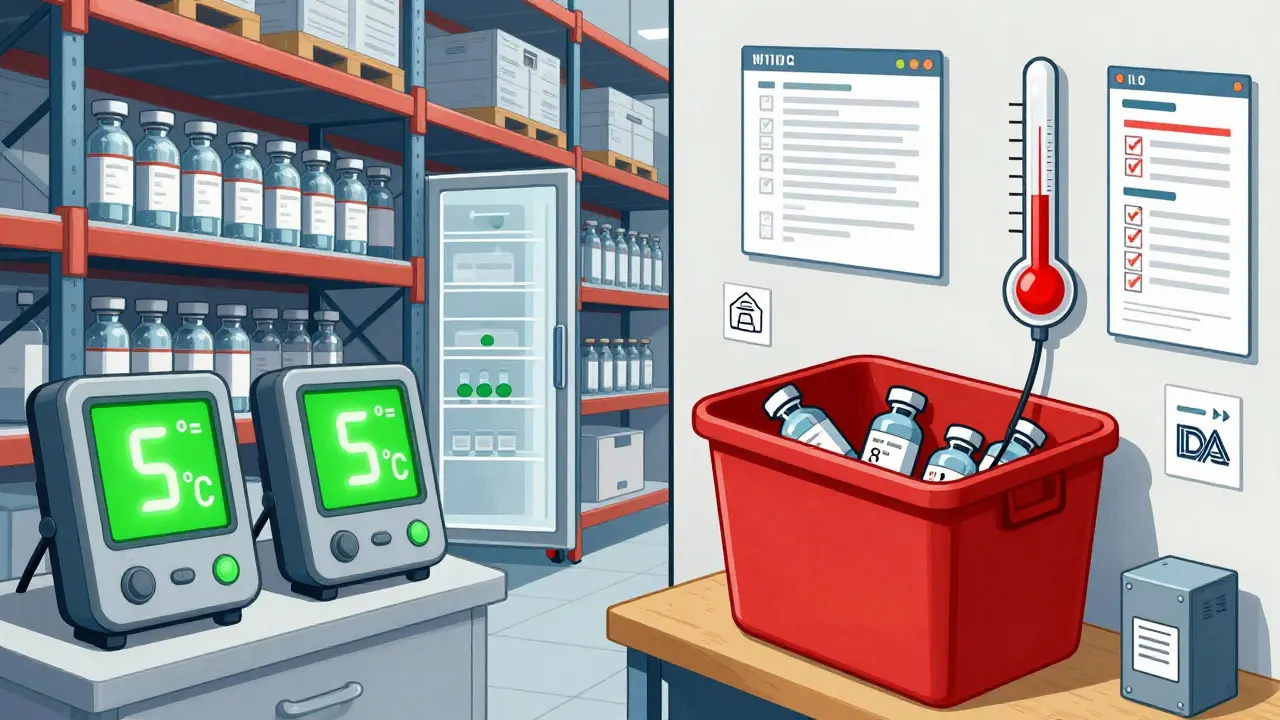
- Temperature control for sensitive drugs: Insulin, vaccines, biologics - these must stay between 2°C and 8°C. If your warehouse thermometer reads 10°C, you’re risking spoilage. Install continuous monitoring systems and log data daily.
- Six-year record keeping: Every invoice, delivery slip, and traceability record must be stored for at least six years. The FDA can audit you anytime.
Who You Can and Can’t Buy From
Not all distributors are equal. The market is dominated by three giants - McKesson, AmerisourceBergen, and Cardinal Health - who control 85% of U.S. pharmaceutical distribution. They’re DSCSA-compliant, have full traceability systems, and are audited regularly. That’s why most hospitals buy from them. But what about smaller suppliers? Or international sources? That’s where the risks spike.- VAWD-certified distributors: Forty-nine states require wholesalers to be Verified-Accredited Wholesale Distributors (VAWD). This is a gold standard. If a supplier isn’t VAWD-certified, walk away.
- 340B program participants: If you’re a safety-net hospital or clinic, you can buy drugs at discounted prices through the 340B program. But you must prove every single dose goes to an eligible patient. HRSA conducted over 1,200 audits in 2022 and found $1.3 billion in improper purchases.
- 503A and 503B compounders: Some pharmacies make custom medications. 503A is for traditional compounding - small batches, patient-specific. 503B is for large-scale outsourcing. Only 503B facilities are inspected by the FDA. If you’re buying compounded drugs, verify which type you’re getting.
The Hidden Costs of Cutting Corners
It’s tempting to buy from a supplier offering 20% lower prices. But here’s what you’re really paying:- Quarantined inventory: One hospital in Ohio had to destroy $87,000 worth of drugs in 2023 because the distributor’s DSCSA data didn’t sync. No warning. No refund.
- Staff time: Hospital pharmacy directors spend 15-20 hours a week just verifying supplier documents. Independent pharmacies? They spend over 10% of their entire budget on compliance.
- Legal liability: If a patient is harmed by a counterfeit drug you dispensed, you’re liable - even if you didn’t know it was fake.
What’s Changing in 2024 and Beyond
The rules aren’t static. In 2024, ASHP will release updated guidelines that tighten requirements for specialty drug suppliers and 503B compounders. The FDA is getting more funding - $150 million more in 2024 - to track down bad actors. Technology is catching up, too. By 2025, 73% of health systems plan to use blockchain or AI tools to detect anomalies in supply chain data. Imagine an algorithm that flags a shipment where the serial numbers don’t match the manufacturer’s database - before it even reaches your warehouse. But here’s the catch: only 35% of hospitals today have seamless integration between their electronic medical records, ERP systems, and traceability platforms. If your software doesn’t talk to your inventory system, you’re flying blind.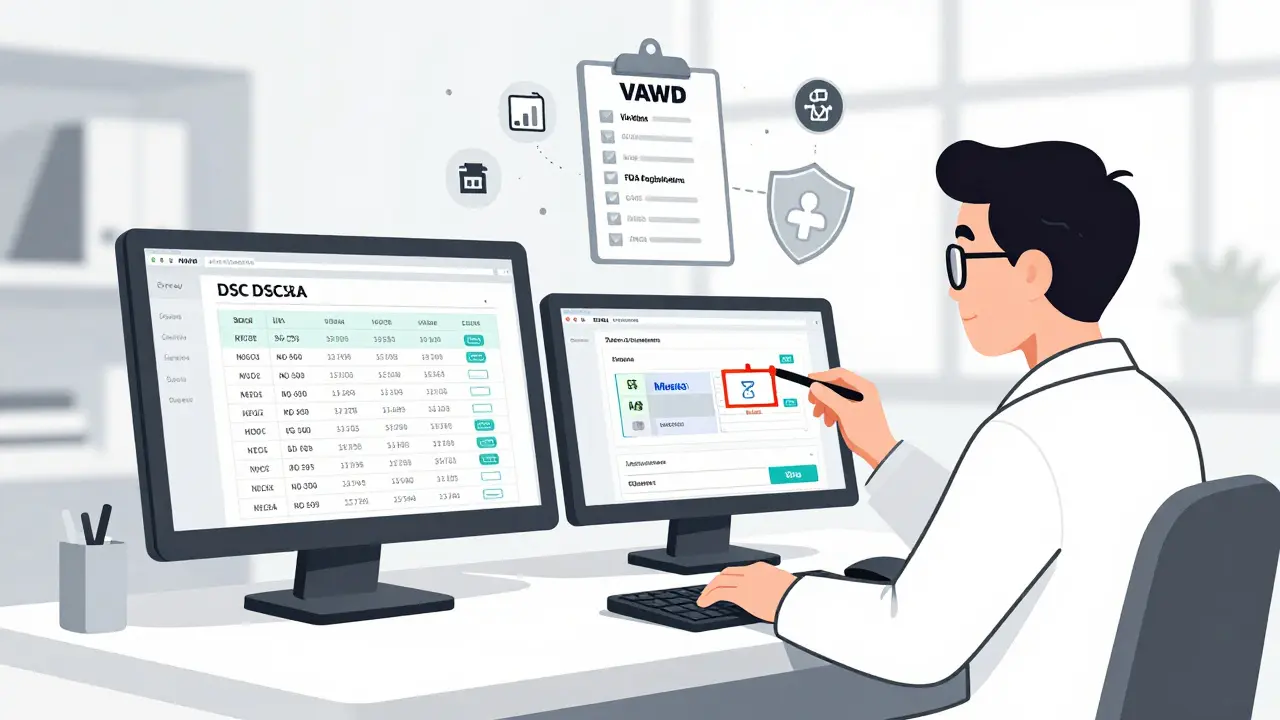
How to Get It Right - Step by Step
If you’re starting from scratch, here’s what to do:- Identify your suppliers: Make a list of everyone you buy from. Cross-check each one against the FDA’s registered establishments list and state licensing databases.
- Require documentation: Demand current FDA registration, VAWD certification, and signed DSCSA transaction statements. No exceptions.
- Install barcode scanners: Make sure every incoming drug is scanned and matched to your purchase order. Use a system that auto-flags mismatches.
- Train your team: At least 120 hours of training on DSCSA, cGMP, and traceability systems is needed for new staff. Consider the CHCSCP certification.
- Use a GPO: Group purchasing organizations like Vizient or Premier handle supplier vetting for you. Hospitals using GPOs with compliance teams had 89% fewer supply chain incidents in 2022.
- Monitor and audit: Do quarterly checks on supplier licenses, temperature logs, and transaction records. Keep everything digital and searchable.
Frequently Asked Questions
What happens if I accidentally dispense a counterfeit drug?
You could face serious legal consequences, including fines, license suspension, or even criminal charges if negligence is proven. More importantly, a patient could be harmed or die. That’s why the FDA and state boards treat this as a top-priority safety issue. Immediate reporting to the FDA and state pharmacy board is required. Your liability insurance may cover some costs, but reputational damage can be permanent.
Can I buy generic drugs from overseas suppliers to save money?
It’s extremely risky. While some international manufacturers are legitimate, the U.S. prohibits reimportation of prescription drugs from other countries unless they’re approved by the FDA. Most overseas suppliers aren’t subject to U.S. inspections. Even if the drug looks right, there’s no guarantee it’s made under cGMP standards. The FDA has seized thousands of fake or contaminated drugs from overseas shipments in recent years.
Do small independent pharmacies have to follow the same rules as big hospitals?
Yes. DSCSA applies to everyone in the supply chain - including independent pharmacies. The only difference is scale. Hospitals have teams and software to handle traceability. Small pharmacies often rely on their wholesaler to provide compliant documentation. But you’re still responsible for verifying it. If your wholesaler can’t provide full transaction data, you can’t accept the shipment.
How do I know if a supplier is really DSCSA-compliant?
Ask for their DSCSA compliance statement and verify their FDA registration number on the FDA’s website. Then, check if they’re VAWD-certified through the National Association of Boards of Pharmacy. Don’t take their word for it - go to the source. Also, ask for a sample transaction history. If they can’t provide a complete digital record with serial numbers, they’re not compliant.
Is blockchain the future of drug tracking?
Yes, but not yet the standard. Blockchain offers a tamper-proof way to record every transfer of a drug. Companies like TraceLink and rfxcel are already offering blockchain-integrated platforms. By 2025, most large health systems will use them. But for now, the FDA still accepts electronic data interchange (EDI) formats. Blockchain is an upgrade, not a requirement - yet.
Susannah Green
January 22, 2026 AT 06:44I’ve been in pharmacy compliance for 12 years, and let me tell you - DSCSA isn’t just bureaucracy, it’s life insurance. I once saw a batch of insulin get rejected because the serial number didn’t match the lot - turned out the distributor had mixed up two shipments from different countries. If we hadn’t scanned it? Someone’s kid could’ve gone into diabetic shock. Scanning isn’t optional. It’s sacred.
And yes, it’s a pain in the butt. But your staff? They’ll thank you later. Train them. Pay for the CHCSCP. Do it right the first time.
Vanessa Barber
January 23, 2026 AT 17:02Yeah, sure. Everything’s ‘critical’ until you’re the one paying for the scanners, the training, the audits, and the GPO fees while your rent goes up. I run a small pharmacy in rural Iowa. My wholesaler gives me the paperwork. I sign it. I don’t have time to verify every damn NDC code. The FDA’s not coming to my back alley. They’re too busy chasing big pharma.
charley lopez
January 24, 2026 AT 09:43The DSCSA framework, while administratively burdensome, represents a necessary structural intervention in the pharmaceutical supply chain. The implementation of serialized product identifiers, coupled with electronic transaction documentation, mitigates the risk of diversion and counterfeiting at the point of dispensing. However, the current interoperability gap between ERP systems and traceability platforms remains a systemic vulnerability. Without API-level integration, compliance becomes a manual, error-prone process - which defeats the purpose of automation.
Anna Pryde-Smith
January 26, 2026 AT 06:31OH MY GOD. I just read this and I’m SCREAMING. This is the most important thing I’ve seen all year. Someone’s kid is dying because some greedy distributor cut corners and nobody’s doing anything. I’ve been calling my state board for months and they keep telling me ‘it’s not a priority.’ WELL IT SHOULD BE. WE’RE LETTING PEOPLE DIE FOR PROFIT. I’M STARTING A PETITION. TAG ME IF YOU WANT TO SIGN.
Also, if you’re not scanning every single pill, you’re a criminal. Period.
Stacy Thomes
January 26, 2026 AT 11:47Y’ALL. This is it. This is the moment we stop pretending. You think you’re saving money by going cheap? You’re not. You’re risking lives. I’ve seen moms cry because their kid got fake antibiotics. I’ve held the hand of a nurse who had to tell a family their dad didn’t make it because the pill didn’t work. It’s not about cost. It’s about courage. Do the work. Scan the barcode. Ask for the paperwork. Be the pharmacy that doesn’t break. You got this.
Dawson Taylor
January 26, 2026 AT 21:31Compliance is not a cost center. It is a moral imperative. The integrity of the pharmaceutical supply chain is foundational to public health. When trust is compromised, the consequences are not merely economic - they are existential. The tools exist. The frameworks are established. The only variable remaining is human will.
Sallie Jane Barnes
January 28, 2026 AT 05:10Just wanted to say - thank you for writing this. I’m a small-town pharmacist, and I feel like nobody gets how hard this is. The paperwork, the calls to suppliers, the late nights checking temperature logs… it’s exhausting. But I do it because I remember my grandma’s prescription that got mixed up in the ‘90s. I won’t let that happen again. You’re not alone. We’re all in this together.
Andrew Smirnykh
January 28, 2026 AT 19:19Interesting how the U.S. system is so centralized. In my country, we rely on community trust and local pharmacists as gatekeepers - no serial numbers, no blockchain. We’ve had almost no counterfeit cases in 15 years. Maybe the answer isn’t more tech, but more accountability at the human level? Just wondering.
Kerry Evans
January 29, 2026 AT 05:36Let’s be real - if you’re still using paper logs or relying on your wholesaler to ‘handle it,’ you’re not a pharmacist. You’re a liability. I’ve reviewed 47 pharmacy audits in the last year. 32 failed DSCSA compliance. 11 had falsified documents. One pharmacist tried to blame ‘the computer.’ The computer doesn’t lie. You do. You’re not protecting patients. You’re protecting your paycheck. Wake up.
Kerry Moore
January 30, 2026 AT 05:06Thank you for this comprehensive overview. I’d like to add that while the DSCSA mandates traceability, the human element remains irreplaceable. Technology can flag anomalies, but only trained personnel can interpret context - a temperature spike during transit, a mismatched invoice language, a vendor’s sudden change in contact information. Vigilance is not a system. It’s a culture. And culture is built, not bought.