Patient Communication in Drug Shortages: What Providers Must Do
 Dec, 1 2025
When a life-saving medication disappears from the pharmacy shelf, patients don’t just lose a pill-they lose control, trust, and sometimes hope. In 2023, nearly 300 drugs were in short supply across the U.S., from heart medications to cancer treatments. And when that happens, it’s not the manufacturer’s job alone to fix the problem. Healthcare providers are on the front lines of patient care, and their communication during a shortage can make the difference between calm and chaos.
Why communication isn’t optional
Patients don’t expect providers to solve supply chain issues. But they do expect honesty. A 2023 study found that 73% of patients lost trust in their provider when they found out about a drug shortage from the pharmacy-not their doctor. That’s not a failure of the supply chain. That’s a failure of communication. The Joint Commission now requires all U.S. healthcare facilities to have structured, empathetic communication plans for drug shortages by January 2025. Non-compliance could risk accreditation. But even before that rule, research showed that poor communication during shortages contributed to 70% of serious patient safety events. Patients stopped taking meds. They switched to unsafe alternatives. They delayed care. All because no one told them what was happening.What providers must say-and how
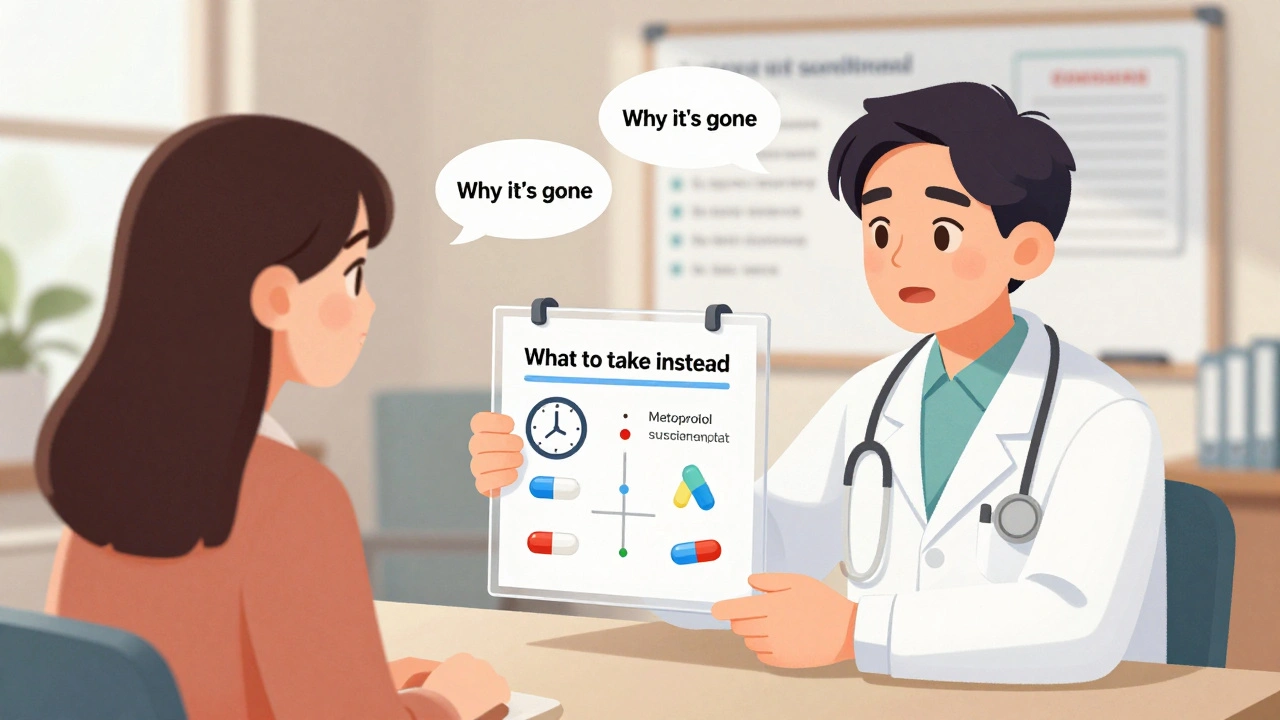
Effective communication during a shortage isn’t about reading a script. It’s about clarity, timing, and care. The European Medicines Agency and CDC agree on five core elements every patient needs to hear:- What drug is affected? Use both brand and generic names. Don’t say “the blue pill.” Say “metoprolol succinate 50 mg.”
- Why is it gone? Be honest. “The factory had a quality issue.” “The raw material is delayed.” No sugarcoating.
- How long will it last? If you don’t know, say so. But give a range: “We expect it back in 4-8 weeks.”
- What are your options? List alternatives with evidence. Not just “take this instead.” Say: “This drug works just as well for blood pressure, and studies show it reduces stroke risk by 12%.”
- How can you reach us? Give a direct phone number or email. Not the main line. Not the front desk. A person who can answer.
And here’s the catch: You have to check if they understood. The CDC’s “Chunk, Check, Change” method works. Say a small piece of info (chunk). Ask them to repeat it back in their own words (check). If they’re confused, change how you explain it. This isn’t extra work-it’s safety.
What happens when you don’t communicate
Patients on Reddit shared stories like this: “My doctor just handed me a new prescription without saying why my heart med was gone. I took it for two weeks until my fingers turned blue. Turns out, it was the wrong drug.” On Healthgrades, reviews mentioning drug shortages average just 2.1 stars. The top complaints? “No warning before my refill was denied.” “The pharmacist didn’t know either.” “I felt like a lab rat.” Meanwhile, providers who took time to explain-especially those who scheduled extra 30-minute appointments or sent visual charts comparing medications-saw 87% patient satisfaction. That’s not luck. That’s strategy.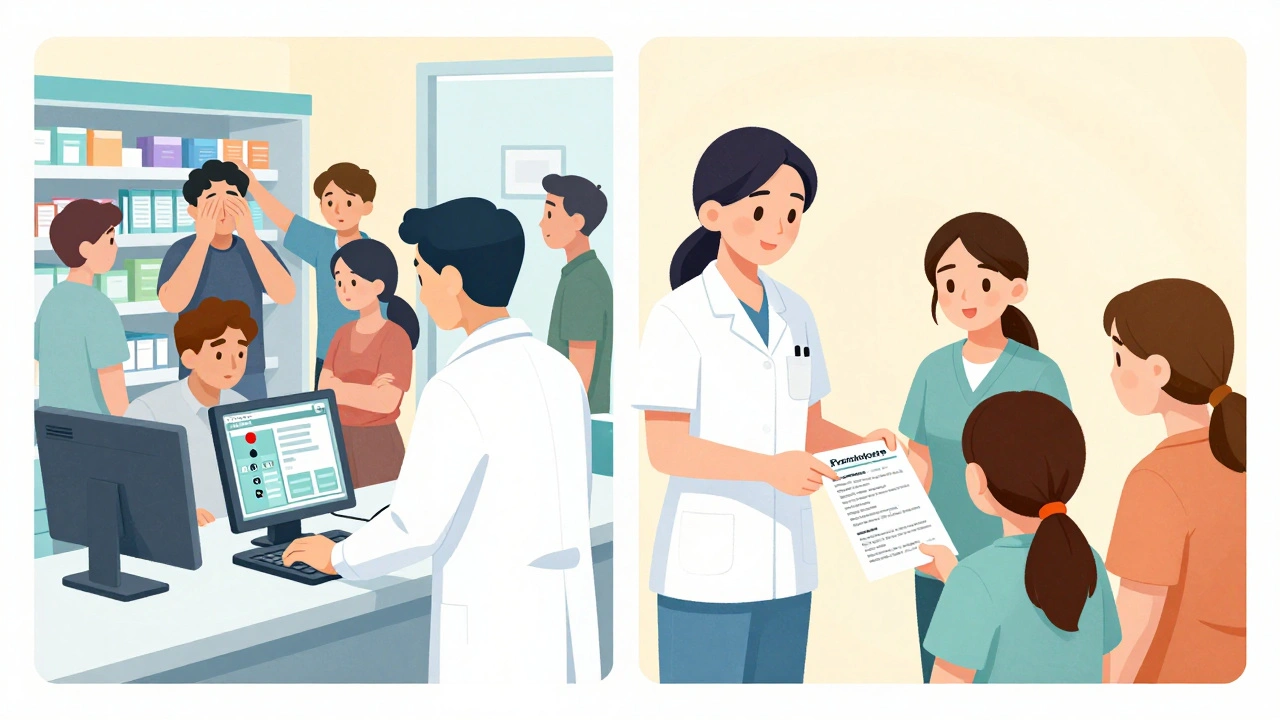
Real-world barriers-and how to beat them
You’re busy. Visits are 15 minutes long. EHRs don’t alert you when a drug is short. Only 38% of electronic systems even flag shortages. And 47% of U.S. adults struggle to understand medical terms. But solutions exist. Kaiser Permanente built shortage alerts into routine visit workflows. It added just 2.7 minutes per patient. Intermountain Healthcare created EHR templates that auto-fill shortage details-no typing needed. Memorial Sloan Kettering assigned communication specialists to handle cancer drug shortages. No provider was left scrambling. For rural clinics? That’s harder. 68% of rural providers say they don’t get real-time shortage updates. But even small steps help: posting a weekly shortage list in the waiting room, training front desk staff to say, “Your med might change-here’s what to expect,” or using simple printed handouts in plain language.What patients really want
A survey of 2,400 patients found that 81% would accept a different drug-if three things were explained clearly:- Why the original drug isn’t available (78% said this was critical)
- Proof the alternative works (72%)
- A realistic timeline for when the original might return (65%)
Patients don’t need a pharmaceutical lecture. They need to feel heard. Dr. Ahmed Khan of the WHO says providers should spend 37% more time on empathetic statements during shortage talks. That means: “I know this is scary.” “I’d be upset too.” “We’re doing everything we can.”
And here’s the quiet truth: 63% of patients don’t ask questions during these conversations-even if they’re confused. They’re afraid of sounding stupid. Or they think the provider is too rushed. So you have to invite them in. Ask: “What’s your biggest worry right now?”

The bottom line
Drug shortages aren’t going away. In fact, they’re getting worse. But how providers respond is still in our hands. You don’t need fancy tech or a big budget. You need consistency. You need honesty. You need to treat the patient-not just the prescription.When a drug vanishes, your job isn’t to fix the factory. It’s to keep the patient safe, informed, and trusted. That’s not just good practice. It’s the bare minimum of care.
What should I say to a patient when their medication is in short supply?
Be clear, direct, and compassionate. Use the patient’s exact medication name (brand and generic), explain why it’s unavailable in simple terms, list clinically appropriate alternatives with evidence, give a realistic timeline, and provide a direct contact for follow-up. Always verify understanding using the teach-back method: “Can you tell me how you’ll take this new medicine?”
Do I have to notify patients before they call about a shortage?
Yes. The American Medical Association recommends “presumptive communication”-reaching out before the patient discovers the shortage on their own. This reduces anxiety by 41%. Waiting until they show up frustrated or angry damages trust. Proactive contact shows you’re in control and care.
How do I handle shortages for patients with low health literacy?
Use plain language-no jargon. Stick to a 6th-8th grade reading level. Avoid terms like “therapeutic equivalent” or “bioavailability.” Use pictures, color-coded charts, or pill organizers. Always check understanding with teach-back. For non-English speakers, use certified medical interpreters-never family members. Studies show limited-English patients misunderstand shortage info 3.2 times more often.
Is it okay to just give a different drug without explaining?
No. Even if the alternative is clinically appropriate, skipping explanation puts patients at risk. Many switch to unsafe substitutes, stop taking meds entirely, or lose trust in their provider. Patients who understand why a change is needed are 23% more likely to stick with the new treatment. Communication isn’t optional-it’s part of the prescription.
What if I don’t know when the drug will be back?
Be honest. Say, “I don’t have a confirmed date yet, but I’m checking daily.” Then follow up. Send an email or call in a week. Patients can handle uncertainty if they feel you’re actively working on it. Silence creates fear. Consistent updates-even if they’re “still waiting”-build trust.
Can I be held legally responsible if I don’t communicate about a shortage?
Yes. CRICO Strategies found that 92% of malpractice cases involving drug shortages cited inadequate documentation of patient communication. If a patient has an adverse reaction because they were never told about a change, you could be liable. Document what you said, how you said it, and whether the patient understood. That’s not bureaucracy-it’s protection.
Shannara Jenkins
December 2, 2025 AT 11:04Just had a patient cry in my office last week because her insulin got switched without warning. She said she felt like a lab rat. I started using the five-point script after reading this-and holy crap, it works. She smiled when I handed her the chart with side-by-side pics of the old and new meds. Turns out, people just want to feel seen.
Also, teach-back is a game-changer. I used to think it was awkward, but now I say, ‘Can you tell me how you’ll take this?’ and they repeat it back in their own words. No jargon. No panic. Just clarity.
Elizabeth Grace
December 2, 2025 AT 11:58Ugh. My doctor just handed me a new script for my BP med and said ‘it’s the same thing.’ I Googled it later and found out it’s a totally different class. I almost had a stroke. Why do providers think we’re dumb? We’re not stupid-we’re scared.
Steve Enck
December 4, 2025 AT 02:17The fundamental flaw in this narrative is the implicit anthropomorphization of healthcare systems as moral agents. Providers are not responsible for supply chain failures-they are merely nodes in a complex, commoditized network. To assign ethical culpability to clinicians for macroeconomic logistical failures is a category error of the highest order. The real issue is not communication-it is the neoliberal dismantling of pharmaceutical infrastructure. Until we address structural capital accumulation, your ‘five-point script’ is a performative gesture masking systemic rot.
Jay Everett
December 5, 2025 AT 12:49Bro. This is the most important thing I’ve read all year. 🙌
I’m a nurse in Phoenix. We started using those color-coded pill charts last month. Patients are actually asking for them. One guy brought his whole family to see the chart-he said, ‘I finally get why they swapped my med.’ I cried. Not because it was emotional, but because it was so damn simple.
And yes, the teach-back thing? Magic. I used to just say ‘any questions?’ and get silence. Now I say ‘tell me how you’ll take this in your own words.’ Boom. 90% of the time they catch their own misunderstandings before I even fix it.
Also, stop using ‘therapeutic equivalence.’ Nobody knows what that means. Say ‘it does the same job.’ Plain. Clear. Human.
Do this. Your patients will thank you. I promise.
मनोज कुमार
December 5, 2025 AT 12:55Joel Deang
December 7, 2025 AT 12:29omg yes!! i had this happen with my dad’s chemo med last year. doc just said ‘new one now’ and i was like wait wtf?? we had to google it at 2am. i printed out the whole article from the post and handed it to his nurse. she cried. then she started using the charts too. we’re not asking for magic. just don’t treat us like dumb kids.
also pls use real words not ‘bioavailability’ i’m not a pharmacist lol 🙏
dave nevogt
December 9, 2025 AT 00:04There’s a deeper layer here that’s rarely acknowledged: the erosion of the therapeutic relationship under the weight of efficiency metrics. We’ve reduced patient care to a series of checkboxes-medication reconciliation, refill alerts, compliance tracking-while the human element, the quiet space where trust is built, has been systematically excised from the workflow. The five-point communication plan isn’t just a protocol; it’s a reclamation of dignity-for both patient and provider. It forces us to pause. To listen. To be present. In an age of algorithmic triage, that pause is revolutionary. It’s not about adding time; it’s about reclaiming intention. And yes, 37% more empathetic statements? That’s not a suggestion. That’s a moral imperative. We are not technicians. We are witnesses to suffering. And sometimes, the most powerful thing we can do is say, ‘I’d be upset too.’
Arun kumar
December 9, 2025 AT 10:51Zed theMartian
December 10, 2025 AT 19:48How quaint. You’re asking doctors to be therapists, social workers, and supply chain managers all at once. Meanwhile, the real villains are the pharmaceutical conglomerates who outsource production to countries with zero quality control and then profit from the chaos. This entire post reads like a PR campaign for providers who are being scapegoated for corporate malfeasance. Let’s not pretend that telling a patient ‘the factory had a quality issue’ somehow fixes the fact that their life-saving drug was manufactured by a factory with 12 safety violations. The real solution? Nationalize drug production. Or at least stop letting CEOs get bonuses while people die waiting for insulin.
Ella van Rij
December 11, 2025 AT 03:52Oh wow. A whole 12-page essay on how to say ‘sorry your drug is gone’ without making patients feel like they’re being sold a used car. Who knew? I’m sure the AMA will award this post a gold star and a complimentary laminated ‘I Communicated With Empathy’ badge.
Meanwhile, my doctor still says ‘it’s just a different brand’ and hands me a pill with no context. I’m just waiting for the day I’m told my tumor is ‘a little more optimistic now.’
ATUL BHARDWAJ
December 11, 2025 AT 22:47