OTC Medication Expiration Dates: What Really Matters and What You Can Ignore
 Jan, 31 2026
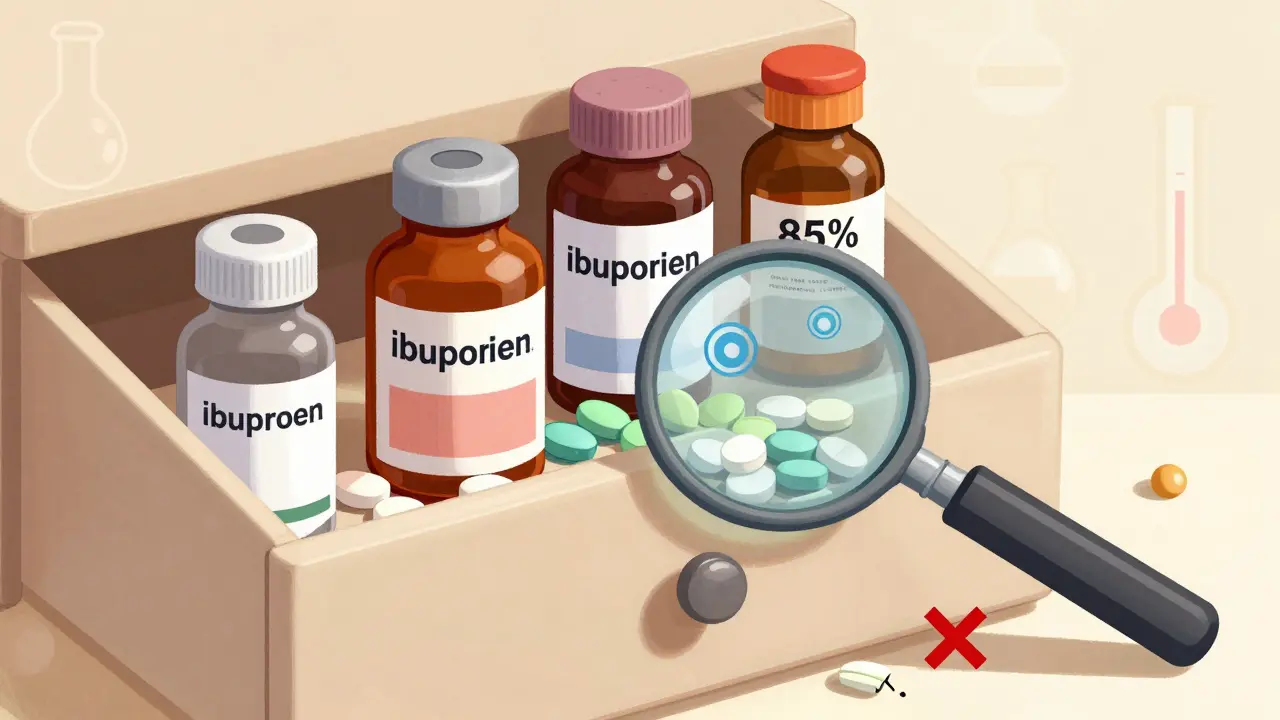
Most people look at the expiration date on their pain relievers, allergy pills, or cold medicine and think: expired means dangerous. But what if that’s not always true? You’ve probably got a drawer full of old bottles you’re too scared to touch. Maybe you’ve even thrown out perfectly good medicine just because the date passed. Here’s the truth: expiration dates on over-the-counter (OTC) meds aren’t like milk cartons. They don’t mean the drug suddenly turns toxic. They’re more like a manufacturer’s guarantee - not a death sentence.
What Expiration Dates Actually Mean
The expiration date on your bottle of ibuprofen or loratadine isn’t when the medicine becomes poison. It’s the last day the manufacturer guarantees it will work exactly as labeled - full strength, pure, and safe. This requirement came from the FDA in 1979 after the Drug Quality Assurance Act. Every OTC drug has to go through stability testing to prove it holds up under normal storage conditions for a set time. That’s usually 1 to 5 years from when it was made.
But here’s the twist: the FDA’s own Shelf Life Extension Program (SLEP), started in 1985 for military stockpiles, tested over 100 drugs - including common OTCs like aspirin and acetaminophen - and found that 90% were still effective 5 to 15 years past their expiration date. Some lasted even longer. That’s not a fluke. It’s science. The date isn’t a magic cutoff. It’s a conservative estimate.
What Makes Some Medicines More Stable Than Others
Not all pills are created equal. The form matters way more than the date. Solid tablets and capsules? They’re tough. They’re dry, sealed, and slow to break down. Studies show they often keep 70-90% of their potency for years after expiration - if stored right. Acetaminophen? It can stay effective for 7 to 12 years. Antihistamines like diphenhydramine? Still strong after 8-10 years. The FDA’s own data backs this up.
Liquids? That’s a different story. Syrups, eye drops, and suspensions are vulnerable. Water invites bacteria. Chemicals break down faster. Liquid antibiotics can become contaminated within 30 days of expiration. Eye drops? A 2019 study found 67% had bacterial growth 60 days past their date. That’s not just weak - it’s risky.
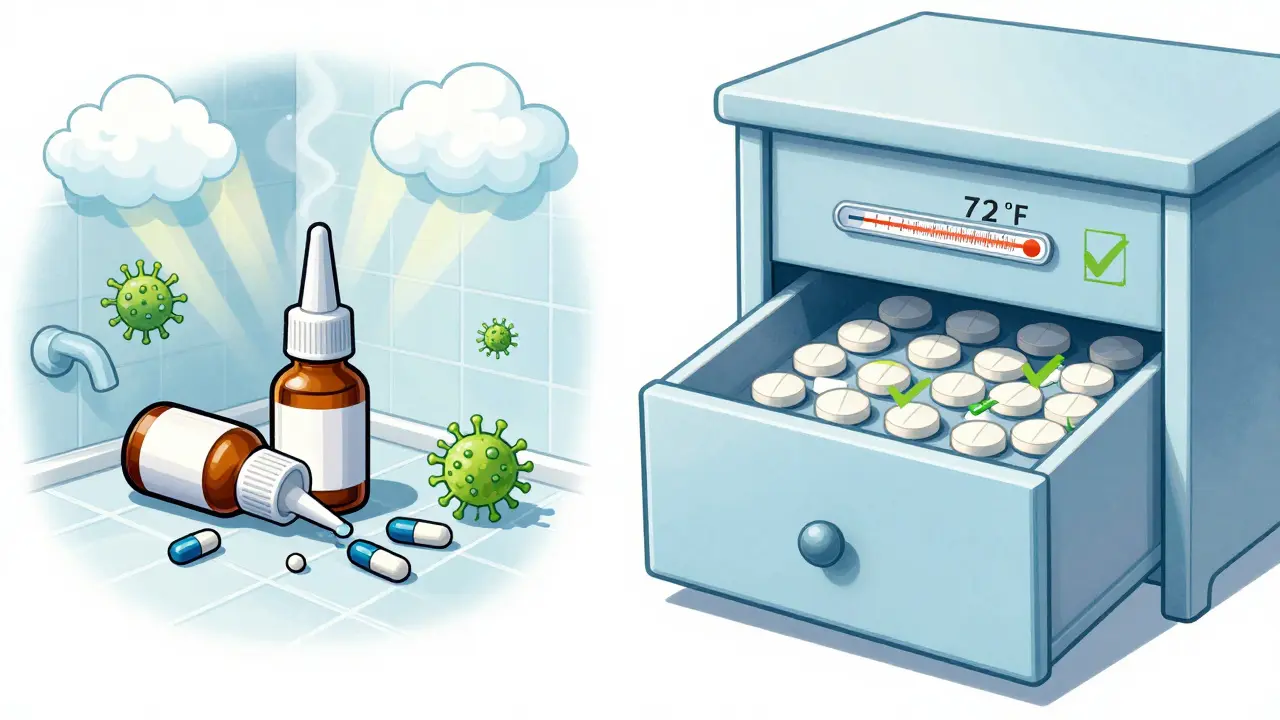
And then there’s the packaging. If your bottle’s been sitting in a steamy bathroom, exposed to sunlight, or left in a hot car, even a solid tablet can degrade. Heat, moisture, and light are the real enemies. Store your meds in a cool, dry place - like a bedroom drawer, not the bathroom cabinet. The ideal range is 59-77°F (15-25°C) with humidity below 60%. That’s what pharmacists say. And yet, the CDC found 68% of households keep meds in the bathroom. That’s the first mistake.
The Dangerous Ones: When You Absolutely Shouldn’t Use Expired Medicine
There are exceptions. Some drugs can’t afford to lose even a little potency. For these, expiration isn’t a suggestion - it’s a safety line.
- Nitroglycerin: Used for heart attacks. If it’s expired, it can lose 40-50% of its strength in just six months. A 2015 study found 34% of patients using expired nitroglycerin during a cardiac event had treatment failure. That’s life or death.
- Insulin: After expiration, it degrades quickly. A 2022 hospital report linked expired insulin to 18% of diabetic ketoacidosis ER visits. Even a 10-15% drop can throw blood sugar out of control.
- EpiPens: Epinephrine loses potency fast. Research shows 25-50% less effectiveness 1-90 months after expiration. If you’re having a severe allergic reaction and your EpiPen doesn’t work, you’re at risk.
- Birth control pills: Even a 5-10% drop in hormone levels can increase pregnancy risk. One 2020 study showed a 12.7% failure rate with pills used six months past expiration - compared to 0.3% with fresh ones.
If you rely on any of these, don’t gamble. Replace them on time. There’s no gray area.
What Most People Do - And Why
Despite the warnings, people are using expired meds - and mostly getting away with it. A 2023 survey on Reddit’s r/Pharmacy showed 78% of 1,243 users admitted to using expired OTC drugs. The most common? Acetaminophen (62%), antihistamines (48%), and topical creams (37%). Almost 90% said they didn’t notice any side effects. Only 11% said the medicine just didn’t work as well.
Amazon reviews back this up. Of 1,842 comments about expiration concerns, 68% of negative reviews were for liquids. Only 29% were for pills. People trust solid meds more. They’re right to.
And yet, 31% of Walgreens customers still toss out meds the second they expire - no matter how good they look. Why? Fear. Confusion. The FDA tells people, “Don’t use expired medicine.” But they don’t explain the nuance. So people play it safe - and waste billions.
How to Tell If an Expired Medicine Is Still Good
If you’re considering using an expired pill, don’t just guess. Look. Smell. Feel.
- Color change? If a white tablet is yellow or brown, toss it.
- Crumbly or powdery? If it falls apart when you touch it, it’s degraded.
- Strange smell? If your aspirin smells like vinegar, it’s broken down into salicylic acid. Not safe.
- Liquid cloudy or separated? If syrup looks muddy or eye drops have particles, don’t use it.
These signs mean chemical breakdown has happened. Even if the date hasn’t passed, if it looks off - throw it out. This advice is backed by 94% of pharmacists in a 2023 Medscape survey.
What’s Changing - And Why It Matters
The system is outdated. Right now, most OTC manufacturers set expiration dates at 2-3 years, even if their product could last 10. Why? Liability. Convenience. It’s easier to print a short date than run long-term stability tests.
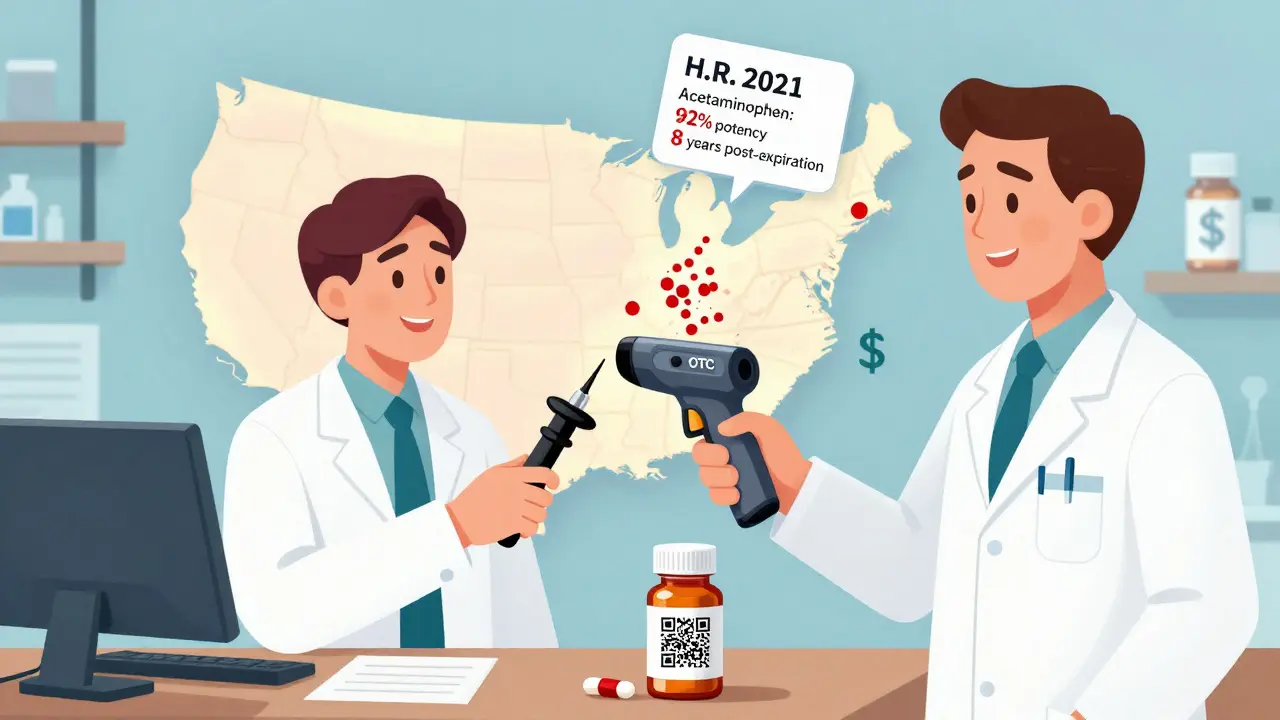
But things are shifting. The FDA released draft guidance in 2023 proposing risk-based expiration dating - meaning different rules for different types of meds. Solid pills? Longer dates. Liquids? Shorter. The American Pharmacists Association launched “Smart Expiry” in early 2023, putting QR codes on packaging so you can scan and get formulation-specific advice.
And then there’s the money. The U.S. spends $765 million a year throwing away perfectly good medicine. The National Academy of Medicine estimates we could save $1.2 billion annually if we used science, not fear, to set expiration dates.
There’s even a bill in Congress - H.R. 2021, the Safe Medication Extension Act - that would let the FDA legally extend expiration dates based on real data. It’s not a pipe dream. It’s coming.
What to Do Right Now
Don’t panic. Don’t throw everything out. Be smart.
- For solid pills (pain relievers, antihistamines, vitamins): If stored properly and still look intact, they’re likely fine for 1-2 years past expiration. Use your eyes. If it looks good, it probably is.
- For liquids (eye drops, cough syrup, antibiotics): If expired, toss it. No exceptions.
- For lifesaving drugs (EpiPens, insulin, nitroglycerin): Replace them on schedule. Period.
- Store right: Cool, dry place. Not the bathroom. Not the car. Not the kitchen window.
- Dispose safely: Use Walgreens’ take-back kiosks (available at 9,000+ locations) or check for local drug disposal events. Don’t flush or trash meds unless there’s no other option.
Expiration dates aren’t about safety in most cases - they’re about certainty. The science says most pills are still good. The law says manufacturers can’t guarantee it. So you decide. Use your judgment. Trust your eyes. Know the risks. And stop wasting money on medicine you don’t need to throw away.
What to Do If You’re Not Sure
If you’re holding an expired bottle and you’re not sure - call your pharmacist. They’re not just there to fill prescriptions. They’re trained to help you make smart decisions. Most will look at the drug, ask how it was stored, and tell you whether it’s likely still safe. It’s free. And it’s better than guessing.
Is it safe to take expired ibuprofen or acetaminophen?
Yes, if stored properly and the pills look normal - no discoloration, crumbling, or odd smell. Studies show acetaminophen and ibuprofen often retain 85%+ potency for years beyond expiration. The risk is low, but never use them if they look or smell off.
What happens if I take expired allergy medicine?
You might just get less relief. Antihistamines like loratadine or diphenhydramine are very stable. If they’re expired but still look solid and smell normal, they’re likely still effective. But if your symptoms don’t improve, replace them - don’t risk a bad reaction from a weakened dose.
Can expired eye drops hurt me?
Yes. Expired eye drops can grow bacteria, leading to serious eye infections. Even if they look clear, don’t use them past the expiration date. The risk isn’t worth it - your vision is too important.
Why do pharmacies tell me to throw out expired meds if they’re still good?
Pharmacists follow FDA guidelines that say expiration dates are the last day of guaranteed safety and potency. They’re legally required to advise caution. But many now privately tell patients that solid OTC meds are often fine for 1-2 years past expiration - if stored well. It’s a gap between policy and science.
How long can I keep medicine in my car or bathroom?
Don’t. Heat and moisture destroy medicine fast. A bathroom cabinet can hit 80°F and 70% humidity - way above the 77°F and 60% humidity limit. Your meds degrade faster there than in a drawer. Store them in a cool, dry place like a bedroom.
Are vitamins still good after expiration?
Most vitamins are safe past expiration, but they lose potency. You won’t get sick - you’ll just get less benefit. If your vitamin C tablet is yellow or smells weird, toss it. Otherwise, it’s probably fine for a year or two past the date.
Final Thought: It’s Not About Fear - It’s About Knowledge
The real problem isn’t expired medicine. It’s misinformation. We’ve been told to fear expiration dates like they’re bombs. But the data says otherwise. Most pills are still safe. Most liquids aren’t. The difference is clear. You don’t need to be a scientist to understand it. Just use your eyes. Know the risks. Store your meds right. And don’t waste money on pills you don’t need to throw away.
Jamie Allan Brown
February 1, 2026 AT 11:31Interesting breakdown. I’ve kept my ibuprofen for three years past expiration-stored in a drawer, no heat, no moisture-and it still works fine. I’m not reckless, but I’m not terrified either. The science here makes way more sense than the fear-mongering we’re fed.
Angel Fitzpatrick
February 3, 2026 AT 01:27Of course the FDA and pharma giants want you to throw out meds-billions in profits depend on it. They’ve been running the Shelf Life Extension Program since ’85 and buried the results. You think they’d tell you your $12 bottle of Tylenol could last 12 years? Nah. They’d rather you buy a new one every 18 months. This isn’t science-it’s corporate control disguised as safety.
Lisa Rodriguez
February 4, 2026 AT 23:36I’m a nurse and I’ve told patients for years: if it’s a solid pill, stored dry and cool, and looks normal-don’t panic. I’ve seen people toss out 5-year-old antihistamines because the date passed, then come back with allergies worse than ever. We’re wasting money and creating unnecessary anxiety. The real enemy is the bathroom cabinet, not the expiration date.
franklin hillary
February 5, 2026 AT 07:48Stop treating medicine like a vending machine. You wouldn’t drink milk past its date, sure-but medicine isn’t milk. It’s chemistry. And chemistry doesn’t care about marketing dates. If your aspirin doesn’t smell like vinegar and doesn’t crumble in your fingers, it’s probably still doing its job. Your body isn’t a toddler-it knows the difference between weak and dead. Use your brain, not the label.
Bob Cohen
February 5, 2026 AT 20:42So let me get this straight-you’re telling me I can save $50 a year by not tossing expired Benadryl… but if I use an expired EpiPen during a reaction, I’m a dumbass? Yeah, okay. That’s not a contradiction, that’s just capitalism with a side of common sense. I’ll take the $50 and keep my EpiPen fresh. Smart compromise.
Nicki Aries
February 6, 2026 AT 12:18I just checked my medicine cabinet-three bottles expired last year, all pills, all stored in my bedroom. One was loratadine, one was acetaminophen, one was melatonin. All look perfect. No discoloration, no odor, no crumbling. I’m not throwing them out. I’m not risking my health-I’m using logic. And if someone tells me I’m irresponsible, I’ll hand them this article and ask them to explain why the FDA’s own data contradicts their fear.
Ishmael brown
February 7, 2026 AT 23:08lol. So now we’re supposed to trust pills more than milk? 🤡 I mean, I get it-science says it’s fine. But what if the bottle sat in your cousin’s hot car for 3 months? What if the humidity in your apartment is 80%? What if the manufacturer used cheap fillers? You can’t just eyeball it. The date exists for a reason: because most people are lazy and can’t tell the difference between a tablet and a rock.
Lilliana Lowe
February 8, 2026 AT 22:35The article is well-researched, but it contains a fundamental misstatement: the FDA does not mandate expiration dates based on 'conservative estimates'-it mandates them based on stability data submitted by manufacturers, which are often underpowered and conducted over short timeframes. The real issue is regulatory inertia and liability avoidance, not consumer ignorance. Additionally, the term 'potency' is misused throughout: degradation does not always equate to reduced efficacy; it may produce toxic byproducts (e.g., salicylic acid from aspirin). The author’s casual dismissal of risk is dangerously oversimplified. Use your eyes? Fine. But don’t confuse observation with pharmacological analysis.