OTC Cold Medications and Warfarin: Avoiding Dangerous Interactions
 Mar, 18 2026
Warfarin Medication Safety Checker
Check Your Cold Medicine Safety
Enter any OTC cold medicine name to see if it's safe with warfarin. Remember: Never rely on "aspirin-free" labels alone.
Every year, millions of people reach for over-the-counter cold medicines when they feel a sniffle coming on. But if you’re taking warfarin - a blood thinner prescribed to prevent clots - that simple cough syrup or sinus tablet could be hiding a serious danger. The risk isn’t theoretical. In 2023, nearly one in five warfarin-related emergencies in U.S. hospitals were linked to OTC cold medications. Many patients don’t realize they’re at risk because the dangerous ingredients are buried in multi-symptom formulas under vague names like "cold & flu relief" or "all-in-one remedy."
Why Warfarin Is So Sensitive
Warfarin, sold under the brand name Coumadin, works by blocking vitamin K, which your body needs to form clots. It’s effective, but it has a very narrow window between working well and causing harm. Your doctor checks your blood regularly with an INR test to make sure your clotting time stays in the safe zone: usually between 2.0 and 3.0. Go too high? You risk internal bleeding. Go too low? You risk a stroke or pulmonary embolism.The problem isn’t warfarin itself - it’s what you mix it with. Over 500 medications and supplements can interfere with how warfarin works. Cold and flu season brings a flood of OTC products that can push your INR dangerously out of range. Even small changes in your metabolism can cause big problems.
The Hidden Dangers in Common Cold Products
Many people assume that if a product doesn’t say "aspirin" on the label, it’s safe. That’s a dangerous myth.Here’s what you need to avoid:
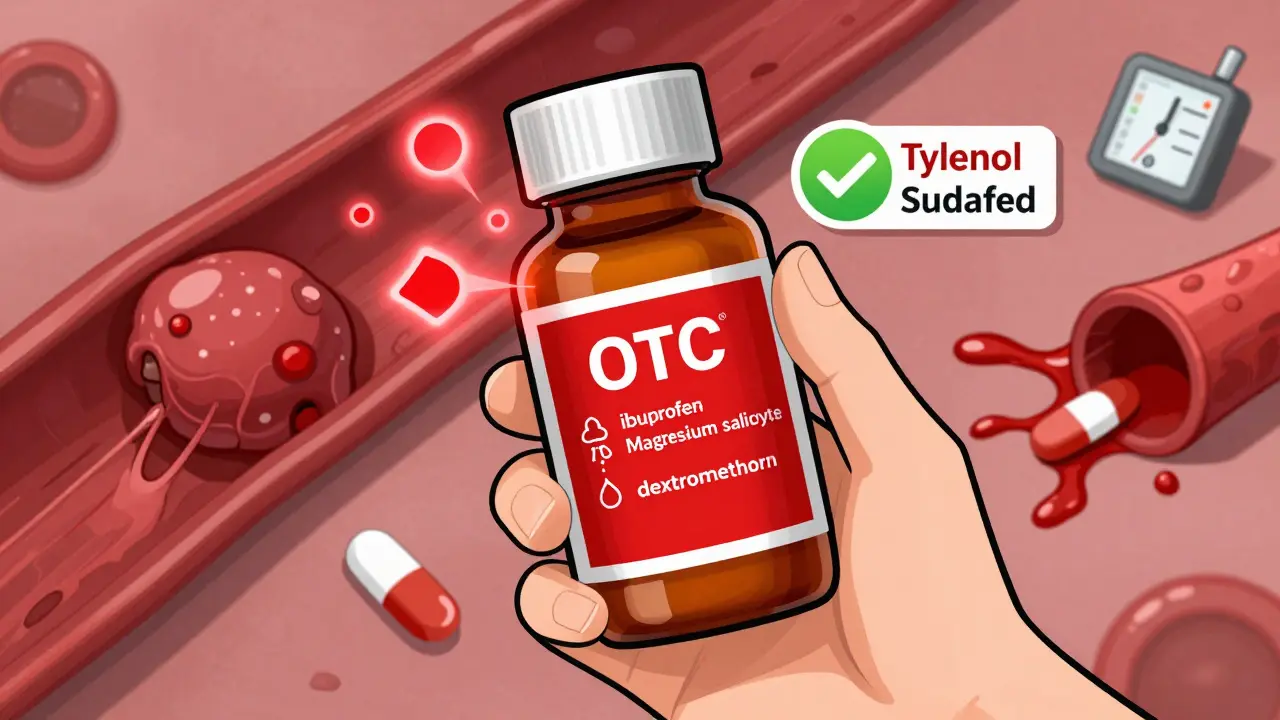
- NSAIDs - ibuprofen (Advil, Motrin), naproxen (Aleve), and even aspirin (Bayer, Excedrin) increase bleeding risk by 3 to 4.5 times when taken with warfarin. They damage the stomach lining and stop platelets from working properly. The FDA now requires a bold warning on all NSAID packaging: "Do not use if taking blood thinners."
- Magnesium salicylate - found in products like Doan’s Pills. It acts like aspirin, even though it’s not called aspirin. At least 37 warfarin-related bleeding cases in 2023 were traced to this ingredient.
- Dextromethorphan with quinidine - some versions of Robitussin contain this combo. Quinidine can raise warfarin levels by 25%, leading to INR spikes. Always check the full ingredient list.
- Cimetidine (Tagamet) - used for heartburn, this OTC drug can increase warfarin levels by 30-50% by blocking the liver enzyme that breaks it down.
- St. John’s wort - a popular herbal supplement for mood. It reduces warfarin’s effect by up to 50%, making clots more likely.
- Ginkgo biloba and fish oil - these supplements thin the blood on their own. Combined with warfarin, bleeding risk jumps by over 2-fold.
What’s Actually Safe
You don’t have to suffer through a cold. There are safe options - if you know what to look for.- Acetaminophen (Tylenol) - this is the go-to pain reliever for warfarin users. But don’t go overboard. Stick to 2,000 mg per day (no more than 4 extra-strength tablets). Taking more than that for three days straight can impair platelet function and raise bleeding risk.
- Pseudoephedrine (Sudafed) and phenylephrine (Sudafed PE) - these decongestants are safe at standard doses. They don’t affect clotting or INR levels.
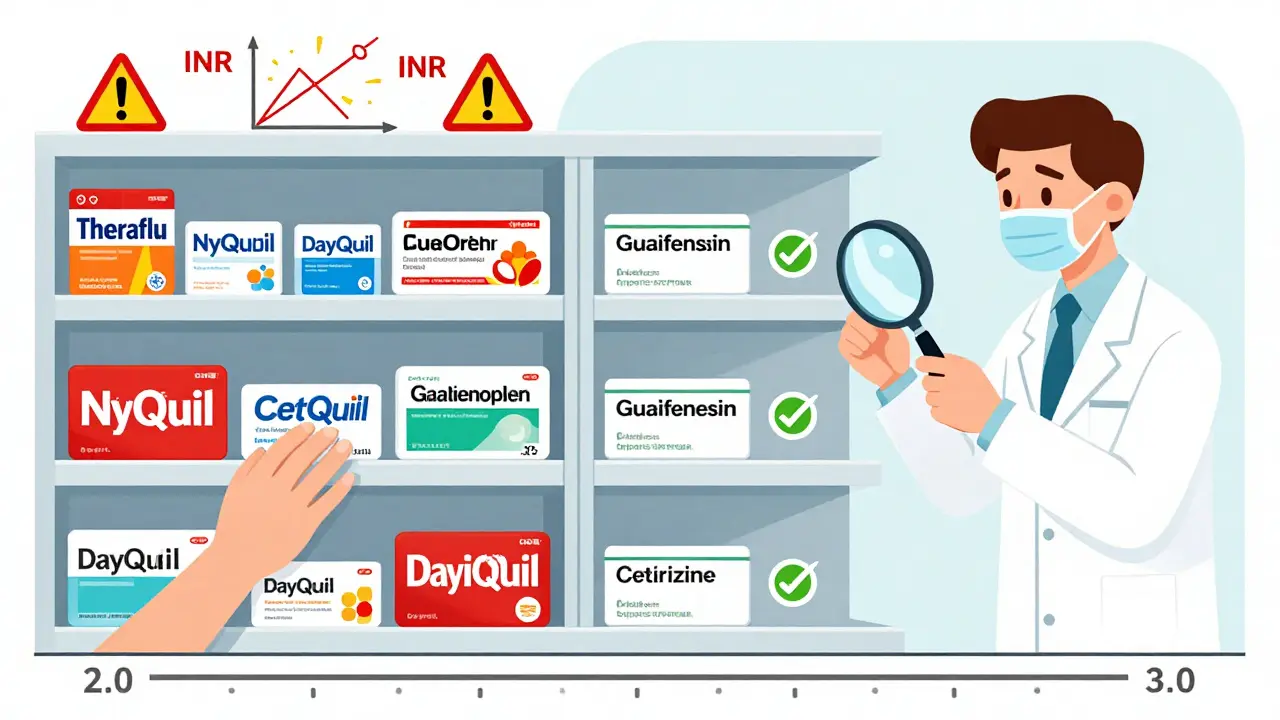
- Guaifenesin (Robitussin, Mucinex) - this expectorant helps loosen mucus. It’s safe and doesn’t interact with warfarin.
- Cetirizine (Zyrtec), loratadine (Claritin), and chlorpheniramine (Chlor-Trimeton) - these antihistamines are generally safe. Avoid first-generation ones like diphenhydramine (Benadryl) if you’re also taking sedatives or have kidney issues, but they don’t directly affect warfarin.
- Single daily low-dose aspirin (81 mg) - only if your doctor prescribed it for heart disease. Never take higher doses or use it for headaches or pain.
How to Read Labels Like a Pro
Most dangerous interactions happen because people don’t read the full ingredient list. They see "aspirin-free" and assume safety. That’s not enough.Here’s how to scan a label properly:
- Look for active ingredients - not just the brand name.
- Check for any of these words: acetylsalicylic acid, ibuprofen, naproxen, magnesium salicylate, ketoprofen, diclofenac. If you see any, put it back.
- Watch for "multi-symptom" formulas. Products like Theraflu, DayQuil, and NyQuil often hide NSAIDs or acetaminophen in the same bottle. You might think you’re taking just a cough suppressant, but you’re also getting 650 mg of acetaminophen and 200 mg of ibuprofen.
- Check the "Warnings" section. Since 2022, the FDA requires all OTC NSAIDs to include a clear warning about blood thinners. If it’s not there, be extra cautious.
- When in doubt, call your anticoagulation clinic. A pharmacist can check the ingredients in seconds.
Real Stories, Real Risks
Online support groups are full of cautionary tales. One user, u/WarfarinWarrior, posted on Reddit after being hospitalized when their INR spiked from 2.4 to 6.1 after taking Theraflu. The product contained acetaminophen and phenylephrine - the phenylephrine was fine, but the acetaminophen, combined with other medications, pushed them over the edge.Another patient in the Warfarin Support Facebook group took "aspirin-free" headache tablets that contained magnesium salicylate. They ended up with a gastrointestinal bleed. No aspirin on the label? Still dangerous.
On the flip side, user u/ClotFreeLife shared how they managed a 10-day cold using only Zyrtec, Sudafed, and plain Robitussin - all approved by their pharmacist. Their INR stayed steady the whole time.
What Works: Proven Strategies
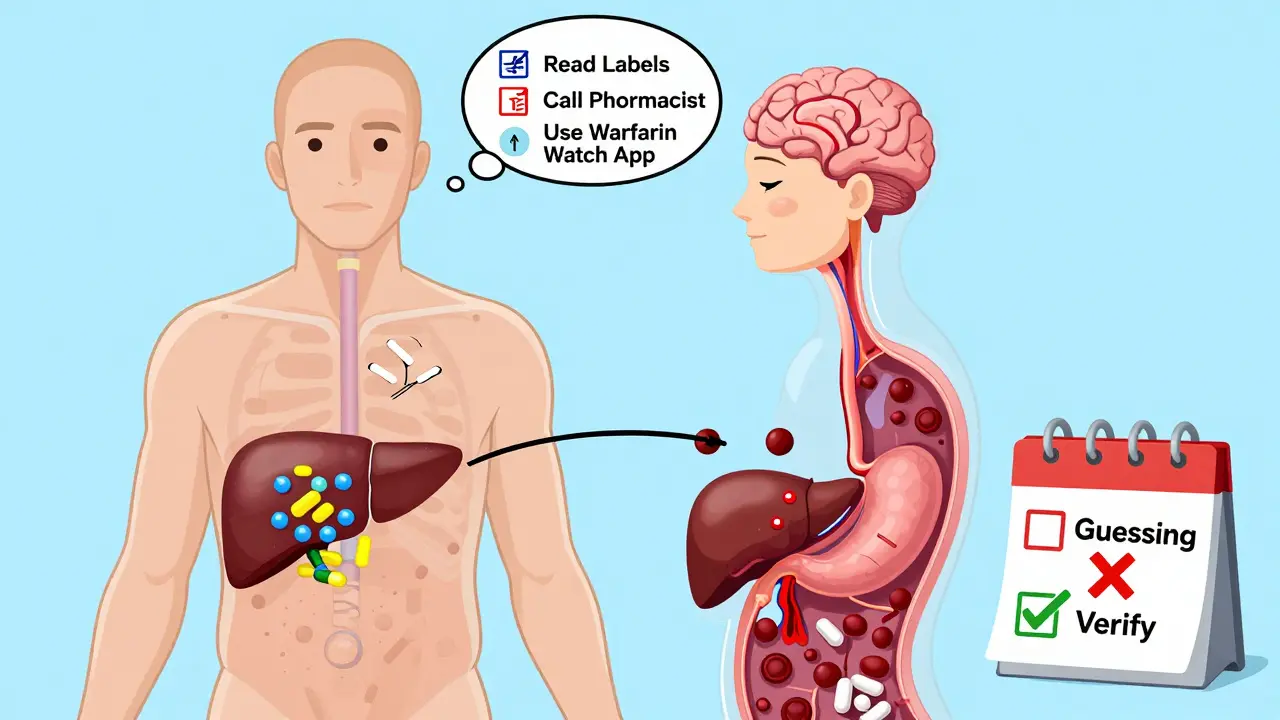
Clinics that see the best outcomes have a system:- Patients get a personalized Medication Safety Card listing approved OTC products. One study showed this reduced adverse events by 63%.
- Pharmacies now use barcode scanners that flag dangerous combinations. Mayo Clinic’s "Warfarin Watch" app checks OTC labels in real time and has 94% accuracy.
- Some clinics offer a 90-minute OTC safety workshop. Patients who take it make 78% fewer dangerous choices.
- Genetic testing for CYP2C9 and VKORC1 variants can predict how your body metabolizes warfarin. People with certain gene types are far more sensitive to interactions. But only 18% of patients get tested due to insurance limits.
The bottom line? Don’t guess. Don’t assume. Don’t rely on memory. Every time you pick up an OTC product, treat it like a new prescription. Ask: "Is this safe with my blood thinner?" Then verify it.
What to Do If You’ve Already Taken Something Risky
If you accidentally took an NSAID, aspirin, or a multi-symptom cold medicine:- Stop taking it immediately.
- Call your anticoagulation clinic or pharmacist - don’t wait for your next INR test.
- Don’t panic. A single dose won’t always cause disaster, but it needs monitoring.
- Keep track of any signs of bleeding: unusual bruising, nosebleeds, dark stools, or blood in urine.
Early intervention is key. Most complications can be reversed if caught in time.
Can I take Tylenol with warfarin?
Yes, acetaminophen (Tylenol) is the safest pain reliever for people on warfarin. But you must limit it to 2,000 mg per day (no more than four 500 mg tablets). Taking more than that for three days in a row can increase bleeding risk. Never combine it with other acetaminophen-containing products like cold syrups or sleep aids.
Is Sudafed safe with warfarin?
Yes, pseudoephedrine (Sudafed) and phenylephrine (Sudafed PE) are considered safe decongestants for warfarin users. They don’t affect INR levels or increase bleeding risk. Just stick to the standard dose - don’t take extra or extended-release versions unless approved by your doctor.
Why can’t I take Advil or Aleve with warfarin?
Advil (ibuprofen) and Aleve (naproxen) are NSAIDs, which both thin the blood and irritate the stomach lining. When combined with warfarin, they multiply the risk of serious bleeding - especially in the gut. Studies show a 4.5-fold increase in gastrointestinal bleeding. Even one dose can be risky. Avoid all NSAIDs unless your doctor specifically says otherwise.
Do OTC cold medicines have warnings for warfarin users?
Since 2022, the FDA requires all OTC products containing NSAIDs to include a bold warning on the front panel: "Do not use if taking blood thinners." But many multi-symptom products still hide NSAIDs under vague names, and not all ingredients are covered. Always read the full active ingredient list - don’t rely on the warning alone.
What should I do before taking any new OTC medicine?
Always check with your anticoagulation clinic or pharmacist before taking any new OTC product, even if it seems harmless. Many clinics now offer free phone consultations for this exact reason. Keep a list of approved medications on your phone or wallet. If you’re unsure, skip it - there’s almost always a safe alternative.
Next Steps: Stay Safe This Season
The best defense is preparation. Before cold and flu season hits:- Get your personalized OTC safety list from your anticoagulation clinic.
- Download a barcode-scanning app like Mayo Clinic’s Warfarin Watch.
- Keep a list of your medications - including supplements - handy for pharmacists.
- Teach a family member how to read labels so they can help if you’re feeling sick.
- Don’t wait for symptoms to get worse. If you’re unsure, call first.
Warfarin saves lives. But it demands respect. A simple cold shouldn’t turn into a hospital trip. With the right knowledge, you can stay healthy - and safe - all season long.
Kal Lambert
March 19, 2026 AT 15:59jared baker
March 20, 2026 AT 11:17Aileen Nasywa Shabira
March 22, 2026 AT 05:16Linda Olsson
March 22, 2026 AT 23:35Ayan Khan
March 23, 2026 AT 10:29Melissa Starks
March 25, 2026 AT 03:19Lauren Volpi
March 26, 2026 AT 21:57Amadi Kenneth
March 28, 2026 AT 00:14Shameer Ahammad
March 29, 2026 AT 19:23Alexander Pitt
March 30, 2026 AT 21:45Manish Singh
April 1, 2026 AT 04:40Nilesh Khedekar
April 3, 2026 AT 02:20Robin Hall
April 4, 2026 AT 20:24Michelle Jackson
April 5, 2026 AT 12:29becca roberts
April 7, 2026 AT 08:00