Non-Formulary Generics: What to Do When Coverage Is Denied
 May, 16 2026
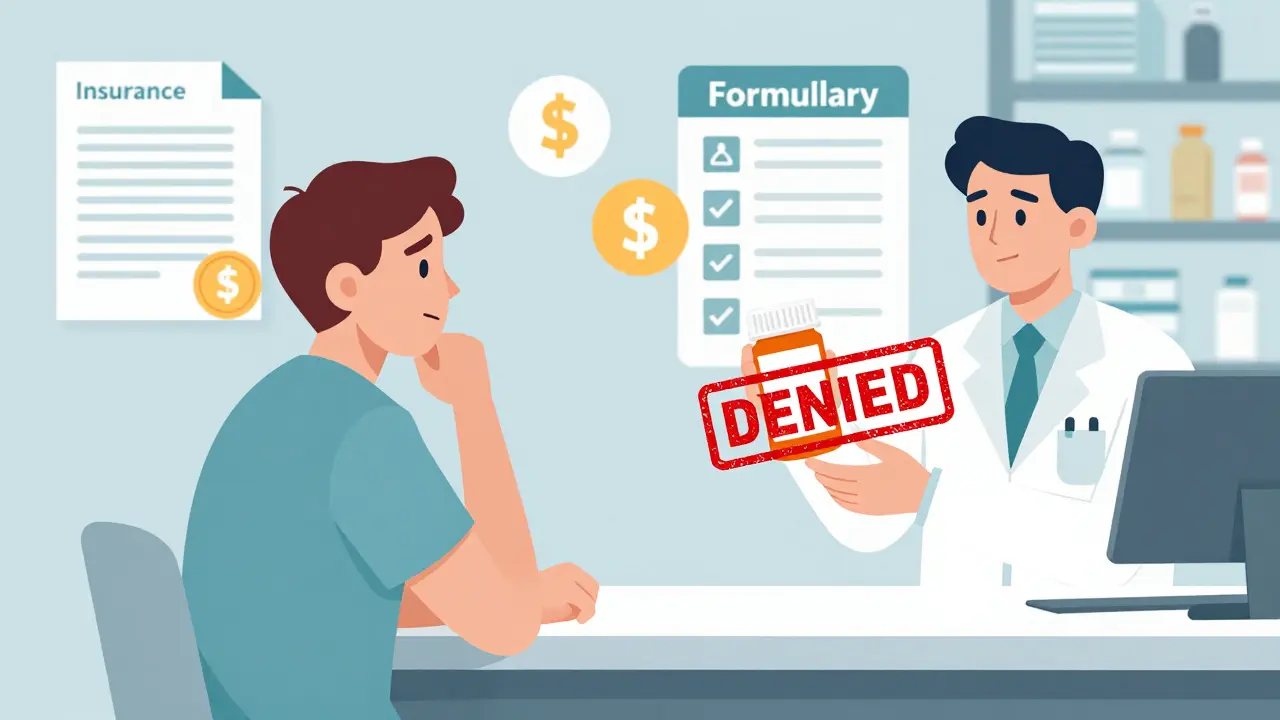
Imagine walking into your pharmacy, handing over a prescription for a generic medication you’ve taken for years, and being told it’s not covered. You’re handed a bill that costs three times more than usual, or worse, told there is no alternative on the list that works for your specific body chemistry. This is the reality of non-formulary generics, which are generic medications excluded from an insurance plan's official list of covered drugs (the formulary). These denials happen frequently, affecting millions of patients annually, but they are rarely permanent dead ends. Federal law provides a structured pathway to overturn these decisions if you know how to navigate the system.
Understanding Why Your Generic Was Denied
To fix the problem, you first need to understand why it happened. Insurance plans use a formulary, which is the official list of medications covered by a specific health insurance plan. While federal regulations, such as those from the Centers for Medicare & Medicaid Services (CMS), require plans to cover at least two drugs per therapeutic category, they do not mandate coverage for every available generic. Plans often exclude certain generics to steer patients toward preferred manufacturers or cheaper alternatives that the insurer has negotiated lower rates with.
This creates a gap where a perfectly safe, effective generic medication falls outside the coverage net. According to data from the Kaiser Family Foundation (KFF), this exclusion can leave patients paying significantly higher out-of-pocket costs. The Medicare Prescription Drug, Improvement, and Modernization Act (MMA) established the framework for Medicare Part D coverage but left room for these exclusions, meaning even standard generics can be flagged as non-formulary. Understanding this distinction is crucial because it shifts the burden of proof from "is this drug real?" to "why is this specific brand necessary for me?".
The Formulary Exception Process: Your First Step
When coverage is denied, your immediate recourse is the formulary exception process. This is a federally mandated procedure designed to ensure medically necessary medications remain accessible despite formulary limitations. It is not a request for charity; it is a legal right to have your medical needs evaluated individually.
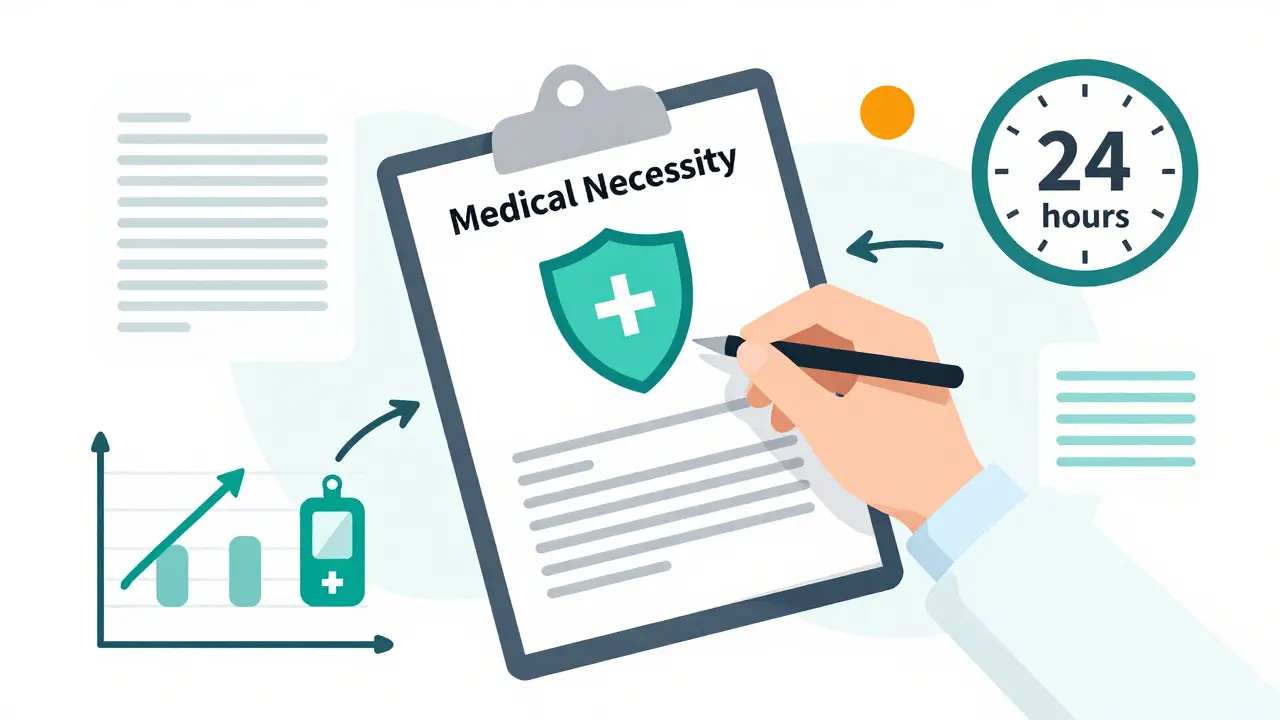
The process requires your doctor to submit a justification stating why the non-formulary drug is medically necessary and why the formulary alternatives would not be as effective or would cause adverse effects. Here is how to execute this step effectively:
- Contact Your Prescriber Immediately: Do not wait until you run out of medication. Ask your doctor to initiate a coverage determination request.
- Request Urgent Review if Applicable: If stopping the medication poses an immediate threat to your life or health, request an urgent review. CMS mandates a decision within 24 hours for urgent cases, compared to 72 business hours for standard requests.
- Provide Specific Clinical Data: Vague statements like "it works better" are often rejected. Your doctor should include specific metrics, such as hemoglobin A1c levels for diabetes or fecal calprotectin levels for inflammatory bowel disease, demonstrating stability on the current regimen.
Data from the Bleeding Disorders Advocacy Alliance shows that 74% of properly documented exception requests for non-formulary generics are approved on the first submission. The key word here is "properly documented." The more clinical evidence you provide, the harder it is for the insurer to deny based on cost alone.
Navigating Appeals and External Reviews
If the initial exception request is denied, do not give up. Approximately 58% of initial denials for non-formulary reasons are successfully overturned through the appeals process, according to the Crohn's & Colitis Foundation. The next step is filing an internal appeal with your insurance plan.
You must file this appeal within strict timeframes: 30 days for denials of non-urgent care not yet received, or 60 days for services already received. During this stage, you can add new information that wasn't included in the initial request, such as recent lab results or letters of medical necessity from specialists.
If the internal appeal fails, you have the right to an independent external review. This involves a third-party organization, independent of your insurance company, reviewing your case. This is your strongest leverage point because the external reviewer is not motivated by the insurer’s bottom line but by clinical appropriateness. Federal law guarantees access to this review if the plan denies the request after internal appeals.

Cost Implications and Financial Pitfalls
While fighting for coverage, the financial impact can be severe. Patients often face full out-of-pocket costs while waiting for decisions. Data from SmithRx indicates that patients typically pay 3.7 times more for non-formulary generics compared to formulary alternatives. For example, a patient might pay $417 out-of-pocket for 90 days of generic metformin ER when the formulary alternative costs $15.
A critical pitfall to avoid is assuming that getting the drug covered means you will pay a low copay. Under Medicare Part D rules, if coverage is granted for a non-formulary drug via an exception, you cannot request a separate tiering exception to reduce cost-sharing. This means you might get the drug covered, but still pay a high percentage of the cost. Dr. Mark Parisi, Chief Medical Officer at MMIT, warns that many providers don’t realize they can request tier exceptions separately from formulary exceptions, creating unnecessary financial burdens. Always ask your pharmacist about the expected copay amount before agreeing to fill the prescription during the appeal period.
Practical Tips for Success
Success in this arena relies on preparation and persistence. Here are actionable steps to improve your odds:
- Document Everything: Keep records of every call, email, and letter. Note the name of the representative, the date, and the reference number. This documentation is vital if you need to escalate to an external review.
- Use Emergency Supply Rules: In urgent cases, CMS requires plans to provide emergency supplies covering 72 hours while the exception is reviewed. However, compliance is spotty. If denied, cite the federal requirement explicitly.
- Leverage State Regulations: Some states have stronger protections than federal minimums. For instance, California requires a 48-hour review standard for urgent cases, whereas the federal requirement is 24 hours. Check your state’s Department of Insurance website for additional rights.
- Engage Patient Advocates: Organizations like the American Medical Association (AMA) and condition-specific foundations often provide templates for letters of medical necessity. Using these standardized formats can save your doctor time and increase approval rates.
Remember, the goal is not just to win an argument but to maintain your health stability. Skipping doses or switching to ineffective alternatives due to coverage issues can lead to hospitalizations, which are far more costly than any generic medication. Stay proactive, document thoroughly, and use the legal frameworks designed to protect your access to care.
What is a non-formulary generic?
A non-formulary generic is a generic medication that is not included on your insurance plan's official list of covered drugs (the formulary). Even though it is generic and often cheaper, your insurer may exclude it to steer you toward other options, resulting in coverage denials or higher out-of-pocket costs.
How long does the formulary exception process take?
For standard requests, insurers must provide a decision within 72 business hours. For urgent cases where delaying treatment could seriously jeopardize your life or health, the decision must be made within 24 hours, as mandated by CMS guidelines.
What happens if my formulary exception is denied?
If denied, you can file an internal appeal with your insurance plan within 30 to 60 days, depending on the urgency. If the internal appeal is also denied, you have the right to request an independent external review by a third-party organization.
Can I get a lower copay if the exception is approved?
Not necessarily. Under Medicare Part D rules, if coverage is granted for a non-formulary drug via an exception, you generally cannot request a separate tiering exception to reduce cost-sharing. You may still face higher out-of-pocket costs even if the drug is covered.
Why do insurance companies deny coverage for generics?
Insurance companies may deny coverage for specific generics to manage costs by steering patients toward preferred manufacturers or alternatives with which they have negotiated lower prices. They may also believe other formulary drugs are clinically equivalent, though this isn't always true for every patient.
mardy duffy
May 17, 2026 AT 02:24another long read about how insurance companies are evil and you have to fight them like a soldier in war
Yuvraj Singh
May 18, 2026 AT 11:22I completely agree with the importance of documentation, especially for those dealing with complex chronic conditions. In my experience working within healthcare systems, I have seen that the difference between approval and denial often lies in the specificity of the clinical data provided by the prescriber. It is not enough to simply state that a medication works; one must demonstrate through objective metrics such as lab results or symptom logs why the alternative options on the formulary are inadequate for that specific patient's physiology. This approach transforms the request from a subjective preference into an objective medical necessity, which is much harder for insurers to reject without risking legal challenges.
Mollie Louise
May 19, 2026 AT 01:23This is such an incredibly helpful breakdown! 🌟 I was so confused when my pharmacy called me last week saying my usual generic wasn't covered anymore 😭 It felt like they were just trying to make money off my confusion but reading this makes it feel like there is actually a system we can use to fight back 💪 I love how you explained the difference between a standard review and an urgent one because I didn't even know that existed! 📚 It gives me so much hope that if I just get my doctor to write up the right notes maybe I won't have to pay that huge price tag 💸 Thank you for sharing this knowledge because it really empowers us to take control of our health instead of just accepting what the insurance company says is best for us ✨🙏
Dana Ellington
May 20, 2026 AT 22:16omg yes!! i had to do this for my mom last year and it was literally a nightmare 😱 she almost ran out of her meds because the pharmacy said they couldn't give her an emergency supply even though she was sick 🤢 we ended up paying like $400 cash just to keep her stable while we fought the appeal process 📉 it took forever and my mom was so stressed out crying every day waiting for the phone call ☎️ but eventually we won the external review 🎉 so yeah this post is super important people need to know they can fight back instead of just giving up 💔
Christina Moran
May 21, 2026 AT 21:43i think its crazy that they force u to jump thru all these hoops just to get ur meds lol like if it worked before why change it now? my insurance did this to me last month and i had to switch to a diff brand cause i didnt wanna deal with the paperwork hassle 😩 its just annoying tbh
victoria catharinaa
May 22, 2026 AT 15:21you should never just accept the first no from these greedy corporations because they count on your ignorance and fear to save their own money at your expense. i am tired of seeing people suffer because they are too polite to demand what is legally theirs under federal law. you must be aggressive and loud and document every single interaction because they will lie to your face and then deny everything later when you try to appeal. do not let them bully you into buying a more expensive drug just because they negotiated a bad deal with another manufacturer. fight hard and fight dirty if you have to because your health is worth more than their profit margin.
Glen Speck
May 23, 2026 AT 11:57it is interesting to consider the philosophical implications of a system that prioritizes cost containment over individual autonomy in medical decisions. one might argue that the formulary system is a necessary evil in a managed care environment designed to keep premiums affordable for the collective group yet it inevitably creates friction for individuals whose biological responses do not align with the statistical averages used to build those formularies. the tension between the insurer's fiduciary duty to the plan and the physician's ethical duty to the patient is where these conflicts arise and navigating that space requires both patience and a clear understanding of the legal frameworks that govern these interactions.
Sam Mackellar
May 24, 2026 AT 07:31The procedural nuances outlined herein are indeed critical for patients seeking to exercise their rights under federal healthcare regulations. It is imperative that individuals understand that the initial denial is rarely the final determination and that the appeals process is structured specifically to provide a mechanism for correcting errors in coverage determinations. Furthermore, the distinction between standard and urgent reviews cannot be overstated, as failing to request an urgent review when clinically indicated may result in unnecessary suffering and potentially severe health consequences that could have been avoided with timely intervention.
Justina Ingram
May 26, 2026 AT 05:00ugh this whole system is so broken :( why do we have to fill out forms and beg doctors to write letters just to get something that should be covered already?? i hate how they play games with our health for pennies on the dollar :@ it makes me so angry that people who are sick have to become paralegals just to afford their medicine #healthcarefail
amit kumar
May 28, 2026 AT 00:17Great points here! 🙏 I always remind my family in India that while our system has different challenges, the principle of fighting for necessary care is universal. In many cases, having a second opinion from another specialist can strengthen the case significantly, especially if the first prescriber's notes are brief. Also, don't forget to check if your employer's HR department has any additional resources or advocates who can help navigate the corporate side of the insurance claim. Sometimes a phone call from an HR rep can speed things up faster than a patient advocate alone! 🚀💼
Desirea Gaona
May 29, 2026 AT 19:36It is essential to recognize that the burden of proof in these matters rests heavily upon the patient and their treating physician to demonstrate medical necessity beyond reasonable doubt. The formulary exception process is not merely a bureaucratic hurdle but a critical safeguard against arbitrary denials of care that could jeopardize a patient's health stability. Therefore, meticulous attention to detail in documenting clinical history, previous treatment failures, and specific adverse reactions to formulary alternatives is paramount. One must approach this process with the understanding that each submission is a formal legal argument requiring robust evidence, and failure to adhere to the prescribed timelines and documentation standards can result in the forfeiture of one's right to appeal. Consequently, engaging with patient advocacy organizations and utilizing standardized templates for letters of medical necessity can significantly enhance the likelihood of a favorable outcome.