Medications and Work Safety Risks: What Every Worker Needs to Know
 Jan, 5 2026
Medication Safety Risk Calculator
How to Use This Tool
Answer these questions to assess your risk from medications at work. This tool helps you understand if your medication might affect your ability to work safely. It's not a medical diagnosis.
Imagine taking a pill to manage pain after a work injury, only to find yourself dizzy on the job - or worse, handling chemotherapy drugs day after day without knowing you’re being exposed to cancer-causing chemicals. This isn’t hypothetical. Every day, millions of workers in the U.S. face hidden risks from medications - either because they’re taking them, or because they’re exposed to them as part of their job.
Two Sides of the Same Coin
There are two major ways medications impact workplace safety. One involves workers who take prescription drugs like opioids or benzodiazepines. The other involves workers who handle hazardous drugs like chemotherapy agents. Both can lead to serious injuries, long-term health problems, or even death - and both are often overlooked.According to NIOSH data from 2018, nearly 1 in 5 U.S. workers with musculoskeletal injuries are prescribed opioids. That’s over 3 million people. And 7% of workers dealing with stress are on benzodiazepines - drugs that slow reaction time, blur vision, and cause drowsiness. When you combine both, your risk of falling or making a critical error at work jumps by 84%. That’s not a small risk. That’s a workplace accident waiting to happen.
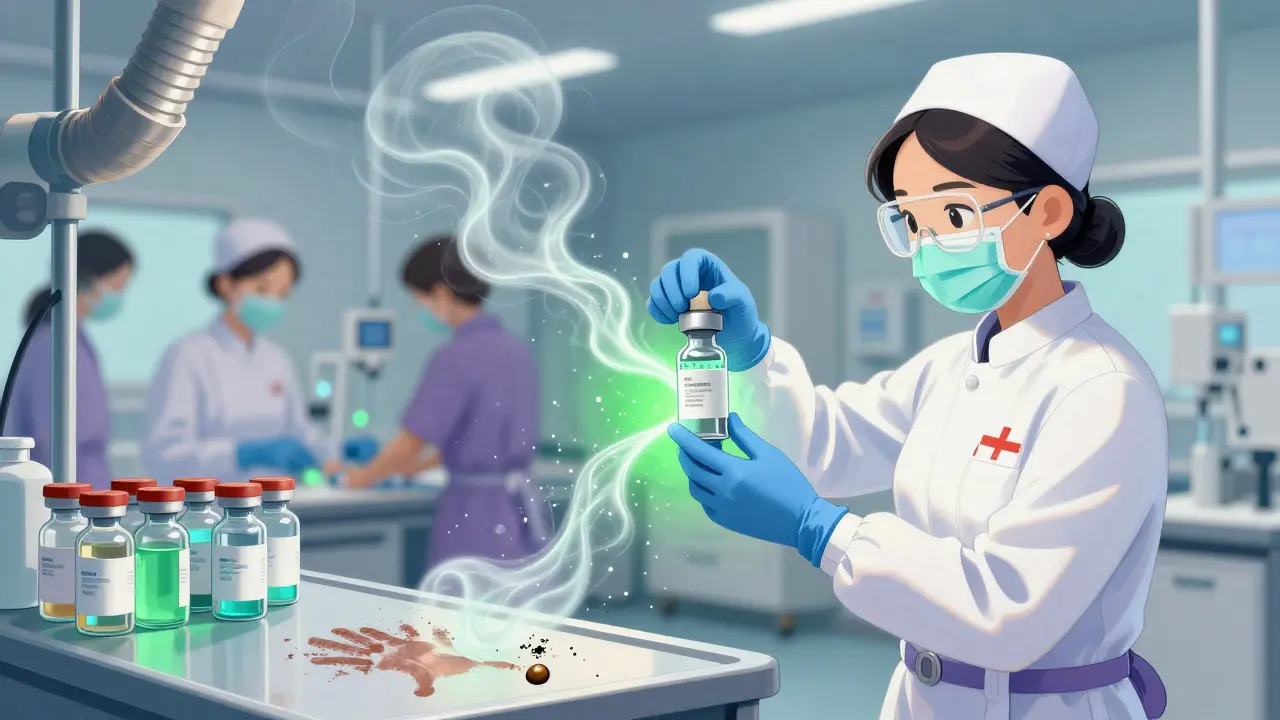
On the flip side, over 8 million healthcare workers in the U.S. regularly handle antineoplastic drugs - the powerful chemicals used to treat cancer. These aren’t just strong medicines. They’re toxic. The 2024 NIOSH list includes 370 hazardous drugs, with 267 classified as cancer-causing agents. Nurses, pharmacists, and lab techs who prepare or administer these drugs can absorb them through their skin, breathe them in, or accidentally swallow them if they don’t wash their hands after handling vials.
How Exposure Happens - And Why It’s Silent
Most people think of workplace hazards as falling from ladders or getting cut by machinery. But hazardous drug exposure is quiet. It doesn’t make noise. It doesn’t leave bruises. You might not even know it’s happening.According to WorkSafeBC’s 2022 analysis, 38% of exposures come from breathing in aerosols or vapors when opening drug vials. Another 29% happen when a drug splashes onto skin or eyes. Even worse - 22% of exposures occur from touching surfaces contaminated with drug residue. A single vial can leave enough residue on a counter to poison someone hours later.
One nurse on Reddit shared her story: after three years of handling chemotherapy drugs, she developed chronic skin rashes. Even though she followed all protocols, surface tests showed detectable levels of drugs in 68% of her work areas. That’s not negligence. That’s systemic failure.
Chronic exposure doesn’t just cause rashes. CDC studies show workers exposed to these drugs have 2.3 times higher risk of miscarriage, infertility, or birth defects. And according to OSHA’s 2022 review, they’re 3.4 times more likely to develop certain cancers later in life.
What’s Being Done - And Where It Falls Short
There are rules. There are guidelines. But they don’t cover everyone.OSHA’s Hazard Communication Standard (29 CFR 1910.1200) requires employers to label hazardous chemicals and train workers. But it only applies to about 6.2 million workplaces. That leaves 1.8 million healthcare workers - mostly in small clinics, outpatient centers, and home care - with no federal protection.
The U.S. Pharmacopeial Convention’s General Chapter 800, which went into effect in 2019, sets stronger standards for handling hazardous drugs. But it only applies to compounding pharmacies. That means 58,000 workers are protected - but the other 7.9 million who handle these drugs in hospitals, oncology units, and surgical centers? Not covered.
Some places are doing better. Mayo Clinic cut hazardous drug exposures by 89% using closed-system transfer devices (CSTDs), better ventilation, and mandatory training. These devices seal drug lines so nothing escapes during transfer. They’re not magic - but they work. WorkSafeBC found they reduce surface contamination by 94.7%.
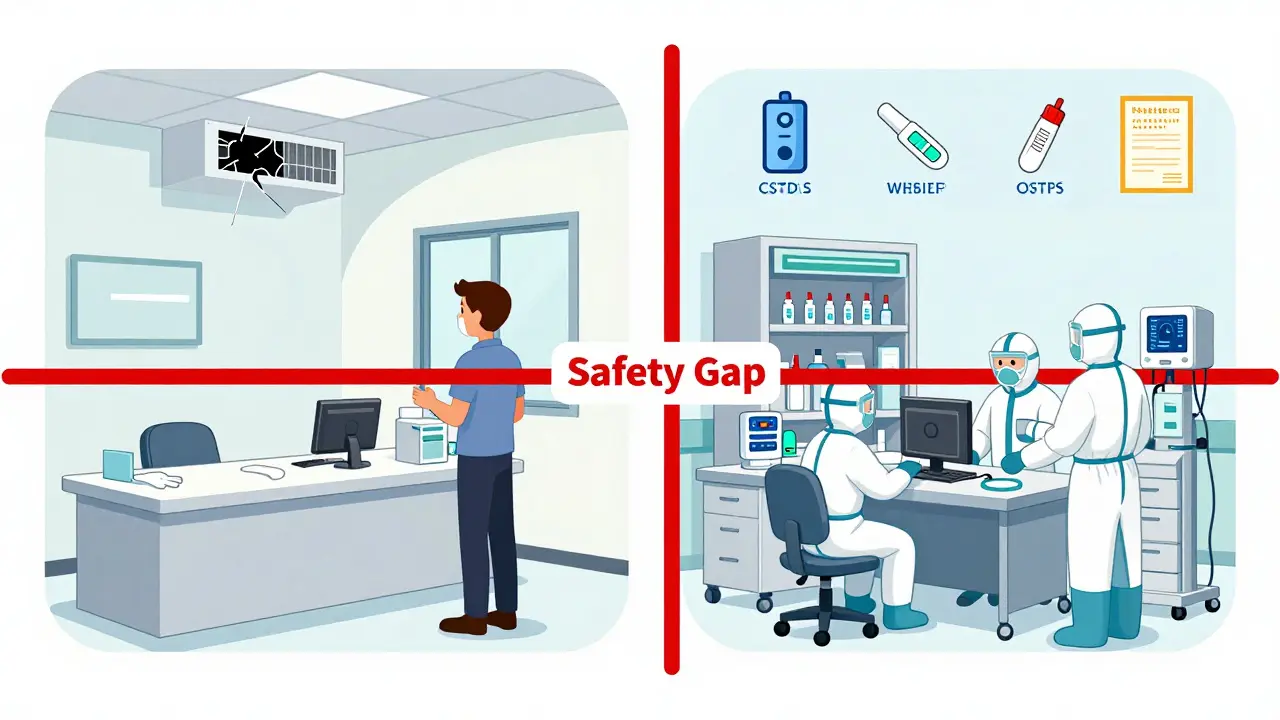
Yet in many facilities, safety cabinets are outdated. Ventilation systems are broken. And workers skip gloves or masks because they’re uncomfortable or rushed. CDC field studies show 43% of healthcare workers don’t follow PPE protocols consistently.
The Human Cost - Beyond the Numbers
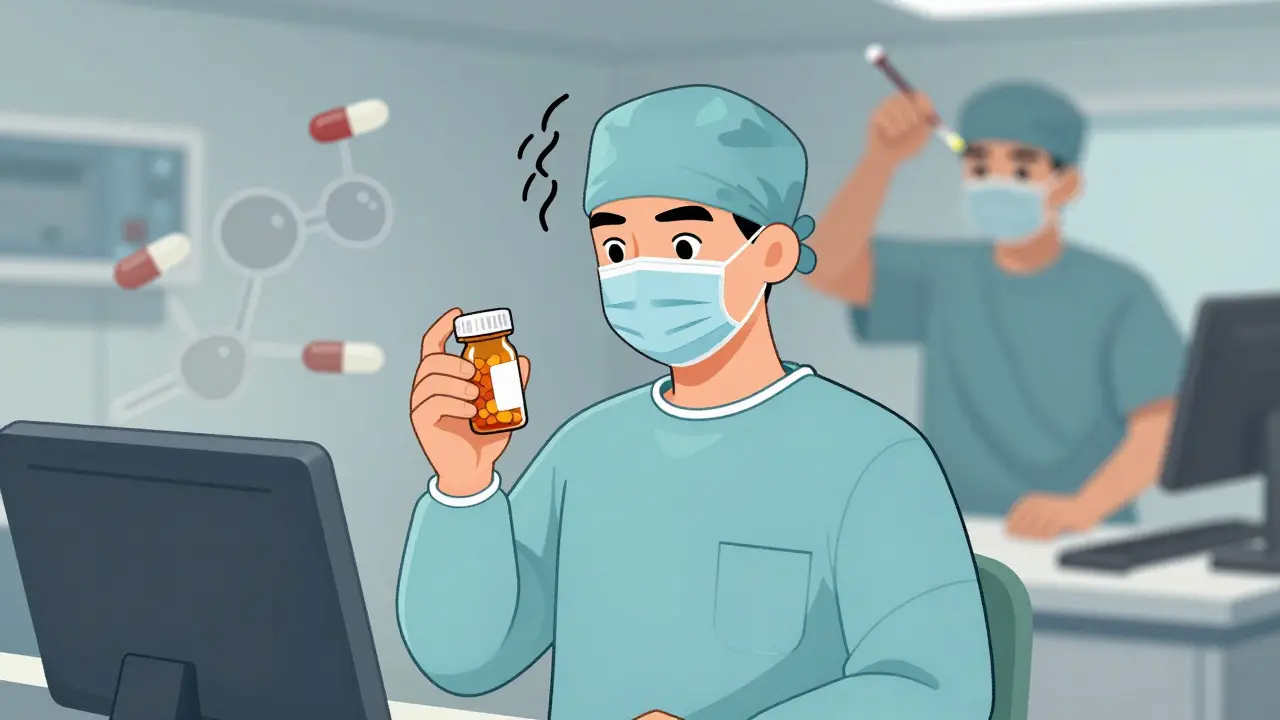
Behind every statistic is a person.An anesthesiologist in Ohio developed dizziness and nausea after being prescribed opioids for a back injury. He nearly caused a surgical error during a procedure. He wasn’t high. He wasn’t irresponsible. He was following his doctor’s orders - and his employer had no policy to address it.
Dr. Laura Welch testified in Congress that workers taking both opioids and benzodiazepines have 38% higher healthcare costs and 2.7 times more disability claims. That’s not just a personal tragedy - it’s a financial drain on employers and the system.
On the other side, unionized healthcare workers have 22% fewer medication-related incidents than non-unionized ones. Why? Because unions push for training, safety equipment, and reporting systems. They don’t let employers ignore the problem.
And then there’s the unfair side: drug-free workplace policies. Some companies fire workers who test positive for prescribed medications - even if they’re not impaired on the job. Dr. Robert Gotlin found 32% of workers lost their jobs due to these policies, despite no safety incidents. That’s punishing people for managing their health.
What You Can Do - Whether You’re a Worker or an Employer
If you take medications that affect your alertness - opioids, benzodiazepines, muscle relaxants, or sleep aids - talk to your doctor and your employer. Ask: Is this safe for my job? Don’t assume it’s fine just because it’s legal. A prescription doesn’t equal workplace safety.For healthcare workers: know the NIOSH 2024 list. If you’re handling chemotherapy, immunosuppressants, or antiviral drugs, you’re at risk. Demand proper PPE, CSTDs, and ventilation. Report contaminated surfaces. If your facility doesn’t have a hazardous drug program, ask why.
For employers: don’t just rely on drug tests. Build real safety programs. Train staff on exposure routes. Install engineering controls. Monitor surfaces. Track incidents. And don’t punish workers for taking legally prescribed meds - assess their actual performance, not their test results.
Small clinics can start simple: use gloves, wash hands after every drug handling, and keep surfaces clean. Big hospitals need full programs - with air sampling, training logs, and regular audits.
The Future Is Here - But Not Everywhere
New tech is emerging. Johns Hopkins is testing AI systems that predict high-risk moments in drug handling - like when a nurse opens a vial near a vent. Early results show 92% accuracy. OSHA is also working on a new rule to set a legal limit for surface contamination: 0.1 nanograms per square centimeter. That’s tiny - but it could force every facility to clean up.And the market is responding. The hazardous drug safety equipment industry is worth $2.3 billion in 2023 and expected to hit $3.8 billion by 2028. More hospitals are buying CSTDs. More pharmacies are upgrading ventilation. But progress is uneven.
Large hospitals with 200+ beds? 78% have full programs. Small clinics under 50 beds? Only 34% do. That gap isn’t just inconvenient - it’s deadly.
Final Thought: Safety Isn’t Optional
Medications save lives. But they can also end them - if we ignore how they interact with work.You don’t need a PhD to understand this. If a drug makes you sleepy, don’t operate machinery. If you’re handling cancer drugs, wear gloves. If your workplace doesn’t train you, ask. If your employer ignores the risk, speak up.
Workplace safety isn’t about paperwork. It’s about people. And every worker - whether they’re on a ladder, at a desk, or preparing chemo - deserves to go home healthy at the end of the day.
Can I be fired for taking prescribed medications at work?
It depends. Under the Americans with Disabilities Act (ADA), employers can’t fire you just because you take prescribed medication - unless it impairs your ability to perform essential job functions safely. If your medication affects alertness, coordination, or reaction time - like opioids or benzodiazepines - your employer may ask for a fitness-for-duty evaluation. But they can’t automatically terminate you. Many workers have been wrongfully fired for legal prescriptions. Document everything and consult an employment lawyer if you’re targeted.
What should I do if I think I’ve been exposed to hazardous drugs at work?
First, wash the exposed area immediately with soap and water. If it’s a splash to the eyes, flush with water for 15 minutes. Then report it to your supervisor and fill out an incident report - even if you feel fine. Symptoms like nausea, skin rashes, or dizziness can appear hours or days later. Request a medical evaluation through your workplace health program. If your employer refuses, contact OSHA or your state’s occupational safety agency. Keep records of all symptoms, dates, and communications.
Are over-the-counter drugs a workplace safety risk?
Yes. Many OTC sleep aids and allergy meds contain diphenhydramine or doxylamine - ingredients that cause drowsiness and slowed reaction time. A 2021 study found workers taking these medications were 40% more likely to have near-miss incidents at work. Even though they’re legal, they’re not safe for operating heavy equipment, driving, or performing precision tasks. Always read labels and ask your pharmacist: "Will this affect my ability to work safely?"
What’s the difference between NIOSH and OSHA guidelines?
NIOSH is part of the CDC and recommends best practices - like the 2024 Hazardous Drugs List and safe handling techniques. OSHA is a federal enforcement agency. It creates legally binding rules, like the Hazard Communication Standard. NIOSH says, "Here’s how to stay safe." OSHA says, "If you don’t do this, you’ll be fined." Many employers follow NIOSH guidelines voluntarily. But only OSHA can enforce penalties. For maximum protection, your workplace should follow both.
Do I need special training to handle chemotherapy drugs?
Yes - and it’s not optional. USP Chapter 800 requires 16 to 24 hours of initial training for anyone handling hazardous drugs, plus 4 to 8 hours annually. Training must cover exposure routes, PPE use, spill response, and waste disposal. If your employer doesn’t offer this, ask for it in writing. If they refuse, file a complaint with OSHA. You have the right to a safe workplace. No one should be expected to handle cancer drugs without proper training.
Is there a way to test if my workplace is contaminated with hazardous drugs?
Yes. Surface wipe tests can detect trace amounts of hazardous drugs on counters, doorknobs, and equipment. These tests are used by NIOSH and OSHA during inspections. If you suspect contamination, request that your employer conduct wipe testing. Some hospitals do this monthly. If they refuse, contact your union or file a safety complaint with OSHA. A 2021 CDC study found 42% of healthcare facilities had detectable levels of hazardous drugs on surfaces - even in places where workers thought they were following protocols.
Vinayak Naik
January 5, 2026 AT 23:35Bro, I work in a small clinic in Bangalore and we handle chemo drugs like they’re coffee pods. No CSTDs, no fancy vents, just gloves that tear if you sneeze too hard. One nurse got a rash that looked like she’d been dipped in hot sauce. Boss said ‘it’s probably allergies.’ 😅 We’re not heroes-we’re just lucky nobody’s dead yet.
Kiran Plaha
January 7, 2026 AT 03:32That stat about 84% higher accident risk with opioids + benzos… that’s wild. My cousin’s a truck driver on pain meds after a back injury. He still drives. No one checks. No one cares. Just hope he doesn’t fall asleep at the wheel.
Amy Le
January 7, 2026 AT 11:51Oh great. Another ‘workers are fragile’ article. In America we don’t need hand-holding-we need accountability. If you can’t handle your meds, don’t work with machinery. Simple. No one’s forcing you to take opioids. And if you’re handling chemo? Wear gloves. Duh.
Pavan Vora
January 8, 2026 AT 18:32Wow… I never knew that just touching a counter after someone handled chemo could poison you…? I mean, really? Like, 22% of exposures from surfaces? That’s… that’s terrifying. I work in a pharmacy in Pune, and we wipe down counters with a damp cloth and call it a day. Maybe we should be wearing hazmat suits? 😅
Indra Triawan
January 10, 2026 AT 07:27I just feel so sad for all these people. I mean… imagine being a nurse and knowing you’re slowly poisoning yourself just to help others. And no one listens. And the system just… keeps going. Like a machine that doesn’t care if the gears are grinding into dust. I cried reading this. I don’t even work in healthcare and I cried.
Tom Swinton
January 10, 2026 AT 14:34Let me tell you something real: safety isn’t about policies on paper-it’s about culture. I’ve been in hospitals where nurses would joke about ‘chemo dust’ like it was a bad perfume. Then they’d rub their eyes and say, ‘I’m fine.’ Meanwhile, the surface wipe tests were showing levels higher than a child’s toy from a recalled batch. The fix? Talk to people. Listen. Train like your life depends on it-because it does. And employers? Stop treating safety like a box to check. It’s not a compliance form. It’s a promise. A promise to go home at night. To hug your kid. To breathe without wondering if your lungs are slowly turning into cancer bait. We can do better. We have to.
Venkataramanan Viswanathan
January 12, 2026 AT 13:22As someone who has worked in both Indian and American healthcare systems, I must say: the gap in safety standards is not just institutional-it is existential. In India, we often lack even basic PPE; in the U.S., we have regulations, but they are selectively enforced. The real tragedy? Workers who know they are at risk, yet fear retaliation if they speak up. This is not a technical problem. It is a moral failure.
Kelly Beck
January 14, 2026 AT 07:43Y’all, I work in oncology and I’m so proud of my team for pushing for CSTDs last year. We had zero exposures this quarter-zero! It’s not magic, it’s just… doing the damn thing. Gloves, ventilation, training, reporting. It’s not hard. It’s just… not always prioritized. To every nurse reading this: you deserve better. And if your boss says ‘we can’t afford it,’ ask them how much a lawsuit, a miscarriage, or a cancer diagnosis costs. 💪❤️
Katie Schoen
January 16, 2026 AT 06:03So let me get this straight… we’re okay with workers getting cancer from their job, but we’ll fire them for testing positive for a prescription? Classic. 🙄 Also, OTC sleep aids are a risk? I thought those were the ‘safe’ meds. Guess I’ll be drinking coffee like a raccoon from now on.
Beth Templeton
January 17, 2026 AT 06:33Just wear gloves. Done.