Mail-Order Pharmacy Safety: How Temperature, Timing, and Tracking Keep Your Meds Safe
 Dec, 24 2025
Medication Temperature Safety Checker
Check if your medications were exposed to unsafe temperatures during shipping based on FDA guidelines. This tool helps you identify potential risks for temperature-sensitive medications like insulin and biologics.
When you order prescription meds by mail, you’re not just saving time or money-you’re trusting your health to a system that has to get everything right. One wrong temperature, one delayed package, one missing signature, and your medication could be useless-or worse, dangerous. This isn’t science fiction. It’s happening right now, to real people. And if you rely on mail-order pharmacies for insulin, biologics, or other temperature-sensitive drugs, you need to know how to protect yourself.
Why Temperature Isn’t Just a Detail
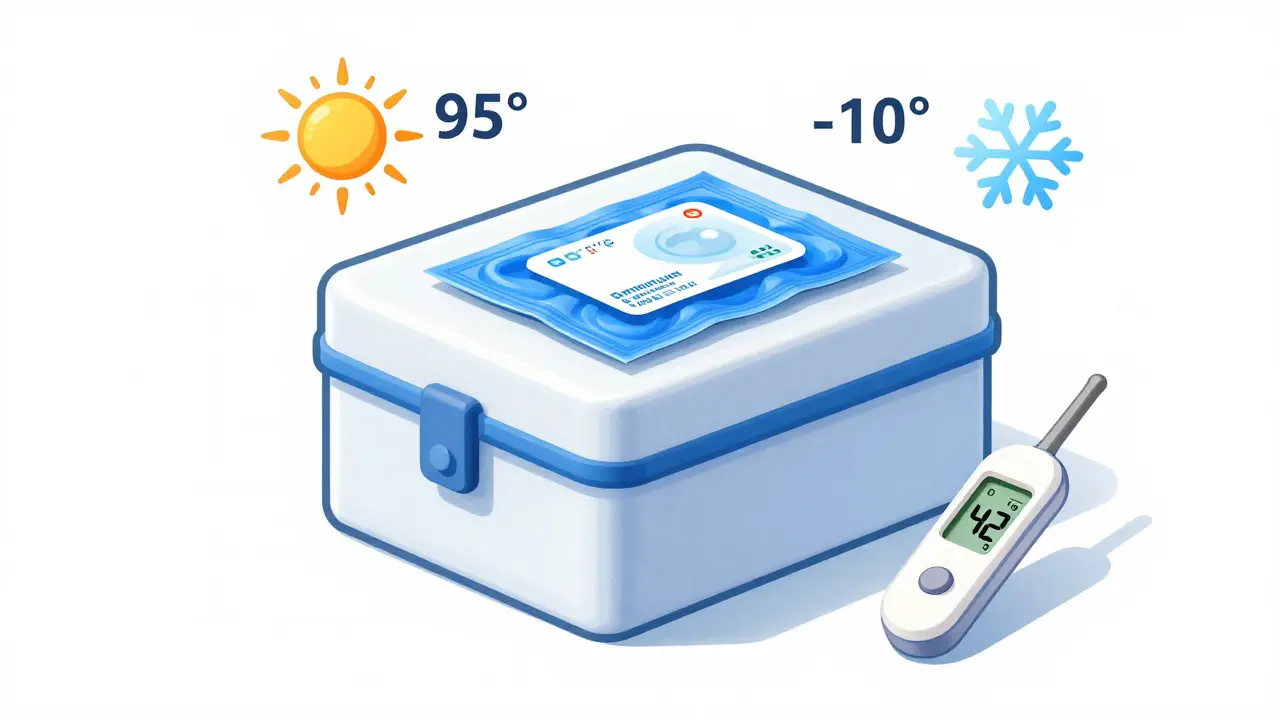
Not all pills are created equal. Some meds, like insulin, certain antibiotics, and biologic drugs used for MS or rheumatoid arthritis, can break down if they get too hot or too cold. The FDA says these drugs need to stay between 36°F and 46°F during transit. That’s fridge temperature. If your package sits in a hot mailbox for hours in July, or freezes in a delivery truck overnight in January, the medicine inside could lose its power. You won’t see it. You won’t smell it. But your body will know.Industry data shows about 3.2% of temperature-sensitive shipments experience dangerous excursions. That might sound low, but with millions of prescriptions shipped each year, that’s thousands of patients getting ineffective drugs. One Reddit user shared how their insulin vials arrived warm after a summer delivery-no warning, no alert. They didn’t know until their blood sugar spiked. That’s not rare. It’s preventable.
Reputable mail-order pharmacies use insulated boxes with gel packs and real-time temperature sensors. Some even send you a text if the package went above 50°F during transit. Ask your pharmacy: Do you monitor temperature during shipping? Can I see the data? If they don’t track it, don’t trust it.
Timing: Don’t Wait Until You’re Out
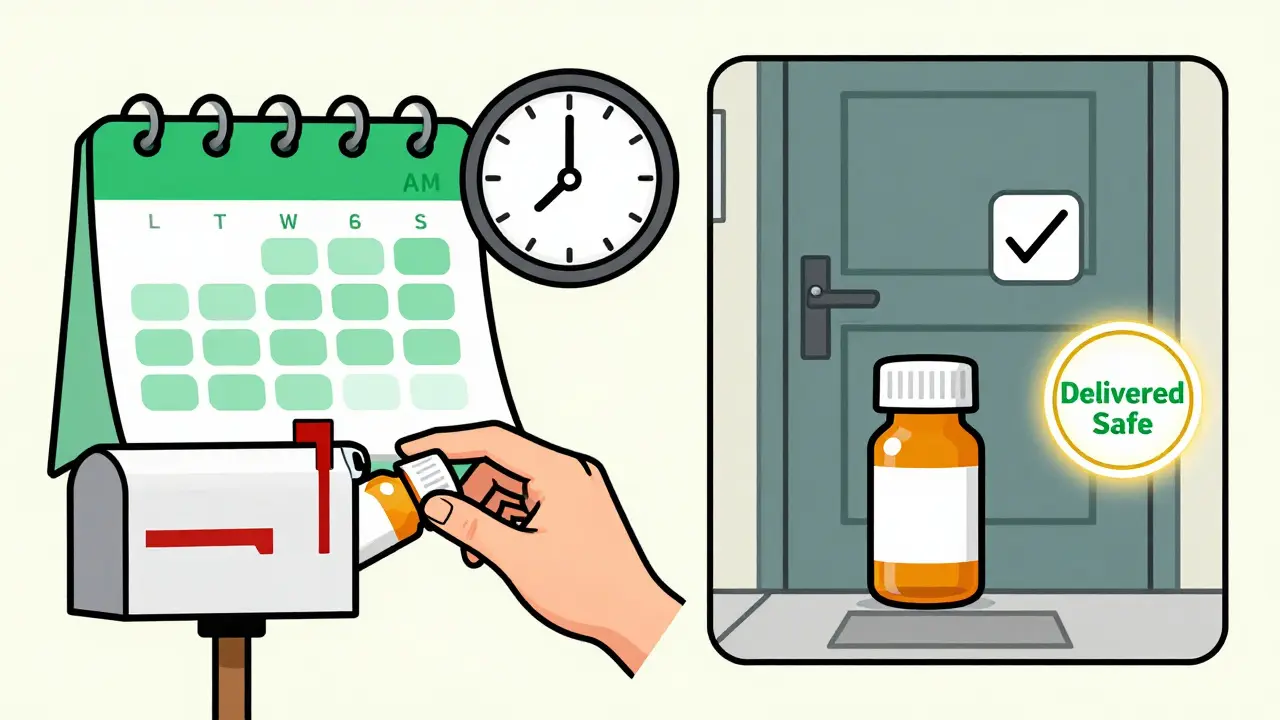
The biggest mistake people make? Waiting until the last pill is gone to reorder. Mail-order isn’t like walking down to the corner pharmacy. Even with fast shipping, it takes 5-10 business days for a package to arrive. If you wait until your prescription runs out, you risk going without life-saving meds for days-or weeks if there’s a delay.GoodRx and Medicare Part D guidelines recommend ordering refills at least two weeks before you run out. Set calendar reminders. Use automatic refill programs. Most mail-order pharmacies let you enroll in auto-renewals-you just need to confirm your info once every few months. That’s it. No more guessing.
But timing isn’t just about when you order-it’s about when you’re home to receive it. If you’re not there to sign for a package containing insulin or a controlled substance, it might get left on your porch. That’s a risk. Some pharmacies now offer delivery windows or require adult signature for high-risk meds. Ask if your pharmacy offers this. If they don’t, consider switching.
Tracking: Know Where Your Meds Are
You wouldn’t send a $500 laptop without tracking. Why send your life-saving medication without it?Every legitimate mail-order pharmacy should give you a tracking number. But tracking isn’t just about knowing when it’s coming-it’s about knowing if it got there safely. Look for services that offer:
- Real-time location updates
- Proof of delivery with photo or signature
- Alerts if the package is delayed or held up
- Temperature logs you can access online
Companies like Pitney Bowes now offer software that reduces labeling errors by 33% and boosts address accuracy to 99.2%. That means fewer wrong deliveries. Fewer lost packages. Fewer panicked calls to your doctor.
And here’s something you might not know: the DEA requires all pharmacies shipping controlled substances (like opioids or stimulants) to use tamper-evident packaging and confirm delivery with a signature. If your package arrives without a seal or doesn’t require a signature, that’s a red flag.
What Makes a Mail-Order Pharmacy Safe?
Not all online pharmacies are created equal. There are shady sites selling fake drugs. And even legitimate ones can cut corners on safety. Here’s how to tell the difference:- Requires a prescription-No pharmacy should sell you meds without a valid doctor’s order.
- Has a U.S. physical address and phone number-Check their website. If it only has a PO box, walk away.
- Licensed in your state-You can verify this through your state’s pharmacy board website.
- Has licensed pharmacists on staff-They should be available to answer your questions.
- Uses NABP accreditation-The National Association of Boards of Pharmacy (NABP) seals mean the pharmacy meets strict safety and compliance standards.
The top three players-Express Scripts, OptumRx, and CVS Caremark-handle 78% of mail-order prescriptions in the U.S. They’re big, but they’re also held to high standards. If you’re on Medicare Part D, you’re likely already using one of them. But even within these systems, safety depends on how well you manage your account.
What Can Go Wrong-and How to Fix It
Even the best systems fail sometimes. Here are the most common problems-and how to handle them:- Package arrives warm-Don’t take the meds. Call the pharmacy immediately. Ask for a replacement and request a temperature log. Most will replace it at no cost.
- Delivery is delayed-Check tracking. If it’s stuck for more than 3 days, call the pharmacy. Ask them to escalate with the carrier. Some pharmacies have direct lines to FedEx or UPS to speed things up.
- Medication looks wrong-Color, shape, or size changed? That could mean a different generic version. Call your pharmacist. Don’t assume it’s safe.
- Package is damaged or missing-Take photos. Report it within 24 hours. Most pharmacies have a 7-day window to replace lost or damaged meds.
And if you’re worried about theft? Consider having packages delivered to your workplace, a secure locker, or a trusted neighbor. Some pharmacies now partner with Amazon Locker or UPS Access Point for secure drop-off.
What’s Changing in 2025 and Beyond
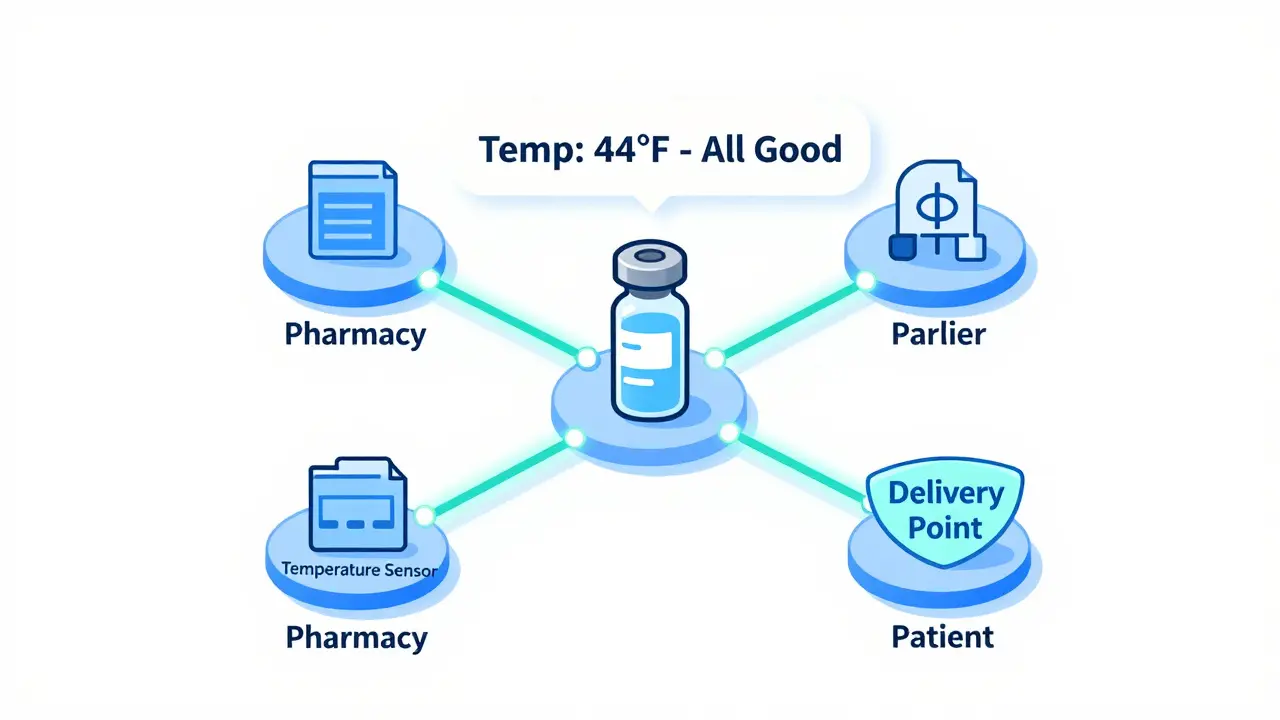
The rules are tightening. By January 1, 2026, all pharmacies shipping controlled substances must use blockchain-based tracking to log every step of the journey. That means you’ll be able to see exactly where your pills were, who handled them, and what temperature they were kept at.The FDA is also pushing for mandatory real-time temperature sensors on all biologic shipments. That’s a game-changer. Soon, you’ll get a notification if your insulin was exposed to heat-even before it reaches your door.
And AI is stepping in. Early adopters are using predictive analytics to reroute shipments before weather delays happen. One study showed a 28% drop in medication access issues just by using smart routing. That’s not just convenience-it’s safety.
Final Checklist: Your Safety Plan
Here’s what you should do right now to protect yourself:- Confirm your pharmacy uses temperature-controlled packaging for sensitive meds.
- Set up automatic refills with a 2-week buffer before you run out.
- Always request tracking and delivery confirmation.
- Verify your pharmacy is NABP-accredited and licensed in your state.
- Know what to do if your meds arrive damaged, warm, or late.
- Keep a printed copy of your prescription and pharmacy contact info in your wallet.
Mail-order pharmacies save money and time. But safety doesn’t come for free. It comes from knowing how the system works-and taking control of your own care. Don’t wait for a bad experience to teach you. Be proactive. Ask questions. Demand transparency. Your health depends on it.
Carlos Narvaez
December 25, 2025 AT 08:22Insulin doesn’t care about your convenience. If it’s warm, it’s garbage. Period. No drama. No excuses. Just science.
Katherine Blumhardt
December 25, 2025 AT 20:18i just got my insulin delivered and it was sitting in my mailbox for 6 hours in 95 degree heat and i didn't even think to check?? 😳 i feel so dumb now
Michael Dillon
December 26, 2025 AT 08:09Wait-so you’re telling me the same system that delivers my Amazon Prime socks in 2 hours can’t guarantee my life-saving meds don’t turn into soup? That’s not a logistics problem. That’s a moral failure.
Ben Harris
December 27, 2025 AT 22:11Everyone’s acting like this is new news but let me tell you-my mom’s insulin arrived melted in 2019 and no one cared. Now that it’s trendy to care, suddenly everyone’s an expert. Wake up. This has been broken for a decade
Bailey Adkison
December 29, 2025 AT 21:35You’re all missing the point. The real issue isn’t temperature control-it’s that pharmacies are outsourcing delivery to companies that can’t even deliver a pizza without losing it. If you want safety, go to a brick-and-mortar. Stop pretending mail-order is a smart choice.
Harbans Singh
December 30, 2025 AT 02:29I’m from India and we don’t have mail-order pharmacies like this-but I’ve seen how temperature affects insulin in our rural clinics. The science is the same everywhere. What’s amazing is that in the U.S., people can actually track and demand accountability. That’s progress. Let’s not waste it.
sagar patel
December 30, 2025 AT 07:16Why are you all so surprised? The system is designed to minimize cost not maximize safety. The moment you treat medicine like a commodity, people die. This isn’t a glitch. It’s the business model
Gary Hartung
December 30, 2025 AT 13:44Oh my GOD-did you all read that part about blockchain tracking by 2026?!?!?!? This is literally the future we’ve been screaming about for years!!! The FDA is finally listening!!! I’m crying. I’m literally crying. This is the most important public health update since the invention of the syringe. Someone call the news. Someone. PLEASE. I need this on CNN. I need a podcast. I need a TikTok trend. I need a TED Talk. I need a movie. I need a Broadway musical. I need a theme park ride. I need a T-shirt. I need a tattoo. I need a monument. I need a national holiday. I need a goddamn parade. I need-
…wait, did anyone else get the email about the temperature sensor update?