Mail-Order Pharmacy Safety: How Temperature, Timing, and Tracking Keep Your Medications Safe
 Dec, 24 2025
Medication Temperature Safety Calculator
Enter your medication details to check if your shipment will remain safe during transit.
Why Mail-Order Pharmacies Are More Than Just Convenience
Getting your meds delivered to your door sounds easy-until your insulin arrives warm, your blood pressure pill is two days late, or you find your package gone from the porch. Mail-order pharmacies serve over 35% of all maintenance prescriptions in the U.S., especially for people with diabetes, high blood pressure, or multiple sclerosis. But behind the convenience is a complex system that must control temperature, nail timing, and track every step of the journey. One mistake can make your medicine useless-or worse, dangerous.
Temperature: Your Medicine Can’t Take a Heat Wave
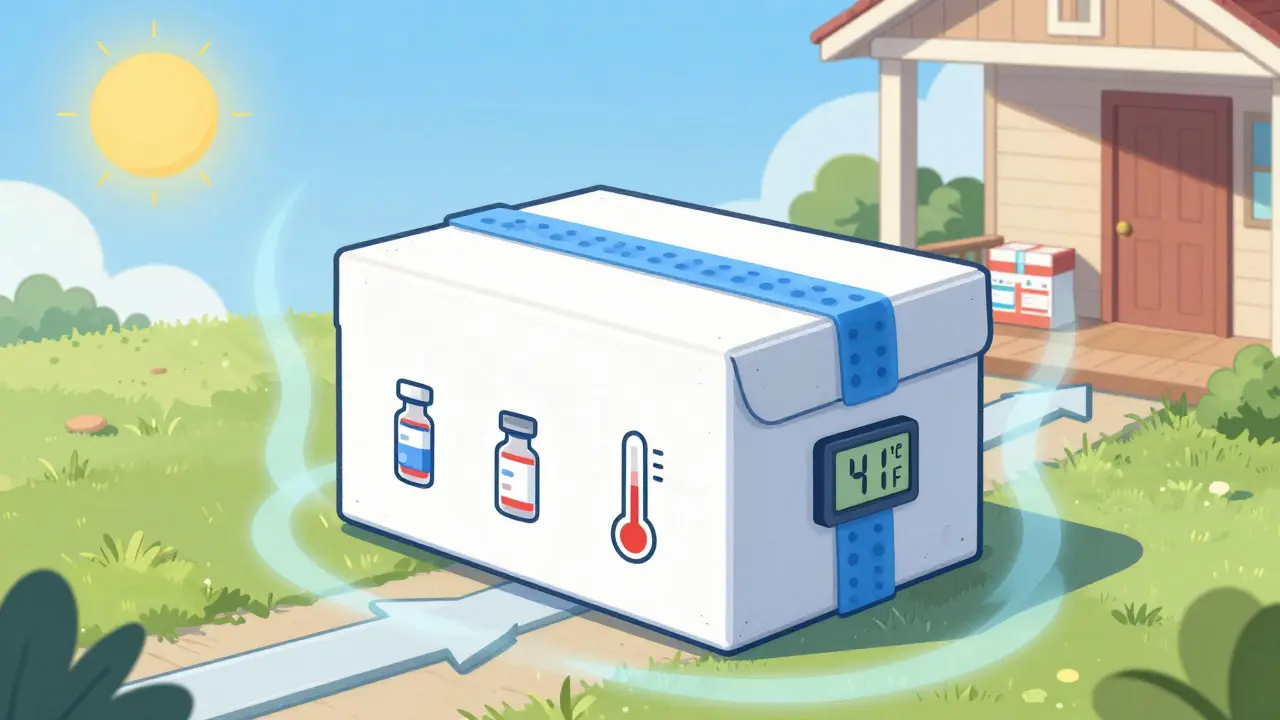
Not all pills are created equal. Insulin, biologics like Tysabri, certain antibiotics, and even some migraine meds need to stay between 36°F and 46°F during transit. If they get too hot or too cold, they break down. You won’t see it. You won’t smell it. But your body will know. The FDA warns that improperly stored meds can lose effectiveness, putting your health at risk.
Reputable mail-order pharmacies use insulated shipping containers with gel packs or phase-change materials that keep things cool for up to 72 hours. Some now include real-time temperature sensors-tiny devices that log every degree change during transit. If the temperature goes outside the safe range, the system flags it. In one case, a multiple sclerosis patient got an alert that her Tysabri shipment had been exposed to 85°F for 36 hours. The pharmacy held the package. She didn’t get a compromised dose.
But not all do this. Industry data shows about 3.2% of temperature-sensitive shipments experience dangerous excursions. That’s 1 in 30 packages. If you’re on insulin or a biologic, ask your pharmacy: Do you use real-time temperature monitoring? Can I see the log before I accept delivery?
Timing: Don’t Wait Until You’re Out
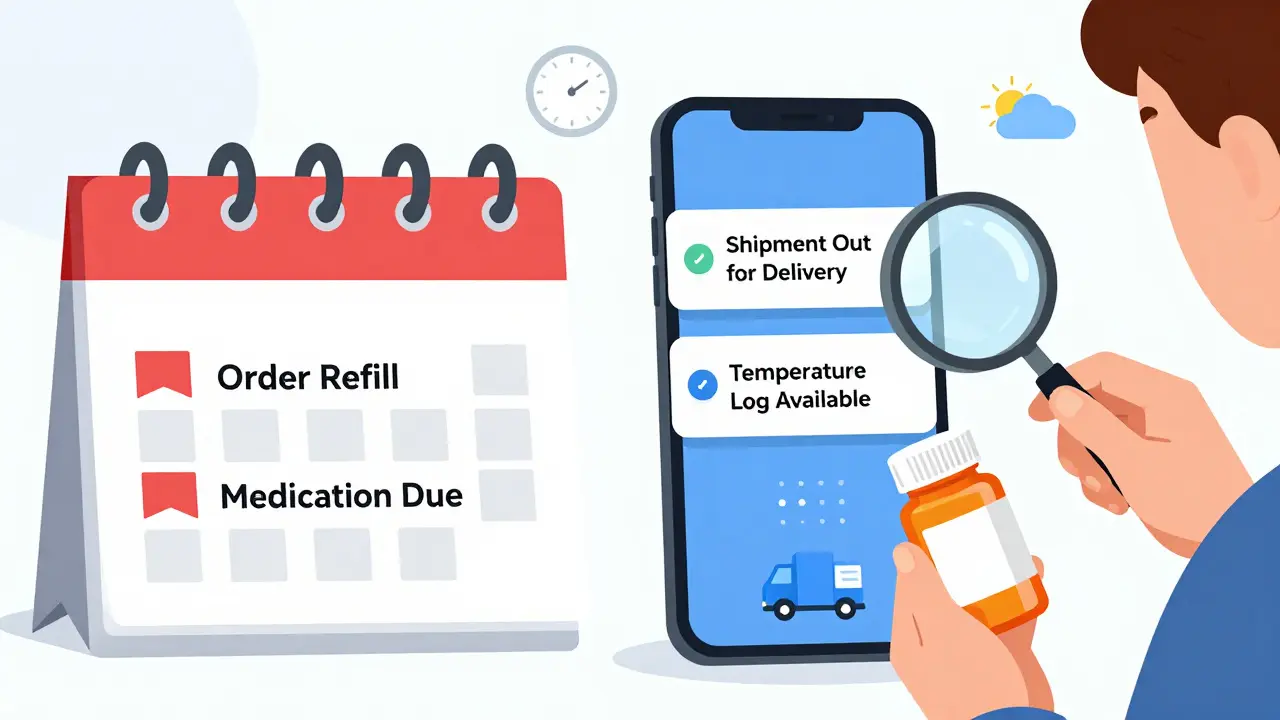
Mail-order isn’t for emergencies. It’s for maintenance. If you wait until your last pill is gone, you’re playing Russian roulette. GoodRx recommends ordering refills at least two weeks before you run out. Why? Because shipping delays happen. Weather. Holidays. Wrong address. Carrier backlogs.
Medicare Part D plans require pharmacies to confirm with you or your caregiver before shipping a new prescription or refill. That’s a safety net-but only if you respond. Many patients miss the text or email. Then, their meds don’t ship. A 2023 GoodRx survey found 22% of mail-order users had at least one delayed delivery in the past year. For someone on blood thinners or seizure meds, that’s not just inconvenient-it’s life-threatening.
Set calendar reminders. Turn on notifications. Link your refill alerts to your phone. And never assume your pharmacy will call you. Most won’t. They’ll send the email and move on.
Tracking: Know Where Your Medicine Is-Every Hour
Tracking isn’t just about knowing when your package arrives. It’s about chain of custody. Did it sit in a hot truck for six hours? Was it stolen from your porch? Did it get misrouted to the wrong zip code?
Top mail-order pharmacies now offer real-time tracking with delivery confirmation. You should get updates: shipped, out for delivery, delivered, signed for. Some even show temperature history alongside location. Pitney Bowes’ 2024 software reduces labeling errors by 33% and improves address accuracy to 99.2%. That means fewer wrong deliveries.
But here’s the catch: 0.7% of packages are stolen after delivery, according to Pitney Bowes data. That’s low-but if it’s your life-saving drug, it’s 100% too high. Ask your pharmacy if they offer secure delivery options: locked boxes, delivery to a neighbor, or a designated pickup location. If you’re home during the day, schedule delivery for when you’re there.
Tamper-Evident Packaging: The First Line of Defense
Every prescription shipped by mail must have tamper-evident packaging. That means seals, shrink wrap, or special labels that show if someone opened the box. This isn’t optional. It’s required by the DEA and USPS under 21 CFR Part 1304. If the seal is broken when you get it, don’t take the pill. Call your pharmacy immediately.
Controlled substances like opioids or ADHD meds have extra rules. They need signature confirmation upon delivery. No leaving packages on porches. No “leave it at the door.” If your pharmacy is doing that, they’re breaking federal law.
Who’s Doing It Right? The Big Three and What to Look For
Express Scripts, OptumRx, and CVS Caremark control 78% of the mail-order market. They have the resources to invest in temperature tracking, AI-driven delivery predictions, and blockchain-based tracking systems coming in 2026. But not all pharmacies are equal.
Look for these signs of a safe, reliable mail-order pharmacy:
- Requires a valid prescription from your doctor
- Has a physical U.S. address and phone number you can call
- Employs licensed pharmacists (not just automated bots)
- Offers real-time temperature tracking for sensitive meds
- Provides delivery confirmation and tracking numbers
- Is NABP-accredited (look for the Verified Internet Pharmacy Practice Sites seal)
Avoid pharmacies that sell without a prescription, ship from overseas, or don’t list contact info. The FDA says these are red flags for counterfeit or unsafe drugs.
What You Can Do to Protect Yourself
You’re not powerless. Here’s your checklist:
- Always order refills at least two weeks before you run out.
- Confirm your address and phone number with your pharmacy every six months.
- Ask if your meds need cold chain shipping. If yes, insist on temperature tracking.
- Check the package before you take the pill. Is the seal intact? Is it cold to the touch?
- Sign up for delivery alerts. Don’t rely on memory.
- If your meds arrive damaged, warm, or missing-call your pharmacy and your doctor. Document everything.
The Future: Smarter Packaging, Fewer Risks
The FDA is pushing for mandatory real-time temperature tracking for all biologics by 2026. The DEA will require blockchain tracking for controlled substances. Companies like Pitney Bowes are rolling out IoT-enabled packaging that sends alerts if the box is opened, dropped, or overheated.
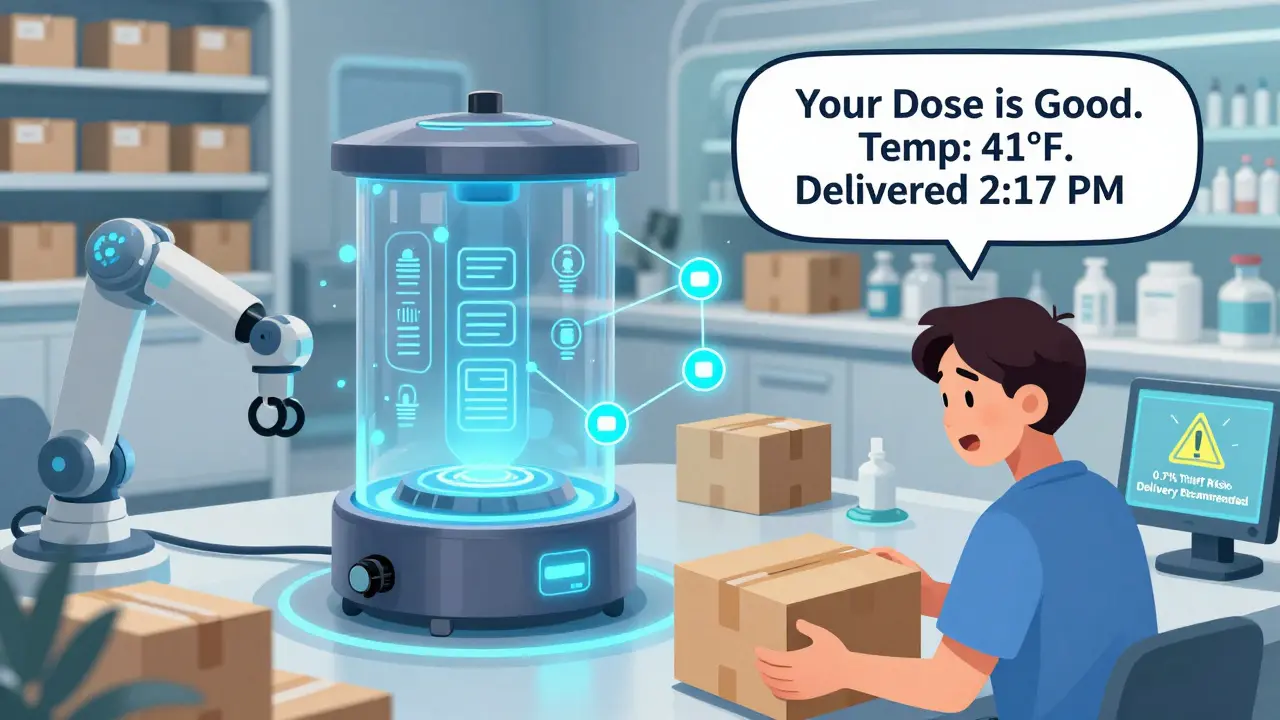
AI is already helping predict delays. One pharmacy reported a 28% drop in missed doses after using AI to flag weather delays or address errors before shipping. In five years, your insulin might come in a smart box that texts you: Your dose is good. Temperature stayed at 41°F. Delivered at 2:17 p.m.
But until then, vigilance is your best tool. Don’t assume safety. Ask questions. Demand transparency. Your life depends on it.
Frequently Asked Questions
Can I trust mail-order pharmacies with my insulin?
Yes-if you choose a reputable pharmacy that uses real-time temperature monitoring. Insulin is sensitive to heat and must stay between 36°F and 46°F during shipping. Ask your pharmacy if they track temperature and if they’ll send you the log before delivery. Avoid pharmacies that don’t offer this. A 2024 Reddit thread documented 63 cases of insulin arriving warm after summer deliveries-many from non-specialized providers.
What should I do if my medication arrives warm?
Do not take it. Contact your pharmacy immediately and ask for a replacement. If it’s a life-saving drug like insulin, epinephrine, or a biologic, call your doctor too. Keep the package and any temperature logs. Most pharmacies will replace the medication at no cost and investigate the cause. Never assume the medicine is still safe just because it looks fine.
How do I know if my mail-order pharmacy is legitimate?
Check for three things: 1) They require a valid prescription from your doctor. 2) They have a U.S. physical address and phone number you can call. 3) They’re NABP-accredited-look for the VIPPS seal on their website. Avoid pharmacies that sell without a prescription, ship from outside the U.S., or don’t list contact info. The FDA warns these are signs of unsafe or counterfeit drugs.
Are mail-order pharmacies safer than retail pharmacies?
Studies show mail-order pharmacies have lower dispensing error rates-about 15% fewer mistakes than retail pharmacies, according to the American Pharmacists Association. They also improve medication adherence by 8-10%. But they introduce new risks: temperature excursions, delivery delays, and package theft. Retail pharmacies let you pick up meds immediately, which is better for urgent needs. Mail-order is safer for routine, long-term meds-if you manage timing and track delivery.
Why do some mail-order pharmacies take so long to refill?
Medicare Part D plans require pharmacies to confirm with you or your caregiver before shipping a new prescription or refill. If you don’t respond to their email or text, the refill gets held up. Also, some pharmacies batch shipments weekly to save costs, which can add days. Always order refills two weeks ahead and set calendar reminders. Don’t wait for them to remind you.
Can I get my meds delivered faster if I need them urgently?
Mail-order is not designed for urgent needs. If you’re out of a critical medication, go to a local retail pharmacy. Some mail-order pharmacies offer expedited shipping for an extra fee-but even that takes 2-3 days. For life-saving drugs like epinephrine, seizure meds, or heart medications, always keep a small emergency supply on hand. Don’t rely on delivery for emergencies.
Winni Victor
December 24, 2025 AT 20:51Terry Free
December 25, 2025 AT 10:58Lindsay Hensel
December 25, 2025 AT 12:19Linda B.
December 26, 2025 AT 17:25Christopher King
December 28, 2025 AT 01:16Oluwatosin Ayodele
December 28, 2025 AT 01:24Jason Jasper
December 28, 2025 AT 08:40Justin James
December 29, 2025 AT 08:29Zabihullah Saleh
December 29, 2025 AT 13:25Rick Kimberly
December 30, 2025 AT 08:31Sophie Stallkind
December 30, 2025 AT 20:35Gary Hartung
December 31, 2025 AT 12:52Ben Harris
January 2, 2026 AT 12:04