Linezolid and Tyramine: What You Must Eat - and Avoid - to Prevent Dangerous Blood Pressure Spikes
 Dec, 11 2025
Linezolid Tyramine Risk Checker
How This Works
Select foods from the list below. The tool calculates total tyramine content and shows if your meal is safe. Remember: avoid high-tyramine foods while on linezolid and for 14 days after stopping.
Danger threshold: >50 mg tyramine per meal.
Total Tyramine Content:
0 mg
Important: Continue avoiding these foods for 14 days after your last dose of linezolid.
When you’re prescribed linezolid for a stubborn bacterial infection - like MRSA or a resistant Enterococcus - you’re probably focused on getting better. But there’s one hidden risk you might never hear about until it’s too late: eating the wrong food can send your blood pressure skyrocketing, possibly into the ICU. This isn’t a myth. It’s a documented, life-threatening reaction tied directly to something you put on your plate.
Why Linezolid Isn’t Just Another Antibiotic
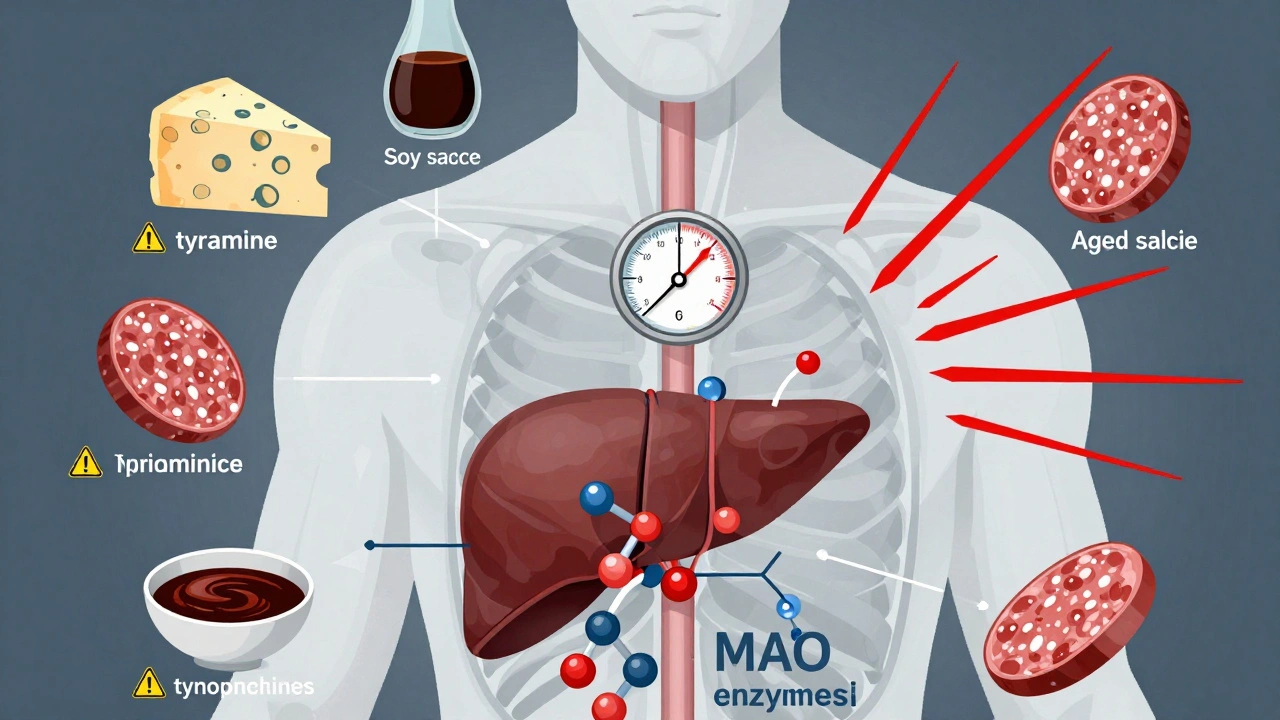
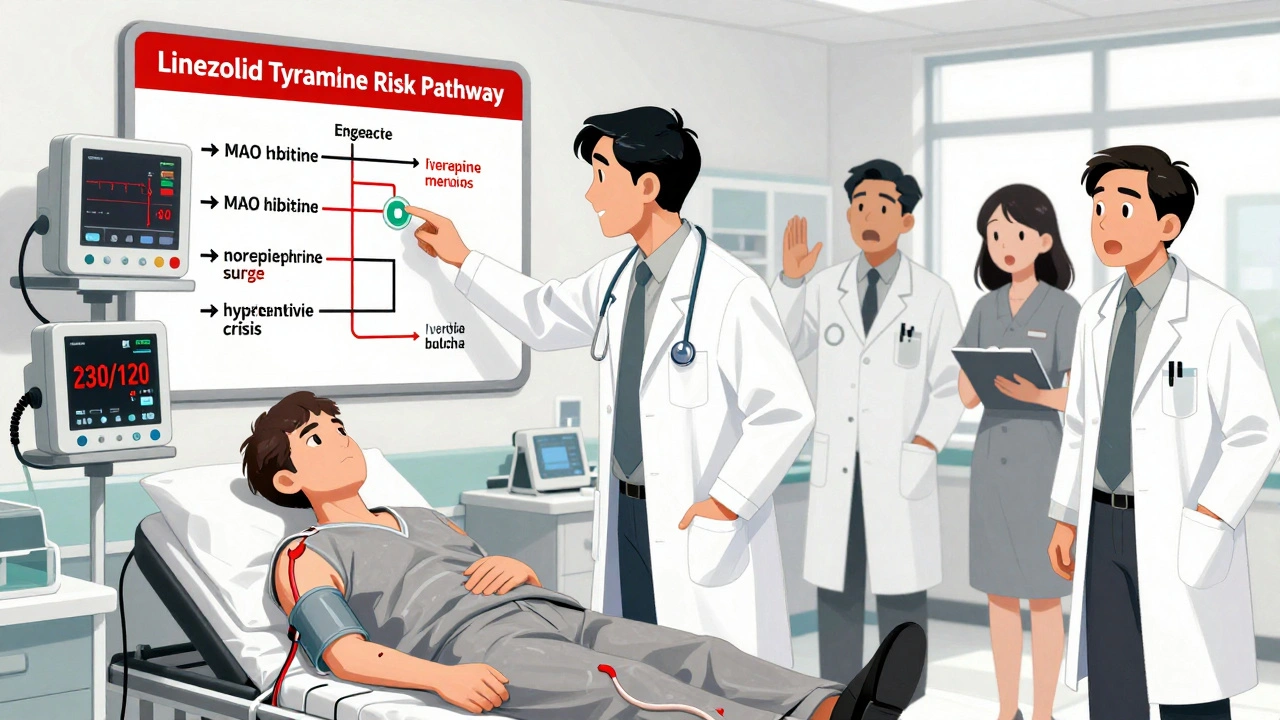
Linezolid is an antibiotic built to fight superbugs that other drugs can’t touch. Approved by the FDA in 2000, it’s used when infections won’t respond to vancomycin or other standard treatments. But unlike most antibiotics, linezolid doesn’t just kill bacteria - it also quietly blocks your body’s ability to break down tyramine, a natural compound found in many aged, fermented, or spoiled foods. This happens because linezolid acts as a weak but real inhibitor of monoamine oxidase (MAO), the enzyme that normally clears tyramine from your bloodstream. When MAO is blocked, tyramine builds up and triggers a massive release of norepinephrine - a powerful stimulant that causes your blood pressure to spike. The result? Hypertensive crisis: systolic pressure over 180 mmHg, dizziness, pounding headache, chest pain, even stroke or heart attack. Studies show linezolid produces about 85% of the tyramine-boosting effect seen with classic MAO inhibitors like phenelzine. That’s not trivial. It’s enough to cause real danger.The Foods That Can Trigger a Crisis
You don’t need to eat a whole block of cheese to trigger this. A single serving of certain foods can push tyramine levels past the danger zone - which experts now say is as low as 50-100 mg per meal. Here’s what to avoid while on linezolid - and for two weeks after you stop:- Aged cheeses: Blue cheese, cheddar, Swiss, parmesan - especially if stored for weeks or months. One ounce of aged cheddar can contain 150 mg of tyramine. That’s already over the safe limit.
- Fermented soy: Soy sauce, miso, tempeh, and fermented bean curd. Even a tablespoon of soy sauce can pack 100 mg or more.
- Tap beer and draft beer: These contain live yeast and can have 100-200 mg per 100 ml. Bottled beer is usually safer, but check labels - some craft brews are still risky.
- Red wine: Especially unfiltered or aged varieties. A single glass can contain up to 100 mg.
- Dried, cured, or fermented meats: Salami, pepperoni, summer sausage, pickled herring, and even improperly stored deli meats.
- Overripe or spoiled fruits: Bananas, avocados, and figs become high in tyramine if left too long. A brown-spotted banana isn’t just overripe - it’s potentially dangerous.
- Leftovers stored more than 24 hours: Tyramine builds up in food as it ages, even in the fridge. Eat meals fresh. Reheat leftovers only if they’ve been cooled and stored properly within hours of cooking.
It’s not just about the food itself - it’s about how it’s handled. A perfectly fresh piece of cheddar is safe. The same cheese aged for six months? Not safe. A cold bottle of wine from the store? Likely fine. A bottle left open for a week? Risky.
What Happens When You Eat the Wrong Thing
Real cases tell the story better than guidelines. In one documented case, a 68-year-old man on linezolid for a bone infection ate a slice of blue cheese for lunch. Within 90 minutes, his blood pressure hit 230/120. He was rushed to the ER. He needed IV meds, continuous monitoring, and three days in the ICU. His BP didn’t drop until linezolid was stopped - and even then, it took 26 days to fully return to normal. Another patient, a 52-year-old woman on linezolid for pneumonia, had a glass of red wine and a sandwich with aged provolone. Her systolic pressure jumped to 212 mmHg. She had a severe headache, blurred vision, and chest tightness. She didn’t realize the connection until her pharmacist reviewed her meds. A 2021 review of 17 such cases found that 65% of patients needed ICU care. Average systolic pressure at presentation? 212 mmHg. The highest? 248 mmHg. These aren’t rare. Between 2018 and 2023, the FDA recorded over 1,200 reports of linezolid-related hypertensive events. Many more go unreported because patients and even doctors don’t connect the dots.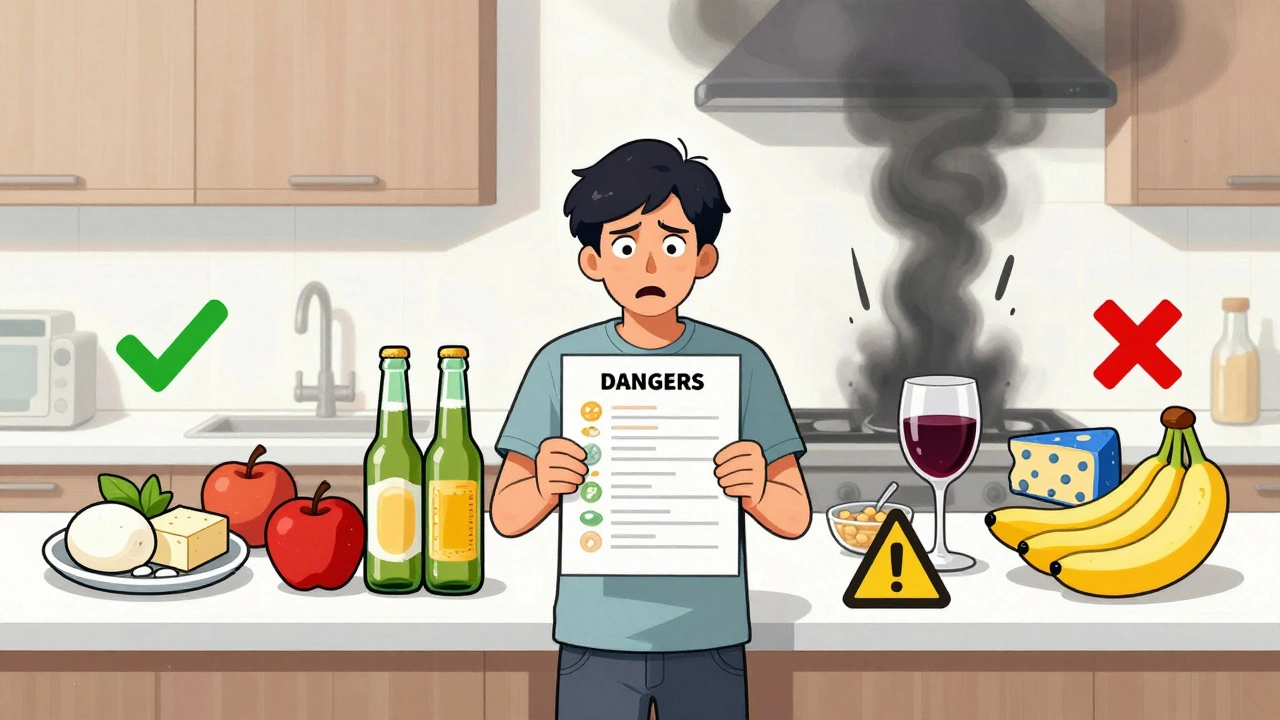
Why People Get It Wrong
You’d think doctors would warn patients. But here’s the problem: only 44% of patients prescribed linezolid get written dietary instructions. Many assume, “It’s just an antibiotic - how bad could it be?” Pharmacists report the same confusion. One pharmacist on Reddit shared: “Just had a patient with 230/130 BP after eating aged cheddar while on linezolid - ICU for three days.” Even more troubling: 61% of patients can’t name a single high-tyramine food after being told to avoid them. They think “no cheese” means no mozzarella. They don’t know soy sauce counts. They eat pepperoni pizza and think they’re fine. Healthcare providers aren’t always better trained. A 2023 survey found that only 59% of internal medicine residents could correctly identify all major tyramine-containing foods. If the doctors don’t know, how can patients?What You Should Do - Step by Step
If you’re prescribed linezolid, here’s what you need to do - no exceptions:- Ask for a written list. Don’t rely on memory. Ask your doctor or pharmacist for a printed handout with examples of safe and unsafe foods.
- Start avoiding risky foods 24 hours before your first dose. Tyramine builds up in your system. Don’t wait until you’re already on the drug.
- Keep avoiding them for 14 days after your last dose. Linezolid’s effects linger. Your MAO enzymes take time to recover.
- Check every food label. Look for “fermented,” “aged,” “cured,” “pickled,” or “yeast extract.” Avoid anything that sounds like it’s been sitting around.
- Use fresh ingredients. Eat meat and cheese the same day you buy them. Cook meals fresh. Don’t rely on leftovers.
- Monitor your blood pressure. If you have high blood pressure or heart issues, check it twice daily while on linezolid. A sudden spike - especially above 160/100 - is a red flag.
- Know the warning signs. Severe headache, chest pain, blurred vision, nausea, rapid heartbeat, nosebleeds, or anxiety. If you feel this way, stop eating, call your doctor, and go to the ER.
What’s Safe to Eat
You don’t have to starve. Here’s what you can still enjoy:- Fresh meat, poultry, and fish (cooked within 24 hours of purchase)
- Most fresh cheeses: mozzarella, ricotta, cottage cheese, cream cheese
- Most fruits and vegetables (as long as they’re not overripe)
- Fresh bread, rice, pasta
- Non-fermented soy products: tofu, edamame, soy milk (check labels for additives)
- Bottled beer, wine, and spirits in moderation (but avoid draft beer and aged wine)
- Instant coffee and tea (avoid espresso or large amounts of caffeine if you’re sensitive)
When in doubt, choose fresh, simple, unprocessed foods. The simpler the meal, the safer it is.
The Bigger Picture: Why This Matters
Linezolid is a critical tool against antibiotic-resistant infections. But its MAO inhibition is not a side note - it’s a core risk. The FDA updated its warning labels in 2019. The Infectious Diseases Society of America now requires baseline blood pressure checks before starting linezolid. Still, many hospitals don’t have protocols in place. Community clinics often skip dietary counseling. Patients are left guessing. Newer antibiotics like contezolid are in trials and show promise - they fight the same bugs without touching MAO. But until those are widely available, linezolid remains a go-to option. That means the responsibility falls on you - and your care team - to get this right.What If You Accidentally Eat Something Risky?
If you realize you ate blue cheese or soy sauce while on linezolid:- Stop eating it immediately.
- Check your blood pressure if you have a monitor.
- Watch for symptoms: headache, chest tightness, dizziness, rapid heartbeat.
- If your BP is over 160/100 or you feel unwell, go to the ER. Don’t wait.
- Call your doctor or pharmacist. They can advise whether you need monitoring or treatment.
Most reactions happen within 30-90 minutes. If you’re symptom-free after 2 hours, you’re likely okay - but keep monitoring for the next 24 hours.
Final Reality Check
Some people say, “I ate aged cheese on linezolid and felt fine.” Maybe you did. But that doesn’t mean it’s safe. Blood pressure spikes can be silent. One person’s body handles tyramine differently than another’s. Age, weight, liver function, and existing high blood pressure all change your risk. This isn’t about being perfect. It’s about being informed. You’re not being overly cautious - you’re protecting yourself from a preventable emergency. Linezolid saves lives. But it can also end them - if you ignore the food on your plate.Can I drink alcohol while taking linezolid?
Avoid all alcohol while on linezolid, especially draft beer, red wine, and fermented beverages. Even small amounts can raise tyramine levels and trigger a dangerous spike in blood pressure. Bottled beer and clear spirits like vodka or gin are lower risk, but still not recommended. When in doubt, skip it.
How long do I need to avoid tyramine after stopping linezolid?
Continue avoiding high-tyramine foods for at least 14 days after your last dose. Linezolid’s effects on MAO enzymes can linger, and your body needs time to rebuild them. Some experts recommend 21 days for patients with liver issues or older adults. When in doubt, ask your doctor.
Is it safe to eat aged cheese if it’s cooked?
No. Cooking doesn’t destroy tyramine. Whether it’s melted on pizza, baked into a casserole, or grilled on a sandwich, the tyramine remains active and dangerous. The compound is heat-stable, so no cooking method makes it safe.
Can I take over-the-counter cold medicine with linezolid?
Avoid all decongestants like pseudoephedrine, phenylephrine, and oxymetazoline. These are sympathomimetics and can dangerously raise blood pressure when combined with linezolid. Use saline sprays or acetaminophen instead. Always check with your pharmacist before taking any OTC meds.
Do I need to avoid all soy products?
No - only fermented soy. Avoid soy sauce, miso, tempeh, and fermented bean curd. Fresh soy products like tofu, edamame, and soy milk are generally safe. But always check the label: some soy milks contain added yeast or flavorings that may include tyramine.
What if I miss a dose of linezolid? Can I eat risky foods then?
No. Even if you miss a dose, linezolid stays active in your system for hours. Don’t assume skipping a pill gives you a free pass. The MAO inhibition lasts long enough that tyramine risk remains unless you’ve been off the drug for at least 14 days.
Webster Bull
December 13, 2025 AT 12:06Deborah Andrich
December 13, 2025 AT 18:49Tommy Watson
December 14, 2025 AT 10:16Donna Hammond
December 15, 2025 AT 16:16Richard Ayres
December 16, 2025 AT 04:36Sheldon Bird
December 17, 2025 AT 08:11Karen Mccullouch
December 18, 2025 AT 15:00Michael Gardner
December 19, 2025 AT 19:19Willie Onst
December 21, 2025 AT 02:34Jennifer Taylor
December 21, 2025 AT 09:05Shelby Ume
December 21, 2025 AT 22:37