Immunosuppressive Combinations: Generic Options for Transplant Care
 Feb, 1 2026
Why generics matter in transplant care
After a transplant, you’re not done with hospitals-you’re just starting a lifelong routine. Every day, you take pills to keep your body from rejecting the new organ. These aren’t vitamins. They’re powerful drugs that quietly suppress your immune system. And they’re expensive. Brand-name immunosuppressants like Prograf or CellCept can cost over $2,000 a month. For someone on a fixed income, that’s not just a bill-it’s a threat to survival.
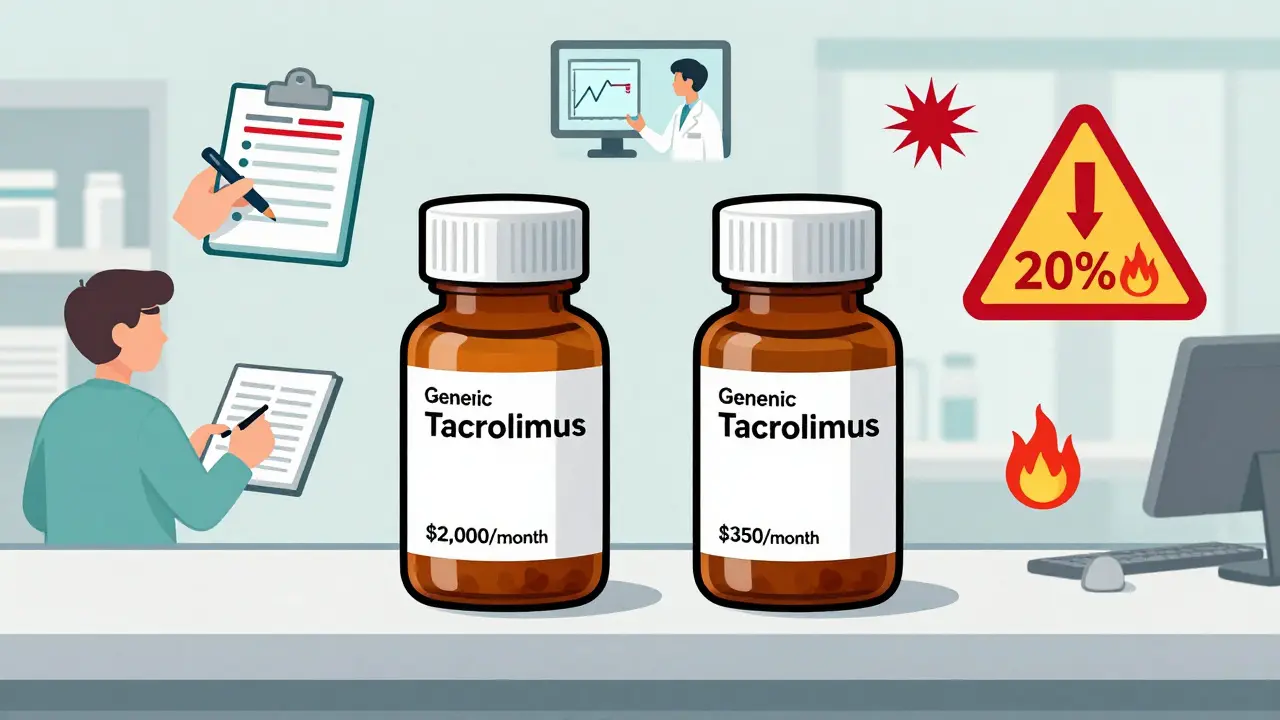
That’s where generics come in. Since 2015, the FDA has approved generic versions of the most common transplant drugs: tacrolimus, mycophenolate, cyclosporine, and sirolimus. These aren’t knockoffs. They’re chemically identical to the brand names, meeting strict FDA standards for bioequivalence. The difference? Cost. A generic tacrolimus prescription now runs $300-$400 a month. That’s 80% less than the brand. For many patients, switching to generics isn’t a luxury-it’s the only way to stay alive.
How transplant drug combinations work
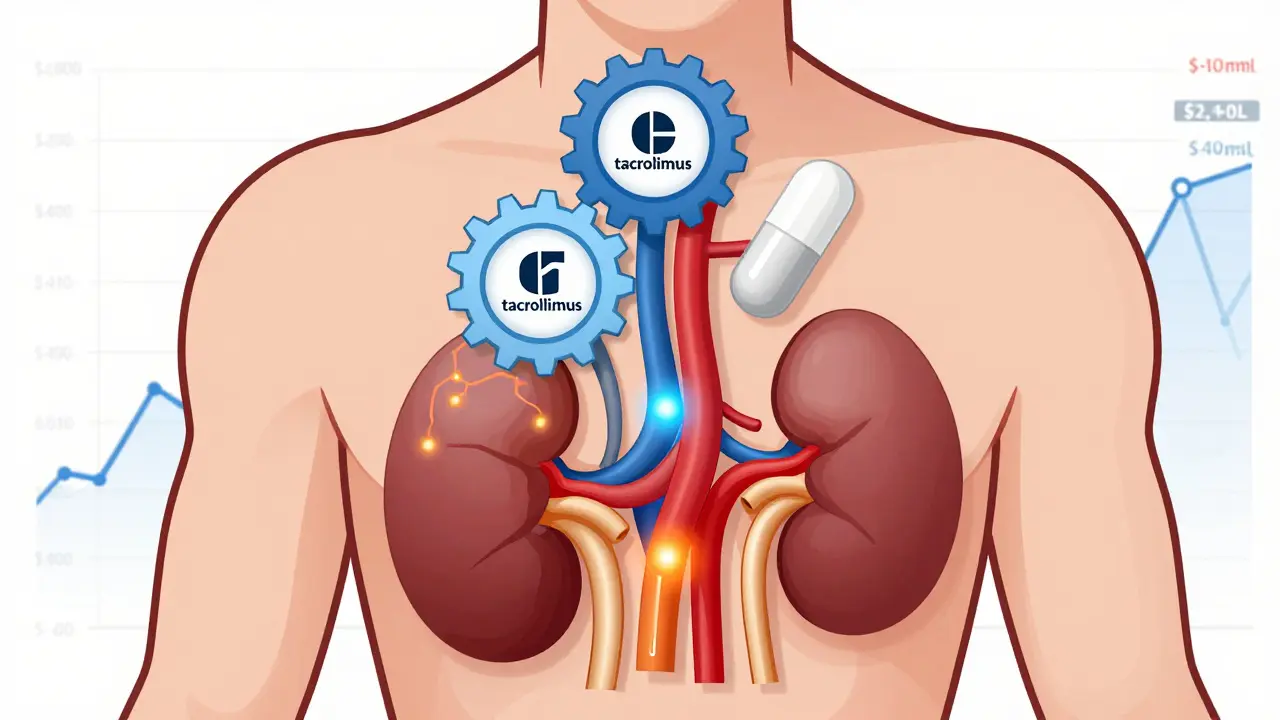
No one takes just one immunosuppressant. The standard is a triple combo: a calcineurin inhibitor (like tacrolimus or cyclosporine), an antimetabolite (like mycophenolate), and a steroid (like prednisone). Each drug hits the immune system in a different way. Together, they create a balanced defense against rejection without completely shutting down your body’s ability to fight infection.
Generic versions of all these drugs are now widely available. Generic tacrolimus (the most common CNI) replaced Prograf. Generic mycophenolate (MMF or MPA) replaced CellCept. Even sirolimus, once only sold as Zortress, is now available as a low-cost generic. The combination of generic tacrolimus and generic mycophenolate is used in 64% of new kidney transplants. In 2023, 78% of new prescriptions for these drugs were generics, according to OPTN/SRTR data.
But it’s not as simple as swapping pills. These drugs have a narrow therapeutic index. That means the difference between a dose that works and one that causes rejection or toxicity is tiny. Tacrolimus levels need to stay between 5 and 10 ng/mL. Too low? Rejection risk spikes. Too high? Kidney damage or tremors kick in. That’s why switching to generics isn’t a one-time change-it’s a process.
Cost savings aren’t just numbers-they’re life-changing
Let’s say you’re a kidney transplant patient on brand-name tacrolimus and CellCept. That’s $2,000 a month. Over a year? $24,000. Over ten years? $240,000. Most people can’t afford that. Medicare covers transplant drugs for life, but copays still add up. Private insurance often has high deductibles. Some patients skip doses. Others sell their medication. That’s not hypothetical-it’s documented in patient forums.
Switching to generics cuts that cost to $450-$600 a month. That’s $5,400 a year. Over ten years? $54,000. That’s $186,000 saved. For many, that’s not just money-it’s the difference between keeping their home, paying for transportation to clinic visits, or buying groceries.
A 2023 study in Transplant International showed that 68% of patients who switched to generics reported no issues with rejection or side effects. One Reddit user, 'KidneyWarrior2020,' wrote: “Generic MMF has worked perfectly for me for 3 years. Saved over $18,000.” But it’s not perfect for everyone. About 22% of patients reported rejection episodes or severe side effects after switching, forcing them back to brand-name drugs.
When generics don’t work-bioequivalence and variability
The FDA allows generic drugs to vary by 80-125% in absorption compared to the brand. That sounds broad, and for most drugs, it’s fine. But for tacrolimus? That’s risky. A 20% drop in absorption could mean your blood level falls below 5 ng/mL. That’s rejection territory.
Some patients switch from brand to generic and suddenly have high creatinine levels, fever, or fatigue. These aren’t random. They’re signs of subtherapeutic drug levels. One transplant pharmacist in North Carolina told me: “We see 30% more clinic visits in the first six months after switching. Patients come in because their levels are all over the place.”
Manufacturers matter. Not all generic tacrolimus is made the same. A 2022 FDA inspection found 12% of generic tacrolimus batches failed USP dissolution testing. That means the pill didn’t release the drug properly in the body. That’s why most transplant centers lock in one manufacturer for each drug. Once you’re stable on a specific generic brand, you stay on it. Switching between generic manufacturers can trigger rejection.
Sirolimus: the underused alternative
Sirolimus (generic version of Zortress) isn’t the first choice for most transplant patients. It’s slower to work. It can cause mouth sores, high cholesterol, and poor wound healing. But it has one huge advantage: it doesn’t damage kidneys like calcineurin inhibitors do.
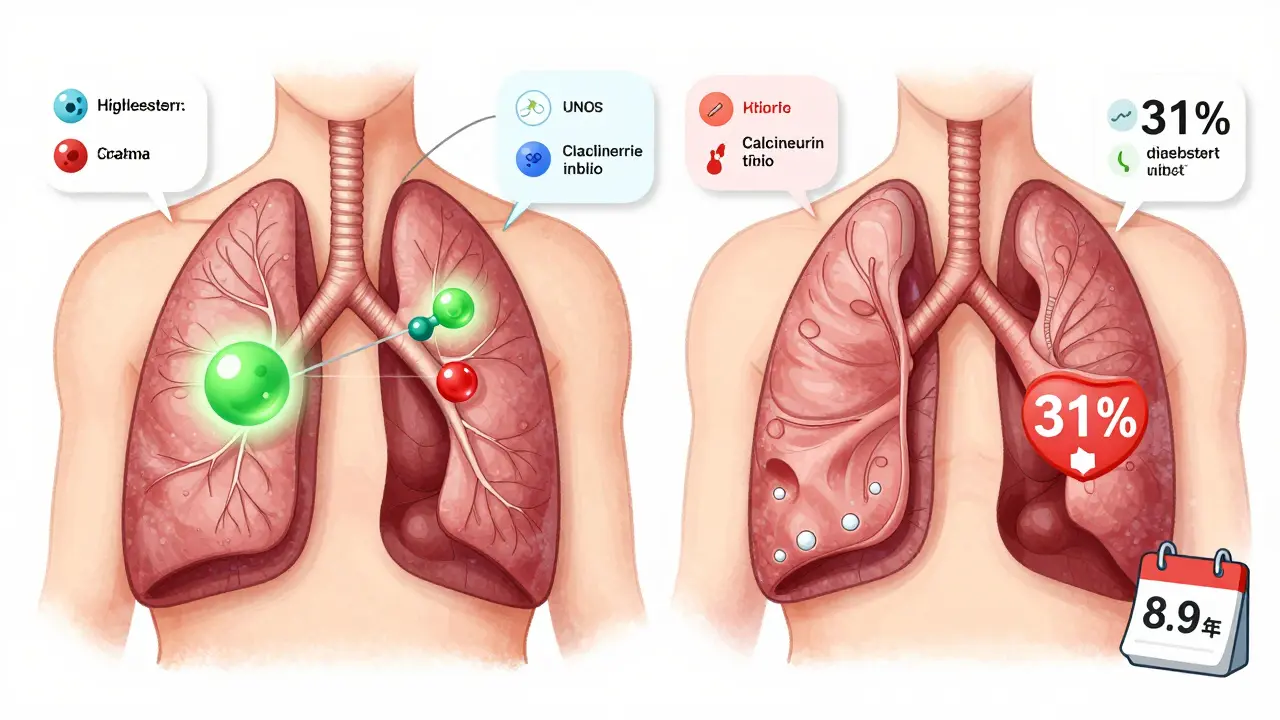
Studies show sirolimus-based regimens, especially when paired with generic tacrolimus, can extend survival. A 2019 analysis of UNOS data found lung transplant patients on sirolimus + tacrolimus lived 8.9 years on average-1.8 years longer than those on mycophenolate + tacrolimus.
And here’s the kicker: sirolimus cuts the risk of post-transplant diabetes by 31%. That’s huge. Diabetes after transplant is common with steroids and tacrolimus. It leads to heart disease, nerve damage, and amputations. A 2024 review in Transplantation Reviews found that sirolimus-based regimens reduced diabetes risk by half compared to calcineurin inhibitors.
Yet only 2.3% of lung transplant patients get this combo. Why? Doctors aren’t trained on it. Pharmacies don’t stock it as often. Patients don’t know to ask. It’s not a first-line drug-but for high-risk patients, it should be.
What patients need to know before switching
Switching to generics isn’t something you do on your own. It’s a team effort. Your transplant coordinator, pharmacist, and doctor all need to be on the same page.
- Don’t switch without a blood test first. Your trough levels need to be measured before and after the switch.
- Expect more clinic visits in the first 3-6 months. You’ll need blood draws every two weeks, then monthly.
- Stick with the same generic manufacturer. If your pharmacy changes your pill, ask for the same brand. Write it down.
- Know your numbers. Keep a log of your tacrolimus or sirolimus levels. If they drop below 5 ng/mL or spike above 15 ng/mL, call your team immediately.
- Watch for signs of rejection: fever, swelling, fatigue, decreased urine output, pain near the transplant site.
Some patients panic when their levels fluctuate. But that’s normal during the transition. The goal isn’t perfection-it’s stability. And with careful monitoring, most people reach it.
What’s next for generic immunosuppressants
The future is moving fast. In May 2023, the FDA approved the first interchangeable biosimilar for belatacept (Nulojix). That’s a new class of drug, not a generic-but it’s cheaper. Manufacturers say it could cut costs by 40%.
KDIGO guidelines updated in 2024 now recommend generic sirolimus as first-line for high-risk kidney transplant patients. That’s a big shift. It means more people will get this kidney-friendly option.
Transplant centers are also exploring protocols to reduce or even stop immunosuppressants entirely. One clinical trial (NCT00078559) used a powerful induction drug called alemtuzumab, followed by low-dose generic tacrolimus and sirolimus. Some patients were able to stop all drugs after a year-with no rejection.
For now, generics are the most practical solution. Eighty-two percent of new kidney transplants in 2023 started on generic tacrolimus. That’s up from 15% in 2016. The trend is clear: cost can’t be ignored. But neither can safety. The key is balance-smart switching, close monitoring, and sticking to one trusted manufacturer.
Final thoughts: It’s not about cheap-it’s about smart
Generic immunosuppressants aren’t a compromise. They’re a breakthrough. They’ve made lifelong transplant care possible for people who would’ve otherwise given up. But they’re not magic. They require discipline. You can’t just take them and forget about them. You need to track your levels, report changes, and stay in touch with your care team.
The data doesn’t lie: graft survival rates with generics are nearly identical to brand-name drugs. One-year kidney survival? 94.7% with generics versus 95.1% with brand. That’s statistically the same. The difference? You’re saving thousands every year.
If you’re on brand-name drugs and struggling to pay, talk to your pharmacist. Ask if a generic is an option. Ask for a blood test before switching. Ask for help finding a single-source manufacturer. Don’t assume it’s too complicated. With the right support, it’s doable-and it could save your life.
phara don
February 2, 2026 AT 01:52Ellie Norris
February 3, 2026 AT 19:55Vatsal Srivastava
February 4, 2026 AT 02:42Dan Pearson
February 5, 2026 AT 10:07clarissa sulio
February 7, 2026 AT 03:25Murarikar Satishwar
February 8, 2026 AT 16:15Brett MacDonald
February 10, 2026 AT 07:37larry keenan
February 11, 2026 AT 10:08Monica Slypig
February 13, 2026 AT 06:05jay patel
February 13, 2026 AT 12:34Ansley Mayson
February 14, 2026 AT 19:20Marc Durocher
February 15, 2026 AT 23:33Nick Flake
February 16, 2026 AT 13:18