How to Overcome Swallowing Difficulties to Keep Taking Medicine
 Jan, 14 2026
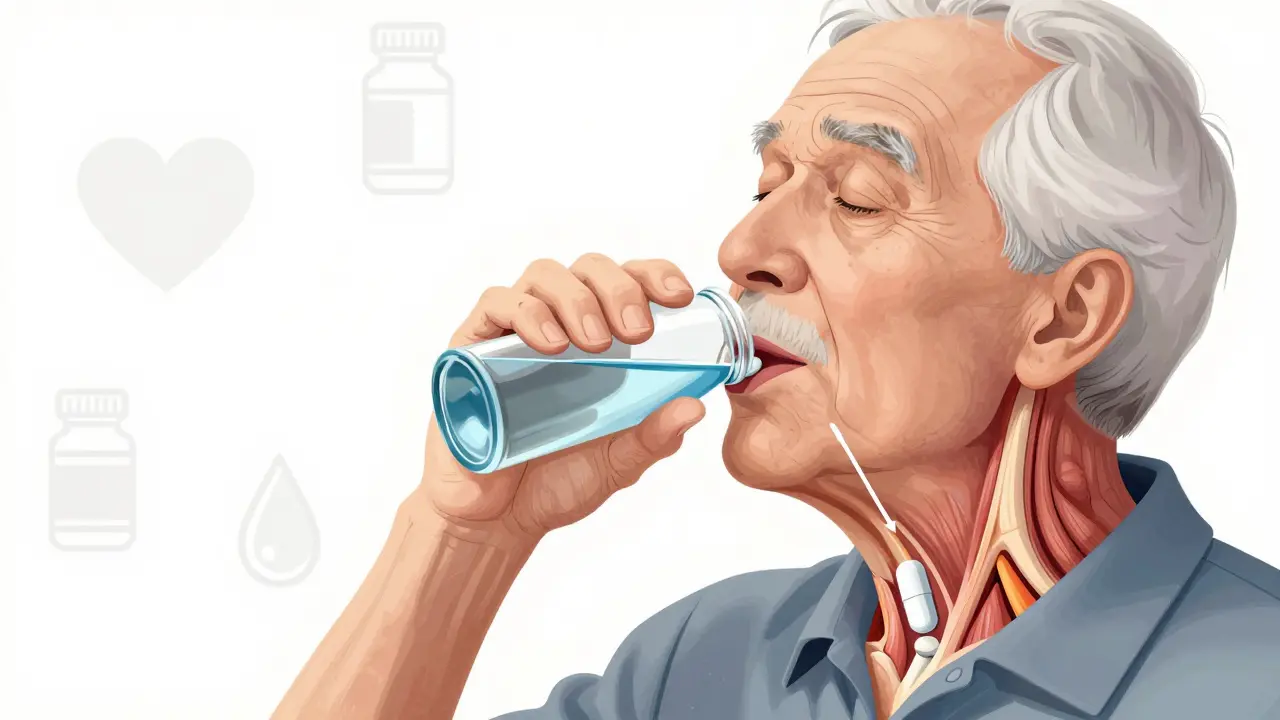
More than 1 in 7 older adults struggle to swallow pills. If you or someone you care for has trouble swallowing medication, you’re not alone-and you’re not failing. The problem isn’t laziness or stubbornness. It’s a real, medical issue called dysphagia. And it’s not just about discomfort. Skipping doses because pills get stuck can lead to dangerous health crashes: uncontrolled blood pressure, infections, even hospital stays.
Why Swallowing Pills Gets Harder with Age or Illness
Swallowing isn’t just a reflex. It’s a complex dance between muscles, nerves, and coordination. When you have a stroke, Parkinson’s, dementia, or even severe acid reflux, that dance gets out of rhythm. The throat muscles weaken. The timing slips. Food or pills can slip into the lungs instead of the stomach. That’s aspiration-and it’s deadly.It’s not just older adults. People with MS, ALS, head and neck cancers, or even after intubation in the ICU often develop swallowing problems. A 2019 study found up to 68% of nursing home residents can’t swallow pills safely. And here’s the scary part: many of them are still being handed large, hard tablets they can’t manage.
What NOT to Do: The Hidden Dangers of Crushing Pills
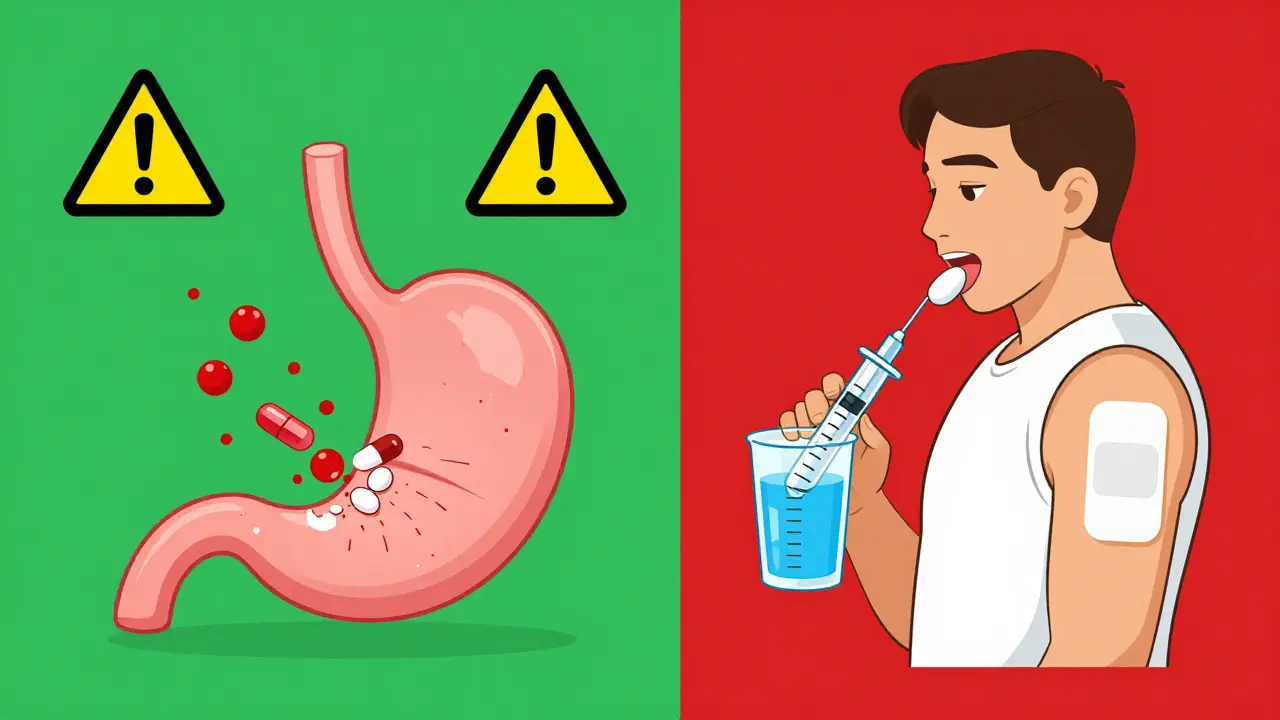
It’s tempting. You crush the pill, mix it with applesauce, and think you’ve solved it. But you’ve created a new problem.More than half of the time, crushing or opening capsules changes how the medicine works. Time-release pills? Crushed, they dump all their dose at once. That can cause overdose. Enteric-coated pills? They’re designed to dissolve in the intestine, not the stomach. Crush them, and the acid destroys the drug-or gives you a stomach ulcer. Some medications become toxic when altered. Others lose effectiveness entirely.
A 2023 review found that nearly half of all crushed or opened medications were inappropriate. Fourteen cases carried risk of serious harm. Nine had no proven benefit anymore. This isn’t a minor mistake. It’s a medical error-and it’s happening because no one checked.
Safe Alternatives: What You Can Actually Use
There are better ways. The key is asking the right questions: Is this pill absolutely necessary? Can it be given another way?Ask for liquid forms. Many drugs come in liquid. Insulin, antibiotics, blood pressure meds, even some antidepressants. Liquids are easier to measure and swallow. If your pharmacy doesn’t stock it, ask them to order it. Some are made by specialty pharmacies.
Look for orodispersible tablets. These dissolve on your tongue. No water needed. They’re common for antipsychotics, anti-nausea meds, and some heart drugs. Ask your pharmacist: “Does this have a dissolving version?”
Try effervescent tablets. Dissolved in water, they turn into a drink. Great for pain relievers or vitamin C. Just check if the flavor is tolerable-some are bitter.
Consider patches or suppositories. Painkillers, hormone therapy, and anti-nausea meds are available as patches you stick on your skin or suppositories you insert. No swallowing required. These aren’t always first-line options, but they’re safe and effective for chronic use.
Explore dissolvable films. Newer tech like VersaFilm sticks to the inside of your cheek and releases medicine slowly. A 2023 study showed 85% of patients with moderate swallowing trouble could use them successfully. They’re not everywhere yet-but they’re coming fast.
Swallowing Techniques That Actually Work
Sometimes, you still need to take a pill. Here’s how to do it safely.The Lean Forward Method (for capsules): Place the capsule on your tongue. Take a medium sip of water. Tuck your chin to your chest-lean forward slightly. Swallow. This uses gravity to guide the capsule down. Clinical observations show this works for up to 75% of people who couldn’t swallow capsules before.
The Pop Bottle Method (for tablets): Fill a plastic water bottle halfway. Place the pill on your tongue. Seal your lips around the bottle’s opening. Take a drink using suction. The suction helps pull the pill down. Works better than just sipping.
Use thicker liquids. If you’re at risk of aspiration (breathing in food), thin liquids like water can slip into your lungs. Use thickened water, nectar-thick juices, or even yogurt. If you’re at risk of choking (pill gets stuck), thin liquids help push it down.
Try the ice chip trick. Before taking your pill, suck on an ice chip. It numbs your throat and triggers your swallow reflex. Then take the pill with a sip of water. Many patients find this reduces gagging.
Work With Your Care Team-Don’t Guess
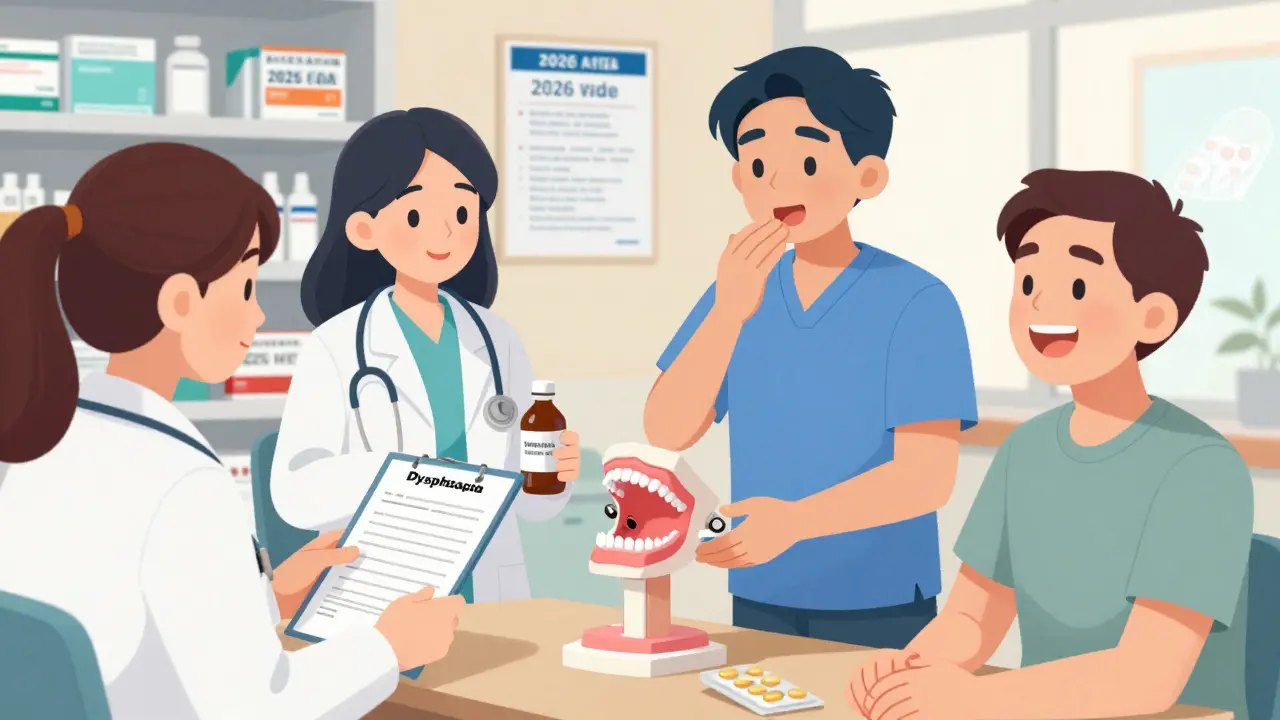
This isn’t something you should fix alone. You need a team.Start with your doctor. Say: “I’m having trouble swallowing my pills. Can we review each one?” Many older adults take 8-10 medications. Some may no longer be needed. Others can be switched.
Ask for a speech-language pathologist (SLP) evaluation. These are swallowing experts. They don’t just tell you to chew more. They test your swallow, identify where the problem is, and teach you safe techniques. They’ll also recommend the right food and liquid textures.
Talk to your pharmacist. They know which pills can be crushed, which can’t, and what alternatives exist. They can tell you if a liquid version exists, or if a patch might work. Pharmacists are underused allies in medication safety.
If you’re on a feeding tube, never mix meds together. Flush with at least 10ml of water between each drug. Some medications bind to tube feed and stop working. Others clog the tube. Ask for once-daily doses when possible.
Real-Life Solutions That Work
Meet Maria, 78. She had a stroke. Could no longer swallow pills. Her blood pressure meds were causing dizziness. Her doctor switched her from a 10mg tablet to a 5mg liquid. She took it with her morning oatmeal. Her BP stabilized. No more falls. Meet James, 82, with Parkinson’s. He couldn’t swallow capsules. His doctor switched his antidepressant to an orodispersible tablet. He puts it on his tongue before coffee. It dissolves in seconds. He’s been taking it for 18 months without missing a dose. These aren’t rare cases. They’re standard fixes-if you ask for them.What’s Changing in 2026
The pharmaceutical industry is finally paying attention. The FDA now asks drug makers to test how easy their pills are to swallow in clinical trials. The European Medicines Agency now requires labels to say whether a pill can be crushed. More drugs are being developed as dissolvable films, mini-tablets, and flavored liquids.Still, only 37% of essential medications have safe alternatives for people with swallowing trouble. That means you still have to be your own advocate. Don’t wait for the system to catch up. Ask. Push. Try.
Final Checklist: What to Do Today
- Write down every pill you take. Include dose and frequency.
- Ask your doctor: “Can any of these be stopped or switched?”
- Ask your pharmacist: “Is there a liquid, dissolving, or patch version of this?”
- Request a swallowing evaluation from a speech therapist.
- Try the lean forward method or pop bottle technique with your next pill.
- Never crush or open a pill without checking with a pharmacist first.
- If you’re giving meds to someone else, document what works and what doesn’t. Share it with the care team.
Medication adherence isn’t about willpower. It’s about design. If the system doesn’t fit your body, change the system-not your behavior. You deserve to take your medicine safely. And you can.
Can I crush my pills and mix them with food?
Only if your pharmacist or doctor says it’s safe. Many pills-especially time-release, enteric-coated, or extended-release types-become dangerous when crushed. Some can cause overdose, while others lose effectiveness. Always check before crushing.
Are liquid medications as effective as pills?
Yes, if they’re the same drug in the same dose. Liquid forms are often just as effective, and sometimes more predictable because they’re absorbed faster. The key is using the correct measuring tool-never use a kitchen spoon. Use the cup or syringe that comes with the medicine.
What if my insurance won’t cover the liquid version?
Ask your pharmacist to submit a prior authorization request. Many insurers will cover the liquid form if it’s medically necessary. You can also ask if a generic version exists. Some specialty pharmacies offer low-cost liquid formulations not sold in regular stores.
Can children use the same techniques as adults?
Yes, but with adjustments. For kids, try having them drink milk or juice before taking the pill to lubricate the throat. Place the pill on the tongue, have them puff their cheeks with water, then swish and swallow. Avoid using the lean forward method for very young children-it can increase choking risk. Always supervise.
How do I know if I have dysphagia?
Signs include coughing or choking when swallowing, feeling like food or pills get stuck, needing to swallow multiple times, wet or gurgly voice after eating, or unexplained weight loss. If you have any of these, ask your doctor for a referral to a speech-language pathologist. Early evaluation prevents serious complications.
Is it safe to use a feeding tube for all medications?
Feeding tubes are safe for meds-but only if done correctly. Never mix drugs together. Flush with at least 10ml of water between each one. Use liquid or crushed forms only if approved. Some medications, like extended-release ones, should never be given through a tube. Always consult your pharmacist or care team before giving meds through a tube.
Annie Choi
January 16, 2026 AT 02:25Been there. My mom had a stroke and couldn't swallow a single pill. We tried everything until we found the orodispersible version of her BP med. No more choking, no more panic. Pharmacist was the real MVP here. Just ask. They know stuff you don't even know exists.
Amy Ehinger
January 16, 2026 AT 21:47I used to crush everything because it was easier. Then my uncle ended up in the ER after crushing his extended-release morphine. Turned out it was basically a time bomb in a tablet. Now I always check with the pharmacist first. Honestly, I didn't even know some pills were designed not to be crushed. The system is so broken it's ridiculous. People are just trying to survive and the meds are working against them.
Iona Jane
January 18, 2026 AT 02:25They don't want you to swallow pills because they're selling you patches and liquids. Big Pharma doesn't profit from cheap generics. That's why they make pills that are impossible to swallow. It's all about pushing expensive alternatives. The FDA? They're in bed with the drug companies. Why do you think they only started requiring swallow tests in 2026? Because someone finally got rich off it.
Jaspreet Kaur Chana
January 19, 2026 AT 04:44In India, we've been doing this for years. Elderly people take medicine with a spoon of honey or yogurt. No water needed. We also use tiny tablets called 'mini-tablets' for heart patients. My aunt takes her statin as a dissolving film now. No more gagging. The tech isn't new, it's just not available everywhere. If you're lucky enough to have a good pharmacy, they'll find a way. Don't give up. Your body deserves better than choking on a 10mm pill.
Haley Graves
January 19, 2026 AT 11:07Stop guessing. Get a swallowing evaluation. Speech therapists aren't just for kids who lisp. They're life-saving specialists for adults who can't swallow pills. My dad went from nearly aspirating every dose to taking everything safely in 3 weeks. It's not magic. It's science. Your doctor won't bring it up because they're rushed. You have to ask. Demand it. Your life depends on it.
ellen adamina
January 20, 2026 AT 12:33Has anyone tried the ice chip trick with antipsychotics? My sister swallows hers fine now but she says the numbing helps with the bitter taste too. Also, does anyone know if dissolvable films work with anticoagulants? I'm trying to find a safe option for my grandfather but the pharmacist said some meds just don't have alternatives yet.
Tom Doan
January 21, 2026 AT 13:13How is it that in 2026, we still have to be pharmaceutical detectives just to take our own medication? We live in an age of AI, quantum computing, and self-driving cars, yet the most basic human function-swallowing a pill-is treated like a moral failing. The real tragedy isn't dysphagia. It's that the healthcare system still operates like it's 1985. And we're supposed to be grateful when they finally offer a liquid version after six months of prior authorizations.
Amy Vickberg
January 22, 2026 AT 10:19I just want to say thank you to whoever wrote this. My mother has dementia and I used to cry every time she choked on her meds. Now we use the pop bottle method with her blood thinner and she takes it without a single gag. We also switched to the dissolving tablet for her anxiety med. It’s not perfect, but it’s working. You’re right-it’s not about willpower. It’s about design. And now I’m fighting to get the system to change for others too.