How to Manage Acarbose and Miglitol Side Effects: A Guide to Beating Bloating
 Apr, 10 2026
AGI Adaptation Tracker & Guide
Your Adaptation Status
Recommended Strategies for You:
Take medication with the first bite of your meal to maximize effectiveness and minimize confusion in the gut.
Keep carbs consistent (45-60g per meal) and limit high-sugar treats to reduce fermentation.
Consider Simethicone for pressure or Probiotics (Lactobacillus GG) to help your microbiome adapt.
Taking medication to manage type 2 diabetes is often a balancing act. You want your blood sugar under control, but you don't want to spend your day feeling like a human balloon. If you've been prescribed Acarbose is an oral antihyperglycemic medication that delays the digestion of carbohydrates in the small intestine or Miglitol is a deoxynojirimycin derivative used to reduce post-meal blood glucose spikes, you've probably heard the warning about "gastrointestinal side effects." In plain English: gas, bloating, and frequent trips to the bathroom.
The good news is that these drugs are incredibly effective at lowering HbA1c by 0.5-1.0% without causing weight gain or the scary "sugar crashes" (hypoglycemia) associated with other meds. The catch? Your gut has to learn how to handle them. If you're currently struggling with flatulence or abdominal discomfort, you aren't alone-about 20-30% of people consider quitting these meds in the first few weeks. But before you throw in the towel, it's worth knowing that these symptoms usually peak around day 7 and often vanish by week 4 as your gut bacteria adapt.
Why These Meds Cause Gas and Bloating
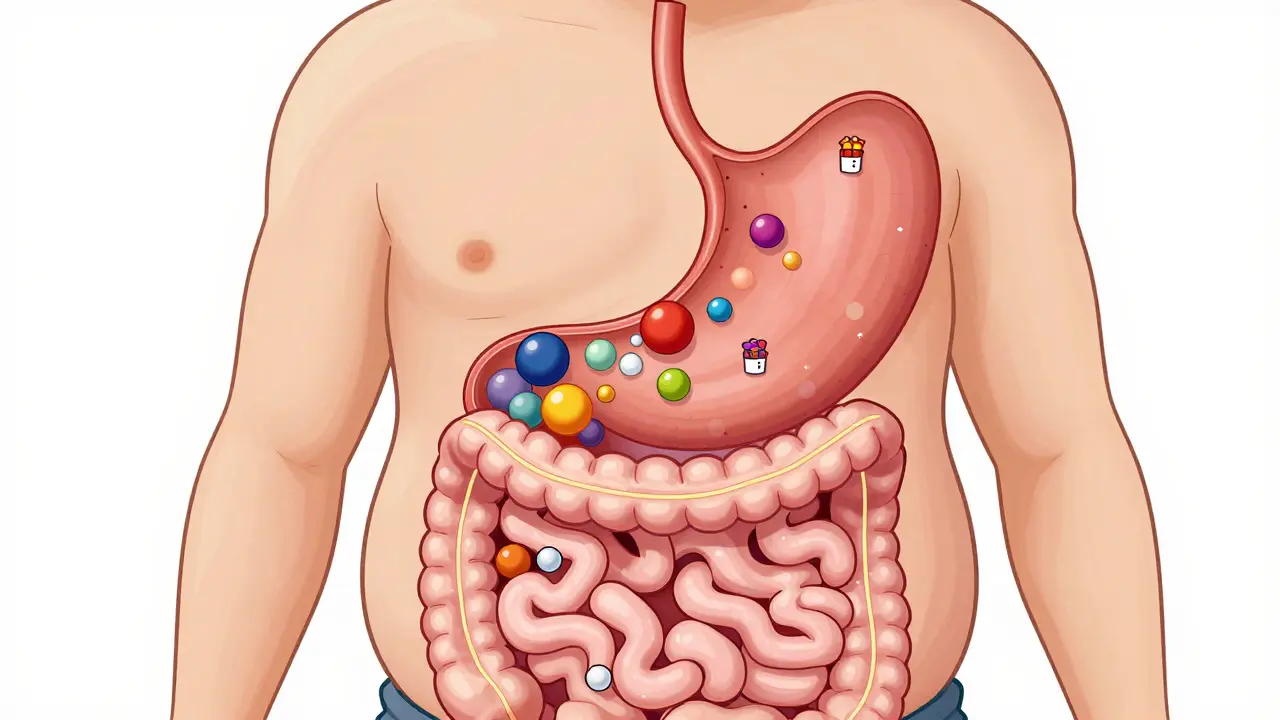
To understand why you're feeling bloated, you have to look at how Alpha-glucosidase inhibitors (AGIs) work. Normally, enzymes in your small intestine break down carbs into simple sugars for absorption. AGIs block these enzymes, meaning those undigested carbohydrates travel further down into your colon.
Once they hit the colon, the bacteria living there have a field day. They ferment the leftover carbs, and the byproduct of that fermentation is gas. Since Acarbose is barely absorbed by your body (less than 2% enters your bloodstream), it stays in the gut longer and often causes more intense symptoms. Miglitol, on the other hand, is absorbed more readily (50-100%), which is why many people find it slightly easier on the stomach.
Comparing Acarbose and Miglitol: Which is Easier on the Gut?
If you have a choice in your prescription, it helps to know the trade-offs. While both do a great job of flattening those post-meal glucose spikes, they don't feel the same in your digestive tract.
| Feature | Acarbose | Miglitol |
|---|---|---|
| Gas/Flatulence | Higher incidence; more severe | Moderate; generally better tolerated |
| Systemic Absorption | Very low (< 2%) | High (50-100%) |
| HbA1c Reduction | Stronger long-term effect (~0.8%) | Effective (~0.6%) |
| Weight Impact | Weight neutral | May lead to slight weight loss |

Pro Strategies to Reduce GI Distress
You don't have to just "tough it out." There are concrete ways to make the transition easier. The most successful patients use a combination of slow titration and strategic dietary changes.
The Slow-and-Steady Dosing Approach
Jumping straight into a full dose is a recipe for disaster. Instead, try a titration schedule. Start with a low dose-perhaps 25mg three times daily-and only increase it every 2 to 4 weeks. This gives your colonic bacteria time to adjust to the new food source. Some users even start with a single dose during their largest meal of the day for the first week before adding the other two doses.
Timing is Everything
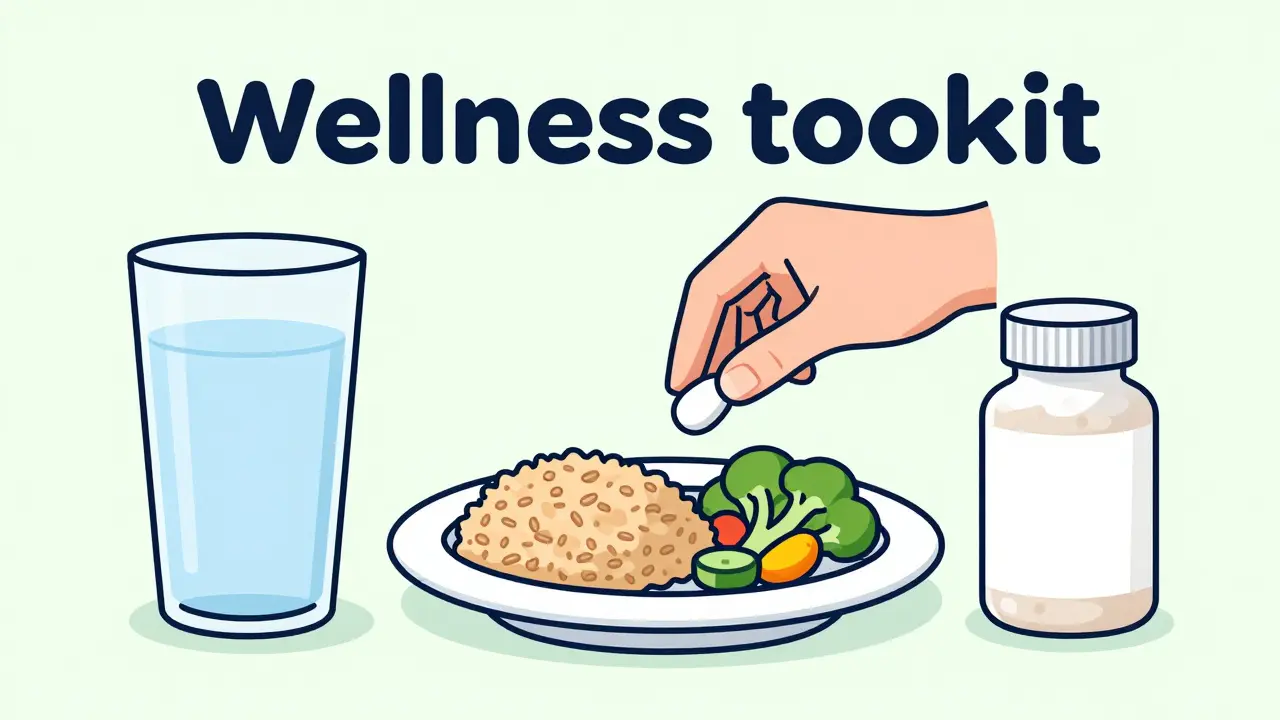
For these meds to work, they need to be present when the food arrives. Take your pill with the first bite of your meal. If you wait until the end of the meal, the enzymes have already done their job, and you've missed the window for glucose control, but you're still adding the drug to your gut, which can confuse the digestive process.
Dietary Tweaks for Less Bloating
- Manage your carbs: Aim for a consistent amount of carbohydrates (roughly 45-60g) per meal. Huge spikes in carb intake can lead to huge spikes in gas.
- Limit simple sugars: High-sugar treats can exacerbate fermentation in the colon, making the bloating worse.
- Ease into fiber: While fiber is great for diabetes, adding a ton of high-fiber vegetables during the first two weeks of AGI treatment can be overwhelming for your system. Introduce them gradually.
Over-the-Counter Relief and Supplements
When lifestyle changes aren't enough, certain supplements can bridge the gap while your body adapts. These aren't cures, but they can make the first month much more bearable.
Simethicone is a common choice for those dealing with pressure. It works by breaking up gas bubbles in the gut, which can reduce the severity of bloating by as much as 40%. If the issue is the volume of gas, some patients use activated charcoal capsules about 30 minutes before meals to absorb some of the flatulence.
Another option is introducing Probiotics. Specifically, strains like Lactobacillus GG or Bifidobacterium longum have been shown to reduce the frequency of gas. By adding healthy bacteria to your gut, you're essentially helping your microbiome manage the undigested carbohydrates more efficiently.
When to Be Concerned
While gas and bloating are "normal" for these drugs, some symptoms are not. You should contact your doctor if you experience severe abdominal pain, unintended rapid weight loss, or signs of liver issues (like yellowing of the eyes). While very rare, the FDA has noted cases of hepatotoxicity associated with Acarbose. For most people, the risk is minimal, but it's something to keep on your radar.
How long do the gas and bloating actually last?
For most people, the symptoms are most intense during the first 3 to 7 days. You'll usually notice a significant improvement by week 2 or 4 as your gut bacteria adapt to the carbohydrates. If symptoms don't improve after a month, talk to your doctor about adjusting the dose or switching to Miglitol.
Can I take Acarbose and Miglitol together?
No, you should not take both. They belong to the same class of drugs (Alpha-glucosidase inhibitors). Taking both would likely lead to severe gastrointestinal distress without providing extra blood sugar benefits.
Do these medications cause hypoglycemia?
On their own, Acarbose and Miglitol typically do not cause hypoglycemia because they don't force the pancreas to secrete more insulin. However, if you are taking them alongside sulfonylureas or insulin, the risk of a sugar crash increases, and you'll need to monitor your levels more closely.
Is Miglitol really better than Acarbose for gas?
Generally, yes. Clinical studies and patient reports suggest that because Miglitol is absorbed more into the system and doesn't sit in the gut as much as Acarbose, it tends to produce fewer and less severe gastrointestinal side effects.
What happens if I miss a dose?
Since these drugs work specifically on the carbohydrates in the meal you are currently eating, a missed dose just means that specific meal won't have its glucose absorption delayed. Don't double up on the next dose; just take the next scheduled dose with your next meal.
Next Steps for Your Journey
If you're just starting out, remember that the first two weeks are the hardest. Keep a simple food and symptom diary to see which meals trigger the most gas. If you're already deep into treatment and still struggling, ask your provider about the newer combination tablets or specific probiotic regimens that can help dampen the side effects. The goal is glycemic control, but it shouldn't come at the cost of your quality of life.
Simon Jenkins
April 10, 2026 AT 22:07Honestly, the sheer audacity of suggesting a 'slow-and-steady' approach as if it were some groundbreaking revelation is simply breathtaking! I have been managing my glycemic index with far more sophisticated methods than mere titration for years, and frankly, this guide barely scratches the surface of what a truly enlightened patient would consider. It's almost quaint how the author thinks a simple food diary is the pinnacle of patient management. Absolute melodrama that we even have to discuss basic GI distress in the modern age when we should be focusing on the systemic failures of pharmacological integration!
danny Gaming
April 11, 2026 AT 02:21who cares bout bloating lol just take the meds n deal with it stop whining abot gas its just diabetes
Camille Sebello
April 13, 2026 AT 00:18I have a cousin... who takes Acarbose!!! Does she still feel like a balloon??? Tell me everything!!!
Franklin Anthony
April 14, 2026 AT 11:40funny how big pharma loves talking about side effects like its just a glitch in the system while they ignore the real reasons why our guts are failing in the first place but hey simethicone is a great little band aid for the masses
Victor Parker
April 15, 2026 AT 20:41It's all a scam to make us buy probiotics anyway 🙄 the government just wants us dependent on these chemicals to control our bodies. Wake up people! 👁️
Sarina Montano
April 16, 2026 AT 07:50The mention of Lactobacillus GG is a fantastic touch because balancing the microbiome can truly turn the tide on that kind of abdominal turbulence! I've found that incorporating a bit of fermented ginger tea alongside the medication can add a zesty layer of relief that most standard guides completely overlook. It's all about creating a symbiotic environment where the bacteria aren't just fermenting waste but are actually working in harmony with the AGIs to stabilize the system.
Ryan Hogg
April 18, 2026 AT 04:01I tried this and it just made me feel more isolated because I couldn't even go to dinner with friends without worrying about my stomach. It's just another thing that reminds me how broken my health is and how lonely this whole journey feels when you're the only one in the room who can't eat normally. My life has become a series of timed pills and avoided foods.
kalpana Nepal
April 19, 2026 AT 01:38Life is just a cycle of pain and healing. We must accept the gas as a small price for the health of the body. Our ancestors suffered more than this and we should be proud to fight this disease with the strength of our nation.
Emily Wheeler
April 20, 2026 AT 16:54I truly believe that we can all find a way through these initial challenges by supporting one another with patience and a gentle heart, and while the bloating is certainly an inconvenience, it is also an opportunity to listen more closely to what our bodies are trying to tell us about our relationship with food and the slow, winding path toward a more balanced existence. If we just breathe through the discomfort and remember that this is a temporary phase of adaptation, we can reach a place of stability where the medication and our natural rhythms finally align in a beautiful, healthy harmony that serves our long-term wellbeing.
Peter Meyerssen
April 22, 2026 AT 04:55The pharmacokinetic profile of Miglitol is clearly superior in terms of systemic absorption 🙄. It's just basic molecular biology, really. Why struggle with the lumen-centric chaos of Acarbose when the plasma concentration of Miglitol provides such a streamlined experience? 💅
Will Gray
April 23, 2026 AT 01:13Typical. They tell you to take a pill with the first bite while the deep state suppresses the natural cures that would actually fix the pancreas. This is just more US-centric medical propaganda designed to keep us in a loop of side effects and prescriptions.