How to Identify Authorized Generics by Packaging and Labeling
 Dec, 28 2025
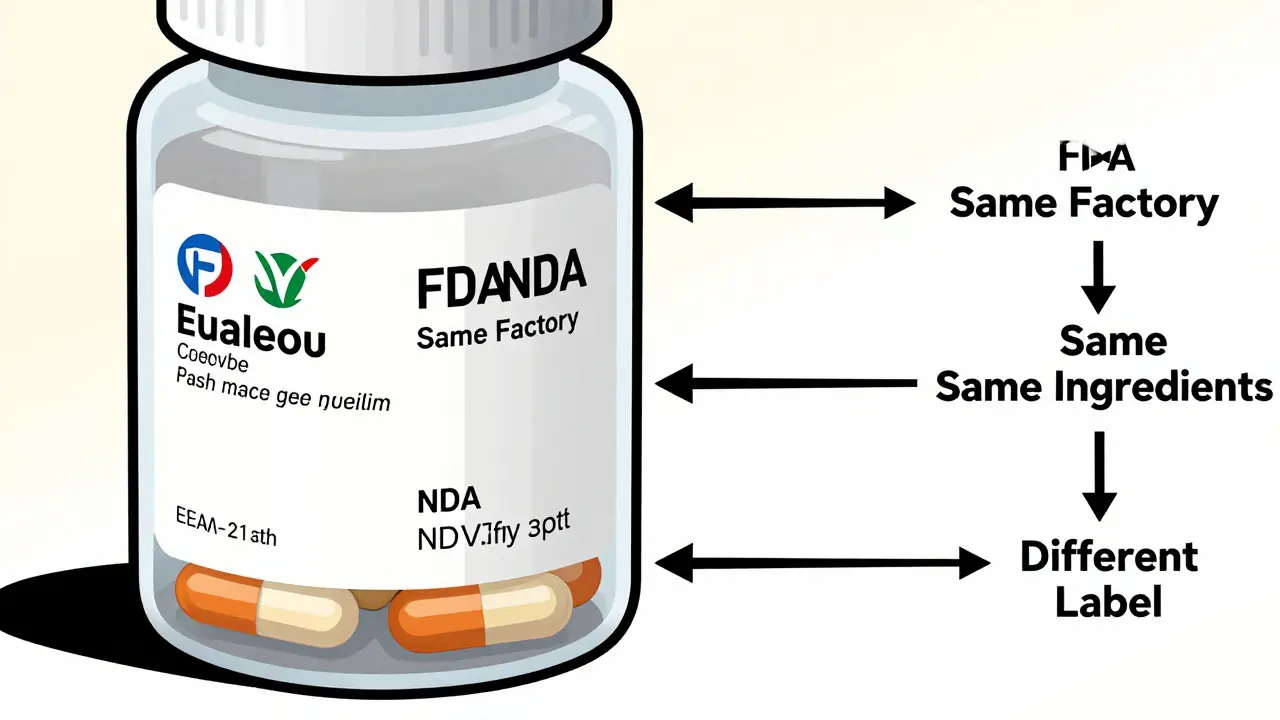
When you pick up a prescription, you might not realize there’s more than one kind of generic drug on the shelf. Some are made by a different company using the same formula. Others are made by the brand-name company itself-just in different packaging. These are called authorized generics. They’re not knockoffs. They’re the exact same drug, made in the same factory, with the same ingredients, but sold under a different label. And if you don’t know how to spot them, you could miss out on savings-or worse, get confused about what you’re taking.
What Makes an Authorized Generic Different?
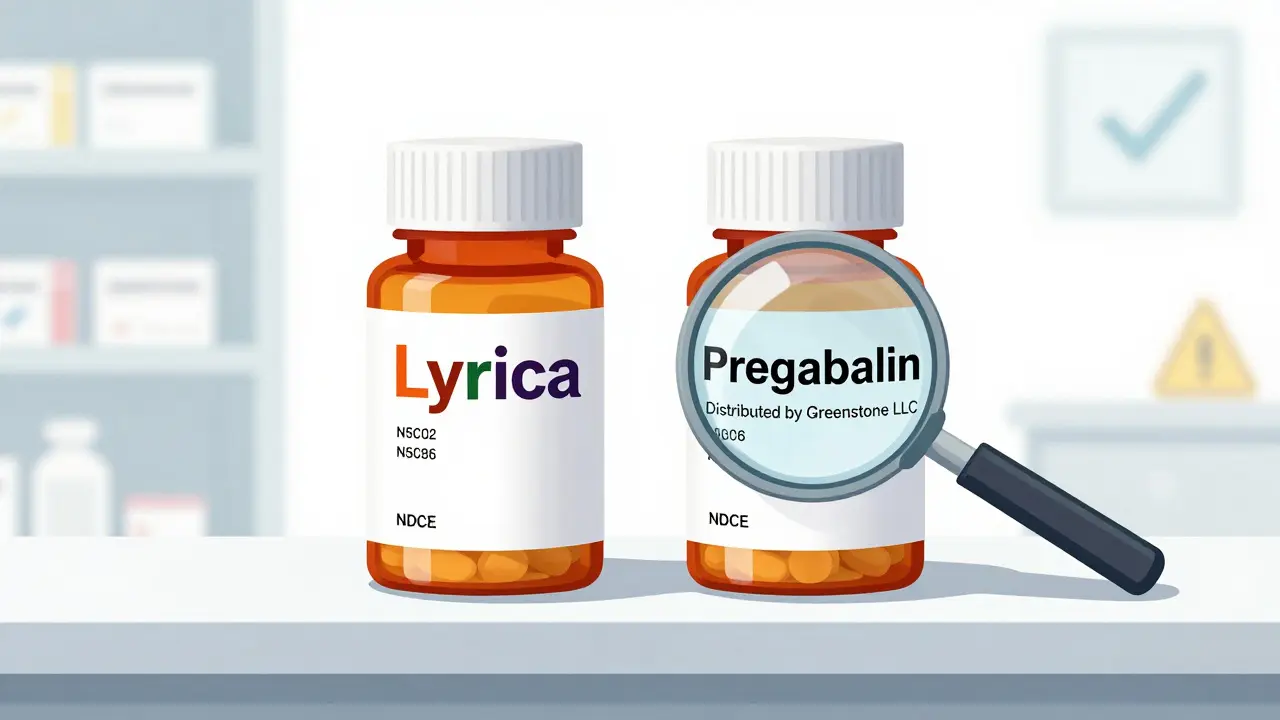
An authorized generic is a brand-name drug that’s sold without the brand name on the bottle. It’s made by the original manufacturer, under the same FDA-approved New Drug Application (NDA), but distributed by a different company-often a subsidiary. For example, if Pfizer makes Lyrica, they might also make an authorized generic version sold under the name Greenstone LLC. The pills inside? Identical. The capsule color? The same. The dosage? Exactly the same. The only differences are on the label and the box. This isn’t the same as a regular generic. Regular generics go through a separate approval process called an ANDA. They must prove they’re bioequivalent to the brand, but they can have different fillers, colors, or shapes. Authorized generics don’t need to prove anything. They’re already the brand. The FDA considers them therapeutically identical because they are the same product, just repackaged.How to Spot an Authorized Generic by the Label
The first thing to look at is the manufacturer or distributor name. If it says something like “Distributed by Greenstone LLC” or “Manufactured for [Brand Name]” instead of the original brand (like Pfizer or AstraZeneca), that’s a red flag it might be an authorized generic. Next, check for the absence of the brand name. You won’t see “Lyrica” or “Prilosec” printed on the bottle. Instead, you’ll see the generic name-like “pregabalin” or “omeprazole.” The FDA requires that authorized generics remove all trademarked brand names and marketing claims from the label. No slogans. No logos. No fancy fonts. Just the facts. You might also notice the label looks simpler, more clinical. No colorful graphics. No “heartburn relief” or “fast-acting” claims. Just the drug name, strength, dosage instructions, and safety info. That’s because authorized generics follow the exact same labeling as the brand, minus the promotional stuff.The NDC Code: Your Most Reliable Tool
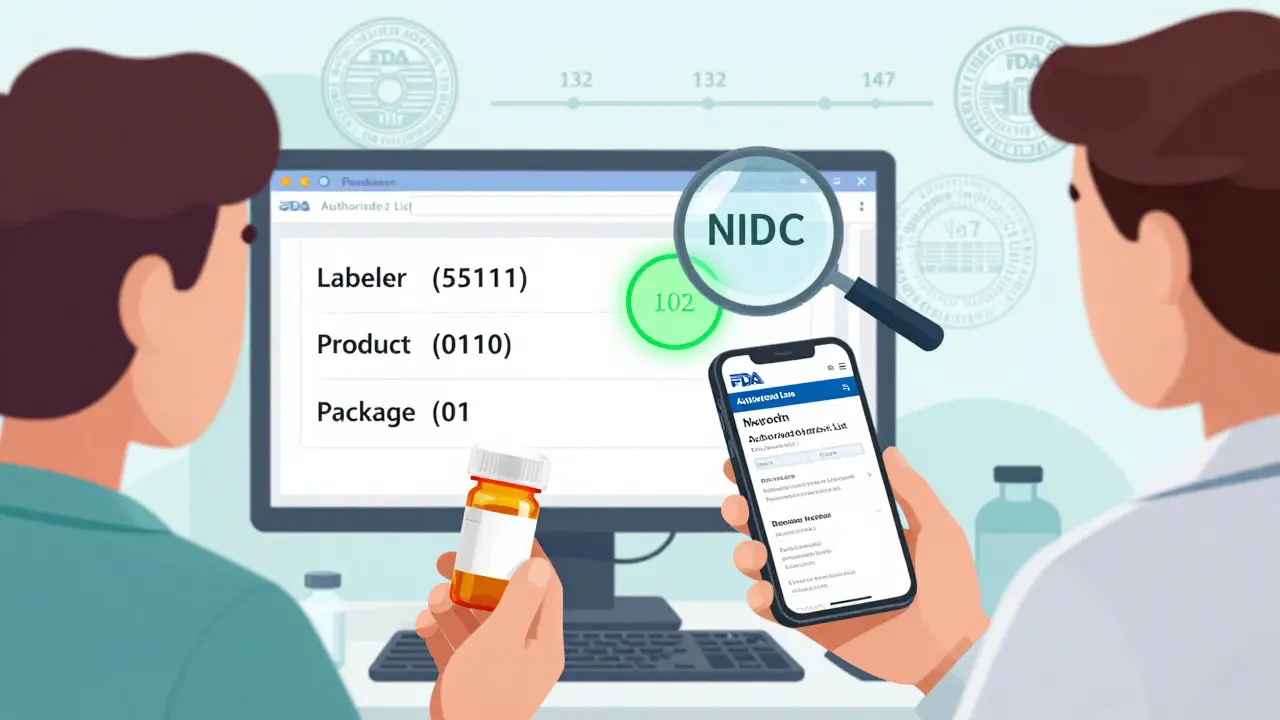
Every drug has a National Drug Code (NDC)-a 10-digit number that breaks down into three parts: labeler code, product code, and package code. For authorized generics, here’s what you need to know:- Labeler code (first part) = different from the brand
- Product code (second part) = identical to the brand
- Package code (third part) = identical to the brand
Why This Matters for You
Authorized generics cost less than the brand-usually 15-25% cheaper-but they’re often more expensive than regular generics. Why? Because they’re made by the same company, so they don’t have the same cost-cutting pressures. But here’s the catch: they’re exactly the same as the brand. No variations in absorption. No differences in how your body reacts. If you’ve ever switched to a regular generic and noticed your symptoms changed-even slightly-authorized generics might be the solution. A 2022 Medscape survey found that 92.6% of patients reported no difference in effectiveness between authorized generics and their brand-name versions. That’s higher than the rate for traditional generics, where minor formulation differences can sometimes cause issues. Pharmacists see this every day. A 2022 survey by the National Community Pharmacists Association found that 63% of pharmacists spent over two minutes per prescription verifying whether a drug was an authorized generic. Why? Because the packaging can be nearly identical to the brand. One pharmacist on Reddit described picking up a bottle of an authorized generic for a patient and thinking, “This looks exactly like the brand-I better double-check the NDC.”What to Do If You’re Unsure
Don’t guess. Don’t assume. Here’s what to do:- Look at the NDC number on the bottle. Write it down.
- Go to the FDA’s Quarterly Authorized Generic List (updated every January, April, July, and October). Search by drug name or NDC.
- If the NDC matches a listing, it’s an authorized generic.
- If it doesn’t show up, it’s a regular generic or the brand.
Common Mistakes and Confusions
Many people mix up authorized generics with “authorized brand” products-those are regular generics that look like the brand because of trademark laws. The FDA doesn’t allow generics to copy the exact appearance of the brand, so some manufacturers make them close but not identical. That’s not an authorized generic. That’s a regular generic with a similar look. Another mistake? Thinking that if the pill looks the same, it must be the brand. Pills can look identical even if they’re not. Authorized generics often have the same imprint code, color, and shape as the brand. That’s intentional. They’re the same drug. And don’t be fooled by the word “generic” on the label. That doesn’t mean it’s an authorized generic. It just means it’s not the brand. Only the NDC and labeler code can confirm it.What’s Changing in 2025?
The FDA plans to integrate authorized generic identifiers directly into the National Drug Code Directory by mid-2024. That means pharmacists will be able to see “Authorized Generic” as a field in their systems, not just as a note. This should cut down on errors, which currently cause about 8.3% of generic drug dispensing mistakes, according to the 2022 ISMP National Medication Errors Report. Right now, there are 147 authorized generics listed by the FDA as of October 2023. That’s up from 132 in 2022. More brands are using this strategy to stay competitive during the 180-day exclusivity window granted to the first generic company to file an application. It’s a legal, FDA-approved way to keep prices lower without sacrificing quality.Bottom Line: Know Your NDC
You don’t need to be a pharmacist to tell the difference. Just learn to read the NDC. If the last six digits match your brand-name drug but the first part is different, you’re holding an authorized generic. It’s the same drug. It’s cheaper. And it’s perfectly safe. If you’ve had issues switching to generics before, ask your pharmacist: “Is this an authorized generic?” Most will know. If they don’t, ask them to check the FDA list. It takes 30 seconds. And it could mean the difference between a medication that works-and one that doesn’t.Are authorized generics the same as the brand-name drug?
Yes. Authorized generics are made by the same company, in the same factory, with the same active and inactive ingredients as the brand-name drug. The only differences are the packaging, labeling, and distributor name. They are not bioequivalent-they are identical.
How do I know if my prescription is an authorized generic?
Check the National Drug Code (NDC) on the bottle. Compare it to the FDA’s Quarterly Authorized Generic List. If the product and package codes match the brand-name version but the labeler code is different, it’s an authorized generic. You can also look for the distributor name-often a subsidiary like Greenstone or Sandoz-instead of the brand name.
Why does the pill look different from the brand?
U.S. trademark laws prevent generics from looking exactly like brand-name drugs. Even authorized generics may have slight differences in color, shape, or imprint to avoid legal issues. But the active ingredient, dosage, and effect are unchanged. The FDA allows these minor cosmetic differences as long as the drug inside is identical.
Are authorized generics cheaper than regular generics?
Usually not. Authorized generics typically cost 5-15% more than regular generics because they’re made by the brand-name company. But they’re still 15-25% cheaper than the brand. They’re a middle-ground option: same quality as the brand, slightly higher price than other generics.
Can I trust an authorized generic if the label says “Distributed by” instead of “Manufactured by”?
Yes. The FDA requires authorized generics to list the distributor, not the manufacturer, on the label. The actual manufacturing is done in the same facility as the brand. The “Distributed by” label is a legal requirement, not a sign of lower quality. The FDA inspects these facilities the same way they inspect brand-name plants.
Why don’t authorized generics show up in the FDA’s Orange Book?
The Orange Book lists drugs approved under ANDAs-regular generics. Authorized generics are marketed under the original New Drug Application (NDA), so they’re not listed there. To find them, you must use the FDA’s separate Authorized Generic Drug List, which is updated quarterly.
Greg Quinn
December 29, 2025 AT 05:48Been using generics for years and never knew about authorized ones. This changed how I look at my prescriptions. I always assumed ‘generic’ meant ‘different’-turns out I was wrong. Now I check the NDC like it’s a treasure map.
Thanks for the clarity.
Nisha Marwaha
December 31, 2025 AT 04:49The pharmacoeconomic implications of authorized generics are profound-particularly in the context of therapeutic substitution paradigms. The NDA-based regulatory pathway ensures bioequivalence by identity, not inference, which circumvents the variability inherent in ANDA submissions. This is a critical distinction for clinical decision-making, especially in polypharmacy cohorts where pharmacokinetic drift can precipitate adverse outcomes.
Always verify labeler codes against the FDA’s quarterly list-it’s not just prudent, it’s standard of care.
Paige Shipe
December 31, 2025 AT 18:42So let me get this straight-you’re telling me the pills are literally the same, but the label says ‘Distributed by Greenstone’? That’s it? No magic? No secret formula? I paid $120 for my brand-name pills for years because I thought the generic was ‘inferior.’ I feel stupid.
And now I’m mad I didn’t know this sooner.
Tamar Dunlop
January 1, 2026 AT 02:02This is such an important piece of information-not just for health, but for dignity. So many people are made to feel like they’re settling when they take generics, when in reality, they’re receiving the exact same medicine. I’ve seen elderly patients cry because they thought switching meant their doctor didn’t care anymore.
Thank you for honoring their experience and giving them back their power to choose wisely.
David Chase
January 2, 2026 AT 07:12AMERICA IS GETTING ROBBED BY PHARMA AND YOU JUST GAVE US THE KEY TO THE VAULT!!!
STOP PAYING BRAND PRICES FOR THE EXACT SAME PILLS!!!
SHARE THIS WITH EVERYONE YOU KNOW!!!
IF YOU’RE STILL USING REGULAR GENERICS, YOU’RE A FOOL!!! 💪🇺🇸💊
Kevin Lopez
January 3, 2026 AT 20:58NDC product and package codes must match. Labeler code differs. That’s the algorithm. No fluff. No theory. Just data. If you’re not checking this, you’re not doing your job-or your due diligence as a patient.
Duncan Careless
January 3, 2026 AT 23:30Interesting read. I’ve noticed more ‘Distributed by’ labels lately but never connected the dots. I’ll start checking the NDC from now on-especially for my dad’s blood pressure med. He’s had a few odd reactions to generics, and this might explain why.
Appreciate the practical guidance.
Russell Thomas
January 5, 2026 AT 09:21Oh wow, so the brand makes the ‘generic’ too? That’s just clever. They get to charge almost brand prices but call it a ‘generic’ to look good.
And you’re telling me we’re supposed to be grateful for this? What a scam. They’re not saving us money-they’re just making the same pill with a new label and calling it ‘ethical.’
Pass.
Joe Kwon
January 5, 2026 AT 21:16This is such a helpful breakdown. I work in a pharmacy and we get asked this all the time. The NDC trick is gold-so simple, yet so few patients know it.
Also, the part about the FDA’s list being updated quarterly? Lifesaver. I’ve started printing that list and keeping it behind the counter. Patients are always shocked when they see their med is an authorized generic.
Thanks for making this so accessible. 🙏
Himanshu Singh
January 7, 2026 AT 03:58Wow i never knew this!! i always think generic = bad but now i check ndc code!! thanks man!!
Jasmine Yule
January 8, 2026 AT 22:48I’ve been telling my friends this for months. My sister was convinced her new generic made her dizzy-turned out it was an authorized generic. Same pill. She just thought the packaging looked ‘cheap.’
People need to stop judging medicine by its cover. 🙄
Lisa Dore
January 8, 2026 AT 23:34This is exactly the kind of info that should be in every pharmacy waiting room. I’ve had patients cry because they thought their insurance forced them onto a ‘lesser’ drug. This clears that up so beautifully.
Thank you for writing this. I’m sharing it with my support group.
Sharleen Luciano
January 10, 2026 AT 08:06How quaint. You’re celebrating a pharmaceutical company’s clever marketing ploy as if it’s a public service. The fact that the brand manufacturer produces the ‘generic’ doesn’t make it noble-it makes it a loophole. You’re just being sold the same product under a different name so they can milk the market longer.
Don’t confuse corporate strategy with altruism.
Jim Rice
January 11, 2026 AT 12:47So you’re telling me the FDA lets a company make a generic version of their own drug, but only if they change the label? That’s not innovation. That’s legal gymnastics.
And you want us to trust this? The same companies that got us the opioid crisis are now our ‘trusted’ generic providers?
Yeah, no thanks.
Henriette Barrows
January 11, 2026 AT 15:19Wait, so if the NDC matches except the first part, it’s literally the same pill? Like, same factory, same machine, same batch?
That’s wild. I just switched my anxiety med and felt weird for a week-I thought it was the generic. Turns out it was an authorized one. Maybe I just needed time to adjust?
Anyway, thank you. I feel less paranoid now. 😌