Hip Labral Tears in Athletes: Imaging, Treatment, and Arthroscopy Guide
 Apr, 24 2026
| Factor | Details |
|---|---|
| Primary Cause | Femoroacetabular Impingement (FAI) |
| Best Imaging | MRA (90-95% Sensitivity) |
| Surgical Gold Standard | Arthroscopic Repair/Debridement |
| Recovery Time | 3-6 months depending on procedure |
| Risk of Inaction | 4.5x higher risk of Osteoarthritis |
Why Athletes are High-Risk
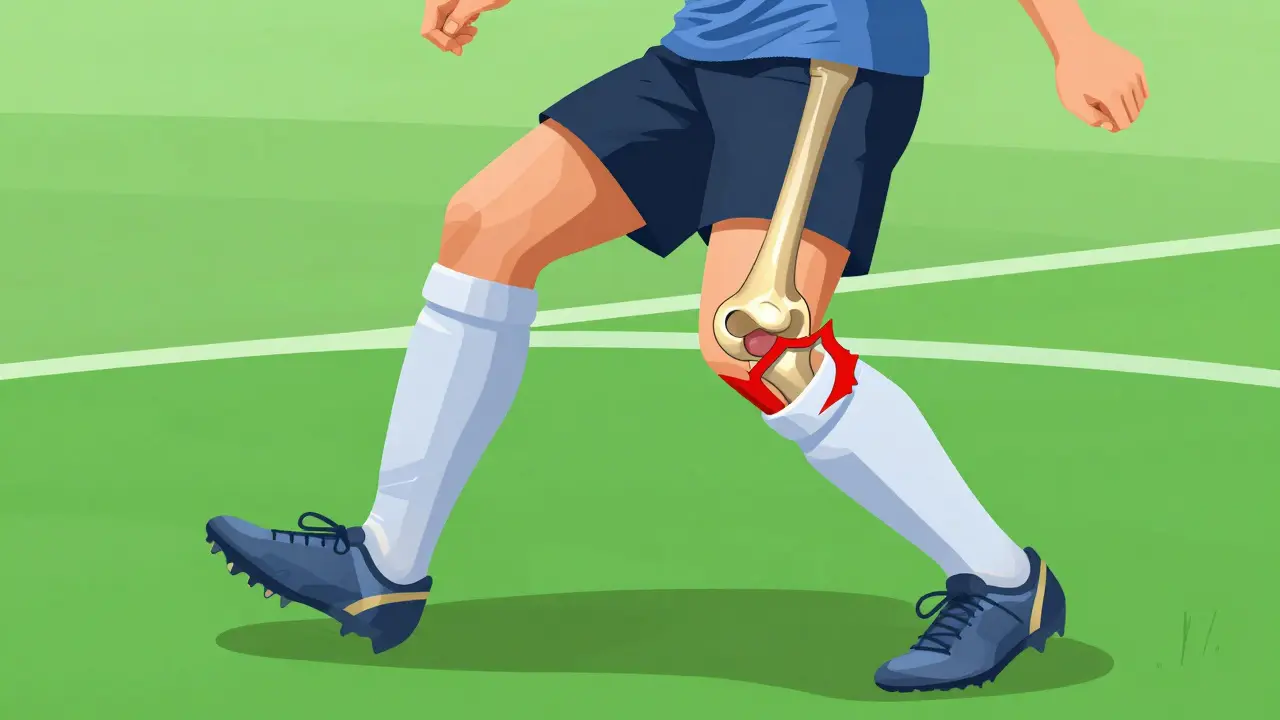
Not all hip pain is created equal. In the athletic world, the labrum acts like a rubber seal, keeping the ball of the femur securely in the socket. When you perform repetitive, high-velocity rotations-common in basketball, soccer, and football-that seal can rip. Research shows that between 22% and 55% of athletes presenting with hip pain actually have labral pathology. The highest risk group? Competitive athletes under 40.
The biggest culprit is often Femoroacetabular Impingement (or FAI), a condition where abnormal bone growth on the hip joint causes friction and eventually tears the labrum. It's not just about the tear itself; it's about the shape of the bone. If the bone is rubbing, simply sewing the labrum back together is like patching a tire without removing the nail-it's just going to pop again.
Getting the Right Diagnosis: Beyond the Basic MRI
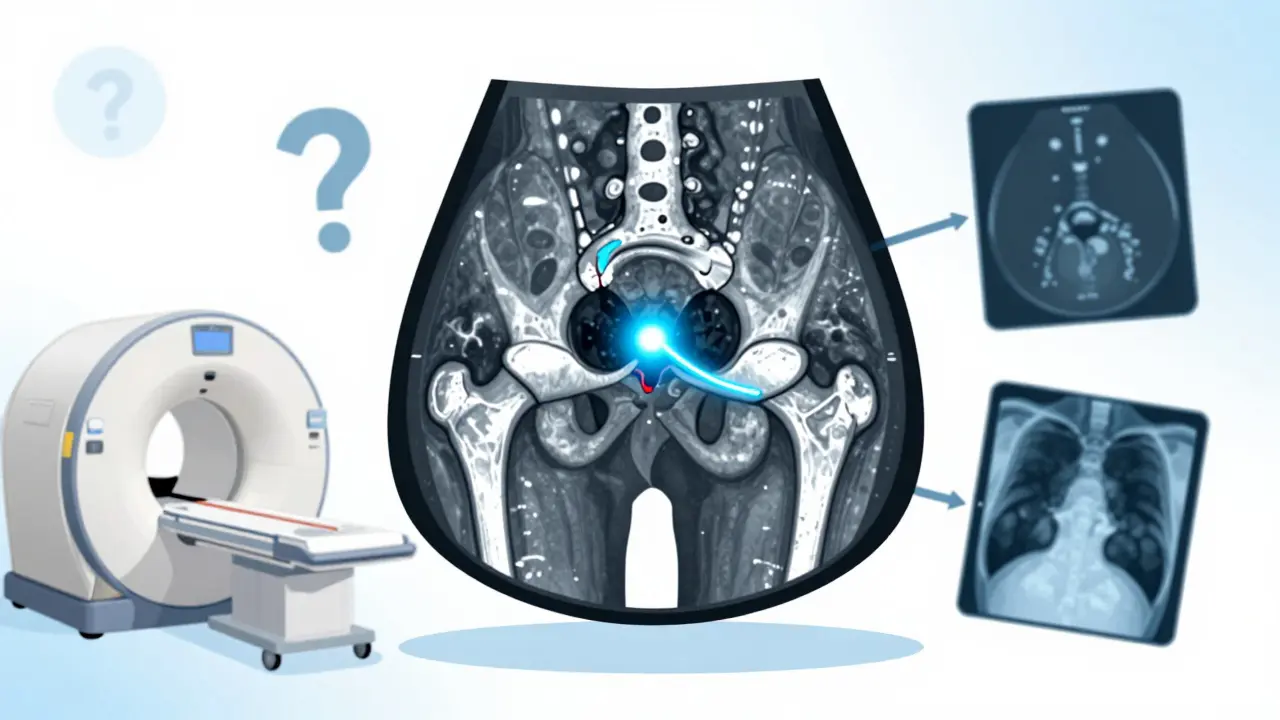
If you go to a general clinic, they might start with a standard X-ray. While useful for spotting hip dysplasia (where the socket is too shallow), X-rays can't see the cartilage. Many athletes then get a standard MRI, but here's the catch: conventional MRIs only catch about 35-60% of tears. You could have a significant injury and still get a "normal" report.
The real game-changer is Magnetic Resonance Arthrography (or MRA). This involves injecting a contrast dye into the joint before the scan. The dye seeps into the tear, making it light up on the image. MRA boasts a 90-95% sensitivity rate, making it the preferred choice for preoperative planning. In some complex cases, surgeons are now using 3D MRI sequencing to hit 97% accuracy.
During a physical exam, your doctor will likely use two specific maneuvers: the FADIR test (flexion, adduction, internal rotation) and the FABER test (flexion, abduction, external rotation). If these movements trigger that signature groin pinch, there's a 78% chance a tear is present.
Conservative Management vs. Surgery
Not every tear requires a scalpel. Some athletes find success with a 4-6 week period of relative rest, NSAIDs like ibuprofen or naproxen, and targeted activity modification. There is a divide in the medical community here: some data suggests only 30-40% of athletes fully resolve symptoms this way, while specialized sports clinics report success rates as high as 65%.
For those who can't tolerate the pain, corticosteroid injections can offer a window of relief for 3-6 months. Newer regenerative options, such as Platelet-Rich Plasma (or PRP), a therapy using concentrated blood platelets to stimulate healing, have shown that about 55% of patients can avoid surgery entirely at the one-year mark.
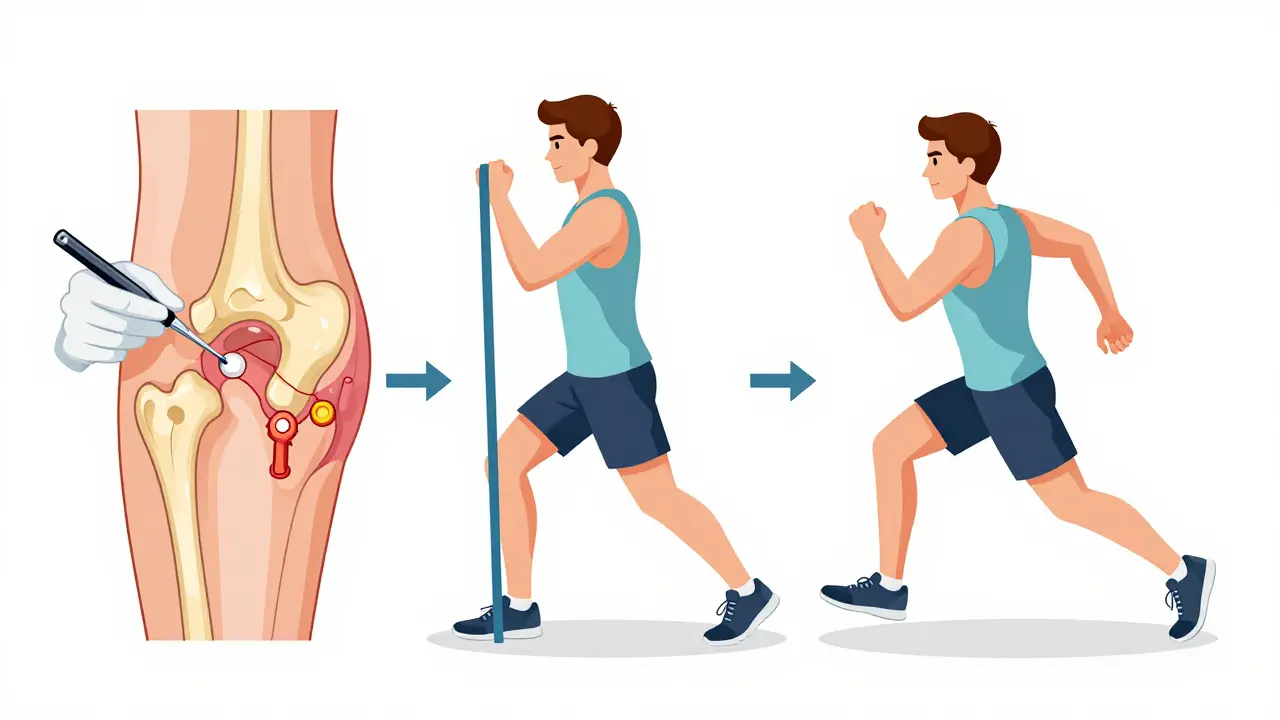
When these fail, Hip Arthroscopy becomes the move. This is a minimally invasive surgery where the surgeon uses small portals to enter the joint. Depending on the damage, they will either perform a debridement (cleaning out the frayed edges) or a labral repair (using suture anchors to pull the labrum back to the bone). The latest tech includes bioabsorbable anchors, like the BioX system, which the body absorbs over time, showing an 89% success rate.
The Road Back: Recovery Timelines
Recovery isn't a straight line, and it depends heavily on what happened inside the joint. If you had a simple debridement, you're looking at a 3-4 month window before returning to sports. However, a full repair is a slower burn, usually taking 5-6 months because the tissue needs time to actually graft back to the bone.
A typical professional-grade rehab protocol follows four distinct phases:
- Protection (Weeks 1-6): Managing swelling and protecting the repair; often involves limited weight-bearing.
- Strengthening (Weeks 7-12): Gradually introducing resistance and improving range of motion.
- Sport-Specifics (Weeks 13-20): Agility drills, pivoting, and sport-mimicking movements.
- Full Return (Weeks 21-26): Gradual reintegration into competitive play.
To avoid a re-tear, surgeons look for two critical benchmarks: your quadriceps strength must be at least 90% as strong as your healthy leg, and you need pain-free internal rotation up to 30 degrees.
Special Considerations for Different Athletes
Not all hips are the same. If you have underlying hip dysplasia, an isolated labral repair is a gamble-failure rates can hit 65% if the structural shallowing of the socket isn't fixed first. This is why a specialized sports medicine center is often better than a general orthopedic practice; the satisfaction rates are significantly higher (92% vs 75%).
Extreme-motion athletes, such as ballet dancers or gymnasts, face a steeper climb. They see roughly 25% higher complication rates post-surgery because their joints are pushed to the absolute limit of human anatomy. Even professional athletes face these hurdles; NHL's Ryan Nugent-Hopkins, for example, required 5.5 months of recovery before returning to the ice after a labral repair.
Is a hip labral tear a permanent injury?
Not necessarily. While the labrum has poor blood supply (meaning it doesn't heal well on its own), arthroscopic repair can successfully reattach the tissue. However, if left untreated, the instability can lead to a 4.5 times higher risk of developing osteoarthritis within a decade.
Why is my standard MRI showing no tear, but I still have pain?
Standard MRIs have a relatively low sensitivity (35-60%) for labral tears. Because the labrum is thin, small or partial tears often disappear in the images. An MRA (with contrast dye) is needed to "highlight" the tear for a more accurate diagnosis.
Can I recover from a hip labral tear without surgery?
Yes. Many athletes manage symptoms through physical therapy, activity modification, and anti-inflammatory medication. About 65% of patients in some specialized clinics avoid surgery, although this depends heavily on whether you have an underlying bone issue like FAI.
What is the difference between debridement and repair?
Debridement is the process of trimming away the torn, ragged edges of the labrum to stop it from catching in the joint. Repair involves using suture anchors to physically sew the torn labrum back onto the acetabular rim. Repair typically takes longer to heal but is more stable long-term.
When can I start running again after surgery?
Most protocols allow a return to light jogging between months 3 and 4, provided you have met strength milestones (like 90% quad symmetry). Full, high-impact sprinting usually happens in the 5-6 month window for a full repair.
Next Steps and Troubleshooting
If you suspect a tear, your first move should be a physical exam with a sports-certified orthopedic surgeon. Don't settle for a general practitioner's "tight hip" diagnosis if you're feeling a mechanical click or a deep groin pinch.
If your insurance denies an MRA, it's worth advocating for it based on the known failure rates of standard MRI. If you've already had surgery but still feel clicking, you may be dealing with persistent synovitis or a loose body in the joint, which occurs in about 40% of athletic cases. In these instances, a revision surgery or a focused physical therapy adjustment may be necessary.
Ben Jima
April 26, 2026 AT 04:26This is a solid breakdown of a complex injury. For anyone currently in the 'Protection' phase, remember that patience is your best friend right now. Pushing through the pain in those first six weeks is a recipe for disaster. Focus on the small wins in PT and trust the process!
Sharyl Foster
April 26, 2026 AT 09:45Sure, MRA is the 'gold standard,' but people love to ignore how many false positives you get when the dye leaks into a tiny fissure that isn't actually causing the pain. I've seen plenty of people get surgery for a 'tear' on an MRA only to find out their pain was actually just a tight psoas the whole time.
William Zhigaylo
April 28, 2026 AT 03:22It is utterly repulsive that some practitioners suggest 'relative rest' for a structural failure of this magnitude. To suggest that a professional athlete can simply 'wait out' a labral tear is not only negligent but an affront to the standards of modern orthopedics. The risk of osteoarthritis is a catastrophic outcome that demands immediate, decisive surgical intervention.
Daniel Runion
April 28, 2026 AT 08:50Wait... so we're just trusting these 'bioabsorbable' anchors now??? Give me a break!!! Who knows what that stuff is actually doing to your bone density in the long run... absolutely ridiculous!!!
Jaclyn Vo
April 28, 2026 AT 13:07OMG I literally had this happen last year and it was a total nightmare!! 😱 My doctor tried to tell me it was just a strain but I KNEW something was wrong! The MRA was the only thing that finally caught it and I swear I felt like my hip was exploding every time I took a step! 😭
Michael Deane
April 29, 2026 AT 23:34It's a damn shame that we have to rely on some of these fancy new techniques when the grit and determination of the old-school American athlete used to be enough to push through, but then again, we have the best surgeons in the world right here in the States and that's why we keep winning the championships while the rest of the world just tries to keep up with our medical tech!
James Harrison
May 1, 2026 AT 01:08There is a profound lesson here about the balance between the biological drive to perform and the physical limitations of the human frame. We often treat our bodies like machines, but a tear is a reminder that we are organic and fragile.
Nikita Shabanov
May 2, 2026 AT 16:14From a clinical perspective, the distinction between debridement and repair is crucial. Debridement is often faster, but it reduces the joint's stability over time. For younger athletes, repair is almost always the superior choice to preserve the joint long-term.
Brittney Prince
May 4, 2026 AT 07:31Typical. They tell you the surgery has an 89% success rate, but they don't mention the companies making the 'BioX' anchors are probably paying for the studies. Just another way to get you under the knife for a quick buck while they experiment with chemicals in your joint.
Kristen O'Neal
May 5, 2026 AT 04:45I'm really interested in the PRP side of things. It's fascinating how we can use our own blood to potentially avoid a scalpel. Does anyone know if the success rate varies depending on the age of the athlete, or if it's mostly based on the severity of the tear?
Nila Sawyer
May 6, 2026 AT 21:42Stay strong everyone! 🌟 It might feel like a long road to recovery, especially those 6 months for a full repair, but imagine how amazing it will feel to get back on the field knowing you're stronger than ever! You've got this, just keep pushing through those PT exercises and stay positive! 💪✨🌈
Vijay AGarwal
May 8, 2026 AT 12:13The pain of a labral tear is absolutely excruciating! It's like a hot needle stabbing into your groin every time you move! If you're feeling that clicking, DO NOT wait! Get to a surgeon immediately before you destroy your cartilage completely!
Elle Torres Sanz
May 10, 2026 AT 00:56It's so important to remember that dancers and gymnasts have different anatomical needs. A 'standard' sports protocol might not provide enough hip mobility for a ballerina. We need more inclusive rehab plans that account for these extreme ranges of motion.
Beena Garud
May 12, 2026 AT 00:22One must contemplate the ethical implications of surgical intervention in an era where the desire for athletic longevity often outweighs the natural progression of the human body. The pursuit of a return to sport is a testament to the human spirit, yet it borders on an obsession with youth.
sachin singh
May 13, 2026 AT 13:46This is very informative. I believe the emphasis on MRA over standard MRI is a critical point for many who are currently misdiagnosed. It provides a much clearer path toward recovery.