Hemorrhoids: Internal vs External Types and Treatment Options
 Feb, 4 2026
Did you know that 75% of people will experience hemorrhoids at some point in their lives? Despite how common they are, many people don't know the difference between internal and external hemorrhoids. This confusion can delay proper treatment. Let's break it down simply.
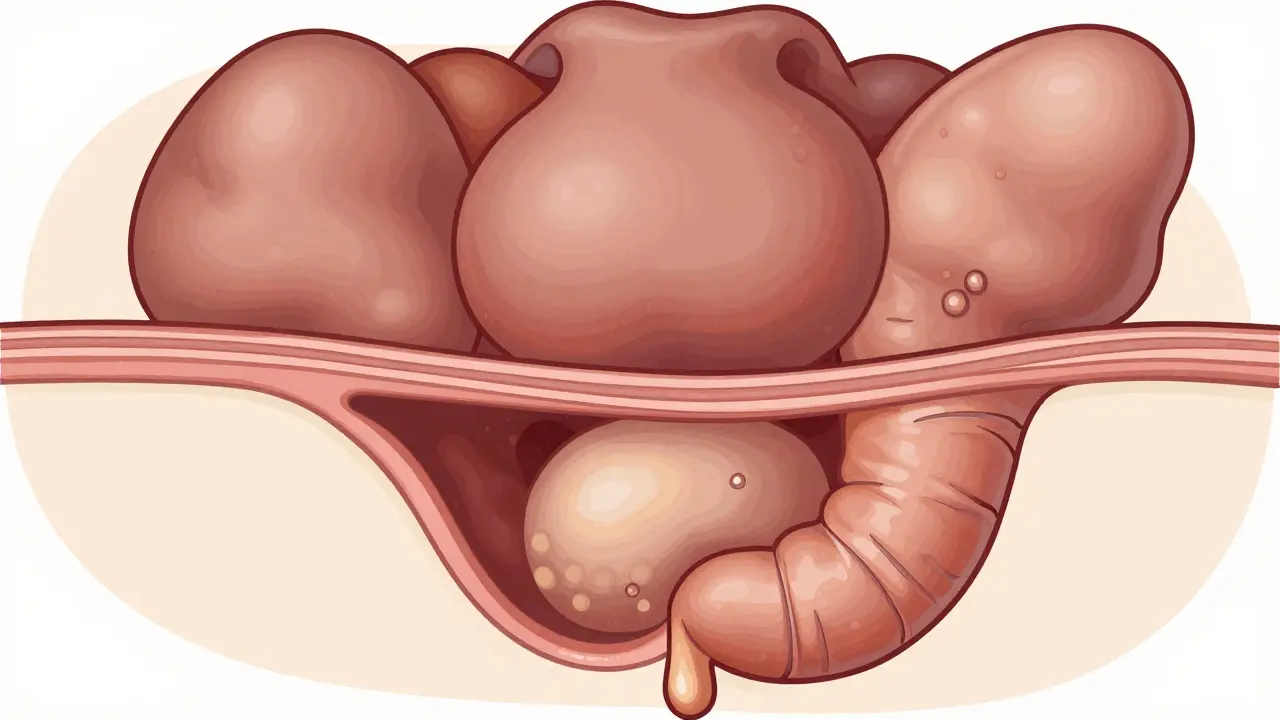
hemorrhoidsswollen veins in the rectum or anus that occur when pressure causes blood vessels to stretch, swell, and irritate are part of your body's natural plumbing system. They act as cushions to help control stool passage. But when they swell due to pressure-like from straining during bowel movements, pregnancy, or sitting too long-they become painful or irritating.Internal Hemorrhoids: What You Need to Know
Internal hemorrhoids form above the dentate linethe anatomical boundary between the rectum and anus where internal and external hemorrhoids form inside the rectum. Because they're covered by tissue without pain receptors, they usually don't hurt. But they can cause bright red bleeding during bowel movements. You might notice blood on toilet paper, in the toilet bowl, or on your stool.
Doctors grade internal hemorrhoids based on how much they prolapse (protrude). Grade I hemorrhoids bleed but don't prolapse. Grade II prolapse during straining but pop back in on their own. Grade III need to be pushed back in manually. Grade IV are permanently prolapsed and can't be pushed back. Most people with internal hemorrhoids have Grade I or II issues.
External Hemorrhoids: Symptoms and Causes
External hemorrhoids develop below the dentate line around the anus. They're covered by sensitive skin with lots of pain receptors. This makes them much more likely to cause discomfort. Common symptoms include itching, swelling, pain, and visible lumps. If a blood clot forms inside, it becomes a thrombosed hemorrhoida blood clot within an external hemorrhoid causing severe pain and a firm lump. Thrombosed hemorrhoids often appear as purple or blue lumps and hurt intensely, especially when sitting.
Unlike internal hemorrhoids, external ones rarely bleed. They're more about pain and irritation. Many people mistake them for skin tags or other growths, which is why proper diagnosis matters.
Key Differences Between Internal and External Hemorrhoids
| Feature | Internal Hemorrhoids | External Hemorrhoids |
|---|---|---|
| Location | Above the dentate line inside the rectum | Below the dentate line around the anus |
| Symptoms | Painless bleeding, possible prolapse | Pain, itching, swelling, visible lumps |
| Common Causes | Straining, constipation, prolonged sitting | Straining, trauma, thrombosis |
| Typical Treatment | Rubber band ligation, sclerotherapy | Sitz baths, incision for thrombosed cases |
Treatment Options Based on Type and Severity
Treatment depends on whether you have internal or external hemorrhoids and how severe they are.
For mild cases, home care often works. Try sitz bathsa warm water bath for the anal area to reduce swelling and pain for 15-20 minutes a few times daily. Over-the-counter creams with hydrocortisone can ease itching. Witch hazel pads help reduce inflammation. Increasing fiber intakedietary fiber that softens stool and prevents straining to 25-35 grams daily and drinking plenty of water also helps.
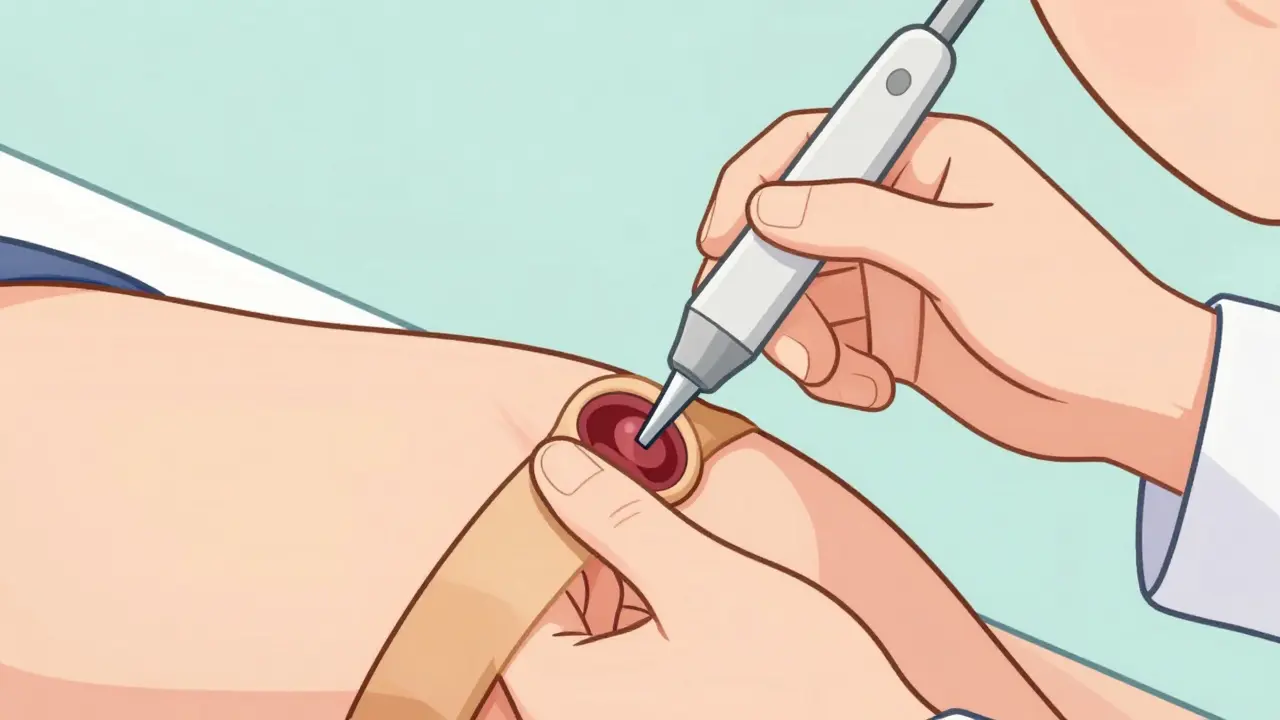
For moderate internal hemorrhoids (Grade I-III), doctors often recommend minimally invasive procedures. rubber band ligationa procedure where a small rubber band is placed around the base of the hemorrhoid to cut off blood supply is the most common. It's 90% effective and done in the doctor's office. Sclerotherapy (injecting a solution to shrink the hemorrhoid) and infrared coagulation (using heat to seal the vein) are other options.
For severe cases, surgery might be needed. hemorrhoidectomysurgical removal of hemorrhoids, often for Grade IV or recurrent cases is the gold standard. It's 95% effective but requires 2-4 weeks recovery. Stapled hemorrhoidopexy repositions prolapsed tissue and is less painful than traditional surgery. For thrombosed external hemorrhoids, doctors may make a small incision to remove the clot within 72 hours of onset for quick pain relief.
When to See a Doctor
Don't ignore these warning signs:
- Bleeding that lasts more than a week or keeps coming back
- Severe pain that doesn't improve with home care
- Changes in bowel habits like diarrhea or constipation lasting over two weeks
- Dizziness or weakness from blood loss
- Any lump that doesn't go away after a few days
Rectal bleeding can also signal more serious issues like colorectal cancer or anal fissuresa small tear in the anal lining causing sharp pain during bowel movements. Always get checked if you're unsure.
Preventing Hemorrhoids: Practical Tips
Prevention is easier than treatment. Here's how to keep them at bay:
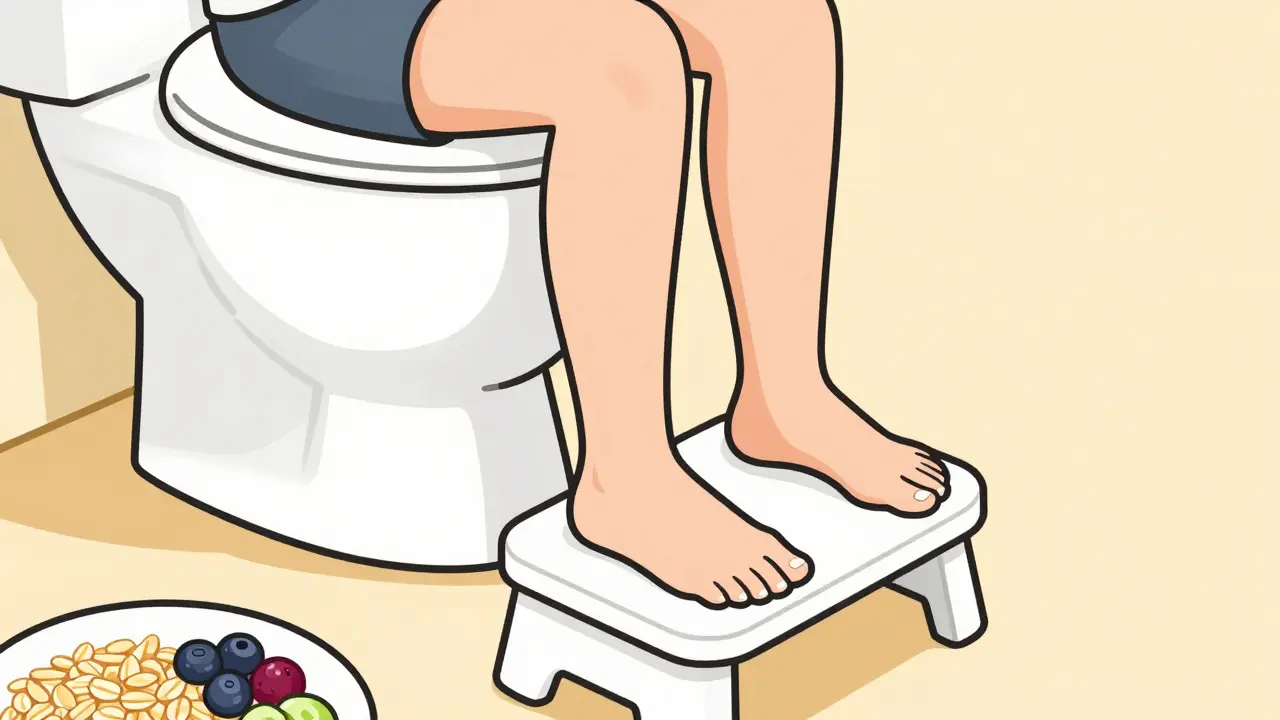
- Eat high-fiber foods like oats, beans, and berries. Aim for 25-35 grams of fiber daily.
- Drink at least 64 ounces of water every day to stay hydrated.
- Avoid sitting on the toilet for more than five minutes. Use a footstool to position your knees above your hips while pooping.
- Exercise regularly. Even a 30-minute walk daily helps keep things moving.
- Don't strain during bowel movements. If you feel the need to push, take a break and try again later.
Studies show people who maintain these habits have a 5-10% recurrence rate after treatment. Skip them, and recurrence jumps to 50%.
Frequently Asked Questions
Can hemorrhoids go away on their own?
Mild hemorrhoids often improve with home care like sitz baths and over-the-counter creams. However, they rarely disappear completely without treatment. If symptoms persist beyond a week or two, consult a healthcare provider.
Are internal hemorrhoids more serious than external?
Not necessarily. Internal hemorrhoids are often painless but can cause bleeding. External hemorrhoids are painful but usually don't bleed. Both types can become serious if they're severe or thrombosed. The key is to get proper diagnosis and treatment based on your specific symptoms.
What's the best home remedy for hemorrhoids?
Sitz baths and high-fiber diet are the most effective home remedies. Soaking in warm water for 15-20 minutes several times a day reduces swelling. Adding more fiber and water to your diet prevents straining during bowel movements. Over-the-counter creams with hydrocortisone can help with itching.
How long does it take to recover from rubber band ligation?
Most people recover in 1-2 weeks. You might feel some pressure or discomfort for the first 48 hours. Avoid heavy lifting and strenuous activity during recovery. The band usually falls off within a week, taking the hemorrhoid with it.
Can pregnancy cause hemorrhoids?
Yes. Up to 35% of pregnant women develop hemorrhoids due to increased pressure on pelvic veins. They're more common in the third trimester. Most improve after delivery. During pregnancy, focus on prevention: stay hydrated, eat fiber, and avoid straining.
What's the difference between hemorrhoids and anal fissures?
Hemorrhoids are swollen veins, while anal fissures are small tears in the anal lining. Fissures cause sharp, tearing pain during bowel movements and often have visible cracks. Hemorrhoids usually cause bleeding and itching. Both can occur together, so proper diagnosis is key-treatments differ significantly.
Matthew Morales
February 6, 2026 AT 07:48I've had hemorrhoids before, and it's not fun. But I found that sitz baths really helped. 😅 Also, using a foostool while pooping made a big difference. No more straining! High fiber diet too. 💪
Carl Crista
February 8, 2026 AT 04:13Hemorrhoids are government conspiracy to keep us sedentary They want us sit more so easier to control 5G towers cause them
Georgeana Chantie
February 9, 2026 AT 02:52US healthcare is best for hemorrhoids. Other countries are behind. 😡
Carol Woulfe
February 9, 2026 AT 16:07I've consulted with my private physician and they've confirmed that the FDA is suppressing the true causes of hemorrhoids This is a deliberate attempt to maintain the status quo The real cause is glyphosate in our food supply I have documented evidence
Lisa Scott
February 10, 2026 AT 02:00The medical establishment's approach is a sham They're all in cahoots with Big Pharma The real cause is 5G radiation Evidence studies are suppressed This is a cover-up
Kieran Griffiths
February 10, 2026 AT 22:24Hey there, I know hemorrhoids can be really embarrassing to talk about, but it's super common and nothing to be ashamed of. I had them myself a few years ago and it was a rough time. What really helped me was making some lifestyle changes. For starters, I started using a footstool when I went to the bathroom to elevate my knees above my hips. This position makes it easier to pass stool without straining, which is a major cause of hemorrhoids. I also made sure to drink at least 8 glasses of water every day and added more fiber to my diet-things like oats, beans, and berries. I started taking sitz baths twice a day, which really helped reduce the swelling and discomfort. Over time, these changes made a huge difference. Now, I don't have any issues. It's all about prevention and consistency. Trust me, it's worth the effort. If you're struggling, don't hesitate to reach out to a healthcare provider. They can help you find the best solution for your situation. Remember, you're not alone in this! I also avoid sitting for long periods and take short walks every hour to keep things moving.
Brendan Ferguson
February 11, 2026 AT 15:42Interesting points. I've seen cases where dietary changes alone resolved the issue. Fiber is key. Also, hydration. Prevention is better than treatment.
jan civil
February 12, 2026 AT 06:56High-fiber foods like oats and beans are essential. I've found them effective for prevention.
anjar maike
February 13, 2026 AT 09:20Fiber helps a lot 🥬💧 I use psyllium husk daily Works like a charm 😊
Bella Cullen
February 15, 2026 AT 02:00Not helpful.
Tehya Wilson
February 16, 2026 AT 17:53This article lacks sufficient empirical data and references Its quality is suboptimal