Getting Clarification on Confusing Medication Instructions
 Feb, 28 2026
Ever opened a prescription bottle and stared at the label like it’s written in code? Medication instructions are supposed to keep you safe - but too often, they do the opposite. "Take one by mouth twice daily." Sounds simple, right? But what does "twice daily" really mean? 8 a.m. and 8 p.m.? Or 7 a.m. and 5 p.m.? What if the pill looks different this time? What if your doctor says "as needed," but the bottle says "maximum three per day"? You’re not alone. Nearly 1.5 million people in the U.S. suffer preventable harm each year because they didn’t understand how to take their medicine. And it’s not because they’re careless - it’s because the system is broken.
Why Medication Instructions Are So Confusing
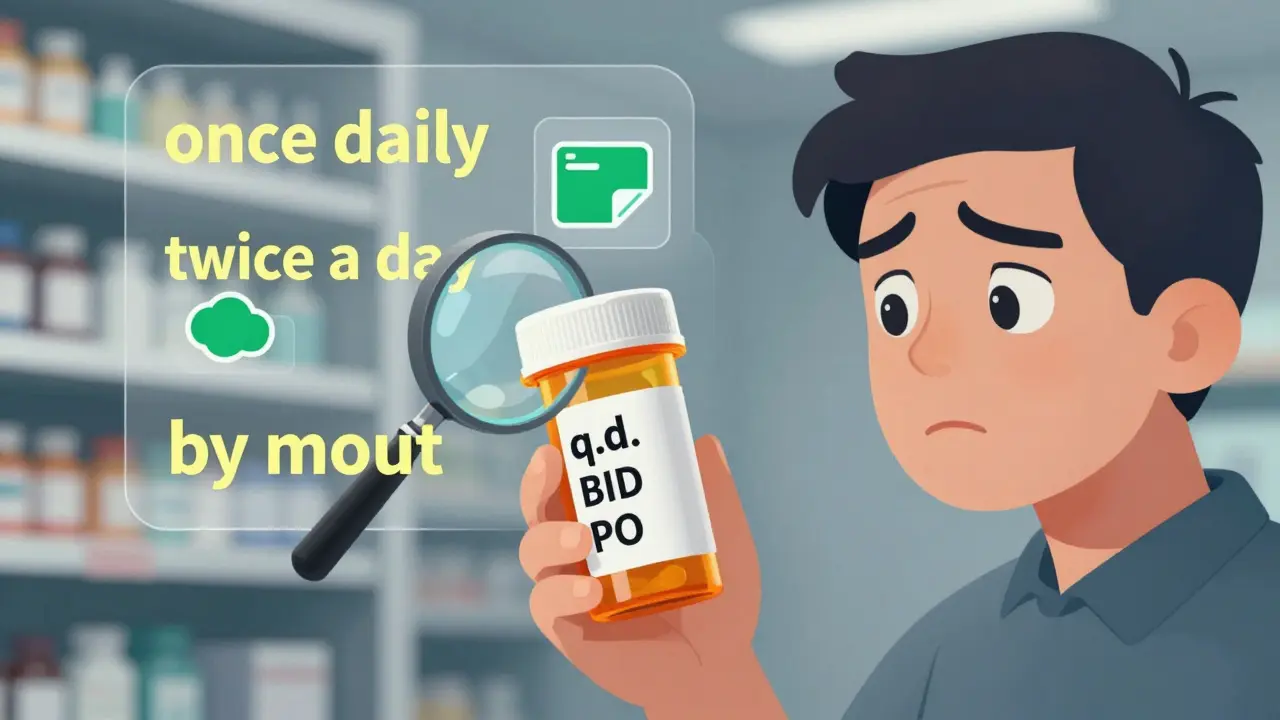
The problem isn’t just bad handwriting anymore. It’s a mix of outdated shorthand, inconsistent labeling between manufacturers, and assumptions that patients already know medical terms. The Institute for Safe Medication Practices (ISMP) has been clear for years: abbreviations like "q.d." (once daily) or "BID" (twice daily) are dangerous. They can be misread as "q.i.d." (four times daily) or confused with "IV" (intravenous) or "IM" (intramuscular). That’s why modern guidelines demand full words: "daily," "twice a day," "every 12 hours." Even worse, two different companies can make the exact same drug - say, a generic version of blood pressure medicine - and give completely different instructions. One might say "take with food," another says "take on an empty stomach." The National Institutes of Health (NIH) found this happens often enough to affect how well the drug works. If you don’t know which version you got, you might be taking it wrong without even realizing it.What the FDA and ISMP Actually Require
The U.S. Food and Drug Administration (FDA) stepped in back in 1998 with a rule: for certain high-risk drugs - like isotretinoin, opioids, or birth control pills - pharmacies must hand you a printed Medication Guide every time you fill the prescription. These guides explain risks, side effects, and exactly how to take the drug. But here’s the catch: only about 200 drugs out of thousands require them. For everything else? You’re on your own. Meanwhile, the ISMP has laid out strict rules for how prescriptions should be written - and they’re not suggestions. Doses must use Arabic numbers (5 mg, not V mg). Never write "d" for "day" in dosing formulas like "mg/kg/d" - it could mean "dose." And never use "q.d." or "QD." Write out "daily." These aren’t just best practices - they’re safety standards. Yet many electronic systems still allow old abbreviations because they’re easier to type.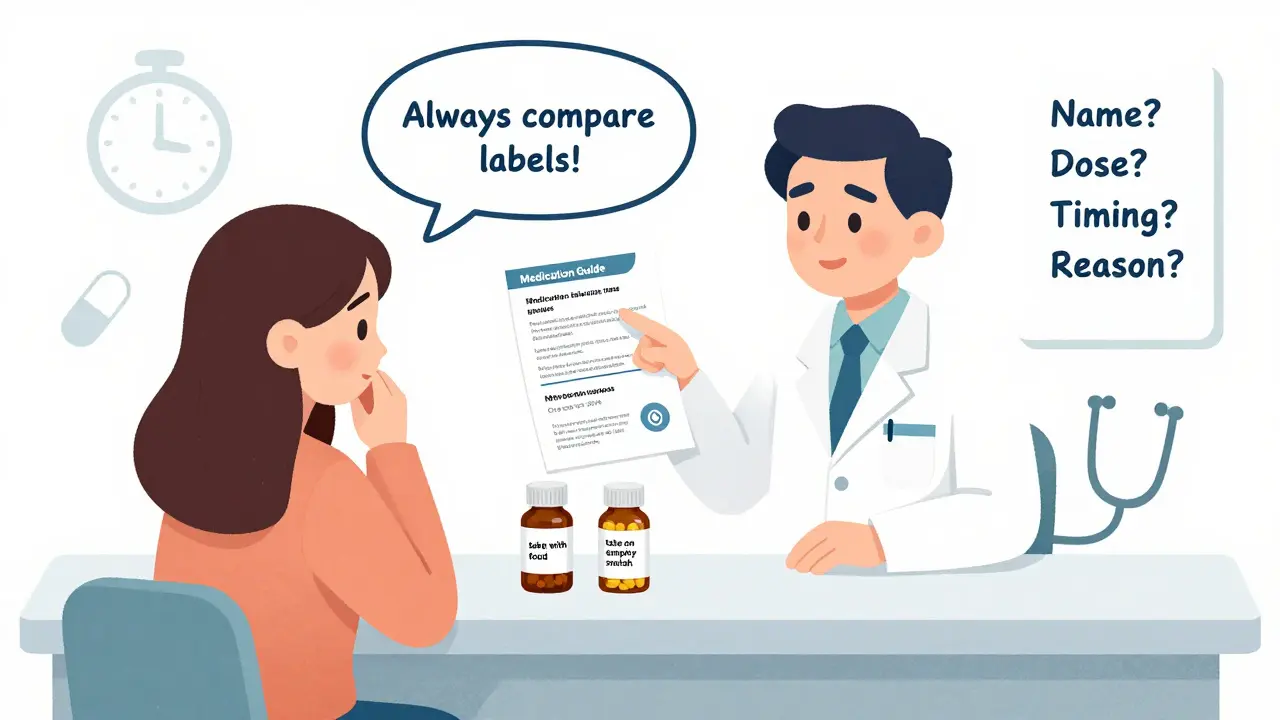
What You Should Do When Instructions Don’t Make Sense
You don’t have to guess. You don’t have to hope. You have the right - and the responsibility - to ask. Here’s exactly what to do:- Ask your pharmacist - not just when you pick up the prescription, but anytime you have doubts. Pharmacists are trained to catch inconsistencies. They see hundreds of prescriptions a day. They know when something looks off.
- Ask your doctor - if the instructions conflict with what you’ve heard before, or if the pill looks different, call the office. Say: "I’m confused about how to take this. Can we go over it?"
- Ask about timing - "Should I take this at bedtime?" "Can I take it with coffee?" "How far apart should doses be?" For cholesterol meds, timing matters - your body makes more cholesterol at night, so taking them at bedtime works better. For antibiotics, spacing doses evenly matters more than the exact time.
- Ask about "as needed" - this phrase is one of the most dangerous. "Take one as needed for pain" doesn’t mean "whenever you feel like it." It usually means "one dose, no more than three times in 24 hours." But you need to know the max. And you need to know why - is it to prevent swelling? Reduce fever? Stop a migraine? Understanding the goal helps you decide if you really need it.
- Compare labels - if you refill a prescription and the pill looks different, check the name, dose, and instructions. If they don’t match your old bottle or the paper your doctor gave you, ask why. It could be a different generic brand - or it could be a mistake.
How Providers Should Be Helping You
In hospitals and clinics, staff are supposed to explain your meds before you leave. The National Coordinating Council for Medication Error Prevention and Reporting (NCC MERP) says every patient should hear: "This is your medicine. This is why you’re taking it. This is what it’s supposed to do. This is what to watch out for. This is how often to take it." But too often, that conversation gets rushed. If you’re given a script and sent on your way - especially if you’re older, have multiple conditions, or take five or more pills a day - you’re at higher risk. Outpatient pharmacies are required to hand out Medication Guides for certain drugs. But for everything else? They’re not required to explain. That’s why so many people rely on the label alone. And labels are written for regulators, not for real people. They say "PO q.d." instead of "by mouth once a day." They use "TID" instead of "three times a day." The good news? You can fix this. Ask. Push back. Say: "I need this explained like I’m 10 years old." Most pharmacists and nurses will appreciate it - and they’ll take the time.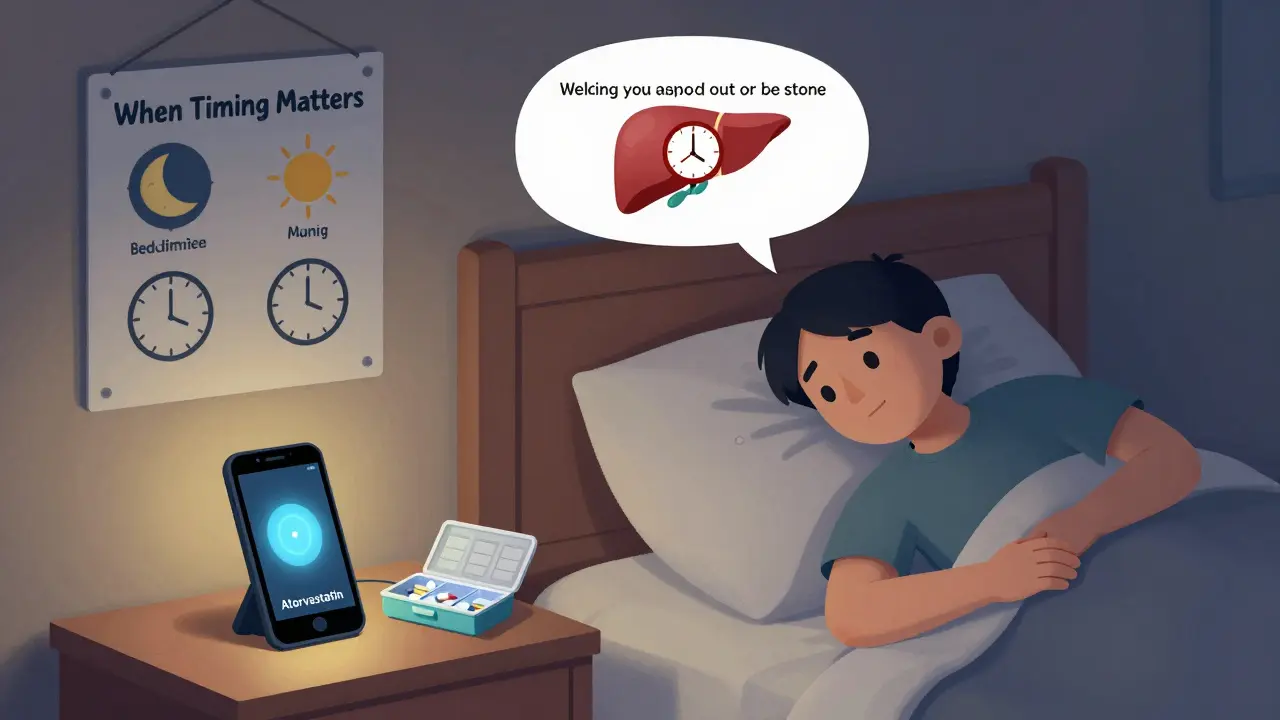
Real-Life Examples of What Goes Wrong
Take Depakote, a seizure and mood stabilizer. A doctor writes: "Take one 500 mg tablet by mouth once a day for one week, then twice daily." That’s clear. But if the pharmacist misreads "q am" as "q.d." and writes "daily," you might never get the second dose. That’s dangerous. Or consider a common painkiller. The label says: "Take 1 tablet every 4 to 6 hours as needed for pain." But the doctor meant: "Take 1 tablet only if pain is above 7/10." Without context, you might take four tablets in a day thinking you’re following the label - and end up with liver damage. Even timing matters. Harvard Health points out that cholesterol-lowering drugs like atorvastatin work best at bedtime - because your liver makes more cholesterol overnight. If you take it in the morning, you might not get the full benefit. But if the label doesn’t say "at bedtime," you won’t know.What You Can Do Right Now
Don’t wait until you feel sick. Don’t assume you got it right. Here’s your action plan:- Write down every medication you take - name, dose, time, reason.
- Keep the original prescription slip or printout your doctor gave you.
- When you get a new prescription, compare it to your list. If anything changes, ask why.
- Set phone alarms for doses - especially if you’re taking something twice a day. Set two alarms 12 hours apart.
- Use a pill organizer - but only if you know what goes in each slot. Don’t guess.
- Call your pharmacy or doctor’s office if you have one question. Don’t wait. Don’t worry about "bothering" them. This is their job.
Medication safety isn’t about memorizing labels. It’s about communication. And you’re not just a patient - you’re a partner in your own care. If you don’t understand your meds, you’re not failing. The system is.
What should I do if my medication looks different this time?
Don’t take it until you ask. Call your pharmacy or doctor. The pill might be a different generic brand - which is usually safe - but sometimes it’s a mistake. Always compare the name, dose, and instructions on the new bottle to your old one or the prescription slip. If anything doesn’t match, get it clarified before taking it.
Can I ask my pharmacist to explain my medication even if I didn’t have questions?
Yes, absolutely. Pharmacists are trained to counsel patients. Many will offer to explain your meds when you pick them up. If they don’t, say: "Can you walk me through how to take this?" You’re not being difficult - you’re being smart. Most pharmacists will be glad you asked.
Why do different brands of the same drug have different instructions?
Each manufacturer submits its own labeling to the FDA, and sometimes they interpret guidelines differently. One might say "take with food," another says "take on an empty stomach." The NIH says this can affect how well the drug works. Your doctor or pharmacist should review these differences and tell you which instructions to follow - but you have to ask. Don’t assume they’re the same.
What does "as needed" really mean on a prescription?
"As needed" doesn’t mean "whenever you feel like it." It usually means "only when you have a specific symptom, and no more than X times per day." For example, a painkiller might say "take 1 tablet as needed for pain, up to 3 times daily." That means you can’t take it four times, even if you’re still hurting. Always ask: What symptom is this for? What’s the max per day? How long should I wait between doses?
Are there any medications where timing really matters?
Yes. Cholesterol-lowering drugs like atorvastatin work best at bedtime because your liver makes more cholesterol at night. Blood pressure pills taken at night may be more effective than morning doses. Some antibiotics need to be spaced evenly - every 8 hours, not just three times a day. Always ask: "Is there a best time to take this?" If the label doesn’t say, assume it’s flexible - but confirm with your provider.
Aisling Maguire
March 2, 2026 AT 00:12Ugh I legit cried laughing at the part where it says "take one by mouth twice daily" like it's some kind of riddle. I once took my blood pressure med at 7am and 7pm for months because I thought that was "twice daily" - turns out my pharmacist said it should've been 8am and 8pm. My BP was all over the place. Never again. I just screenshot the label and send it to my pharmacist with "help?" and they always reply within 20 mins. So easy. Why do we make this so hard? 🤦♀️
Vikas Meshram
March 2, 2026 AT 21:24It's not the system's fault. It's patient negligence. If you can't read a label written in plain English, maybe you shouldn't be managing your own meds. I've worked in pharma for 14 years. Every single instruction is standardized. The abbreviations are outdated, yes, but they're still used because they're efficient. If you can't handle that, get a caregiver. Simple as that.
Byron Duvall
March 4, 2026 AT 02:45Okay but have you ever wondered if Big Pharma does this on purpose? Like, what if they WANT you to mess up your dosing so you end up back in the hospital and they can sell you more drugs? I read this one guy on TruthFeed who said the FDA allows conflicting labels because it creates dependency. Think about it - if your blood pressure med works better at night but they don't say that on the bottle, you're gonna need a second prescription next month. It's not incompetence. It's profit.
Lisa Fremder
March 5, 2026 AT 22:19Why are we even talking about this? Americans are lazy. You want clarity? Get a nurse. Stop whining about labels. I've been on 7 meds since I was 22 and I never once asked anyone anything. I just read the damn bottle. If you're dumb enough to get confused, that's your problem. Not the system. Not the pharmacist. YOU.
Brandon Vasquez
March 6, 2026 AT 13:27I get how overwhelming this can feel. I'm a caregiver for my mom and she takes 8 pills a day. We use a pill organizer, set alarms, and write everything down. The hardest part? When the pills look different. We always call the pharmacy first. No shame in asking. I’ve had pharmacists thank us for asking - said they wish more people did. You’re not bothering them. You’re helping them do their job better.
Gigi Valdez
March 7, 2026 AT 14:30The inconsistency in labeling across generic manufacturers is a genuine public health concern. The FDA’s approval process allows for minor variations in inactive ingredients, but the instructions should be harmonized. There is no clinical justification for one manufacturer saying "take with food" and another saying "take on an empty stomach" for the same bioequivalent compound. This isn't an oversight - it's a regulatory gap that needs addressing at the policy level.
Sneha Mahapatra
March 9, 2026 AT 03:09There's something deeply human here - the fear of making a mistake with something that could hurt you. I used to stare at my prescriptions like they were ancient texts. Then I realized: it's not about memorizing. It's about trust. Trust in your pharmacist. Trust in your doctor. Trust that asking "what does this mean?" isn't weakness - it's wisdom. I now keep a little notebook. Write down the why, not just the how. It changes everything.
bill cook
March 9, 2026 AT 11:04Wait so you're telling me I can't just take my pain pills whenever I feel like it? Like, if I'm having a bad day and I want to feel better? That's not freedom. That's prison. They make you follow rules so you don't get addicted? But what if I'm already addicted? What if I need it? Who cares about the label? I need relief. That's what matters.
Noah Cline
March 10, 2026 AT 22:08Let’s be clear: the use of "q.d." and "BID" in EHRs is a Class I safety violation under ISMP guidelines. These are not merely outdated conventions - they are documented root causes in the NCC MERP error taxonomy. The persistence of these abbreviations in digital systems reflects systemic failure in clinical informatics governance. Pharmacists are not empowered to override these in real-time due to interoperability constraints with legacy pharmacy management platforms - a structural flaw that demands regulatory intervention, not patient self-advocacy.
Justin Ransburg
March 12, 2026 AT 16:38You're not alone in this. I used to be terrified of my meds too - until I started asking. Now I call my pharmacy every time I get a new script. They love it. Seriously. One pharmacist told me, "You're the reason we still have a job." You don't need to be a genius. Just be curious. And kind. That's all it takes. You're doing better than you think.