Generic Drugs: What They Are and How They Work
 Jan, 27 2026
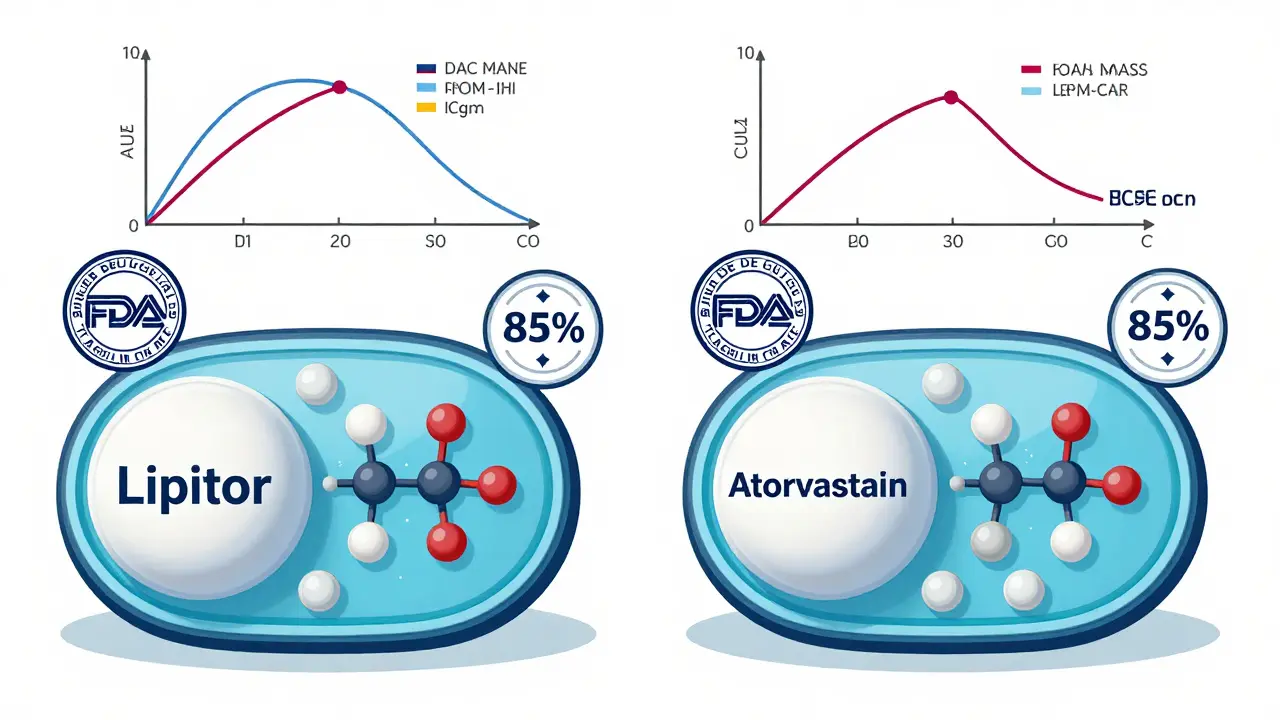
When you pick up a prescription, you might see two names on the label: one you recognize, like Lipitor, and another that looks unfamiliar, like atorvastatin. The second one is a generic drug. It’s not a cheaper version or a knockoff-it’s the exact same medicine, just without the brand name. And for most people, it works just as well, for a fraction of the cost.
What Exactly Is a Generic Drug?
A generic drug contains the same active ingredient as the brand-name version. That means if your doctor prescribes a brand-name drug like Prozac (fluoxetine), the generic version is just fluoxetine. The chemical structure, how it works in your body, and the dose are identical. The U.S. Food and Drug Administration (FDA) requires that generics meet the same strict standards for safety, strength, purity, and quality as the original brand.
Generics become available only after the brand-name drug’s patent expires. Patents typically last 20 years from the date they’re filed, but because clinical testing takes years before approval, the actual market exclusivity is often closer to 10-12 years. Once that window closes, other companies can apply to make the same drug. This process is called the Abbreviated New Drug Application (ANDA), created by the Hatch-Waxman Act of 1984. It lets generic manufacturers skip expensive animal and human trials because they only need to prove their version works the same way as the original.
How Do We Know Generics Work the Same Way?
The biggest concern people have is whether generics are truly equivalent. The answer lies in bioequivalence. This isn’t just a buzzword-it’s a scientific requirement. To get FDA approval, a generic must deliver the same amount of active ingredient into your bloodstream at the same rate as the brand-name drug. The FDA uses precise measurements called AUC (area under the curve) and Cmax (peak concentration) to compare how the body absorbs the drug.
The standard? The generic’s absorption must fall within 80% to 125% of the brand’s. That’s a tight range. For example, if the brand delivers 100 units of the drug into your blood over time, the generic must deliver between 80 and 125 units. Any more variation than that, and it wouldn’t be approved. This isn’t theoretical-it’s tested in real people, usually 24 to 36 healthy volunteers, under controlled conditions.
Studies back this up. The Institute of Medicine reviewed 38 clinical trials on generic cardiovascular drugs and found no meaningful difference in effectiveness compared to brand names. The American College of Physicians, the American Medical Association, and the FDA all agree: generics are therapeutically equivalent.
What’s Different About Generics?
If the active ingredient is the same, why do generics look different? That’s because of inactive ingredients-things like dyes, fillers, and coatings. These don’t affect how the drug works, but they’re changed to avoid trademark infringement. So your generic version of Viagra might be a blue oval instead of a diamond-shaped pill, and it might taste slightly different. But the medicine inside? Identical.
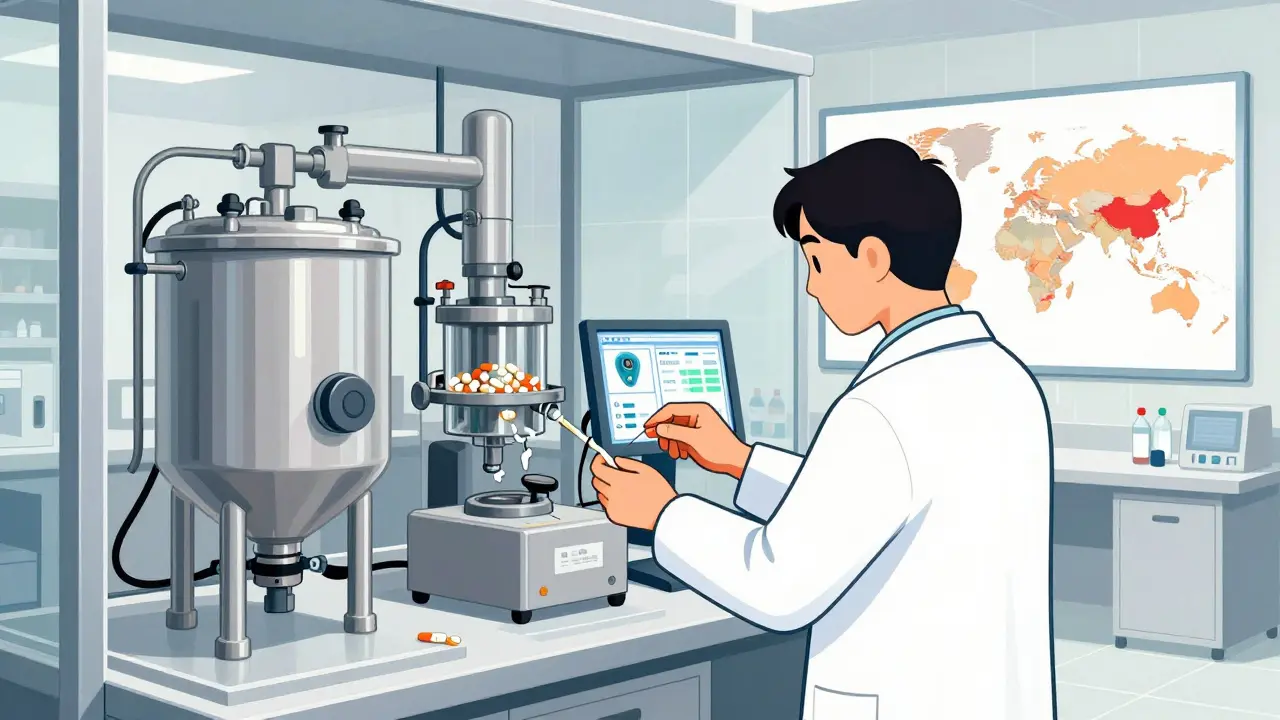
Even the manufacturing process is held to the same standard. The FDA inspects generic drug factories just like brand-name ones-about 3,500 inspections a year worldwide. These aren’t scheduled visits; they’re unannounced. Inspectors check everything: how ingredients are mixed, how pills are compressed, how quality is tested. The rules for cleanliness, documentation, and testing are exactly the same.
There’s one small exception: some drugs have a narrow therapeutic index. That means even tiny changes in blood levels can cause problems. Examples include warfarin (a blood thinner), levothyroxine (for thyroid issues), and some epilepsy drugs. For these, doctors may prefer to stick with one version-brand or generic-because switching could require more frequent monitoring. But even here, the FDA approves generics only if they meet bioequivalence standards. The risk isn’t from the drug itself-it’s from human error or inconsistent switching.
Why Are Generics So Much Cheaper?
Brand-name drugs cost a lot because the company that invented them had to pay for research, clinical trials, marketing, and patent protection. The average cost to bring a new drug to market? Around $2.6 billion, according to research published in the Journal of Health Economics.
Generic manufacturers don’t have to repeat those steps. They don’t pay for the original research. They don’t run massive advertising campaigns. They don’t need to recoup billions in development costs. So they can sell the same medicine for 80% to 85% less. In some cases, when five or more generic makers enter the market, prices drop to just 9% of the original brand price.
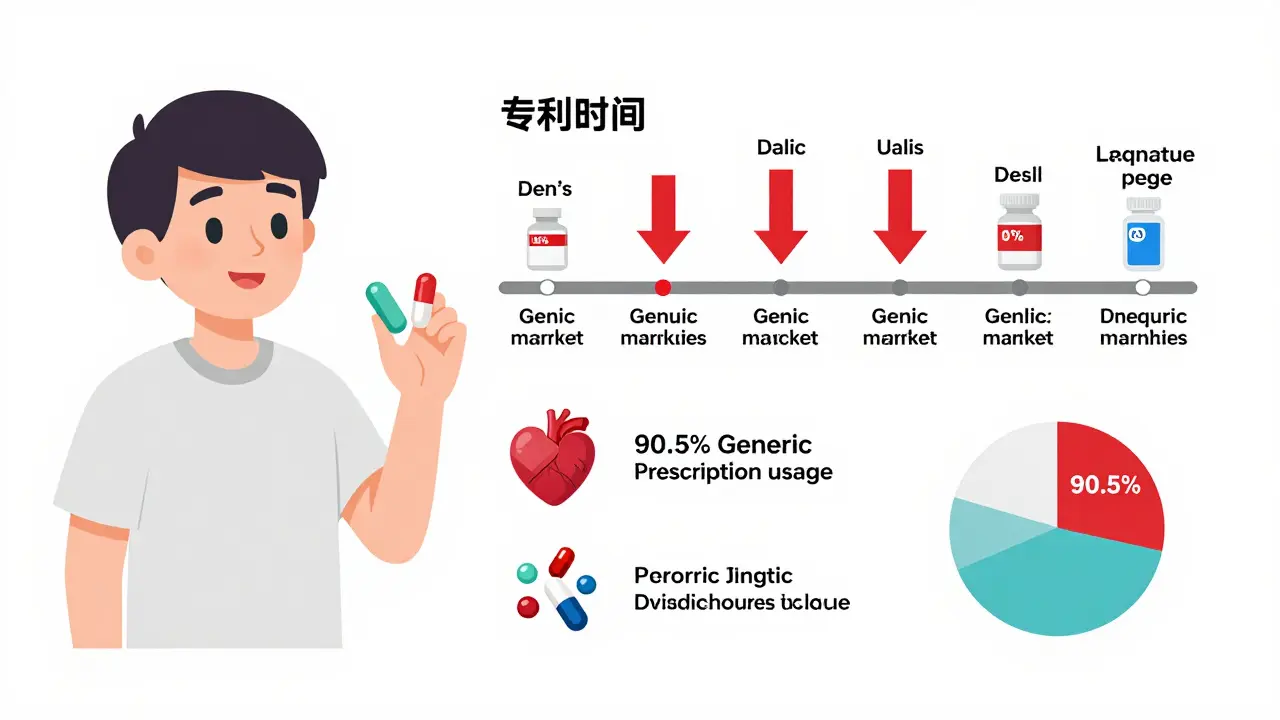
The numbers speak for themselves. In 2022, 90.5% of all prescriptions filled in the U.S. were generics. Yet they made up only 13.1% of total drug spending. Over the past decade, generics saved the U.S. healthcare system an estimated $2.18 trillion.
What About Biosimilars? Are They the Same?
Not all drugs are simple chemicals. Some, like insulin or rheumatoid arthritis treatments, are made from living cells. These are called biologics. They’re too complex to copy exactly. So instead of generics, we have biosimilars.
Biosimilars are highly similar to the original biologic, but not identical. They require more testing and often cost less, but not as dramatically. While traditional generics save 80-85%, biosimilars typically save only 20-30%. That’s because producing them is still expensive and technically difficult. As of 2022, biosimilars had captured only about 31% of their potential market in approved uses. But that’s changing as more biologics lose patent protection.
How Are Generics Approved and Monitored?
The FDA’s Office of Generic Drugs reviews about 1,000 ANDAs each year. The average review time is 10 months. Once approved, the drug is added to the FDA’s Orange Book, which lists all approved generics and their brand-name equivalents. Pharmacists can legally substitute a generic unless the doctor writes “dispense as written.” That’s allowed in 49 states.
After approval, the FDA keeps watching. All drugs-brand and generic-are tracked for side effects through the MedWatch system. If a generic causes unexpected problems, the FDA can pull it. There’s no special treatment for generics; they’re held to the same post-market surveillance standards.
Still, challenges remain. In 2022, the FDA reported a 22% increase in drug shortages. Many of those were linked to manufacturing issues at generic drug plants, especially those overseas. About 80% of the active ingredients in U.S. generics come from India and China. That’s efficient-but it also makes the supply chain vulnerable. The White House has flagged this as a national security concern.
What’s Next for Generic Drugs?
More than 350 brand-name drugs with combined annual sales of $138 billion are set to lose patent protection between 2023 and 2027. That means a wave of new generics is coming. The FDA is preparing by speeding up reviews under its GDUFA III program and issuing more detailed guidance for complex drugs like inhalers, eye drops, and topical creams.
At the same time, some brand-name companies are launching their own generics-called authorized generics-to compete in the low-price market. These are made by the original manufacturer but sold under a different label. They’re often priced just slightly above the cheapest generic, but they give patients a familiar option.
What’s clear is this: generics aren’t a compromise. They’re a smart, safe, and proven way to get the medicine you need without paying a premium for a brand name.
Can I Trust My Generic Prescription?
Yes. If your doctor prescribes a generic, you can be confident it’s been tested, approved, and monitored just like the brand-name version. If you’re unsure, ask your pharmacist. They can tell you if your generic looks different from last time, and why. If you’ve had a bad experience switching-like feeling worse after changing pills-talk to your doctor. But don’t assume it’s the generic’s fault. Often, it’s something else: stress, diet, another medication, or even the placebo effect.
For most people, switching to a generic is one of the easiest ways to save money without sacrificing care. And with over 90% of prescriptions filled with generics in the U.S., you’re not alone. Millions of people rely on them every day. They’re not second-choice medicine. They’re the standard.
Are generic drugs as safe as brand-name drugs?
Yes. The FDA requires generic drugs to meet the same safety and quality standards as brand-name drugs. They use the same active ingredients, are made in the same type of facilities, and are subject to the same inspections. The only differences are in inactive ingredients like color or shape, which don’t affect safety.
Why do generic drugs look different from brand-name drugs?
By law, generic drugs must look different from brand-name versions to avoid trademark infringement. That means the pill might be a different color, shape, or size. The active ingredient is the same, but the fillers, dyes, or coatings can vary. These changes don’t affect how the drug works.
Can I switch between brand-name and generic drugs safely?
For most drugs, yes. But for medications with a narrow therapeutic index-like warfarin, levothyroxine, or certain seizure drugs-small changes in blood levels can matter. Your doctor may recommend sticking with one version to avoid the need for frequent monitoring. Always talk to your doctor before switching.
Why are generic drugs so much cheaper?
Generic manufacturers don’t have to pay for the original research, clinical trials, or marketing that brand-name companies do. Once a patent expires, multiple companies can produce the same drug, driving prices down. On average, generics cost 80-85% less than brand-name versions.
Do generic drugs take longer to work?
No. The FDA requires generics to be bioequivalent, meaning they enter your bloodstream at the same rate and to the same extent as the brand-name drug. If the brand works in 30 minutes, so does the generic. Any delay you notice is likely due to other factors, like what you ate or how you took the pill.
Are all generic drugs made in the U.S.?
No. About 80% of the active ingredients in U.S. generic drugs come from facilities in India and China. The FDA inspects these facilities just like U.S.-based ones. The final product must meet the same standards regardless of where it’s made.
fiona vaz
January 28, 2026 AT 16:12I switched to generics years ago after my insurance stopped covering brand-name meds. My blood pressure hasn't budged, and I'm saving $40 a month. No side effects, no weird reactions-just the same results for less. If you're nervous, ask your pharmacist to compare the active ingredients. They're the same.
Brittany Fiddes
January 29, 2026 AT 09:18Oh please. You Americans think generics are magic because you're too lazy to pay for real medicine. In the UK, we don't need to be convinced-our NHS doesn't even offer the brand names unless absolutely necessary. You think your FDA is the gold standard? Half of your generics are made in factories where the inspectors get paid in noodles and prayers.
Colin Pierce
January 29, 2026 AT 14:02Just to clarify something I see a lot: the 80-125% bioequivalence range isn't a loophole-it's based on decades of pharmacokinetic data. The variation is smaller than what you'd see if you took the same brand-name pill on an empty stomach vs. after a big meal. That's why it's not just ‘close enough’-it's clinically indistinguishable for 99% of people.
And yes, I'm a pharmacist. I've seen people panic over a different-shaped pill. The color change doesn't change the chemistry.
Linda O'neil
January 31, 2026 AT 12:39Generics are the unsung heroes of healthcare. Seriously. People act like they’re taking a risk, but they’re not-they’re choosing smart. I’ve helped my mom switch three times now. She was scared, but now she calls them ‘the good stuff, cheaper.’ If you’re not using generics and you can afford to, you’re literally throwing money away. And that money could go to someone who needs it more.
James Dwyer
February 2, 2026 AT 06:51My doctor switched me to generic levothyroxine and I felt like a zombie for two weeks. Turns out, my body reacted to the filler. Switched back. Now I pay more, but I don’t feel like I’m walking through wet cement. Not all generics are equal for everyone.
Chris Urdilas
February 3, 2026 AT 20:33So let me get this straight-you’re telling me that a pill made in India, by a company that’s never heard of my name, with a different dye and a slightly different coating, is just as good as the one I paid $200 for last year? And I’m supposed to trust this because the FDA says so? Cool. Cool cool cool. Meanwhile, my blood pressure monitor is still working fine, and my wallet is crying happy tears.
Rhiannon Bosse
February 4, 2026 AT 08:02Okay but have you seen the FDA inspection reports? The ones that got leaked? Half the generic plants in China have mold in the mixing tanks and the workers wear flip-flops. And the FDA? They show up once every three years. The rest of the time, it’s just a guy in a lab coat taking pictures of the paperwork. You think your thyroid med is safe? It’s probably made by someone who’s never even seen a human being. This isn’t medicine-it’s a global lottery.
And don’t even get me started on the ‘authorized generics’-those are just the brand companies pretending they’re not greedy. They make the generic themselves, then sell it under a new name. Same factory. Same pill. Same price gouging. Just with a different label. Sneaky.
Bryan Fracchia
February 5, 2026 AT 22:36It’s funny how we treat medicine like it’s a luxury item instead of a basic human need. We spend billions on branding, packaging, and marketing for a molecule that could be made by anyone. The real tragedy isn’t that generics exist-it’s that we’ve been conditioned to believe that ‘brand’ means ‘better.’ That’s not science. That’s capitalism dressed up as trust.
Generics don’t just save money-they restore dignity. You don’t need a logo on your pill to feel better. You just need the right chemistry. And if we can’t trust that, then maybe we’re not ready to trust science at all.
Sue Latham
February 7, 2026 AT 15:03Oh honey, you think generics are fine? Have you ever checked the inactive ingredients? Some have gluten, some have lactose, some have dyes that are banned in Europe. You’re not just taking a pill-you’re playing Russian roulette with your gut. And your pharmacist? They don’t even know what’s in it. They just scan the barcode and hand it over. You’re not saving money-you’re risking your health.
Lexi Karuzis
February 9, 2026 AT 13:26Wait-so you’re saying the same drug, made in a different country, with different fillers, under different lighting, with different machines, by different people, with different quality control… is ‘bioequivalent’?!! That’s not science-that’s a fairy tale! And the FDA? They’re asleep at the wheel! I’ve read the reports-there are 12,000 violations last year alone! And you’re just going to swallow it?!!
Mel MJPS
February 11, 2026 AT 09:52My grandma took generic blood pressure meds for 12 years. Never had a problem. But when they switched her to a different generic, she got dizzy. Turned out the new one had a different filler that made her stomach upset. We went back to the original generic-and she was fine. Point is: not all generics are created equal, even if they’re both ‘approved.’ Stick with the one that works for you.