Documenting Side Effects: How to Track Patterns and Triggers for Better Health
 Feb, 13 2026
Symptom Tracker: Identify Your Triggers
Track Your Symptoms Using the ABC Model
Your Tracking Log
Pattern Analysis
After 0 days of tracking, our system has detected potential trigger patterns. Look for recurring antecedents that correlate with symptoms above 5/10 intensity.
When you start noticing strange symptoms-headaches that come out of nowhere, sudden fatigue after lunch, or anxiety spikes at night-you might wonder: what’s causing this? Most people guess. They blame stress, sleep, or bad luck. But guessing doesn’t fix anything. The real answer lies in documenting side effects-not just noting them, but tracking them with precision over time. This isn’t just for people with chronic illnesses. It’s for anyone who wants to understand their body better.
Why Tracking Works When Guessing Doesn’t
Your body doesn’t send you a text when something’s off. It gives you signals: a tight jaw, a racing heart, a wave of nausea. But these signals are messy. They overlap. One day, a headache comes after coffee. The next, it’s after a late dinner. Was it the caffeine? The sugar? The lack of sleep? Without data, you’ll never know.
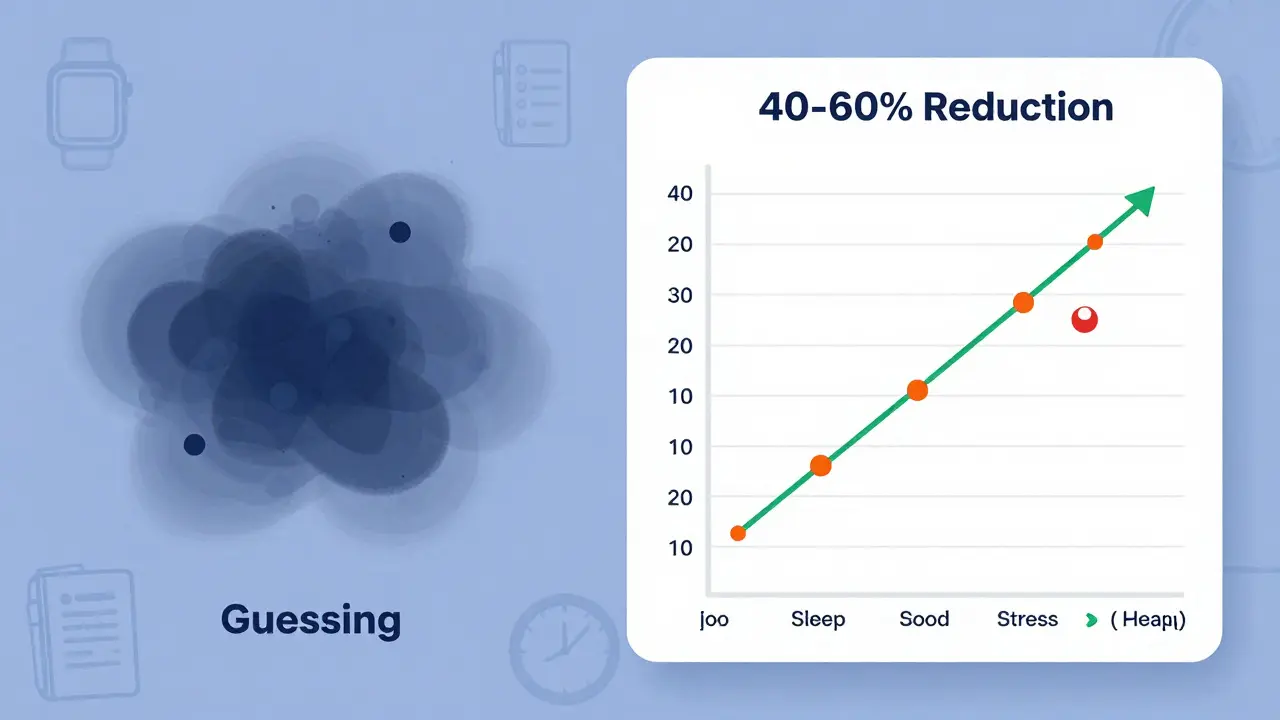
That’s where tracking changes everything. Studies show that people who keep detailed symptom logs identify triggers 5.3 times more often than those who don’t. In one 2023 study of 12,500 migraine sufferers, those who tracked consistently saw a 40-60% drop in headache frequency once they found their triggers. That’s not luck. That’s science.
Tracking turns vague feelings into clear patterns. It turns "I feel bad sometimes" into "I get headaches every time I eat aged cheese after 7 p.m. and sleep less than 6 hours." That kind of clarity lets you take control.
The ABC Model: Your Simplest Starting Point
You don’t need a fancy app or a medical degree to start. The most proven method is the ABC model: Antecedent, Behavior, Consequence. It’s been used for decades in behavior analysis and now powers most symptom trackers.
- A (Antecedent): What happened right before the symptom? (e.g., ate pizza, argued with a coworker, skipped breakfast)
- B (Behavior): What was the symptom? How bad was it? Rate it 0-10. (e.g., headache, 7/10, lasted 2 hours)
- C (Consequence): What happened after? (e.g., took ibuprofen, went to bed, felt better by morning)
It sounds basic, but 87% of successful trigger identifications require at least 14 days of this kind of recording. The key isn’t perfection-it’s consistency. Even if you forget one day, keep going. The pattern emerges over time.
What to Track (and What to Skip)
Not everything matters. You don’t need to log your entire life. Focus on these five core elements:
- Date and time - Exact to the nearest 15 minutes. A headache at 10:15 p.m. is different from one at 3:30 a.m.
- Symptom intensity - Use a 0-10 scale. 0 = nothing, 10 = unbearable. This lets you compare days.
- Triggers - List what changed: food, drink, sleep, stress, weather, medications.
- Medications and supplements - Include dose and time. Even "took a vitamin" matters.
- Sleep and stress - How many hours did you sleep? Rate stress 1-5. These are silent triggers.
Don’t waste time logging your mood, your cat’s behavior, or what you watched on TV. Those rarely connect. Stick to what science says works.
Pen and Paper vs. Digital Tools
Some people swear by journals. Others need apps. Both work-but differently.
Paper journals like MedShadow’s symptom tracker have a 91% compliance rate. Why? They’re simple. No notifications. No battery. Just write it down before bed. They’re especially popular among adults over 65, with 68% still using them after six months.
Digital tools like the Wave app or MigraineBuddy offer automation. They sync with your Apple Watch, track sleep patterns, and even alert you when your heart rate spikes. They’re faster at spotting patterns-28% quicker than paper. But 43% of users quit after two months because the setup is too complicated.
Here’s the truth: if you hate typing, use paper. If you love data, go digital. The best tool is the one you’ll actually use.
What Triggers Are Common? Real Examples
From thousands of real logs, certain triggers keep showing up:
- Diet: Aged cheeses, processed meats (tyramine), alcohol (especially red wine), artificial sweeteners.
- Sleep: Less than 6 hours, or inconsistent bedtimes.
- Stress: High-pressure meetings, arguments, or even worrying about the next day.
- Environment: Bright lights, loud noises, strong smells (perfume, cleaning products).
- Hormones: For women, symptoms often spike 2-3 days before menstruation.
One Reddit user tracked for 90 days and found her migraines only happened after eating pepperoni pizza and sleeping less than 5 hours. She cut both out-and her headaches dropped from 12 a month to 2.
Another person with fibromyalgia discovered her pain spiked every time she sat in her office chair for more than 45 minutes without standing. A $20 standing desk fixed it.
When Tracking Backfires
It’s not magic. Sometimes, tracking makes things worse.
For 12-15% of people with anxiety, obsessing over symptoms can feed the cycle. One woman tracked every twinge in her chest, convinced it was a heart attack. She ended up in the ER three times in a month. Her doctor told her to stop logging for two weeks. The panic attacks dropped.
Another trap: expecting instant results. If you don’t see a pattern after a week, don’t quit. It takes 30 days on average. The first two weeks are messy. The third week? That’s when the clues start to click.

How to Make It Stick
Here’s how to build a habit that lasts:
- Set a daily reminder: 8 p.m. every night. Five minutes. That’s all it takes.
- Use a template. Blank pages lead to abandonment. Use a simple chart with boxes for each category.
- Review weekly. Every Sunday, look back. What’s the same? What’s different?
- Share with your doctor. Bring your log. It’s more helpful than saying, "I feel bad."
People who follow this routine are 47% more likely to keep tracking for over six months. That’s the difference between "I tried it" and "It changed my life."
What’s Next? The Future of Tracking
It’s getting smarter. In 2024, the FDA approved Twofold’s Symptom Tracker Template for use in clinical trials. Apple Watch now measures skin temperature, helping detect migraine prodromes 28% earlier. AI tools are being tested to predict flare-ups 48 hours ahead-with 63% accuracy.
But the core hasn’t changed. No algorithm replaces a person who writes down what happened. The real power is in the habit: consistent, honest, patient tracking.
Healthcare systems are catching on. 78% of major hospitals now pull patient tracking data into electronic records. That means your journal isn’t just for you-it’s part of your care plan.
Start Today. No Perfect System Needed.
You don’t need to buy an app. You don’t need to be an expert. Just grab a notebook. Or open a notes app. Write down:
- What happened before you felt off?
- What did you feel? (Rate it 0-10)
- What happened after?
Do it for 14 days. No more. No less. If you don’t see a pattern? Keep going. If you do? Celebrate. That’s your first win.
Side effects aren’t random. They’re clues. And you’re the only one who can read them.
How long does it take to see patterns in symptom tracking?
Most people start seeing clear patterns after 14-30 days of consistent tracking. Research shows 87% of successful trigger identifications require at least two weeks of daily logging. For complex conditions like migraines or fibromyalgia, 30 days is the standard for reliable results. Don’t expect answers in a week-this is a slow, data-driven process.
Can I track side effects without using an app?
Absolutely. Paper journals have a 91% user compliance rate, higher than most apps. Many people over 65 and those with low digital literacy prefer notebooks. The key isn’t the tool-it’s consistency. Use a simple template with date, trigger, symptom, and intensity. Write it down every evening. No app needed.
What’s the most common mistake people make when tracking?
The biggest mistake is waiting too long to write it down. Symptoms are often overestimated by 22% if recorded more than two hours after they occur. People also use vague terms like "felt bad" instead of numbers. Use the 0-10 scale. Be specific: "headache, 7/10, started after coffee at 8:30 a.m." Precision turns noise into data.
Does tracking really reduce symptoms?
Yes. Studies show 40-60% reduction in symptom frequency once triggers are identified and avoided. In migraine patients, detailed diaries reduce ER visits by 37%. For anxiety and fibromyalgia, tracking improves treatment outcomes by 33-36%. It’s not a cure, but it gives you control-letting you avoid triggers, adjust habits, and communicate better with doctors.
Is tracking safe for everyone?
For most people, yes. But for 12-15% of individuals with anxiety disorders, obsessive tracking can worsen symptoms. If you find yourself checking your body constantly, rereading logs, or feeling more anxious after tracking, pause. Talk to a therapist. Sometimes, stepping back is the healthiest move. Tracking should empower you-not trap you.
Do I need to track every single day?
Not every day, but regularly. Missing one day won’t ruin your data. Missing three days in a row might. Aim for 5-7 minutes daily, preferably at night. If you forget, write it the next morning. The goal is consistency over perfection. Even 5 days a week is better than nothing.
Mike Hammer
February 14, 2026 AT 09:32Also, weirdly calming to write it down. Like therapy but cheaper.
Daniel Dover
February 15, 2026 AT 00:32Joe Grushkin
February 15, 2026 AT 10:10Esha Pathak
February 15, 2026 AT 21:35Now I sip chamomile at sunset like a zen monk who finally got the memo. It’s not magic. It’s just paying attention. Like listening to your body instead of scrolling through TikTok.
Somehow, the universe whispers when you stop yelling at it.
Chiruvella Pardha Krishna
February 16, 2026 AT 01:42Virginia Kimball
February 17, 2026 AT 04:01Stop overthinking. Just write one line a day. Your future self will hug you. Seriously. Do it. You got this 💪❤️
Kapil Verma
February 17, 2026 AT 15:54Michael Page
February 19, 2026 AT 06:19Mandeep Singh
February 21, 2026 AT 05:56