Cognitive Decline Screening and Early Interventions in 2025: What Works Now
 Dec, 17 2025
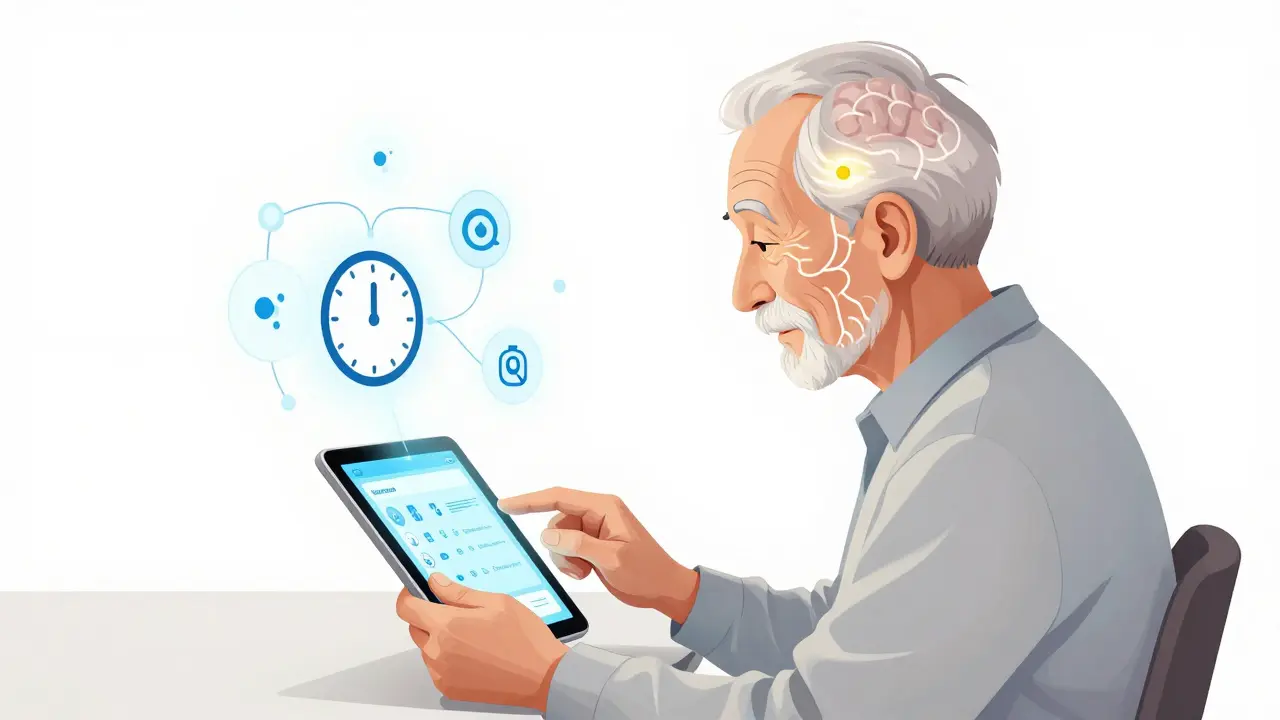
By 2025, detecting cognitive decline isn’t about waiting for someone to forget their grandchild’s name. It’s about catching tiny, invisible changes before they become problems - and the tools to do it are finally here. For years, doctors relied on paper tests like the MoCA or MMSE, asking patients to draw a clock or remember three words. But those tests missed too much. They couldn’t catch the early, subtle shifts in thinking that happen years before memory loss becomes obvious. Today, that’s changing. New digital tools are spotting cognitive decline earlier, more accurately, and in ways that matter for treatment.
Why Traditional Screeners Are Falling Behind
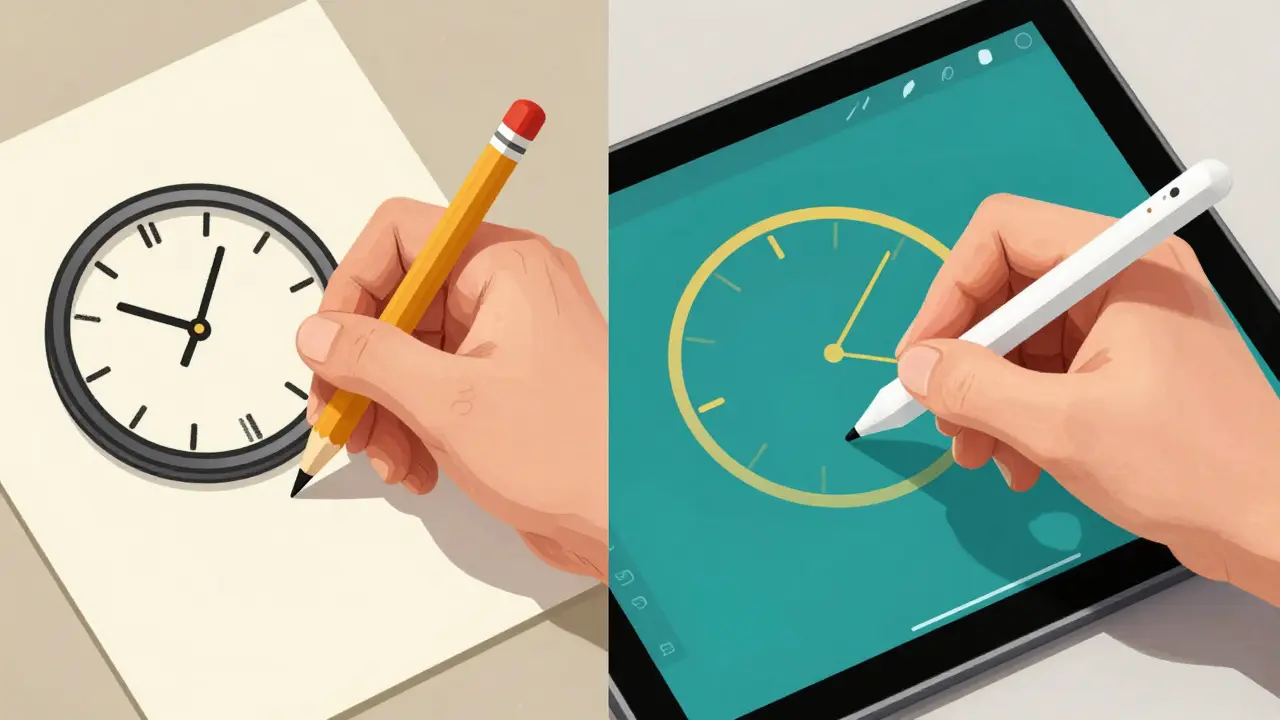
The Montreal Cognitive Assessment (MoCA) and Mini-Cog used to be the gold standard. They’re simple, quick, and free. But they’re also blunt instruments. A 2023 meta-analysis found they only caught 71% to 90% of people with mild cognitive impairment (MCI). That means up to 30% of people with early brain changes were being told they were fine. And here’s the real problem: these tests can’t tell the difference between someone who’s just tired and someone whose brain is starting to change.Take the clock-drawing test. If someone draws a crooked clock, is it because they have early Alzheimer’s? Or because they’re 78, have arthritis, and can’t hold the pencil steady? Traditional tools don’t measure how the task is done - only whether it’s done right. That’s like judging a runner’s speed by whether they crossed the finish line, not by their stride, form, or pace.
That’s why experts at the Alzheimer’s Association International Conference in 2025 called these tests outdated. They’re not useless, but they’re no longer enough. If we want to stop cognitive decline before it turns into dementia, we need tools that see the small, early signals - and that’s where digital screening comes in.
How Digital Tools See What Paper Tests Can’t
Digital cognitive assessments don’t just ask questions. They watch how you answer. Take the digital Trail Making Test Part B (dTMT-B). Instead of just timing how long it takes to connect numbers and letters, it records every millisecond of your movement. It tracks your pen stroke speed, how often you pause, whether your lines wobble, and even how efficiently your path follows the ideal route. This isn’t just about getting the answer right - it’s about detecting tiny delays in brain processing that paper tests ignore.One study showed this tool could tell the difference between cognitive decline and motor problems with 87.2% accuracy. That’s huge. Many older adults struggle with hand control due to arthritis or tremors. A traditional test might flag them as having cognitive issues when they don’t. The dTMT-B can separate the two.
Then there’s VR-E, a virtual reality test that immerses users in a 3D environment while tracking eye movements with millimeter precision. It measures attention, memory, and spatial judgment by watching where you look and how long you fixate on objects. In tests, it correctly identified MCI with an AUC of 0.9415 - far higher than MoCA’s typical 0.80-0.85. That means it’s nearly 95% accurate at spotting early changes.
Linus Health’s Digital Assessment of Cognition (DAC) combines several digital tasks - including a digital clock draw and recall test - into a 7-minute battery. Their machine-learning model doesn’t just score the outcome; it analyzes over a dozen movement and timing metrics to classify MCI stages. In validation studies, it hit 93.7% accuracy. That’s not just better than paper tests - it’s in a different league.
Who’s Using These Tools - and How
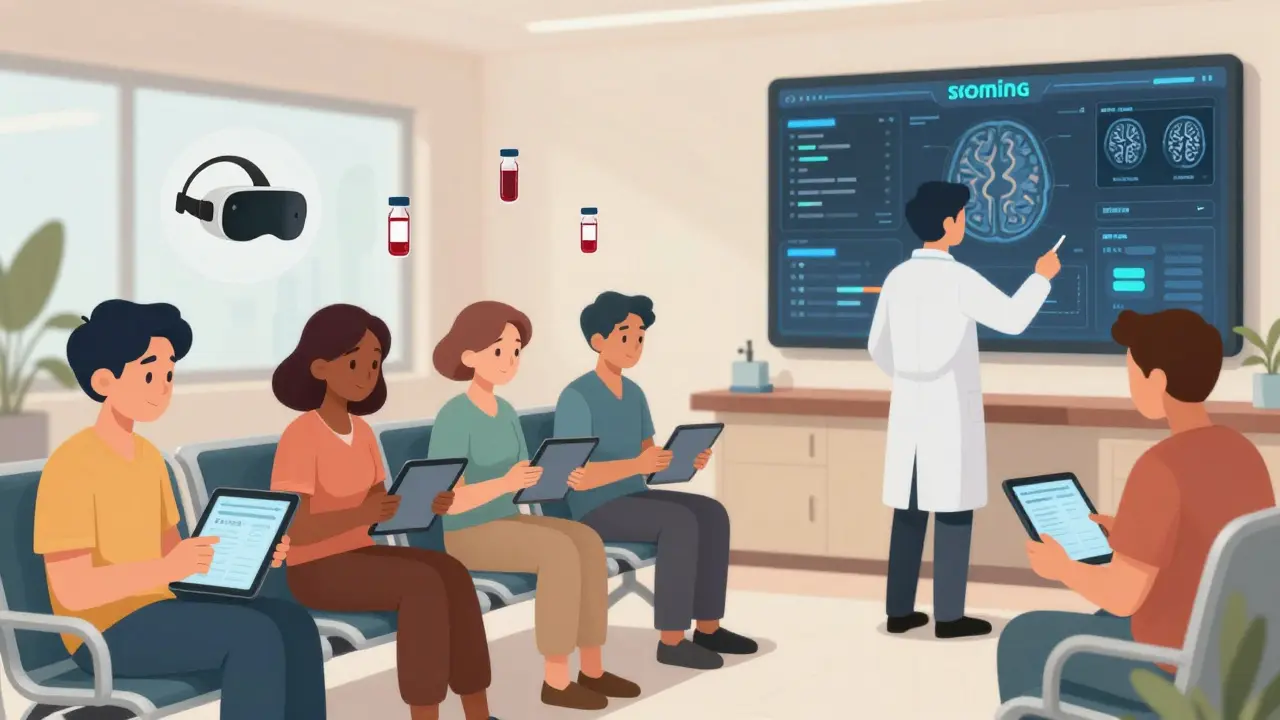
These tools aren’t science fiction. They’re in clinics right now. Cleveland Clinic’s Cognitive Battery (C3B) is being used during Medicare Annual Wellness Visits. Doctors don’t need to be tech experts. Medical assistants get trained in 20 minutes. Physicians need just 15 minutes of instruction. The system integrates directly into the electronic health record and flags abnormal results automatically.Patients notice the difference. In Cleveland Clinic’s validation study, 68% said they felt less anxious than with traditional tests. Why? Because it’s interactive, not intimidating. One patient, 78, completed the Linus Health app in the waiting room with no help. “I didn’t even realize I was being tested,” she said.
But it’s not perfect. About 17% of users - mostly older adults with little tech experience - struggle with button presses or screen navigation. One Reddit user wrote: “My dad failed the online test because he couldn’t figure out how to click, not because his memory was gone.” That’s a real concern. If the tool is too complex, it misdiagnoses people who are healthy but technologically excluded.
That’s why experts recommend starting simple. The American Medical Association suggests beginning with tools like the Digital Clock and Recall (DCR) before moving to complex VR systems. And usability matters. Tools designed with large buttons, voice prompts, and minimal clicks are more likely to succeed.
The Big Shift: From Detection to Action
This isn’t just about finding problems. It’s about acting on them. In 2025, we have disease-modifying drugs like lecanemab - medications that can slow Alzheimer’s progression - but only if given early. These drugs work best in the preclinical stage, before symptoms are obvious. That’s why screening now has a clear purpose: find people who qualify for treatment.Dr. James Leverenz of Cleveland Clinic says linking cognitive screening to Medicare visits allows doctors to track changes year over year. “It’s not a one-time check,” he says. “It’s a longitudinal record.” That’s critical. A single test might miss a decline. But comparing results over time? That’s how you catch the slow fade.
And the next wave is even bigger: blood tests. For years, diagnosing Alzheimer’s required expensive PET scans or spinal taps. Now, blood biomarkers for amyloid and tau proteins are becoming reliable. The National Institute on Aging says they’re “finally in reach.” In early trials, combining blood tests with digital cognitive data predicted brain amyloid levels almost as well as PET scans.
Linus Health’s model - combining dTMT-B, DCR, and APOE gene status - achieved an AUC of 0.89. That’s close to the 0.91 of cerebrospinal fluid tests. Soon, a simple blood draw and a 7-minute digital test could replace invasive procedures and expensive scans.
Barriers to Widespread Use
Despite the progress, adoption isn’t universal. Sixty-seven percent of health systems say integrating these tools with their electronic health records is the biggest hurdle. If the test result doesn’t show up in the patient’s chart, it’s useless. Cleveland Clinic solved this by building direct EHR links. Smaller clinics? They’re still struggling.Cost is another factor. VR-E equipment runs about $2,500 per unit. While tools like RoCA or DCR run on tablets or laptops, not every practice has the budget. But reimbursement is improving. Medicare now pays up to $45 per digital cognitive assessment in 2025. That’s helping drive adoption. As of Q1 2025, 450 healthcare systems use Linus Health’s platform - up from 120 a year earlier.
And then there’s equity. A 2025 review found 78% of digital cognitive studies underrepresent minorities and people with lower education. If these tools aren’t tested and designed for diverse populations, we risk widening health gaps. A tool that works for a tech-savvy 70-year-old in Boise might fail for a non-English-speaking 75-year-old in rural Mississippi.
What You Can Do Today
If you’re over 65, or caring for someone who is, ask your doctor about cognitive screening. Don’t wait for memory lapses. Ask: “Do you use digital tools to check cognitive health during annual visits?” If they say no, ask why. If they’re still using paper tests, push for an update.Even if your doctor doesn’t offer digital screening yet, you can track your own cognitive health. Use free, validated apps like the NIH Toolbox or CogniFit. They’re not diagnostic, but they can help you notice trends. Keep a journal: Are you forgetting names more often? Struggling to find words? Taking longer to solve simple problems? These aren’t normal aging - they’re signals.
And if you’re concerned about a loved one, don’t assume it’s just “getting older.” Suggest a screening. Bring up the new tools. Share what you’ve learned. The more people ask, the faster doctors will adopt them.
The Future Is Here - And It’s Digital
By 2030, the global market for cognitive screening tools will be worth nearly $5 billion. That’s not hype - it’s demand. Medicare coverage, new drugs, and better tech are forcing the system to change. Within five years, McKinsey predicts 90% of primary care practices will use at least one validated digital tool.This isn’t about replacing doctors. It’s about giving them better eyes. The goal isn’t to diagnose dementia. It’s to catch the earliest signs - so treatment can start before it’s too late. The tools are here. The science is clear. The only thing left is for us to use them.