Cetirizine vs Fexofenadine: Which Antihistamine Has Fewer Side Effects?
 Feb, 18 2026
Antihistamine Selector: Which Is Right For You?
Your Recommendation
Based on your answers, cetirizine is the better choice for your situation. It works faster (20-30 minutes) and provides stronger symptom control, which is important for you. While it may cause some drowsiness (up to 15% of users), this is manageable if you take it at night.
| Feature | Cetirizine | Fexofenadine |
|---|---|---|
| Speed of Relief | 20-30 min | 2-3 hours |
| Drowsiness Risk | 10-15% | 4-6% |
| Food Restrictions | No restrictions | Must be taken on empty stomach |
| Best For | Fast relief, nighttime use | Alertness needs, no food restrictions |
When allergy season hits, you don’t want to choose between relief and falling asleep at your desk. Two of the most common over-the-counter antihistamines-cetirizine (Zyrtec) and fexofenadine (Allegra)-are designed to do the same job: block histamine and calm your sneezing, runny nose, and itchy eyes. But they don’t do it the same way. One makes you drowsy. The other barely touches your alertness. If you’ve ever wondered which one to pick, it’s not about which is stronger-it’s about which side effects you can live with.
How They Work (And Why It Matters)
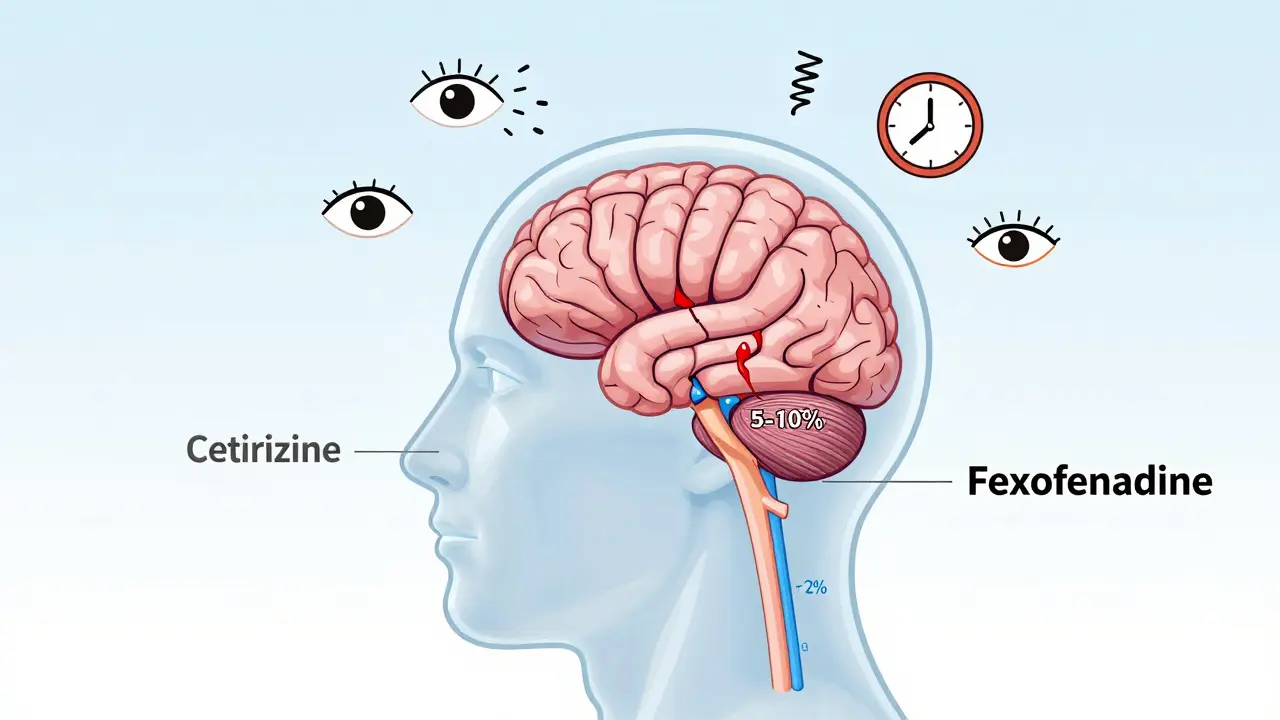
Both cetirizine and fexofenadine are second-generation antihistamines, meaning they were engineered to avoid crossing the blood-brain barrier. That’s why they don’t knock you out like Benadryl. But here’s the catch: they’re not equally good at it. Cetirizine still sneaks into your brain a little. About 5-10% of it crosses into your central nervous system. That’s why some people feel sleepy, even at the standard 10 mg dose. Fexofenadine? It’s even more selective. Less than 1-2% makes it into your brain. Think of it like a key that only fits one lock-your allergy receptors-and ignores the ones in your brain. That tiny difference in penetration is why fexofenadine is often called the "non-drowsy" option. But it’s not zero. About 1 in 100 people still feel tired on fexofenadine. For cetirizine? Up to 15% of users report drowsiness. That’s not a small number. If you drive, work with machinery, or need to stay sharp for a meeting, that matters.Which One Works Faster?
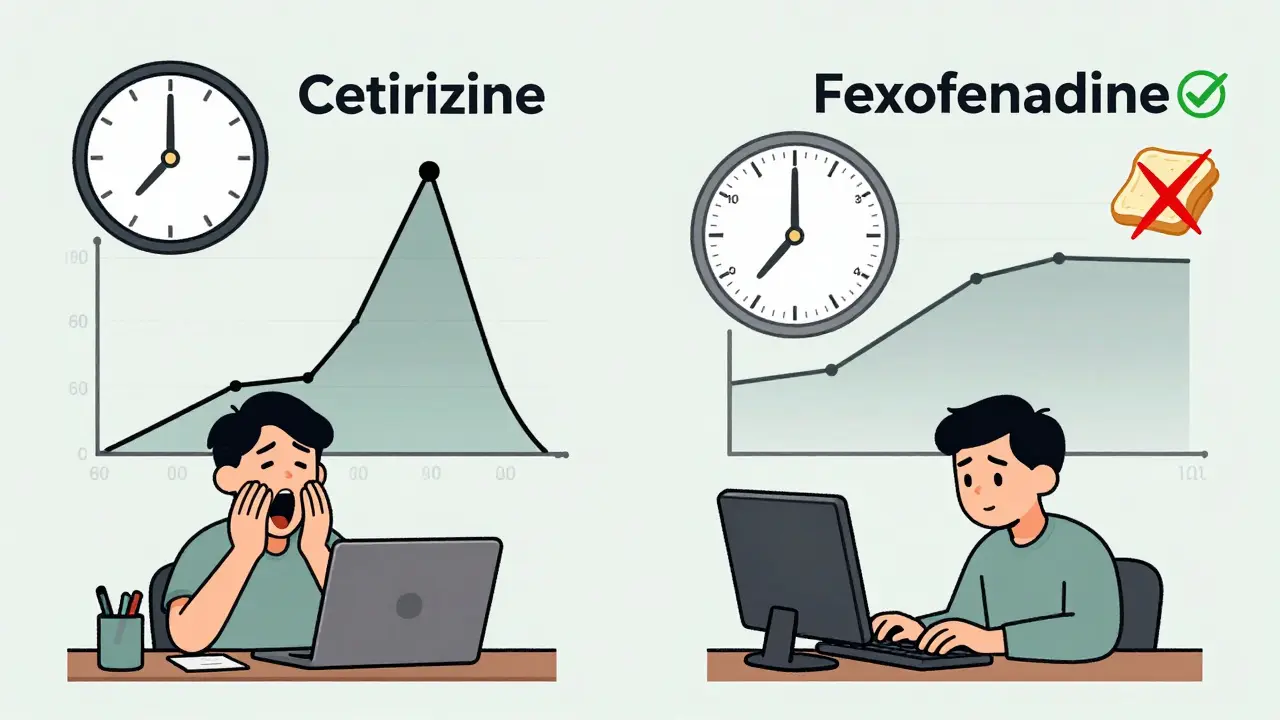
Speed counts when your eyes are watering and you’re desperate for relief. Cetirizine hits your bloodstream in 20 to 30 minutes. Peak levels? Around 60 minutes. That’s why people say, "I took Zyrtec and felt better before lunch." Fexofenadine? Slower. It takes 2 to 3 hours to peak. If you’re already sneezing and itchy, you’ll wait longer to feel better. A 2005 study showed cetirizine reduced symptoms 26% more than fexofenadine at the 12-hour mark. That’s not a fluke-it’s a consistent pattern across multiple trials. But here’s the twist: that difference doesn’t always mean you’ll feel better in real life. Most people don’t notice the extra 14% symptom reduction. What they notice? The drowsiness.The Side Effect Showdown
Let’s get down to the real question: which one causes fewer annoying side effects?- Cetirizine: Drowsiness (up to 15% of users), dry mouth (18%), headache (12%), fatigue. Some report a "heavy" feeling in the head.
- Fexofenadine: Headache (10%), nausea (8%), upset stomach (22%), dizziness. Drowsiness? Only about 4-6%.
Food and Drug Interactions: What You Can’t Ignore
This is where fexofenadine gets tricky. It doesn’t play well with food. If you take fexofenadine with a high-fat meal, your body absorbs up to 33% less of it. Grapefruit juice? That cuts absorption by up to 43%. Orange juice? Same problem. Even antacids with aluminum or magnesium (like Tums or Maalox) can slash fexofenadine’s effectiveness by 41% if taken within two hours. Cetirizine? No such fuss. You can take it with breakfast, lunch, or a snack. No restrictions. That’s a big win for people who hate pill schedules. Also, alcohol. Mixing alcohol with cetirizine can triple your drowsiness risk. With fexofenadine? Less of a concern. Still, don’t mix them. Just in case.Who Should Take Which?
Here’s a simple guide:- Take cetirizine if: You need fast, strong relief. You’re not driving or operating heavy machinery. You’re okay with feeling a little sleepy. You take it at night. You have kids under 12-cetirizine has more safety data for children.
- Take fexofenadine if: You need to stay alert. You’re a truck driver, nurse, student, or pilot. You hate taking pills on an empty stomach. You’ve tried cetirizine and felt too tired. You’re on a tight schedule and can’t afford to be slowed down.
Price, Availability, and What’s New
Both are available as generics. Generic cetirizine costs about $7.50 for 30 tablets. Generic fexofenadine? Around $6.85. The difference is barely noticeable. New developments? Fexofenadine now comes in a 120 mg extended-release form (Allegra 12 HR). But independent testing found it doesn’t improve symptom control much over the old 180 mg dose. The real change? Regulatory warnings. Both drugs now carry rare warnings about heart rhythm changes-QT prolongation. The risk is extremely low (less than 1 in 100,000), but if you have a heart condition, talk to your doctor before choosing either.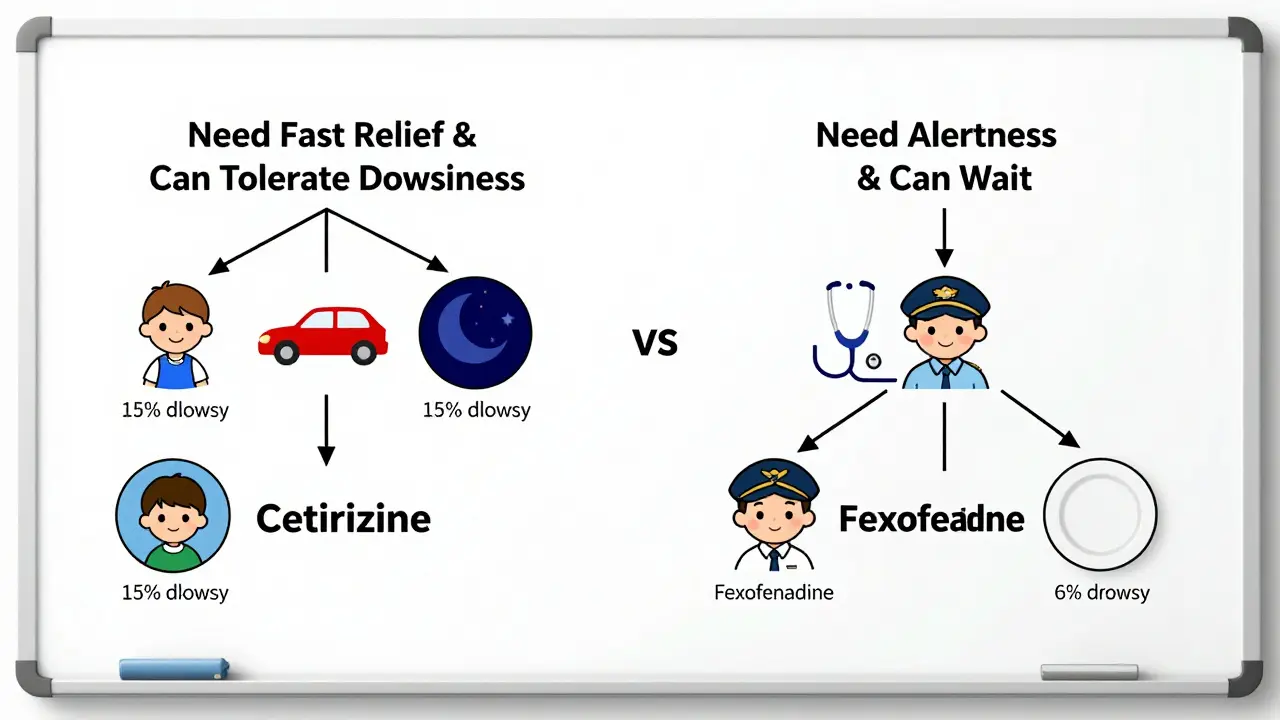
Real People, Real Choices
On Reddit, a user named "HayFeverSurvivor89" wrote: "I tried both for two weeks. Cetirizine made me crash by 2 PM. Fexofenadine? I worked a 10-hour shift like normal. I switched for good." But on Drugs.com, someone else said: "I switched to fexofenadine to avoid drowsiness… but my allergies got worse. I went back to Zyrtec. I’m tired, but I’m not sneezing through my meetings." There’s no one-size-fits-all answer. It’s personal.What About Pregnancy?
If you’re pregnant, both are rated Category B-no proven risk in humans. But cetirizine has been studied in over 200 pregnancies. Fexofenadine? Only about 40 studies. If you’re choosing between the two while pregnant, most OB-GYNs lean toward cetirizine because there’s more data.Bottom Line
Cetirizine wins on symptom control. Fexofenadine wins on staying awake. If you can tolerate a little sleepiness, cetirizine gives you better relief. If you need to be sharp all day, fexofenadine is the smarter pick-even if it takes longer to work. There’s no "best." There’s only "best for you."Is cetirizine more likely to make you sleepy than fexofenadine?
Yes. Studies and user reports show cetirizine causes drowsiness in 10-15% of users, while fexofenadine causes it in only 4-6%. This is because cetirizine crosses into the brain more easily. If you drive, work with machinery, or need to stay alert, fexofenadine is the safer choice.
Can I take fexofenadine with food?
It’s best to take fexofenadine on an empty stomach. High-fat meals, grapefruit juice, and orange juice can reduce its absorption by up to 43%. If you take it with food, you might not get the full benefit. Cetirizine has no such restrictions-you can take it with or without food.
Which one works faster for allergy symptoms?
Cetirizine works faster. It reaches peak levels in the blood in about 60 minutes. Fexofenadine takes 2 to 3 hours. If you need quick relief-like during a sudden pollen flare-cetirizine gives you faster results. But if you’re okay waiting, fexofenadine still works well.
Are there any serious side effects with either medication?
Both are very safe for most people. The most common issues are drowsiness (cetirizine) or upset stomach (fexofenadine). In rare cases (less than 1 in 100,000), both can affect heart rhythm (QT prolongation). If you have a history of heart problems or take other heart medications, talk to your doctor before using either.
Can I switch between cetirizine and fexofenadine?
Yes, you can switch. Many people try one, find the side effects too much, and switch to the other. There’s no waiting period between them. But if you’re switching because one didn’t work well, give the new one at least two weeks to see if it helps. Allergy meds often need time to build full effect.
Which is better for kids?
Cetirizine is more commonly recommended for children. It has over 20 years of safety data in kids as young as 2 years old. Fexofenadine is approved for children 6 and up, but there’s less long-term data. Pediatric allergists usually start with cetirizine unless drowsiness is a major concern.
Amrit N
February 19, 2026 AT 12:17Davis teo
February 20, 2026 AT 00:36Michaela Jorstad
February 20, 2026 AT 14:36Ellen Spiers
February 21, 2026 AT 15:25Marie Crick
February 22, 2026 AT 22:05Courtney Hain
February 23, 2026 AT 00:31Robert Shiu
February 24, 2026 AT 07:28Scott Dunne
February 25, 2026 AT 04:54Caleb Sciannella
February 26, 2026 AT 17:13Ashley Paashuis
February 28, 2026 AT 04:25Oana Iordachescu
March 1, 2026 AT 04:41Chris Beeley
March 2, 2026 AT 05:01Arshdeep Singh
March 4, 2026 AT 04:56Danielle Gerrish
March 5, 2026 AT 14:41Jeremy Williams
March 5, 2026 AT 23:46