Caffeine and ADHD Medications: Synergy and Side Effect Risks
 Mar, 13 2026
When you have ADHD, finding the right balance between focus and calm can feel like walking a tightrope. Many people reach for coffee to help sharpen their attention, especially if they're already on medication like Adderall. But what happens when you mix the two? It’s not just about getting more alert-it’s about whether that extra boost is helping you or pushing you over the edge.
Why People Combine Caffeine and ADHD Medications
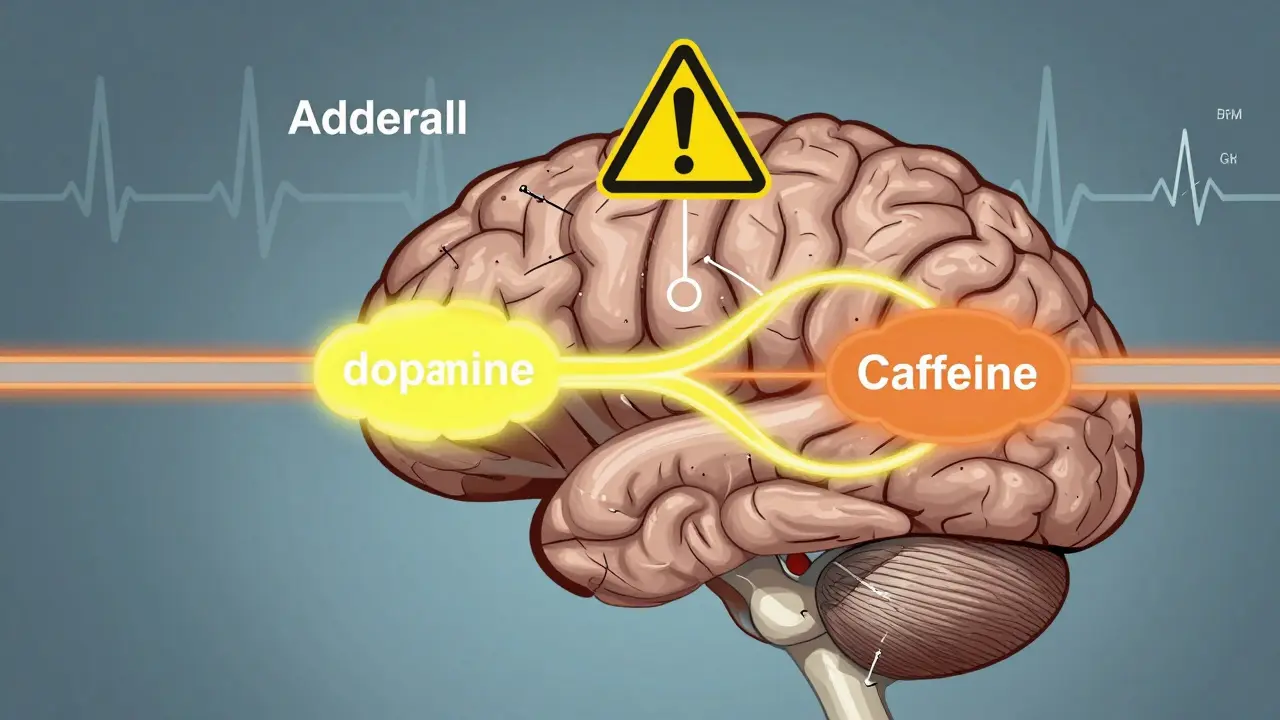
Caffeine and stimulant medications like Adderall both work on the same brain chemicals: dopamine and norepinephrine. These neurotransmitters are often low in people with ADHD, which is why medications are prescribed in the first place. Caffeine, even though it’s not a prescription drug, acts like a weaker version of Adderall. It blocks adenosine receptors, which makes you feel more awake, and it slightly increases dopamine release. For some, that extra push helps them stay on task, especially during long workdays or when their medication is wearing off.
But here’s the catch: caffeine isn’t regulated like prescription drugs. You can’t control how much you’re really getting. A tall coffee from a chain shop might have 200 mg of caffeine. A single energy drink? Up to 300 mg. And that’s not counting chocolate, tea, or even some headache pills. Meanwhile, Adderall doses are carefully measured-10 mg, 20 mg, 30 mg. Mixing unpredictable caffeine with precise medication? That’s where things get risky.
The Science Behind the Interaction
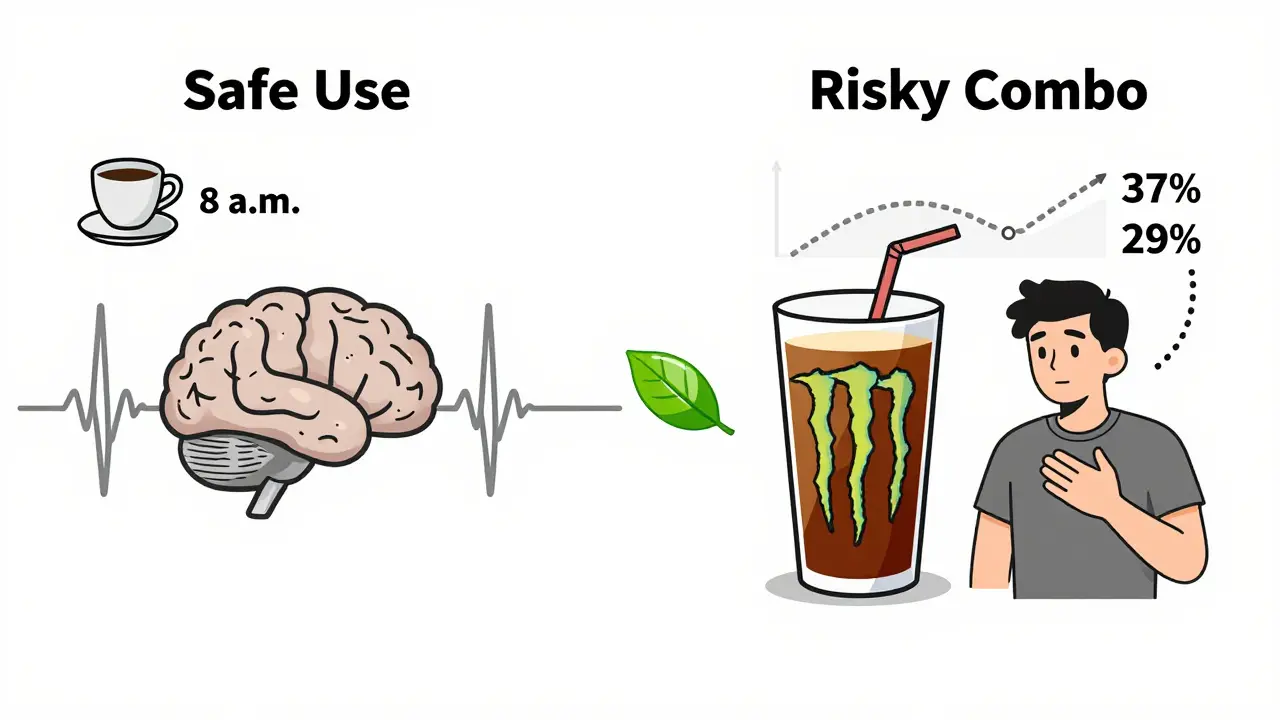
Research shows caffeine and Adderall don’t just add up-they multiply. A 2021 study from the VA Hospital found that people who took both had a 37% higher chance of developing a fast heart rate (tachycardia) and a 29% higher chance of high blood pressure. These aren’t minor concerns. For someone with undiagnosed heart issues, this combo could lead to chest pain, dizziness, or even a medical emergency.
On the flip side, some studies suggest that when caffeine is paired with L-theanine-a compound found in green tea-the effects can be more balanced. A 2020 study involving five boys with ADHD showed that the combination of 160 mg caffeine and 200 mg L-theanine improved focus and reduced impulsivity better than either substance alone. L-theanine seems to calm the nervous system without dulling alertness. But here’s the problem: you won’t find this exact ratio in your morning coffee. Most people aren’t drinking green tea with their Adderall.
The FDA doesn’t approve caffeine as an ADHD treatment. Neither does the American Academy of Pediatrics. And yet, according to a Reddit analysis of over 1,200 comments from ADHD users in 2023, 62% of respondents reported using caffeine with their medication. Of those, 41% said it helped, but 59% said it made their anxiety worse. That’s nearly six in ten people feeling more on edge, not more focused.
Real-World Consequences: What Happens When You Mix Them
Take the story of one user on Reddit, u/ConcentratedChaos. They took 20 mg of Adderall with one cup of coffee every day. At first, it felt perfect-sharp focus, no crash. But by hour three, their heart would race, their hands would shake, and they’d feel like they were vibrating out of their skin. They switched to half-caf, and the crashes stopped. That’s not luck-it’s pharmacology.
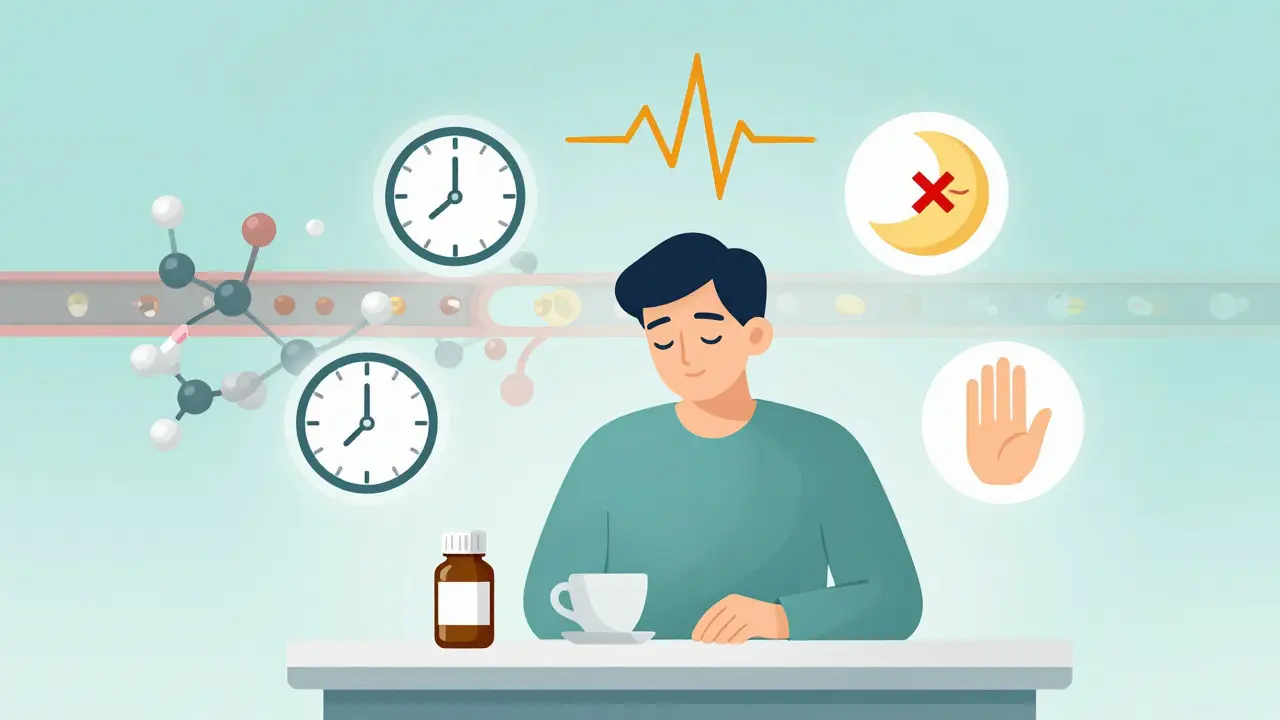
Caffeine’s half-life is about 5 hours. That means if you drink a coffee at 8 a.m., half the caffeine is still in your system at 1 p.m. Adderall lasts 10-13 hours. So if you take your pill at 7 a.m. and drink coffee at 8 a.m., you’re flooding your system with two stimulants for over five hours straight. No wonder so many people report jitteriness, insomnia, or panic attacks.
A 2022 survey by NAMI found that 33% of adults who combined caffeine with stimulants ended up needing medical care for side effects. Compare that to just 8% of people who took their medication alone. That’s a fourfold increase in emergency visits.
Who’s Most at Risk?
Not everyone reacts the same way. Genetics play a big role. About 40% of people are slow metabolizers of caffeine because of a variation in the CYP1A2 gene. These individuals break down caffeine slowly, so it builds up in their system. For them, even one cup of coffee with Adderall can feel like a double dose.
Age matters too. The American Academy of Pediatrics explicitly warns against combining caffeine with stimulants in children and teens. Their nervous systems are still developing, and their hearts are more sensitive to overstimulation. A 2023 study in JAMA Internal Medicine found that 23% of adults with ADHD also have heart conditions like high blood pressure or arrhythmias. For them, caffeine isn’t just a risk-it’s a red flag.
And then there’s the hidden caffeine. Energy gels, protein bars, weight-loss supplements, even some flavored waters. People don’t realize they’re consuming caffeine on top of their meds. The FDA now requires labels on supplements with more than 50 mg of caffeine-but many products still slip through the cracks.
How to Stay Safe If You’re Using Both
If you’re already combining caffeine and ADHD medication, don’t stop abruptly. But do start tracking. Here’s what actually works, based on clinical guidelines:
- Time it right. Wait at least 4-5 hours after taking your ADHD medication before consuming caffeine. This lets the peak levels of Adderall pass before adding another stimulant.
- Keep it low. Start with no more than 100 mg of caffeine per day-that’s one small coffee. Don’t go over 200 mg total, especially if you have any heart issues.
- Watch for signs. Heart palpitations, trembling, trouble sleeping, or sudden anxiety? These aren’t normal. They’re your body saying it’s overloaded.
- Track your intake. Use a simple journal or app. Record what you ate, when you took your pill, and how you felt. Patterns will show up after 2-4 weeks.
- Get checked. If you’ve been combining them for months, ask your doctor for a basic heart check. Blood pressure, EKG, or even a simple pulse monitor can catch early problems.
One psychiatrist in Asheville who treats ADHD patients told his clinic: "If you’re going to drink coffee, make it half-caf. And never drink it after noon." Simple. Practical. And backed by data.
The Bigger Picture: Why This Matters Now
The global market for ADHD medications is growing fast-projected to hit $24.6 billion by 2028. At the same time, coffee consumption continues to rise. More people are self-managing their ADHD with caffeine because it’s easy, legal, and cheap. But accessibility doesn’t mean safety.
The FDA’s 2024 draft guidance says it clearly: combining stimulants without medical supervision increases emergency room visits. Between 2019 and 2023, cases jumped from 12,400 to 15,750 per year. That’s a 27% increase. And it’s not just about heart problems. Insomnia, panic attacks, weight loss, and mood swings are all climbing too.
Future research is looking at personalized approaches-like genetic testing for caffeine metabolism. If you’re a slow metabolizer, you might need to avoid caffeine altogether. If you’re fast, maybe you can tolerate a little. But right now, we don’t test for it. So the safest rule is: assume you’re slow. Assume you’re sensitive. Assume your body can’t handle the double hit.
What to Do Instead
If caffeine isn’t working-or is making things worse-what else can you try?
- Adjust your medication. Talk to your doctor about switching to a longer-acting stimulant or a non-stimulant option like atomoxetine. Sometimes the problem isn’t caffeine-it’s the timing or dose of your pill.
- Try L-theanine. It’s available as a supplement (200-400 mg daily). Studies show it can reduce anxiety without drowsiness. It doesn’t replace medication, but it can smooth out the edges.
- Improve sleep and routine. Poor sleep makes ADHD symptoms worse. Better sleep means less need for stimulants. Aim for 7-8 hours, no screens an hour before bed.
- Use movement. A 20-minute walk, yoga, or even stretching can increase dopamine naturally. It’s not as fast as Adderall, but it’s sustainable and safe.
The goal isn’t to eliminate caffeine forever. It’s to use it wisely. For some, a small morning cup works fine. For others, even one sip triggers a cascade of side effects. You won’t know until you pay attention.
Can I drink coffee while taking Adderall?
You can, but it’s risky. Combining caffeine and Adderall increases the chance of fast heart rate, high blood pressure, and anxiety. If you do drink coffee, limit it to 100 mg of caffeine (one small cup), wait at least 4-5 hours after taking your medication, and avoid it after noon. Monitor your heart rate and watch for jitteriness or trouble sleeping.
Does caffeine help ADHD symptoms?
Caffeine can help with focus for some people, but it’s far less effective than prescription stimulants. Studies show it’s about 60-70% less effective at improving core ADHD symptoms like inattention and impulsivity. It also doesn’t help with executive function the way Adderall does. For many, the side effects outweigh the benefits.
What happens if I take caffeine with my ADHD meds every day?
Daily use can lead to tolerance, meaning you need more caffeine to feel the same effect. It also increases the risk of chronic high blood pressure, sleep disruption, and anxiety disorders. Over time, your body may struggle to regulate dopamine naturally, making your ADHD symptoms harder to manage without higher doses of medication.
Are there safer alternatives to caffeine for focus?
Yes. L-theanine (200-400 mg daily) can reduce anxiety and improve focus without stimulant effects. Regular physical activity, consistent sleep, and structured routines also naturally boost attention. Some people find that cold showers, breathing exercises, or even chewing gum helps with concentration. These are safer and don’t interact with medication.
Should I stop caffeine if I’m on ADHD medication?
You don’t have to quit entirely, but you should be cautious. If you’re experiencing anxiety, heart palpitations, insomnia, or mood swings, cutting caffeine for 2 weeks can show you whether it’s the cause. Then, if you want to bring it back, start with half-caf in the morning only. Always talk to your doctor before making changes.
tamilan Nadar
March 13, 2026 AT 20:35Rosemary Chude-Sokei
March 14, 2026 AT 07:37Noluthando Devour Mamabolo
March 15, 2026 AT 12:44Leah Dobbin
March 16, 2026 AT 21:01Ali Hughey
March 18, 2026 AT 08:14Alex MC
March 19, 2026 AT 07:50rakesh sabharwal
March 19, 2026 AT 12:51Aaron Leib
March 20, 2026 AT 17:39Dylan Patrick
March 20, 2026 AT 21:42Kathy Leslie
March 21, 2026 AT 11:57Amisha Patel
March 22, 2026 AT 10:50Elsa Rodriguez
March 22, 2026 AT 19:51Serena Petrie
March 23, 2026 AT 10:24Buddy Nataatmadja
March 24, 2026 AT 00:52mir yasir
March 24, 2026 AT 15:35