Allergen Avoidance: Environmental Control and Home Strategies for Better Breathing
 Dec, 12 2025
Every year, millions of Americans wake up with itchy eyes, a stuffy nose, or a cough that won’t quit-not because they’re sick, but because their home is full of invisible triggers. If you’ve ever blamed the season for your allergies, you’re missing the bigger picture. The real problem isn’t just pollen outside. It’s what’s hiding in your mattress, clinging to your couch, and floating in the air you breathe while you sleep. Allergen avoidance isn’t optional for people with asthma or allergic rhinitis-it’s the foundation of real relief.
Why Your Home Is the Problem
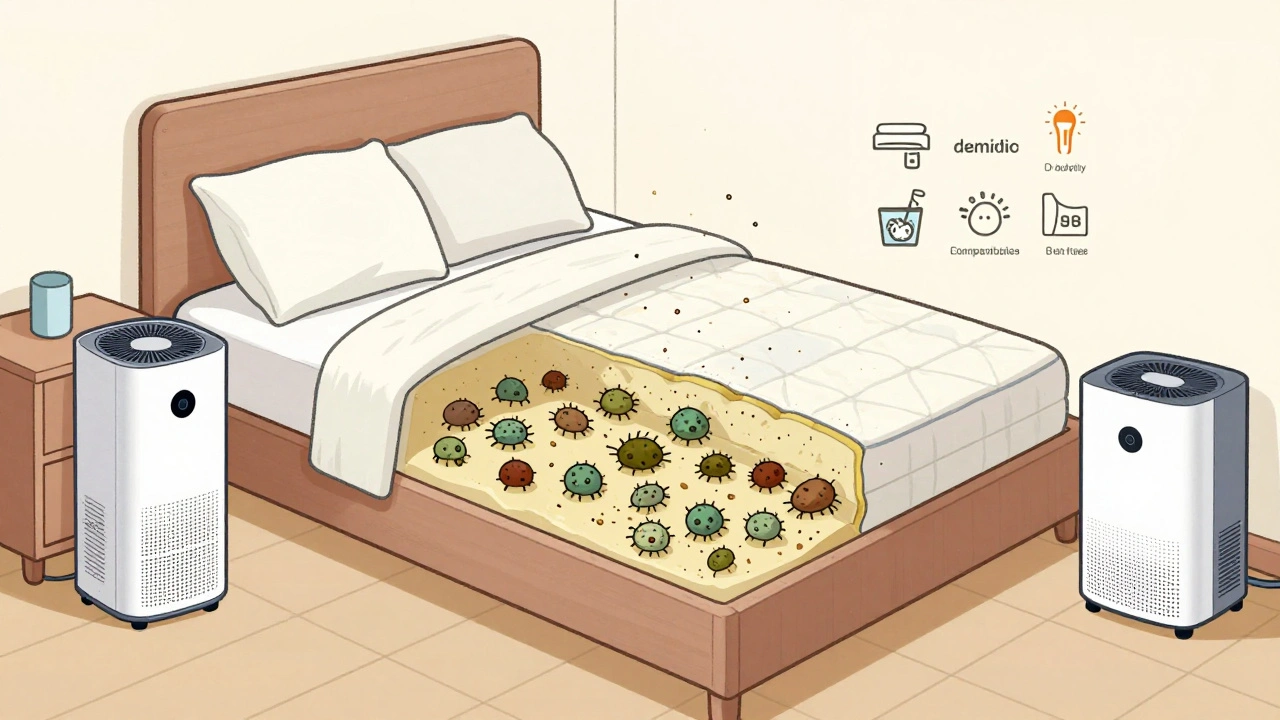
Your house isn’t just a shelter. It’s a breeding ground for the things that make you sneeze, wheeze, and feel awful. Dust mites, pet dander, mold spores, and cockroach particles aren’t just dirt. They’re powerful allergens that trigger immune reactions in up to 50 million Americans. The most common? Dust mites. Eight out of ten homes in the U.S. have them. And they don’t live in the corners-they live in your bed. Each mite produces 20 droppings a day, and those droppings are what you’re actually allergic to.People often think cleaning more will fix it. But vacuuming once a week? That’s not enough. You need to change how you live in your space. The goal isn’t to make your home spotless. It’s to make it inhospitable to allergens.
Dust Mite Control: Start with Your Bed
Your bed is ground zero for allergens. Dust mites thrive in warm, humid environments-and your body gives them exactly that. Sweat, dead skin cells, and body heat create the perfect storm. The single most effective step you can take? Encase your mattress, box spring, and pillows in allergen-proof covers.These aren’t regular zippered sheets. They’re made of tightly woven fabric that blocks mites and their droppings from escaping. Look for covers labeled "barrier fabric" or "allergen-impermeable." They reduce exposure by 73% to 90%. Pair that with washing all bedding-sheets, pillowcases, blankets-in hot water (at least 130°F) every week. Cold water won’t kill mites. Hot water does.
And don’t forget the pillows. Down or feather pillows trap more allergens than synthetic ones. Swap them out for hypoallergenic synthetic fills. If you can’t replace them, put them in the dryer on high heat for 20 minutes every two weeks. That kills mites and removes allergens.
HEPA Filters: Don’t Buy Just Any Air Purifier
Air purifiers are everywhere. But most don’t help. If it doesn’t have a true HEPA filter, it’s wasting your money. True HEPA filters capture 99.97% of particles as small as 0.3 microns. That includes dust mite debris, pet dander, and mold spores.Placement matters. Put one in your bedroom, and make sure it’s sized right. It should provide 4 to 6 air changes per hour in the room. That means if your bedroom is 200 square feet, look for a unit rated for at least 400 square feet. A tiny purifier on the other side of the house won’t help you breathe better at night.
Replace the filter every 6 to 12 months. A clogged filter doesn’t just stop working-it can start blowing allergens back into the air. And don’t rely on air purifiers alone. Use them with other strategies. They’re a tool, not a magic button.
Pet Dander: You Don’t Have to Give Up Your Pet
If you love your cat or dog, you don’t need to give them up. But you do need to change your habits. Pet dander sticks to everything-clothes, carpets, furniture. And it stays airborne for hours.Start with pet-free zones. Ban pets from the bedroom. That’s the most effective single move. Studies show this reduces allergen levels in the bedroom by 30% to 55%. Bathe your cat weekly. Yes, weekly. It cuts airborne cat allergen (Fel d 1) by 41%. Brush your dog outside, not on the couch. Wash your hands after petting them. And change your HVAC filter monthly-high-efficiency filters trap dander before it circulates.
Vacuuming helps, but only if you use a vacuum with a HEPA filter. Regular vacuums blow allergens back into the air. A 2020 study found HEPA vacuums reduced airborne dog allergen by 66%. And don’t forget to clean your furniture. Use a damp cloth, not a dry duster. Dry dusting just moves allergens around.
Humidity Control: The Silent Allergy Killer
Mold and dust mites both love moisture. Keep indoor humidity between 30% and 50%. Above 50%, mites multiply. Above 60%, mold starts growing on walls, in bathrooms, even behind furniture.Buy a hygrometer-it costs less than $20. It tells you the real humidity level. Don’t guess. If it’s too high, use a dehumidifier. In humid climates like Florida or even Boise in summer, you may need to run it 12 to 18 hours a day. That’s not a one-time fix. It’s a daily habit.
Fix leaks fast. A dripping faucet or a leaky roof? That’s a mold factory. Clean mold off hard surfaces with a solution of 1 part bleach to 10 parts water. Don’t use vinegar or tea tree oil alone-they don’t kill mold spores. And never paint over mold. It grows back.
Cockroaches and Other Hidden Threats
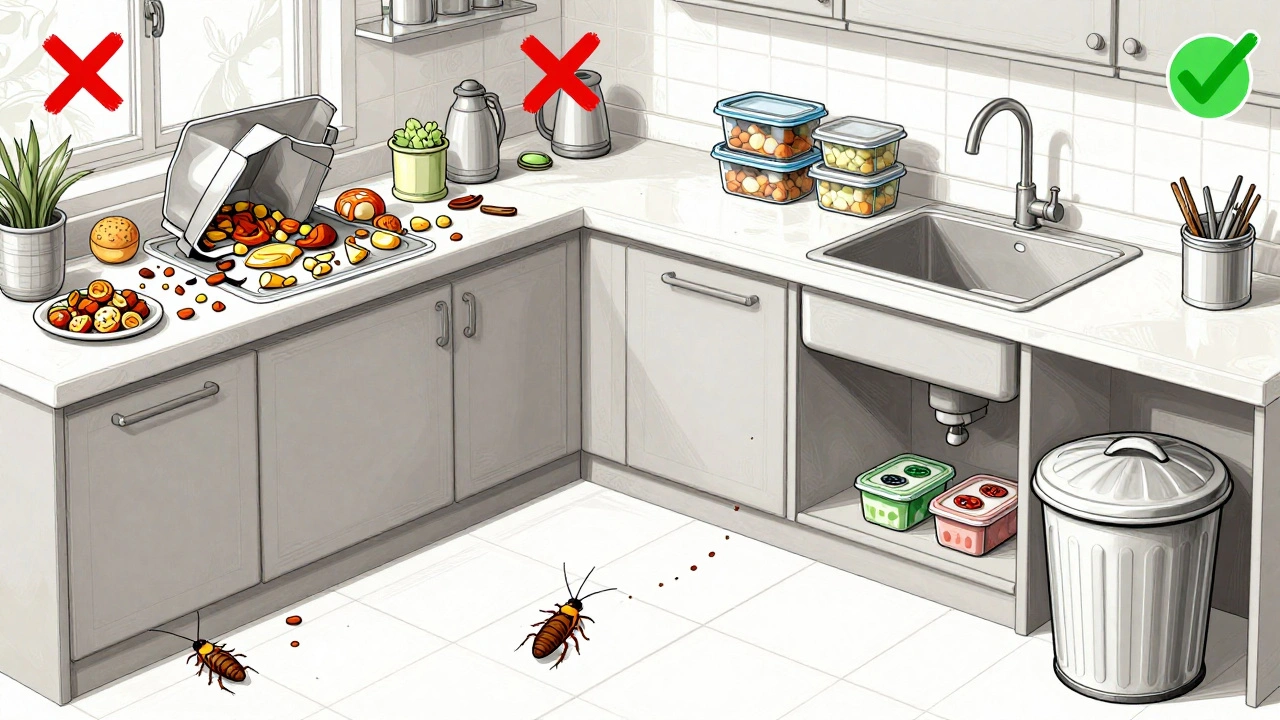
Cockroach allergens are a major trigger for asthma, especially in urban homes. You might not see them, but their droppings, saliva, and body parts are in your kitchen, under the sink, even in your cabinets.Store all food in airtight containers. Don’t leave dirty dishes out overnight. Empty your trash daily. Seal cracks around pipes and baseboards. Use bait stations or boric acid, not sprays. Sprays scatter allergens into the air. Bait stations kill them quietly.
If you’ve got an infestation, call a professional. A single treatment can reduce allergen levels on floors by 86%. But prevention is cheaper than extermination. A clean kitchen is your best defense.
Why Single Fixes Don’t Work
Many people try one thing: a new air purifier, or mattress covers, or washing sheets more often. And they expect miracles. But research shows single interventions rarely make a real difference. A 2023 review of 15 studies found that 78% of trials using just one strategy saw no significant improvement in symptoms.Real results come from combining at least three strategies. For example: HEPA filter + allergen-proof bedding + humidity control. That combination cuts allergen exposure by 75% to 90%. And when you hit that threshold, symptoms drop. You need less medication. You sleep better. You breathe easier.
It’s not about doing everything perfectly. It’s about doing enough of the right things consistently. Start with the three most impactful: cover your bed, run a HEPA filter in your bedroom, and control humidity. Then add one more. Build from there.
The Cost of Relief
You don’t need to spend thousands. Basic steps cost less than $300:- Allergen-proof mattress and pillow covers: $30-$100
- Small HEPA air purifier: $150-$250
- Portable dehumidifier: $100-$150
That’s it. That’s the core toolkit. Expensive whole-house systems? They help-but only if you’re severely allergic or live in a high-pollution area. Most people get 80% of the benefit from the basics.
And here’s the catch: adherence drops fast. People start strong. Six months later, they’re back to washing sheets in cold water, skipping the dehumidifier, letting pets on the bed. Why? Because it’s hard. It takes time. It’s not glamorous. But the payoff? Fewer emergency room visits. Fewer inhaler puffs. More nights of deep sleep.
What Doesn’t Work
There’s a lot of noise out there. Avoid these myths:- Essential oils don’t kill allergens. They might smell nice, but they don’t reduce dust mites or mold.
- UV light purifiers don’t remove particles. They kill germs, not allergens.
- Houseplants can increase humidity and harbor mold in soil. Skip them if you’re sensitive.
- Extreme food allergy avoidance at home (like removing all nuts from the house) isn’t helpful unless someone has a confirmed food allergy. It causes stress without benefit.
Stick to science-backed steps. Don’t fall for products that promise "allergy-free" homes. There’s no such thing. But you can make your home safe enough to breathe.
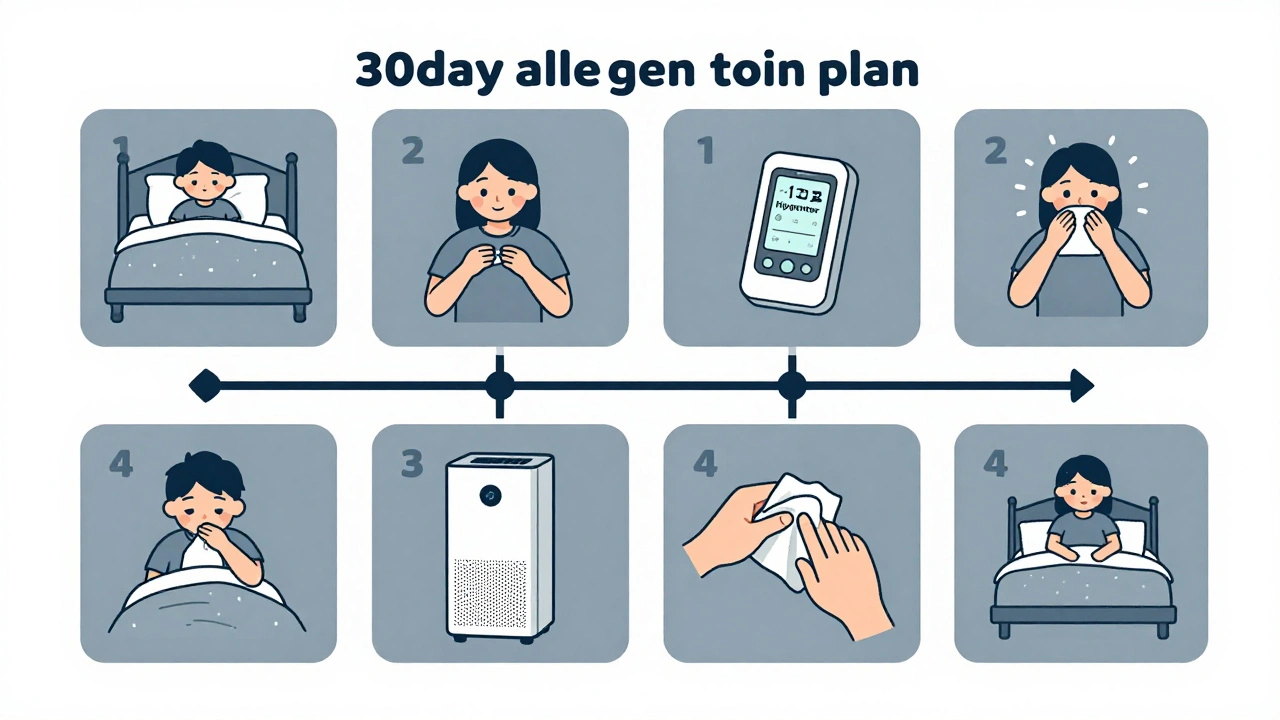
Getting Started: Your 30-Day Plan
Here’s how to begin without getting overwhelmed:- Week 1: Buy and install allergen-proof covers on your mattress and pillows. Wash all bedding in hot water.
- Week 2: Get a hygrometer. Check humidity in your bedroom. If it’s above 50%, buy a small dehumidifier.
- Week 3: Buy a HEPA air purifier for your bedroom. Run it on high while you sleep.
- Week 4: Ban pets from the bedroom. Vacuum with a HEPA filter. Start wiping surfaces with a damp cloth daily.
After 30 days, you’ll notice a difference. Less morning congestion. Fewer coughing fits at night. That’s not luck. That’s control.
When to Seek Help
If you’ve tried these steps for 3 months and still struggle, talk to an allergist. Get tested. You might be allergic to something you didn’t know-like feathers, certain molds, or even a specific type of dust. Once you know your triggers, you can tailor your strategy.Also, if you have asthma, work with a certified asthma educator. They’ve trained thousands of people to make these changes successfully. One study found patients who worked with educators had an 85% adherence rate-nearly double the rate of those who just got a doctor’s advice.
Can I still have pets if I’m allergic?
Yes, but you need to set strict boundaries. Keep pets out of bedrooms, bathe them weekly, use HEPA filters, and wash your hands after touching them. Removing pets entirely reduces allergens the most, but many people manage well with careful habits.
Do air purifiers really help with allergies?
Only if they have a true HEPA filter and are sized correctly for the room. A HEPA purifier in your bedroom can reduce airborne allergens by up to 70%. But it won’t fix everything-combine it with bedding covers and humidity control for real results.
How often should I wash bedding to control dust mites?
Wash all bedding-including sheets, pillowcases, and blankets-in water at least 130°F (54.4°C) once a week. Cold water doesn’t kill mites. Hot water does. Dry on high heat to finish the job.
Is a dehumidifier necessary if I have air conditioning?
Not always. AC reduces humidity, but not enough in humid climates or during shoulder seasons. Use a hygrometer to check. If humidity stays above 50% even with AC running, you need a dehumidifier.
Can allergen avoidance replace allergy medication?
For many people, it reduces the need for medication-but doesn’t replace it entirely. Allergen avoidance lowers your exposure so your body reacts less. That means you may need less antihistamine or inhaler use. But if you have moderate to severe asthma or rhinitis, combine avoidance with your doctor’s treatment plan.
Allergen avoidance isn’t about perfection. It’s about progress. You don’t need to overhaul your life overnight. Start with one room. One change. Then add another. Over time, you’ll stop just managing symptoms-and start living without them.
Yatendra S
December 12, 2025 AT 13:36Bro, I just put allergen covers on my bed and now I’m sleeping like a baby 🛌✨ No more 3 a.m. sneezing fits. My nose is finally free. It’s wild how something so simple changes everything. I used to think I was just ‘sensitive’-turns out I was living in a mite zoo. 🤯
Himmat Singh
December 13, 2025 AT 05:32It is imperative to underscore that the empirical efficacy of allergen avoidance protocols is contingent upon rigorous adherence to scientifically validated methodologies. The notion that mere encasement of bedding constitutes a panacea is, in fact, a fallacious oversimplification. One must consider the multifactorial etiology of allergic rhinitis, wherein airborne particulate dynamics are influenced by architectural ventilation, textile porosity, and anthropogenic bioeffluents. A holistic approach remains non-negotiable.
Webster Bull
December 13, 2025 AT 18:40HEPA filter + bed covers + dehumidifier = game over for allergies. No magic, no hype. Just science. Do the three. Sleep better. Breathe easier. That’s it. No need to overthink it. Start tonight.
Emma Sbarge
December 14, 2025 AT 15:38Look, I get it. But this whole ‘allergen avoidance’ thing is just another woke wellness scam. You think your mattress cover is gonna fix what Big Pharma and the EPA won’t admit? My grandpa lived in a dusty farmhouse his whole life and never took an antihistamine. We don’t need to turn our homes into sterile labs just to breathe. American grit > allergy fear.
Sheldon Bird
December 15, 2025 AT 18:10Y’all are killing it with the real talk. I was skeptical too-until I tried the 30-day plan. Week 1: covers. Week 2: hygrometer (turned out my AC was lying to me). Week 3: HEPA purifier on low all night. Week 4: pets banned from the bedroom. Now I wake up without a cough. It’s not perfect, but it’s the first time in years I feel like I’m not fighting my own house. You don’t need to do everything. Just start with one. Then another. You got this.
Karen Mccullouch
December 16, 2025 AT 23:21Who the hell is paying for all this? I’m a single mom working two jobs. I don’t have $300 to waste on fancy sheets and gadgets. And don’t even get me started on ‘weekly cat baths.’ My cat hates water. I hate water. We both hate this. Why is this even a thing? Who decided we all need to live like astronauts? I’ll take my antihistamines and my dirty couch, thanks.
Michael Gardner
December 17, 2025 AT 01:16HEPA filters don’t work. I bought one. My symptoms got worse. Turns out the filter was leaking allergens back out. And don’t get me started on ‘allergen-proof’ covers-they just make your bed feel like a plastic coffin. This whole post feels like a marketing brochure for a company selling $200 pillowcases. Real talk: if you’re still sneezing after all this, maybe it’s not the dust mites. Maybe it’s your stress. Or your diet. Or your neighbor’s cat.
Jennifer Taylor
December 18, 2025 AT 21:58Okay but what if the allergens are coming from the government? I mean, think about it. Why do they push all this ‘clean home’ nonsense? Why now? Why are they suddenly so concerned about dust mites? Did you know mold spores can be weaponized? I read a guy on TruthFeed who said the CDC’s humidity guidelines were written by Big Pharma to sell dehumidifiers. I tested my air with my phone’s camera and it glowed green near the vents. That’s not normal. My pillowcase has a QR code now. I think it’s tracking me.